What Are Your Chances of Winning a Wrongful Death Lawsuit?


Every article on this site is researched by our internal team, reviewed for legal accuracy against current Texas law, and held to State Bar of Texas advertising standards before publication. We do not publish content that overstates outcomes or makes promises about results.
Learn more about our
editorial standards .
Key Takeaways
- Texas bars all recovery when the person who died was 51% or more at fault.
- A civil wrongful death suit can win even after a criminal acquittal or dismissal.
- You have two years from the date of death to file a wrongful death lawsuit.
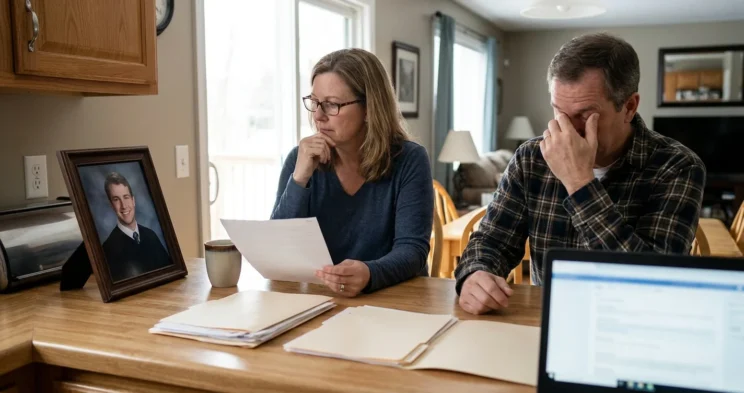
The police report says a driver ran the light on Bandera Road near Loop 410 and never hit the brakes. Your brother did not make it home that night.
Now, there’s a criminal case moving and someone has told you to file a wrongful death suit. Before you spend a year of your life on it, you want to know whether you would actually win.
How To Win a Wrongful Death Lawsuit
No reliable percentage exists for your odds of winning a wrongful death suit. What decides these cases is checkable evidence, not a statistic.
Start with eligibility, because some cases end before they begin. Texas limits wrongful death claims to the spouse, children, and parents of the person who died.
Siblings, cousins, and unmarried partners cannot file on their own. If you are unsure where you fall, check the rules on who can sue in a wrongful death case first.
Every Texas wrongful death claim then rests on the same four elements. You must show that the other driver owed your family member a duty of care and that they breached that duty. Then you must tie that breach to the death and to your family’s losses.
The right to bring the claim comes from Texas Civil Practice and Remedies Code Chapter 71. It stands apart from any criminal charge the driver faces, which is why a plea deal does not end your family’s civil case.
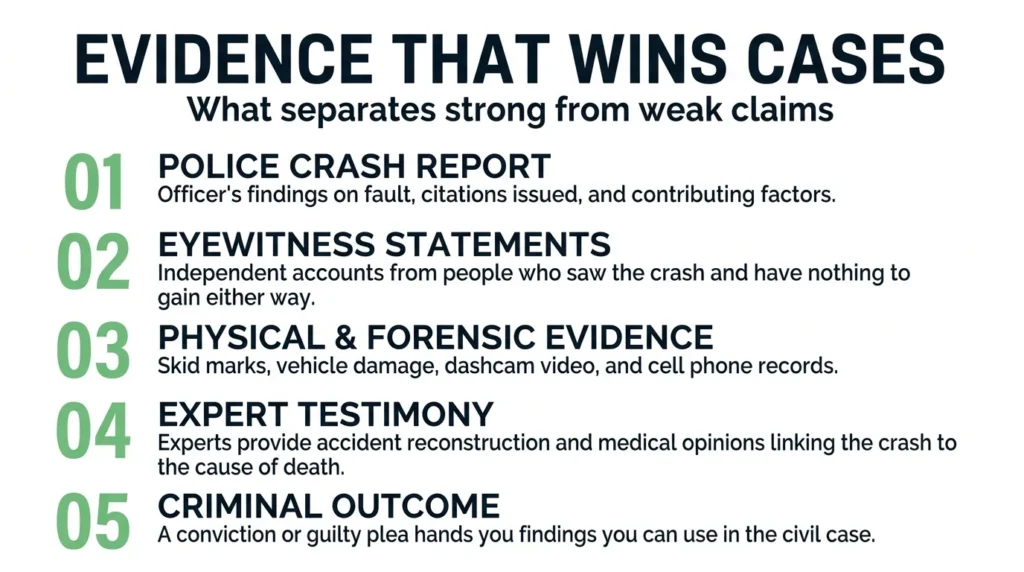
What separates a strong claim from a weak one is proof.
- Police crash report: The investigating officer’s findings on fault, citations issued, and contributing factors.
- Eyewitness statements: Independent accounts from people who saw the crash and have nothing to gain either way.
- Physical and forensic evidence: Skid marks, vehicle damage, dashcam video, and cell phone records.
- Expert testimony: Accident reconstruction and medical opinion linking the crash to the cause of death.
- The related criminal outcome: A conviction or guilty plea hands you findings you can use in the civil case.
Texas loses thousands of people to traffic crashes every year, and TxDOT crash statistics document them by county and year. Your situation is not a rare edge case, and the law around it is settled.
Civil versus Criminal Wrongful Death Standards
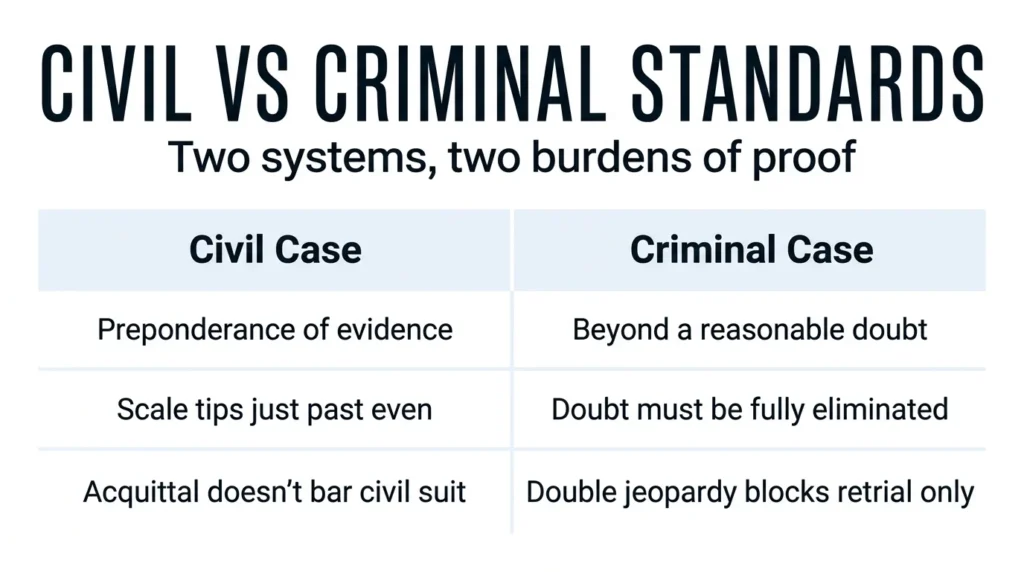
A civil wrongful death suit can succeed even when the criminal case against the same person falls apart. The two systems ask juries to be certain at very different levels.
The Civil Preponderance of Evidence Standard
In a civil case, your side only has to show that the defendant more likely than not caused the death. Lawyers call this preponderance of the evidence, meaning the scale has to tip just past even.
That is a lower bar than it sounds. You don’t have to erase every doubt about what happened, and you don’t need a flawless witness.
The Criminal Beyond a Reasonable Doubt Standard
In criminal cases, prosecutors have to eliminate reasonable doubt, the highest standard in American law. When they cannot clear it, the charge gets dismissed or the jury acquits.
None of that stops your family from suing over the same crash. An acquittal means the state could not prove a crime, not that the death was nobody’s fault.
Double jeopardy shields a defendant from a second criminal trial. It does nothing to shield them from a civil claim your family brings.
Texas’s 51% Comparative Fault Rule
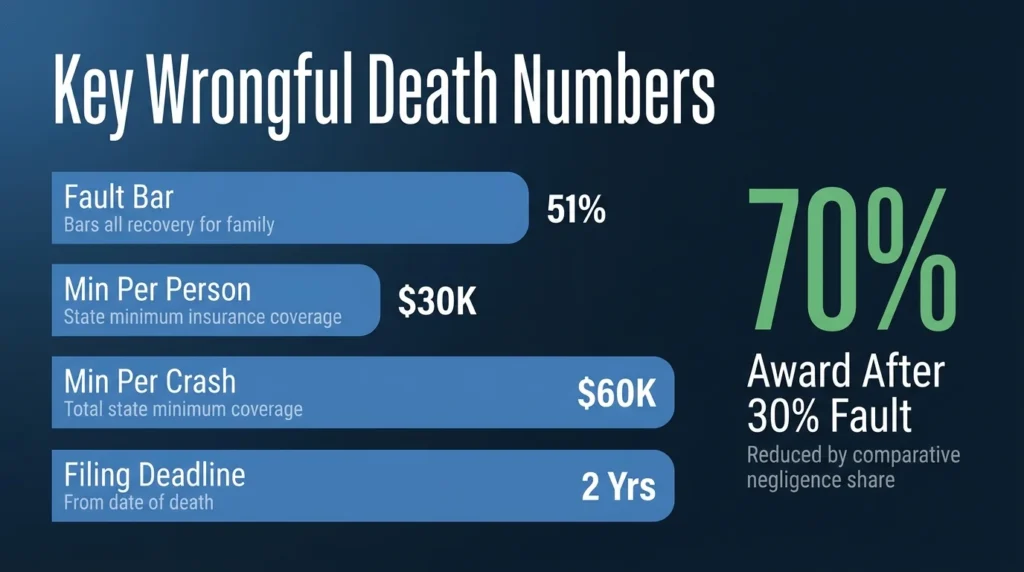
If a jury finds the person who died was 51% or more at fault, your family recovers nothing. Texas calls this proportionate responsibility, and Texas Civil Practice and Remedies Code § 33.001 sets that bar.
Below that line, shared fault still costs you. A verdict cut by 30% fault means your family collects 70% of the award.
Expect the defense to fight over those percentages, because Texas’s comparative negligence rule gives them a financial reason to. Arguing your loved one was speeding or distracted is the cheapest way for an insurer to cut what it pays.
Judgment-Proof Defendant Risk
Winning a verdict and collecting on it are two separate problems. A defendant with no insurance and no real assets is judgment proof. You can win and still see nothing.
Most of what families collect comes from an insurance policy, not a personal bank account. Texas Transportation Code § 601.072 sets the state minimum at $30,000 per injured person and $60,000 per crash.
If the driver carried only that minimum, the policy can cap what your family sees no matter how clear the fault was.
Statutory caps apply in certain cases too. Claims involving medical care or a government entity run into limits on wrongful death damages that a jury verdict cannot exceed.
Knowing what a defendant can actually pay should be part of your assessment from day one. A coverage and asset check tells you whether a legal win turns into money.
What Happens If You Lose Your Case?
Losing at trial doesn’t mean your family owes money for legal bills. With a contingency fee, you pay your attorney out of the recovery, and no recovery means no fee.
Court costs and case expenses work separately from that fee. Your written agreement spells out who covers them and when, so ask before you sign anything.
Most cases never reach a verdict at all. A file that looks shaky for trial may still settle, and average wrongful death settlement amounts show the range families see.
The deadline is where a lost claim becomes permanent. Texas gives you two years from the date of death to file under Texas Civil Practice and Remedies Code § 16.003.
Once that window closes, you usually cannot refile a dismissed or lost case. Filing deadlines in Texas wrongful death cases have only a few narrow exceptions, and none of them are worth counting on.
Weak facts are not the only way these cases fail. Naming the wrong plaintiff or filing in the wrong court can end a strong claim.
The steps for filing a wrongful death suit are technical, and courts do not overlook mistakes in them.
Talk to a Wrongful Death Attorney About Your Claim
Angel Reyes & Associates has spent over 30 years helping Texas families after a preventable death. Our record includes more than $1 billion recovered for clients, and you pay no attorney’s fee unless we win.
Your case depends on how your own evidence holds up under pressure. A case review with our wrongful death legal team gives you that answer instead of a guess.
We work statewide from more than 20 office locations across Texas, and we can handle most of your case remotely. Schedule a free consultation, and we’ll give you a straight read on what your family is facing.
Past results do not guarantee future outcomes.
Wrongful Death Lawsuit FAQs
How long does a wrongful death lawsuit take to resolve in Texas?
A case with clear fault and a cooperative insurer can settle in under a year. A case that goes to trial often takes two to four years or longer.
Who receives the money if a wrongful death lawsuit succeeds?
Texas law does not set a fixed split among the spouse, children, and parents who qualify. Courts and families instead weigh factors like financial dependence and the closeness of the relationship when dividing the award.
What is the difference between a wrongful death claim and a survival action?
A wrongful death claim pays the family for their own losses. A survival action instead recovers what the deceased person could have claimed for pain and losses before death, with proceeds going to the estate.
Is money from a wrongful death settlement taxable?
Most compensation for the death itself, including lost financial support and funeral costs, is not taxed under federal law. Punitive damages and any interest earned on a settlement are usually taxable.
Can more than one family member file a separate wrongful death lawsuit over the same death?
Texas law allows it, but courts and insurers strongly favor one combined lawsuit. Filing separately usually raises costs and can make a defendant less willing to settle.
About the Authors

Spencer Browne
Writer
Spencer Browne is a partner at Angel Reyes & Associates and a Board Certified personal injury trial lawyer with nearly 100 jury trials across Texas. He focuses on car, truck, and wrongful death cases, with notable verdicts including a landmark win in the Choctaw Casino bus crash case. A recognized speaker and legal educator, Spencer is a member of the American Board of Trial Advocates and has been honored as a Texas Super Lawyer and one of D Magazine’s Best Lawyers in Dallas. He brings deep trial experience and relentless advocacy to every client he represents.

Kyle Nicolas
Editor
Kyle Nicolas is the Web Content & SEO Manager at Angel Reyes & Associates. He has more than 10 years of experience as a marketing co...

Angel Reyes
Reviewer
Angel L. Reyes, III is the Founder and Managing Partner of Angel Reyes & Associates. A nationally recognized trial attorney and business...