How Do You Prove Negligence in a Wrongful Death Case?


Every article on this site is researched by our internal team, reviewed for legal accuracy against current Texas law, and held to State Bar of Texas advertising standards before publication. We do not publish content that overstates outcomes or makes promises about results.
Learn more about our
editorial standards .
Key Takeaways
- Proving wrongful death negligence means showing duty, breach, causation, and loss.
- Civil claims need only a preponderance of evidence, not proof beyond a reasonable doubt.
- Texas bars all recovery if your loved one was more than 50% at fault in the crash.
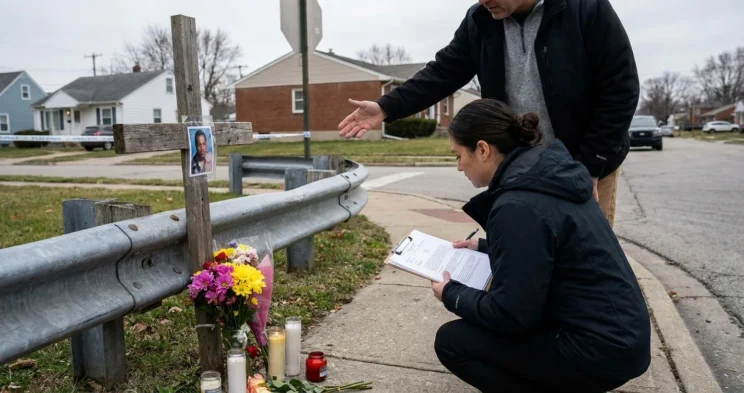
The call came late, and the days since have not felt real. You lost someone you love in a crash on I-35W north of downtown Fort Worth, and the other driver walked away.
Now people keep mentioning a wrongful death claim, and you are trying to understand what it would actually take to prove one.
Negligence Elements You Must Prove
Proving negligence in a wrongful death case comes down to four elements. You must show the at-fault party owed a duty of care, breached it, caused the death, and left your family with real losses.
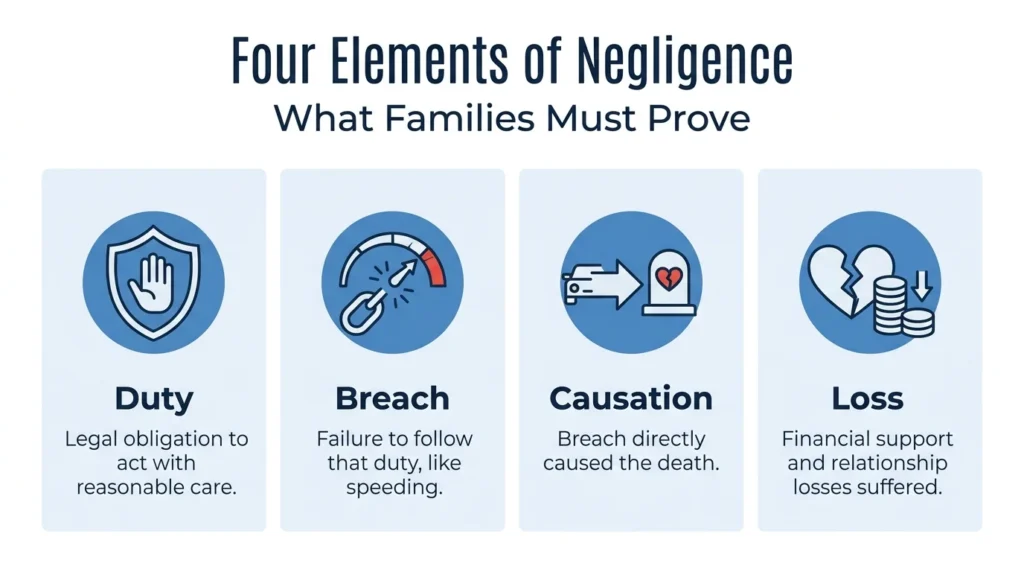
The elements of negligence in a wrongful death case are the same four elements any negligence claim uses. Duty means the other party had a legal obligation to act with reasonable care.
A driver’s duty to follow traffic laws is the clearest example. Breach means they failed that duty through a careless or unsafe act, like speeding or running a red light.
Causation is usually the hardest part of proving negligence. The breach must have directly caused the death, not simply added to the surrounding circumstances.
The fourth element is the loss your family carries, which is the basis for what your family can claim. This loss covers both financial support and the relationship you can no longer replace.
A wrongful death claim is more than ordinary negligence, though. The right to bring it comes from the Texas Civil Practice and Remedies Code (CPRC) § 71.002, which creates the claim by statute.
That same law decides who can file. Under Texas Civil Practice and Remedies Code (CPRC) § 71.004, the right generally belongs to the surviving spouse, children, and parents.
Because a Texas wrongful death claim compensates the family rather than the deceased, the losses at issue are your family’s own. Texas also limits how long you have to act, so knowing the wrongful death filing timeline early protects your options.
Burden of Proof in a Wrongful Death Claim
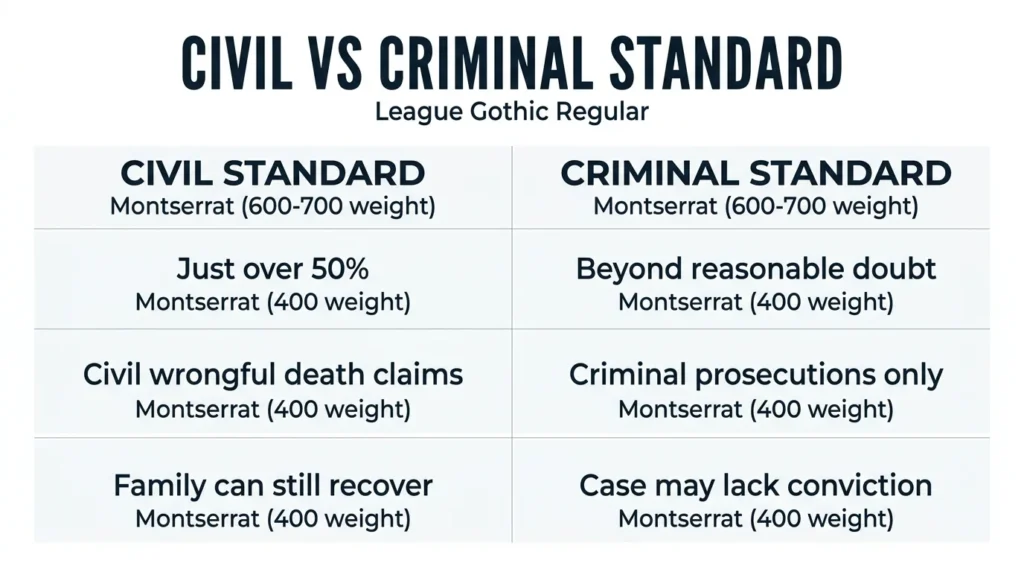
Families often assume they must prove fault the way a prosecutor proves a crime. The civil standard is lighter, and it works in your favor.
Preponderance of the Evidence Standard
A wrongful death claim only requires a “preponderance of the evidence.” That means showing it is more likely than not that negligence caused the death.
This is the wrongful death burden of proof, and it sits far below absolute certainty. If the evidence tips even slightly past the halfway point, the element is met.
That lower standard is a real advantage, but it does not make a case automatic. Strong evidence and a team with decades of experience in injury claims still shape the outcome.
Beyond a Reasonable Doubt Standard
Beyond a reasonable doubt is the criminal standard, and it has no bearing on your civil claim. Prosecutors must meet it to convict someone of a crime tied to the death.
Your family can still pursue and win a wrongful death claim even if no charges are filed. A criminal case that ends without a conviction does not close the door on your claim.
Evidence Used to Prove Wrongful Death
You prove those elements with evidence, and a few sources carry most cases. The evidence needed to prove wrongful death usually starts at the crash scene and the vehicles themselves.
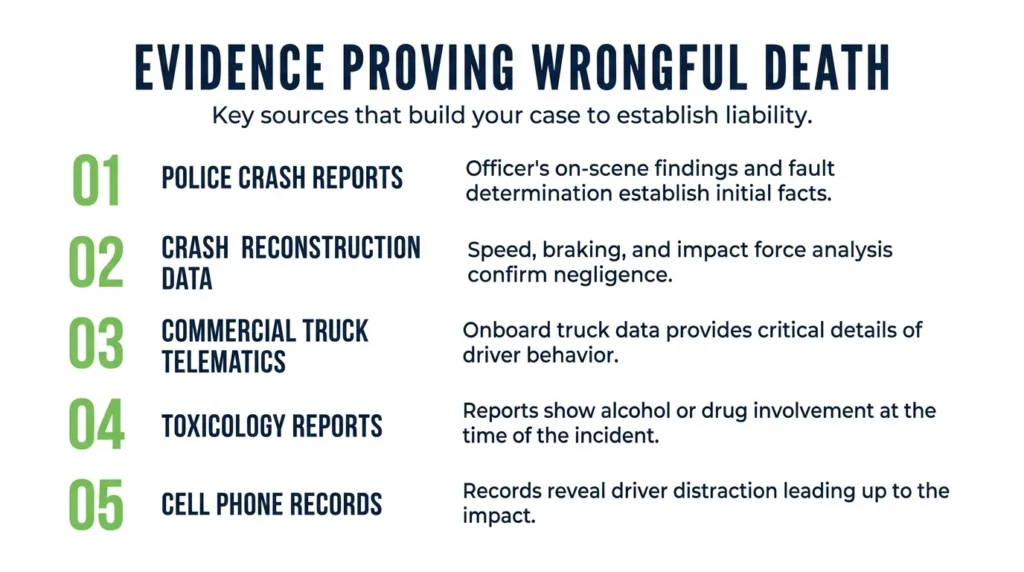
- Police crash reports: The responding officer documents on-scene findings and often notes an initial fault determination. Understanding how a police report shapes your claim helps you set the tone early.
- Crash reconstruction and black box data: Reconstruction specialists and event data recorders can pin down speed, braking, and impact forces. Federal rules under 49 CFR Part 563 set what these recorders must capture.
- Commercial truck data: When a truck causes the crash, onboard telematics add another layer of proof common to truck accident claims.
- Toxicology reports: Lab results can show whether alcohol or drugs contributed to the crash.
- Cell phone records: Phone data can reveal whether a driver was distracted at the moment of impact.
Each source tells part of the story, and together they build the more-likely-than-not case the law requires.
How Comparative Negligence Reduces Compensation
Even a strong case can shrink if your loved one shared blame for the crash. Texas bars compensation entirely when the deceased is found more than 50 percent responsible.
This rule comes from the Texas Civil Practice and Remedies Code (CPRC) § 33.001, often called the 51 percent bar. Texas comparative negligence turns your wrongful death claim into a fight over percentages of blame.
A judge or jury assigns each party a share of responsibility based on the evidence. Under Texas Civil Practice and Remedies Code (CPRC) § 33.003, that finding sets how the fault divides.
The way the 51 percent fault rule works can decide whether your family recovers anything at all. Most fatal claims grow out of motor vehicle crashes, where shared-fault disputes are common in car accident claims.
The lower the share of fault assigned to your loved one, the more your family keeps. That is why the evidence you gather early does double duty, proving negligence and holding down the blame placed on your side.
Talk to an Experienced Attorney Today
Losing someone to another’s carelessness leaves your family with grief and hard questions about what comes next. Angel Reyes & Associates has guided Texas families through wrongful death claims for over 30 years, and we can review your case at no cost.
We work on contingency, so there is no fee unless we win, and your first consultation is always free. That work has meant more than $1 billion recovered for clients, and se habla español whenever you need it.
We serve families across Texas and answer calls 24/7, so you can schedule a free consultation whenever you are ready.
Past results do not guarantee future outcomes.
Wrongful Death Case Negligence FAQs
How long do you have to file a wrongful death claim in Texas?
Texas law generally gives you two years from the date of death to file a wrongful death lawsuit. Some exceptions can extend that window, so acting sooner rather than later protects your options.
Does an autopsy or medical examiner's report help prove negligence in a wrongful death case?
Yes, a forensic autopsy can pinpoint the exact cause and manner of death. That helps show the crash caused it, not some unrelated health issue.
Can an employer be held responsible if an employee's negligence caused the death?
Yes, if the employee was acting within their job duties when the crash happened. Texas law can then hold the employer responsible under a rule called vicarious liability.
What happens if the at-fault driver did not have insurance?
Proving negligence still makes the driver legally responsible, even without insurance. Your family may need to use your own uninsured motorist coverage or pursue the driver’s personal assets to collect on a judgment.
What happens if more than one driver or party shares the blame for the crash?
A party found more than 50 percent at fault can be held responsible for your family’s entire judgment, even if others also share blame. If no party crosses that 50 percent mark, each one only pays their own share.
About the Authors

Angel Reyes
Writer
Angel L. Reyes, III is the Founder and Managing Partner of Angel Reyes & Associates. A nationally recognized trial attorney and business leader, Angel has helped over 70,000 injury victims recover more than $1 billion since founding the firm in 1993. Named to the Texas Super Lawyers list annually since 2008, Angel brings Wall Street experience, Ivy League education, and a deep commitment to client advocacy. He is a frequent legal commentator and published author with extensive contributions to legal scholarship, trial strategy, and consumer protection.

Kyle Nicolas
Editor
Kyle Nicolas is the Web Content & SEO Manager at Angel Reyes & Associates. He has more than 10 years of experience as a marketing co...

Angel Reyes
Reviewer
Angel L. Reyes, III is the Founder and Managing Partner of Angel Reyes & Associates. A nationally recognized trial attorney and business...