



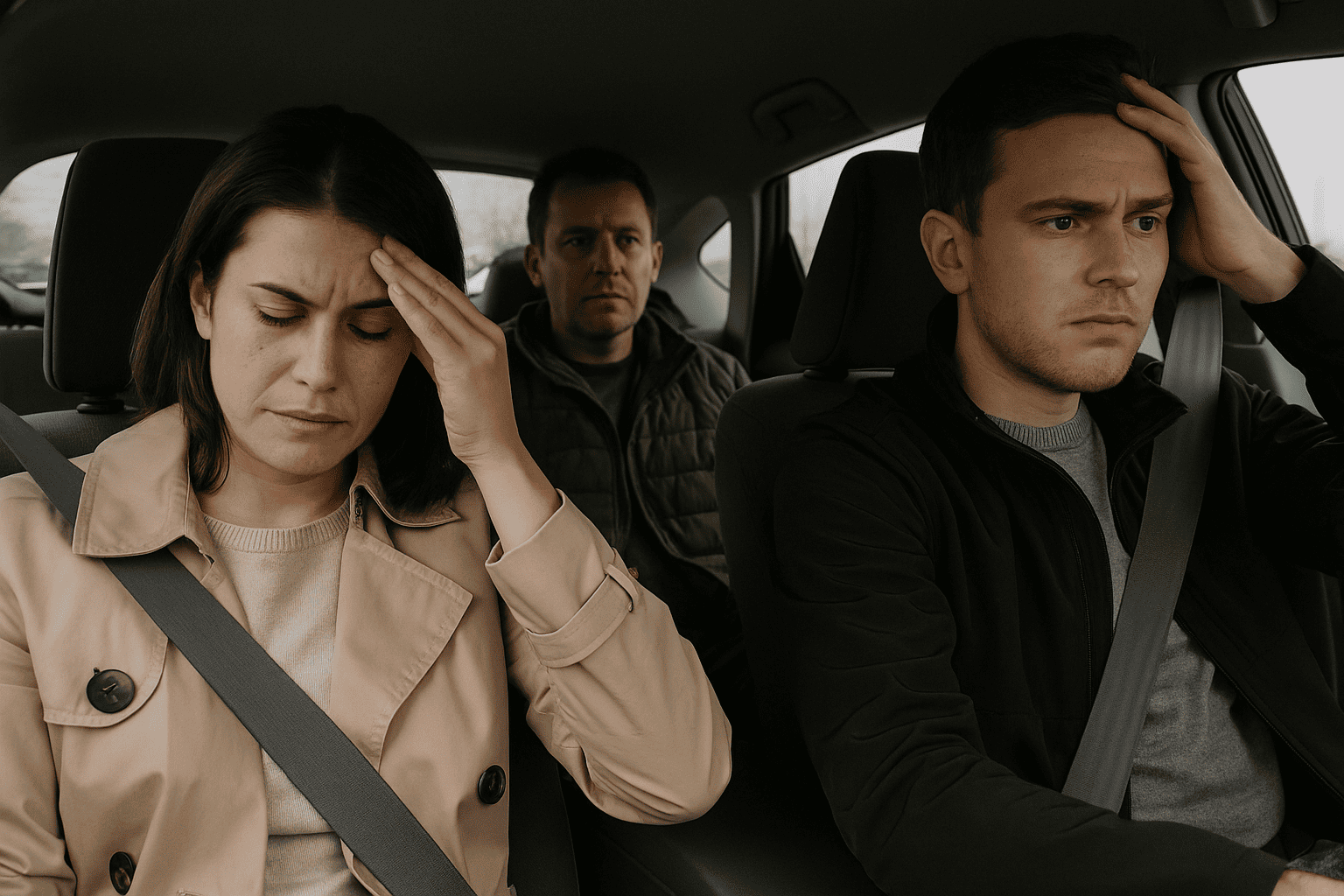
Understanding Your Rights After a Texas Rideshare Crash
You’re sitting in the back of an Uber on I-35 when another driver runs a red light and slams into your vehicle. You have the right to file claims against both the rideshare company’s insurance and the at-fault driver’s policy.
Rideshare accidents create unique insurance challenges that standard car crashes don’t involve. Multiple insurance policies, varying coverage periods, and corporate legal teams make these claims more complex than typical collisions.
Texas saw over 25,000 rideshare vehicles operating across Dallas, Houston, and Austin last year. With millions of rides completed annually, accidents involving Uber and Lyft have become increasingly common on Texas roads.
First Steps to Take After a Rideshare Crash in Texas
Taking immediate action after a rideshare crash protects both your health and your legal claim. Call 911 first to get medical help and ensure police create an official report.
Document everything at the scene by taking photos of vehicle damage, skid marks, and your injuries. Collect witness contact information before they leave.
Report the crash through the Uber or Lyft app immediately, but avoid discussing who caused the accident. Focus on factual information like time, location, and vehicle information.
Seek medical evaluation even if you feel fine initially. Adrenaline masks pain, and some injuries like whiplash or internal bleeding don’t show symptoms for hours or days.
Your medical records become critical evidence for your claim. Insurance companies often argue that delayed treatment means you weren’t seriously injured, so getting evaluated within 24-48 hours strengthens your case significantly.
Keep all medical records, receipts, and documentation related to the crash. This includes correspondence with insurance companies, rideshare companies, and any other parties involved.
Who Pays After a Rideshare Accident in Texas?
Liability and compensation depend on who caused the crash and the driver’s app status at impact. Texas law allows multiple parties to share financial responsibility for your injuries.
If You’re a Passenger in Uber or Lyft
Rideshare companies provide $1 million commercial insurance when drivers have accepted rides or have passengers in their vehicles. You can file claims against this policy regardless of whether your driver or another motorist caused the crash.
Passengers maintain rights to pursue compensation from all at-fault parties. If another driver hit your rideshare, you can claim against both that driver’s insurance and the rideshare company’s policy.
This dual coverage often results in better compensation for medical bills, lost wages, and pain and suffering. Working with Dallas rideshare accident lawyers helps maximize recovery from all available sources.
If You’re Another Driver Hit by a Rideshare Car
Your claim path depends on what the rideshare driver was doing when they hit you. If their app was off, you’ll deal with their personal auto insurance like any standard collision.
When the app was on, Uber or Lyft’s commercial policies may apply. The coverage amount varies based on whether the driver was waiting for rides, heading to pick up a passenger, or actively transporting someone.
Multiple insurance policies might overlap, creating complexity that often requires legal guidance. Each insurer may try to shift responsibility to others, delaying your compensation.
If You’re the Rideshare Driver
Your coverage depends entirely on your app status during the crash. Uber and Lyft provide different insurance levels for different phases of driving.
Personal auto insurance typically excludes commercial driving activities. Many rideshare drivers discover too late that their personal policy won’t cover accidents that happen while they’re logged into the app.
Understanding Uber & Lyft’s Insurance Periods
Coverage varies dramatically based on what the driver was doing when the crash occurred. Understanding these periods helps you identify which insurance applies to your situation.
Period 0 – App Off
Only the driver’s personal insurance applies when the app is completely offline. Uber and Lyft have no involvement or liability during this period.
Period 1 – App On, Waiting for Ride
Contingent coverage kicks in with $50,000 per person injured, $100,000 total per accident, and $25,000 for property damage. This coverage only applies if the driver’s personal insurance denies the claim.
Insurance companies often dispute Period 1 claims. The driver’s personal insurer may deny coverage because commercial activity was involved, while Uber/Lyft argue their contingent coverage shouldn’t apply.
Period 2 – Ride Accepted, En Route to Pickup
Uber and Lyft provide $1 million liability coverage once a driver accepts a ride request. This coverage continues until the passenger enters the vehicle.
Period 3 – Passenger in Vehicle
Full protection includes $1 million liability coverage, uninsured/underinsured motorist coverage, and contingent collision and comprehensive coverage. This maximum coverage remains active until the passenger exits the vehicle.
The transition between periods creates coverage gaps. Disputes often arise about exactly when a passenger “exited” the vehicle or whether a driver had truly “accepted” a ride.
How Texas Law Affects Rideshare Claims
Texas laws create unique considerations for rideshare accident claims that differ from other states’ approaches. Understanding these laws helps protect your rights during the claims process.
Comparative Negligence in Rideshare Accidents
You can recover damages if you’re less than 51% at fault for the accident. Your compensation gets reduced by your percentage of fault.
For example, if you’re awarded $100,000 but found 30% at fault, you’ll receive $70,000. Fault percentages become crucial negotiation points with insurance companies.
Multiple Liable Parties = Multiple Insurance Policies
Complex rideshare crashes often involve several responsible parties. A drunk driver might hit your Uber while your driver was speeding, making both drivers partially liable.
Filing claims against multiple insurers requires coordinating between different adjusters, policy limits, and claim procedures. Each insurer tries to minimize their portion of liability.
Time Limits for Filing
You have two years from the crash date to file a lawsuit in most Texas rideshare cases. Government vehicles or commercial trucks involved in your crash might have shorter deadlines.
Insurance claims should start immediately, even though lawsuits can wait. Evidence disappears, witnesses forget details, and injuries become harder to link to the crash as time passes.
Injured in a Hit-and-Run While in an Uber or Lyft?
Uber and Lyft provide uninsured/underinsured motorist (UM/UIM) coverage when you’re a passenger. You can still recover compensation even if the at-fault driver flees the scene.
Report the hit-and-run through the app immediately and ensure police file a report. The rideshare company’s UM/UIM coverage acts as a safety net for passengers when other drivers can’t be identified or lack insurance.
UM/UIM claims require proving the phantom vehicle existed and caused the crash. Witness statements and physical evidence become crucial for establishing what happened.
Quick action preserves evidence before it disappears.
Should You Contact Uber or Lyft Directly After an Accident?
Report accidents through the app or online support portal, but limit your initial communication. Provide basic facts about when and where the crash occurred without discussing fault or injuries in detail.
Rideshare companies often offer quick settlements that undervalue claims. Their goal is closing cases cheaply before you understand your injuries’ full extent or your rights under Texas law.
Let attorneys handle detailed communications once you’ve started a claim. Legal representation signals you understand your rights and won’t accept lowball offers.
Insurance representatives seem helpful but work to minimize payouts. They record conversations and use your statements to dispute claims later.
FAQs About Texas Rideshare Accident Claims
What are my rights as a passenger in an Uber or Lyft crash?
Passengers can pursue compensation through the rideshare company’s commercial insurance and potentially other involved drivers’ policies. You’re generally not at fault as a passenger, strengthening your claim position compared to typical rideshare settlements in Texas.
Can I sue Uber or Lyft directly?
Claims typically go through their insurance rather than suing the companies directly. Lawsuits against Uber or Lyft themselves require proving gross negligence, inadequate driver screening, or systemic safety failures.
Do Uber and Lyft offer uninsured driver coverage?
Yes, when you’re a passenger during Period 2 or 3. Coverage activates if another driver hits your rideshare and either flees or lacks adequate insurance.
What if multiple drivers were involved?
Texas comparative fault laws determine how responsibility gets divided among all negligent parties. An attorney helps identify all liable parties and coordinates claims with multiple insurers to maximize your recovery.
Should I accept a settlement from Uber or Lyft?
Never accept initial offers without legal consultation. Early settlements rarely account for ongoing medical treatment, future lost wages, or non-economic damages like pain and suffering that develop over time.
Why Choose Angel Reyes for Your Rideshare Accident Case
We’ve guided injured Texans through complex insurance claims for over 30 years. Our bilingual team helps both English and Spanish-speaking clients navigate rideshare accident claims across Dallas, Austin, and Houston.
We work on contingency, meaning you pay nothing unless we win your case. Our investigators reconstruct accidents, gather evidence, and negotiate with multiple insurance companies while you focus on recovery.
Rideshare accidents involve unique insurance complexities that general car accident attorneys might not fully understand. We stay current on evolving rideshare regulations and coverage requirements specific to Texas.
Get a free consultation to review your rideshare accident claim options.