How is Fault Determined in Texas?


Every article on this site is researched by our internal team, reviewed for legal accuracy against current Texas law, and held to State Bar of Texas advertising standards before publication. We do not publish content that overstates outcomes or makes promises about results.
Learn more about our
editorial standards .
Key Takeaways
- Insurance adjusters determine fault in most Texas claims, while juries decide contested cases using evidence, witness testimony, and Texas negligence standards.
- Texas follows a modified comparative negligence rule under Civil Practice and Remedies Code SS 33.001, barring recovery if you are more than 50% at fault.
- Premises liability fault depends on the property owner's duty of care, your visitor status, and whether reasonable warnings or repairs were in place.
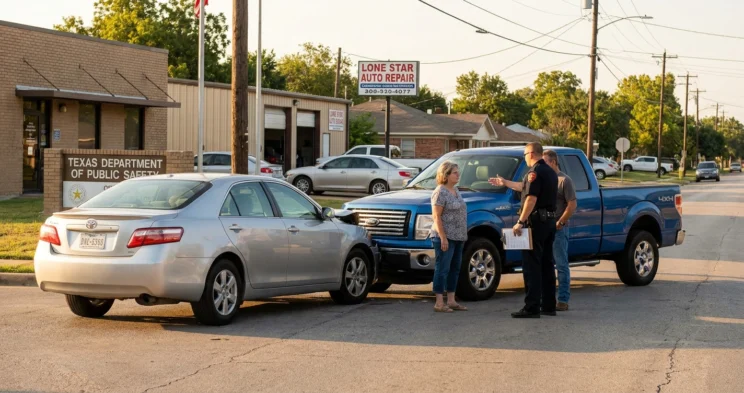
How Texas Law Dictates Accident Responsibility
You were stopped at a red light on Lamar Boulevard when another driver slammed into the back of your car. The other driver swears you stopped suddenly, and now the insurance adjuster is asking pointed questions that feel designed to shift blame onto you.
Determining who is at fault for an accident is rarely as simple as it seems. Insurance adjusters, juries, and the evidence they review all play a role in how blame gets assigned and how much compensation you can recover.
Who Determines Fault in Texas Accidents?
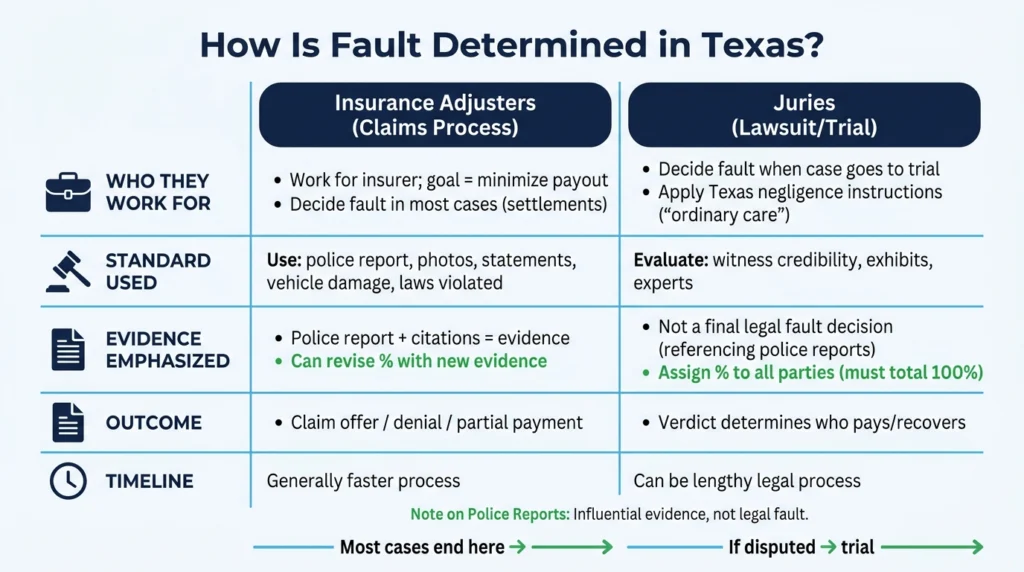
Two main parties decide who is at fault after an accident in Texas. During the claims process, fault is determined by insurance adjusters. If your case proceeds to trial, juries determine fault. Each operates under different rules, motivations, and standards of proof.
Insurance adjusters handle the vast majority of fault determinations because most claims settle without a lawsuit. They work for insurance companies whose business goal is to resolve claims for the lowest possible payout.
Police officers responding to a crash on I-35 or US-183 document what they observe and may issue citations, but they do not officially assign legal fault. Their reports are influential evidence, but not the final word.
How Insurance Adjusters Assign Fault in Car & Truck Accidents
Adjusters build a fault picture by piecing together several types of evidence. The process can feel cold, but understanding it helps you seek a more favorable outcome to your claim.
Police reports are usually the starting point. Adjusters look at the officer’s narrative, diagrams, citations issued, and any statements drivers made at the scene.
Physical evidence carries significant weight. Damage patterns on vehicles, skid marks, debris fields, and the final resting positions of cars all tell a story about speed, angle, and point of impact.
Witness statements can confirm or contradict driver accounts. Adjusters weigh credibility based on the witness’s vantage point, consistency, and whether they have any connection to the parties involved.
Traffic law violations often drive fault decisions. Running a red light, following too closely, or carrying passengers in the bed of a pickup truck can shift fault heavily onto the violating driver.
In serious truck crashes on highways like I-635 or the Dallas North Tollway, adjusters may bring in accident reconstruction specialists. These experts use physics, data from electronic control modules, and scene measurements to recreate the collision.
Texas Comparative Negligence Law & Fault Percentages
Texas follows a modified comparative negligence rule under Texas Civil Practice and Remedies Code SS 33.001. This statute shapes every fault discussion in the state.
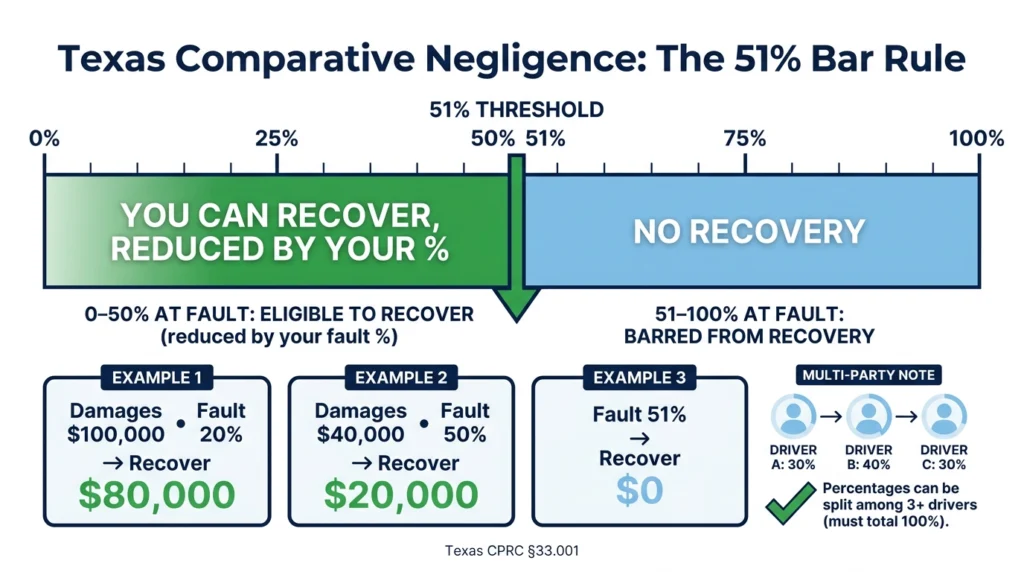
Under the 51% Bar Rule, you can only recover damages if you are 50% or less at fault for the accident. Cross that threshold by even one percentage point and you lose any eligibility to receive anything.
Your compensation also gets reduced by your percentage of fault. If a jury finds you 20% responsible for a crash with $100,000 in damages, you recover $80,000.
Multi-vehicle pile-ups create complicated fault questions. Adjusters may assign different percentages to three or four drivers, and disagreements are common when this happens.
How Juries Determine Fault in Texas Courts
When cases do not settle, juries take over the fault decision. They evaluate evidence presented at trial, including expert testimony, exhibits, and the credibility of every witness who takes the stand.
Judges instruct jurors on Texas negligence standards: a person is negligent when they fail to use ordinary care that a reasonable person would use under similar circumstances. Jurors apply this standard to each party.
During deliberation, juries assign specific fault percentages to everyone involved. These numbers must add up to 100%, and they directly determine who pays and who recovers.
Jury verdicts often differ from what insurance adjusters offered. A claim valued at $40,000 by an adjuster might result in a much higher verdict, which is why having trial-ready representation is critical, even during settlement talks.
Fault Determination in Premises Liability Cases
Slip-and-fall and other premises liability cases follow different rules than car accidents. Texas property owners owe a duty of care that depends on why you were on the property.
A grocery store in Plano that fails to mop up a spilled drink or place a wet floor sign may be liable when a customer falls. The same applies to a leaking refrigerator case, an unmarked freshly waxed floor, or a spill an employee walked past without addressing.
Other common premises scenarios include broken stair railings, dimly lit parking garages where assaults occur, unsecured swimming pool gates, and uneven sidewalks at apartment complexes. Each requires showing the owner knew or should have known about the hazard.
Your status on the property matters under Texas law. Invitees (customers, for example) receive the highest duty of care, licensees (social guests) receive less, and trespassers receive the least.
Comparative negligence still applies. If you were looking at your phone when you stepped onto a wet floor with no warning sign, a jury might assign you partial fault, reducing your recovery accordingly.
Challenging Fault Determinations in Texas
Insurance company fault decisions are not final. If an adjuster blames you unfairly or assigns too high a percentage, you have the right to push back.
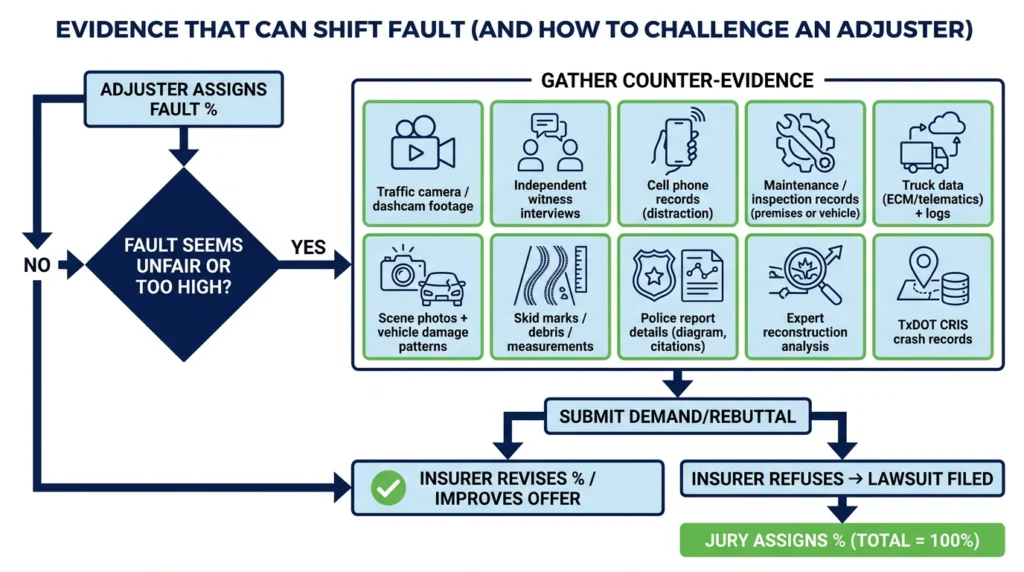
Building a counter-case takes evidence: traffic camera footage, additional witness interviews, maintenance records for premises cases, cell phone records showing the other driver was distracted, or expert analysis of the crash. The Texas Department of Transportation crash records system can also provide useful documentation.
A personal injury attorney investigates fault independently rather than accepting the adjuster’s version. We interview witnesses, hire reconstruction experts when warranted, subpoena records, and prepare the case as if it will go to trial even when settlement is the goal.
When insurers refuse to revise an unfair determination, filing a lawsuit puts the question in front of a jury. Many cases settle once the insurer realizes you are prepared to litigate.
Talk to Angel Reyes & Associates About Your Case
Fault determination affects every dollar of your recovery, and the insurance company’s first answer is rarely the right one. At Angel Reyes & Associates, we have over 30 years of experience challenging unfair fault decisions for Texans across the state.
We offer free initial consultations and operate on a no-fee-unless-we-win basis, so getting answers costs you nothing. We are available 24/7, se habla español, and we serve clients throughout Texas from more than 20 office locations across the state. Reach out to us today to discuss what happened and what your options look like.
Witness Statement FAQs
Can insurance adjusters change their fault determination after initially assigning percentages?
Yes, adjusters can revise fault percentages when new evidence emerges, such as additional witness statements, traffic camera footage, or expert analysis that contradicts their initial assessment.
What happens if multiple insurance companies assign different fault percentages for the same accident?
When insurers disagree on fault allocation, they may enter arbitration or the dispute could proceed to court where a jury makes the final determination under Texas law.
Does Texas require a minimum time period between when a property owner discovers a hazard and when they must fix it?
Texas law requires property owners to remedy hazards within a reasonable time after discovery. What constitutes “reasonable” depends on the specific danger and available resources to address it.
Can fault percentages be appealed after a jury verdict in Texas?
Fault determinations can be challenged on appeal, but appellate courts rarely overturn jury findings unless there was insufficient evidence or legal error during the trial proceedings.
How does fault assignment differ when a commercial truck driver causes an accident while working?
Under Texas Transportation Code Chapter 644, trucking companies may share liability with their drivers through respondeat superior doctrine, potentially creating multiple defendants with separate fault percentages.
About the Authors

Angel Reyes
Writer
Angel L. Reyes, III is the Founder and Managing Partner of Angel Reyes & Associates. A nationally recognized trial attorney and business leader, Angel has helped over 70,000 injury victims recover more than $1 billion since founding the firm in 1993. Named to the Texas Super Lawyers list annually since 2008, Angel brings Wall Street experience, Ivy League education, and a deep commitment to client advocacy. He is a frequent legal commentator and published author with extensive contributions to legal scholarship, trial strategy, and consumer protection.

Kyle Nicolas
Editor
Kyle Nicolas is the Web Content & SEO Manager at Angel Reyes & Associates. He has more than 10 years of experience as a marketing co...

Angel Reyes
Reviewer
Angel L. Reyes, III is the Founder and Managing Partner of Angel Reyes & Associates. A nationally recognized trial attorney and business...