Texas Robotaxi Crash Liability: Who Counts as the Operator & Who Pays?


Every article on this site is researched by our internal team, reviewed for legal accuracy against current Texas law, and held to State Bar of Texas advertising standards before publication. We do not publish content that overstates outcomes or makes promises about results.
Learn more about our
editorial standards .
Key Takeaways
- Texas law can treat the ADS as the legal operator when engaged, directing liability toward companies behind it.
- Multiple parties can share fault in a robotaxi crash, from the fleet operator to the vehicle's manufacturer.
- TxDMV authorization means the robotaxi operator should carry insurance, but act fast to preserve vehicle data.
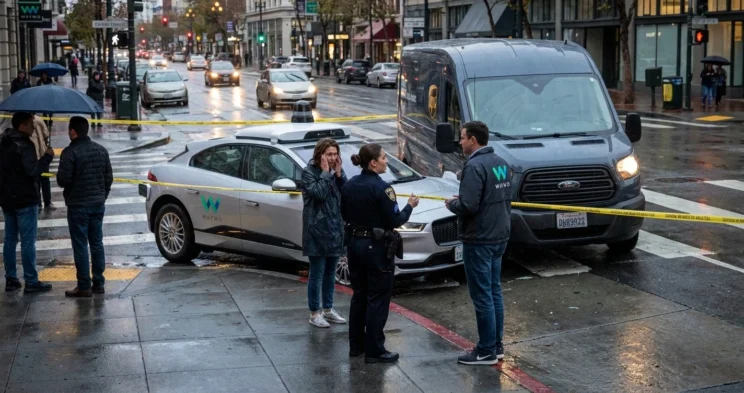
You were riding in a robotaxi through Stone Oak when another vehicle ran a red light on Loop 1604. The collision happened fast. Now you’re dealing with injuries, medical bills, and a confusing question: who do you hold responsible when there was no human driver behind the wheel?
Texas has created a legal framework specifically for these situations. Understanding how the state defines the “operator” of a self-driving vehicle can help you identify who may be liable for your injuries and which insurance policies should cover your damages.
What Makes Robotaxi Crashes Different Under Texas Law
Robotaxi claims turn on definitions that don’t exist in ordinary car wrecks. The most important one is who the law treats as the “operator” when the vehicle is driving itself.
A robotaxi is a commercial vehicle designed to transport passengers without a human driver. This is different from consumer vehicles with driver-assist features like lane-keeping or adaptive cruise control. Those systems still require a human driver to remain in control. A true robotaxi operates autonomously within its approved service area.
Texas remains a fault-based state for car accidents. The person or entity responsible for causing the crash is responsible for paying damages. But when the at-fault “driver” is an Automated Driving System, the path to compensation runs through the companies and entities behind that technology rather than an individual person.
The National Highway Traffic Safety Administration defines an Automated Driving System as hardware and software collectively capable of performing the entire driving task on a sustained basis. When that system is engaged and operating the vehicle, Texas law can treat the ADS itself as the operator.
The Key Texas Rule: When the ADS Is Legally the “Operator”
Texas Transportation Code Subchapter J establishes that an automated driving system can be considered the operator of a vehicle when the system is engaged. This matters because operator status influences who receives citations, who faces regulatory scrutiny, and who injured parties may pursue for compensation.
In plain terms: if you’re a passenger in a robotaxi and the ADS is controlling the vehicle, you’re not the operator. The technology is. This shifts the liability analysis away from you and toward the entities responsible for that technology.
Key terms you may encounter include:
- Automated Motor Vehicle: A motor vehicle equipped with an ADS
- ADS Engaged: The automated driving system is performing the entire dynamic driving task
- Autonomous Operation: The vehicle is operating under ADS control without human intervention
The operator designation influences who may be treated as the driver for traffic law compliance and enforcement purposes. However, civil liability for injuries still depends on the specific facts of the crash and applicable legal theories like negligence or product defect.
“Operator” vs. “Owner” vs. “Authorization Holder”
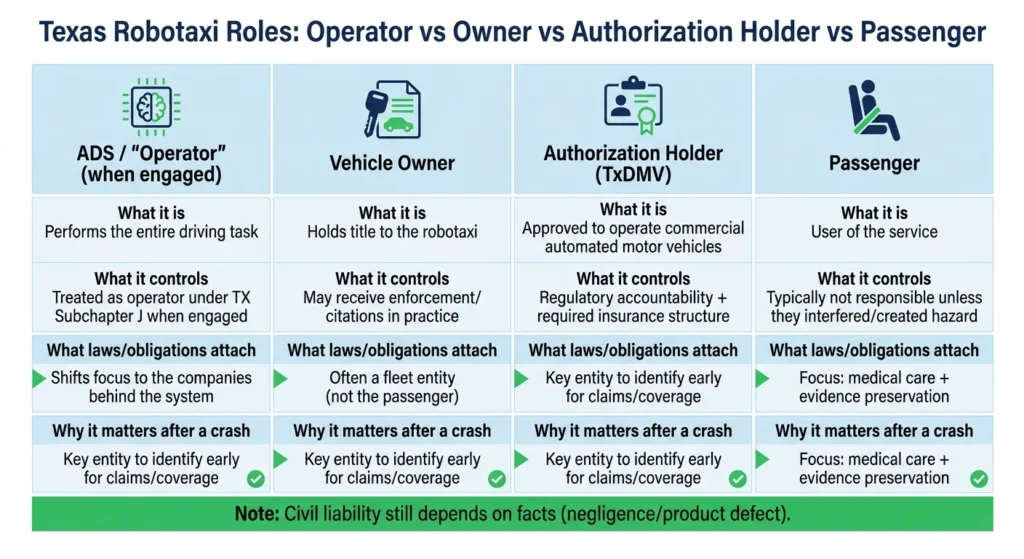
Many articles stop at explaining that the ADS is the operator. But Texas distinguishes between several roles that matter for liability and insurance purposes.
The passenger is simply using the service. Unless you interfered with the vehicle’s operation or created a separate hazard, you typically bear no responsibility for how the robotaxi drove.
The vehicle owner is the entity that holds title to the robotaxi. This is usually the fleet company, not an individual.
The authorization holder is the entity that has received approval from the Texas Department of Motor Vehicles to operate automated motor vehicles commercially without a human driver. This authorization creates regulatory accountability and typically requires the holder to maintain specific insurance coverage.
These labels influence which insurance policies apply, how claims are processed, and who receives legal notices after a crash. Identifying the correct authorization holder early can prevent delays in your claim.
Who Gets the Ticket & Why That’s Not the Whole Liability Story
Under Texas’s framework, when the ADS is engaged and a traffic violation occurs, enforcement may be directed to the owner or authorization holder rather than citing a human driver. This makes sense because there is no human driver to cite.
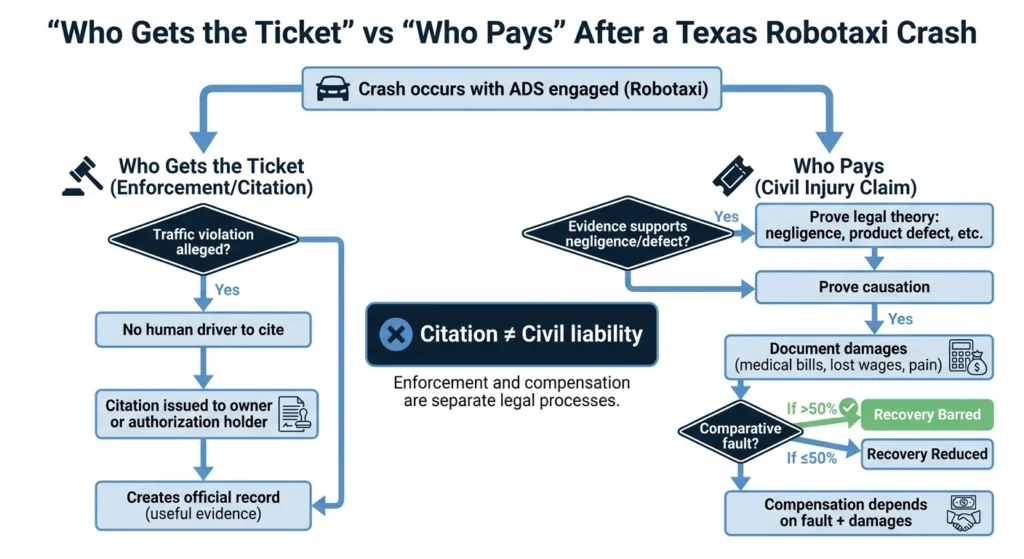
This citation framework can shape the early narrative of a crash investigation. If the robotaxi company receives the citation, that becomes part of the official record. However, receiving a citation is not the same as being found liable in a civil injury claim.
Who gets cited ≠ who pays your damages.
A citation is evidence that may support your claim, but civil liability requires proving negligence or another legal theory, establishing causation, and documenting damages. The entity cited may dispute fault, argue comparative negligence, or point to other contributing factors.
What matters in the first 72 hours after a robotaxi crash:
- Get medical attention for any injuries
- Call 911 and ensure a police report is filed
- Document the scene with photos and video
- Identify the robotaxi company name and vehicle number
- Save your ride receipt and app confirmation
- Get contact information from any witnesses
How TxDMV Authorization Influences Responsibility
The TxDMV Automated Vehicles Regulatory Program requires companies operating commercial robotaxis in Texas to obtain authorization. This program, governed by 43 TAC Chapter 220, establishes requirements for commercial automated motor vehicle operations.
Authorization status matters for several reasons. An authorized operator has agreed to comply with state requirements, maintain specified insurance coverage, and submit to regulatory oversight. If a company is operating without proper authorization, that fact could strengthen arguments about corporate negligence.
Attorneys investigating robotaxi crashes often verify authorization status early. This helps identify the correct corporate entity, confirms insurance coverage should exist, and may reveal compliance issues relevant to the claim.
Real-World Fault Targets After a Texas Robotaxi Crash
Translating the legal “operator” concept into civil claims often means pursuing multiple defendants. Robotaxi crashes can involve the fleet company, vehicle manufacturers, remote operators, maintenance vendors, and other drivers on the road.
Texas follows a modified comparative fault system. If you’re found partially at fault, your recovery is reduced by your percentage of responsibility. If you’re more than 50% at fault, you recover nothing. When a robotaxi and another driver share fault, allocation between them affects which insurance policies pay and how much.
Common defendants in robotaxi injury claims include:
- The robotaxi company or fleet operator
- The vehicle or ADS manufacturer
- Remote operators or monitoring services
- Other motorists involved in the crash
- Maintenance or service providers
Each potential defendant requires evidence connecting their conduct or product to your injuries. Claims depend on what actually happened: perception errors by the ADS, failure to follow traffic rules, human driver negligence, or road condition factors.
The Robotaxi Company or Fleet Operator
The fleet entity is typically the first target for claims. When the ADS was engaged and the service was operating commercially, the company behind that service bears responsibility for how its vehicles perform.
Theories against the fleet operator may include negligent operation, inadequate monitoring systems, unsafe decisions about where and when to deploy vehicles, or insufficient training for any remote staff. If you’ve been injured in a car accident involving a commercial fleet, the company’s safety policies and practices become relevant evidence.
Identifying the correct corporate entity matters. The app brand name may differ from the legal entity that holds TxDMV authorization and insurance policies. Your attorney can verify this through regulatory records.
Fleet operators commonly defend claims by blaming other drivers, arguing the crash was unavoidable, or claiming the injured person contributed to the collision. These defenses require careful factual rebuttal.
The Manufacturer or Software Developer
If a hardware or software defect contributed to your crash, product liability claims may apply. This could involve the vehicle manufacturer, the ADS developer, sensor suppliers, or other component makers.
Product liability claims require proving:
- A defect existed (design, manufacturing, or inadequate warnings)
- The defect caused or contributed to the crash
- You suffered damages as a result
Defects in an ADS context might include sensor failures, perception errors, inadequate mapping data, or software bugs that caused unsafe driving decisions. These claims typically require technical experts to analyze vehicle data and explain what went wrong.
Federal agencies like NHTSA establish safety standards and terminology for automated vehicles, but Texas state law governs civil liability for crash injuries. Both frameworks may be relevant to building your case.
Remote Operators or Safety Monitors
Some robotaxi systems include remote human assistance. A teleoperator might provide guidance, approve route changes, or respond to situations the ADS cannot handle independently.
If a remote operator was involved and their decisions contributed to the crash, their conduct and training become relevant. Questions include response time, whether they followed protocols, and whether the handoff between human and ADS was handled safely.
Evidence from remote operations includes communication logs, timestamps, and intervention records. This data must be preserved quickly through legal process before it’s overwritten or deleted.
Other Motorists
Many robotaxi crashes involve fault by another human driver. Speeding, distraction, impairment, running red lights, or illegal lane changes can cause or worsen collisions regardless of whether the other vehicle was autonomous.
Standard negligence principles apply to claims against other drivers. Police reports, witness statements, and camera footage help establish what happened. If the other driver was uninsured or underinsured, your own UM/UIM coverage may become important.
When multiple parties share fault, claims may proceed against several defendants simultaneously. This is similar to complex truck accident cases involving drivers, trucking companies, and equipment manufacturers.
Insurance & Who Pays in a Texas Robotaxi Claim
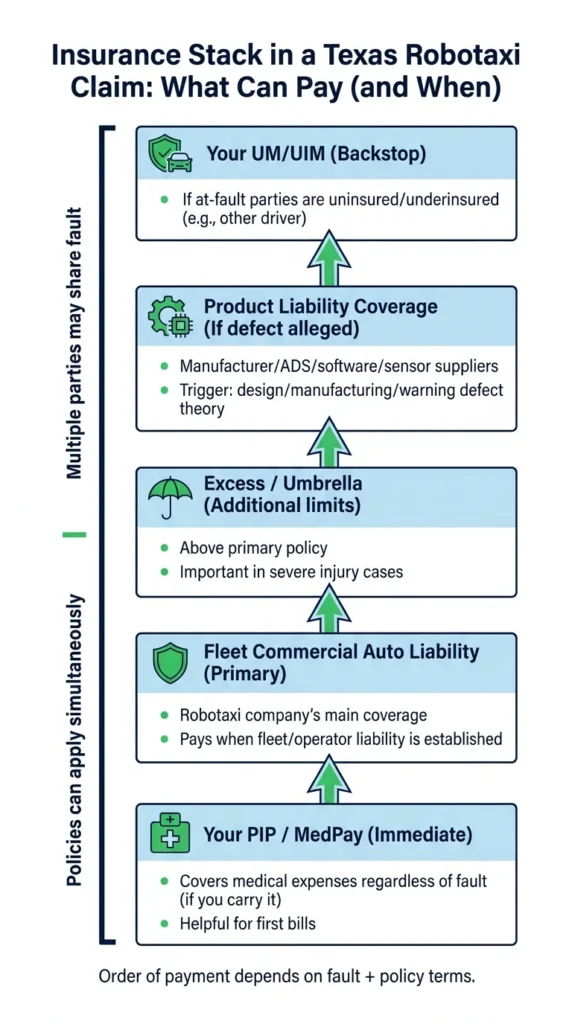
Multiple insurance policies may apply to a robotaxi crash:
- Fleet commercial auto liability: The robotaxi company’s primary coverage
- Excess or umbrella policies: Additional coverage above primary limits
- Product liability coverage: May apply if manufacturer defects are alleged
- Your own PIP/MedPay: Can cover immediate medical expenses regardless of fault
- Your UM/UIM coverage: Applies if at-fault parties are uninsured or underinsured
TxDMV authorization requirements mean commercial robotaxi operators should maintain structured coverage. This differs from traditional rideshare insurance, where coverage varies based on whether the driver is waiting for a ride request, en route to pick up a passenger, or actively transporting someone.
Don’t assume rideshare accident insurance concepts apply directly to robotaxis. The coverage structure for fully autonomous commercial vehicles operates differently than Uber or Lyft policies tied to human driver status.
Understanding average settlements for rideshare accidents can provide context, but robotaxi cases involve additional complexity that may affect claim value.
When to Contact a Texas Self-Driving Car Accident Lawyer
Robotaxi cases become technical quickly. Early legal help can identify correct corporate entities, preserve critical data, and prevent claim mistakes.
Consider consulting an attorney if:
- You suffered serious injuries requiring ongoing treatment
- Fault is disputed between multiple parties
- A commercial fleet is involved
- Electronic data needs preservation
- Insurance companies are pressuring quick settlements
- Media attention is creating competing narratives
Bring to your consultation: the crash report number, photos from the scene, medical records, your ride receipt and app details, any communications from insurance adjusters, and witness contact information.
Angel Reyes & Associates has over 30 years of experience handling complex injury claims across Texas. We offer free initial consultations and work on contingency, meaning no fee unless we win. Our team has helped clients recover more than $1 billion in compensation. We have more than 20 locations statewide and can handle most of your case remotely.
If you’ve been injured in a robotaxi crash, contact us to discuss your options. We’re available 24/7 and offer service in Spanish.
Texas Robotaxi Crash Liability FAQs
Can a robotaxi company use my ride app data after a crash?
Yes, trip records, in-app messages, route history, and time stamps can become important evidence about where the vehicle was, when the ride started, and which company operated it. Save screenshots and emails early in case account details change or access is lost.
What if the police report lists no human driver for the robotaxi?
That does not automatically prevent an injury claim. In Texas, the investigation can still focus on the company or other legally responsible parties even if no person was behind the wheel.
Are black box or vehicle data recorder records available after a robotaxi crash?
Potentially, but they usually are not handed over just because you ask. Access often depends on who owns the data, what systems recorded it, and whether it is obtained through the claims process or formal legal steps.
Does a software update matter if the robotaxi crashed before or after it was installed?
It can. Update timing may help show whether the company knew about a problem, changed how the vehicle behaved, or failed to correct a known issue before the crash.
Can road design or poor maintenance play a role in a robotaxi crash claim?
Sometimes, especially if missing signs, bad lane markings, malfunctioning signals, or road hazards contributed to the wreck. Claims involving a government entity can follow different notice rules and shorter deadlines, so timing may matter.
About the Authors

Angel Reyes
Writer
Angel L. Reyes, III is the Founder and Managing Partner of Angel Reyes & Associates. A nationally recognized trial attorney and business leader, Angel has helped over 70,000 injury victims recover more than $1 billion since founding the firm in 1993. Named to the Texas Super Lawyers list annually since 2008, Angel brings Wall Street experience, Ivy League education, and a deep commitment to client advocacy. He is a frequent legal commentator and published author with extensive contributions to legal scholarship, trial strategy, and consumer protection.

Kyle Nicolas
Editor
Kyle Nicolas is the Web Content & SEO Manager at Angel Reyes & Associates. He has more than 10 years of experience as a marketing co...

Angel Reyes
Reviewer
Angel L. Reyes, III is the Founder and Managing Partner of Angel Reyes & Associates. A nationally recognized trial attorney and business...