Rideshare Accident Property Damage Claims in Texas


Every article on this site is researched by our internal team, reviewed for legal accuracy against current Texas law, and held to State Bar of Texas advertising standards before publication. We do not publish content that overstates outcomes or makes promises about results.
Learn more about our
editorial standards .
Key Takeaways
- Uber and Lyft's $1 million policy covers passenger belongings during an active trip.
- Texas insurers must acknowledge a property claim within 15 days of filing it.
- You have two years to file a rideshare property damage lawsuit in Texas.
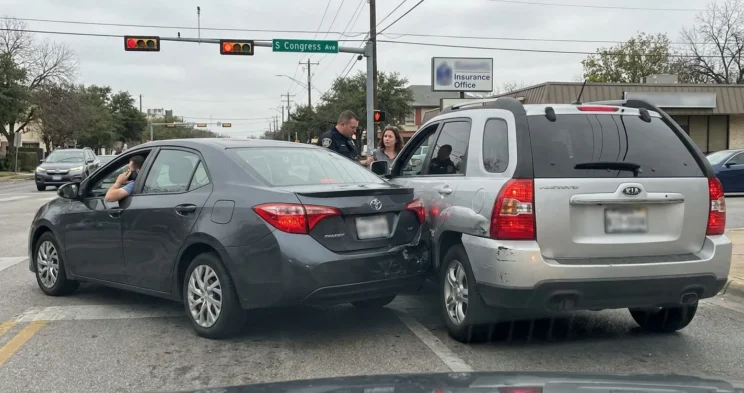
You were riding home from the Galleria in an Uber when another driver ran a light on Westheimer Road and slammed into the side of the car. Your phone screen shattered, and your laptop bag was crushed in the back seat.
Now the rideshare app’s support chat is giving you the runaround, and you have no idea who actually pays for your damaged things. You have more options than that chat window suggests.
What “Property Damage” Means in a Rideshare Claim
Property damage in a rideshare claim means two separate things, and they are not handled the same way. One is damage to vehicles and structures hit in the crash. The other is damage to your personal belongings inside the car, like your phone, laptop, camera, or luggage.
Your personal items are not automatically covered under the same provision that pays for vehicle liability. The at-fault driver’s vehicle property damage coverage exists to repair cars and fences, not to replace the gear in your bag.
That gap catches most passengers off guard. You assume one claim covers everything, then learn your shattered phone sits in a different category than the dented bumper.
Texas treats your damaged belongings as a recoverable loss when someone else’s fault caused them. Rideshare companies operating in Texas must carry insurance under Texas Insurance Code Chapter 1954, which sets the coverage amounts that apply at each stage of a trip.
Coverage Periods & Which Policy Applies
Which policy pays for your belongings depends entirely on what the driver was doing when the crash happened. Texas law splits rideshare driving into distinct periods, and each one triggers a different layer of insurance.
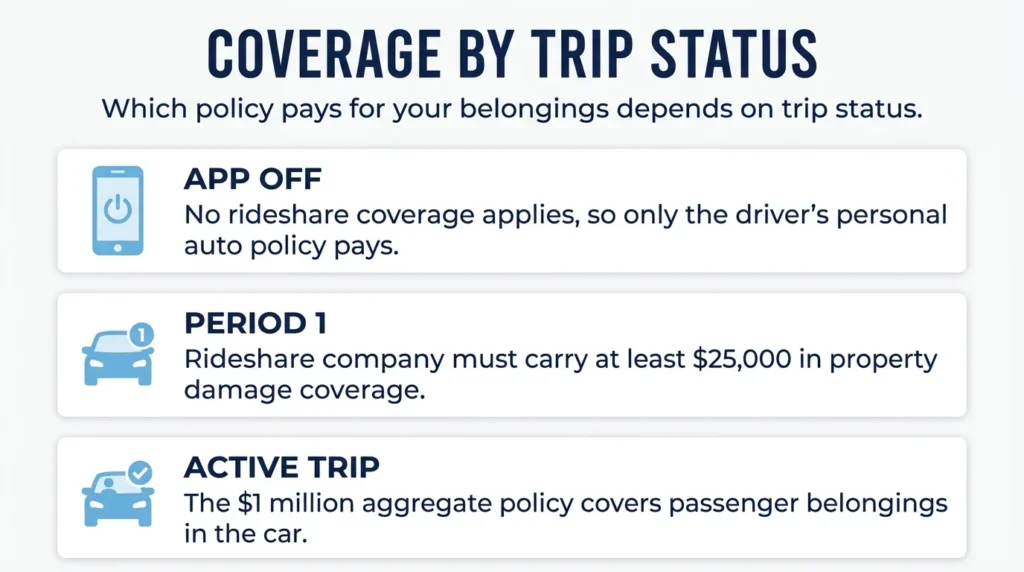
In Period 1, the app is on but the driver has not accepted a ride yet. Texas requires at least $25,000 in property damage liability during this window under Texas Insurance Code (Insurance Code) § 1954.052.
The driver’s personal auto policy is supposed to be primary in Period 1. Many personal policies exclude rideshare use, though, which can leave a coverage gap right when you need it.
Period 2 & 3: Passenger in the Vehicle
If you were a passenger when the crash happened, you were in the coverage period that matters most. Period 2 covers the driver heading to pick you up, and Period 3 covers the trip with you in the car.
During both, the rideshare company’s $1 million aggregate policy applies under Texas Insurance Code § 1954.053. This is the coverage that governs almost every passenger personal property claim.
That $1 million figure is an aggregate limit, not a guaranteed payout for your laptop. It covers bodily injury and property damage across everyone involved in the crash.
App Off: No TNC Coverage
When the app is off, the driver is just a private motorist, and Uber and Lyft owe you nothing. Their coverage only switches on once the app is running.
In that situation, the at-fault driver’s personal auto liability policy is your only source. Texas sets the floor at $25,000 in property damage coverage for personal auto policies.
How to File a Claim for Damaged Belongings
Start by documenting the loss before you leave the scene, because that evidence is what carries your claim. The steps below give you a clear order to follow.
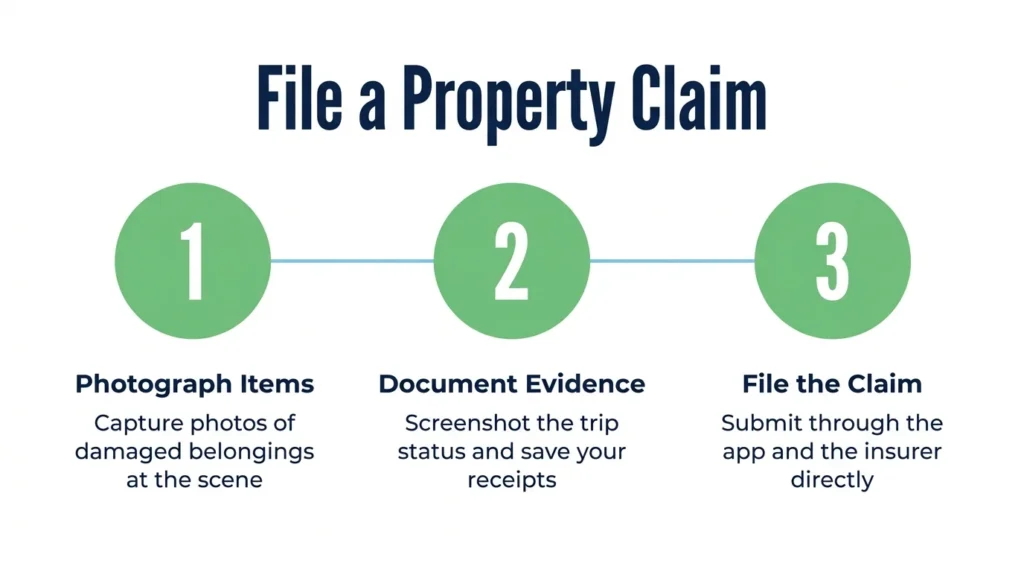
Step 1: Photograph the damaged items. Capture your shattered phone, crushed bag, or broken laptop from several angles while everything is still at the scene.
Step 2: Screenshot the app. Capture the Uber or Lyft screen showing your active trip status and the time, which proves you were a passenger when the crash happened.
Step 3: Save your receipts. Pull together purchase records or order confirmations for the damaged items so the insurer can verify what they were worth.
Step 4: File through the app and with the insurer. Submit a claim in Uber Help or Lyft Support, and file directly with the rideshare company’s insurance carrier at the same time. Do not rely on the support chat alone.
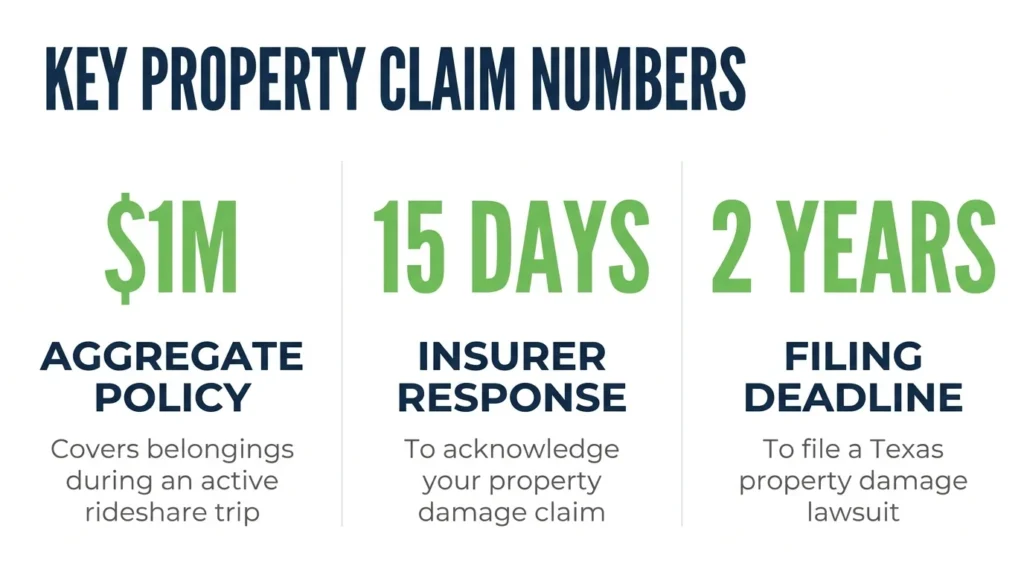
Texas law puts a clock on the insurer once you file. Under Texas Insurance Code Chapter 542, the insurer must acknowledge your claim within 15 days and accept or reject it within 15 business days of getting all your documentation.
You can confirm the insurance requirements yourself through the Texas Department of Insurance ride-sharing guide, which explains what coverage rideshare companies must carry. Knowing the rules makes it harder for an adjuster to stall you.
The documentation and timeline rules are also where property claims most often get stuck, and an attorney who handles Texas rideshare accident cases can keep the process from drifting.
When the Rideshare Policy Falls Short
When the rideshare insurer denies your claim or lowballs the value, you still have parallel paths to compensation. Your belongings do not have to go uncompensated just because one policy says no.
Your homeowners or renters insurance is often the cleanest backup. Many standard policies cover your personal property no matter where the loss happened, though deductibles and depreciation will lower what you collect.
The at-fault driver’s personal auto policy can also support a separate liability claim when that driver caused the crash. That route runs alongside any rideshare claim rather than replacing it.
If your own renters or homeowners insurer pays you first, it may then chase the at-fault party to recover what it spent. That process is called subrogation, and it happens without further effort from you.
The amount you ultimately recover depends on fault, coverage, and documentation. If your property claim was denied or undervalued, the broader recovery picture regarding what to do after a rideshare accident can help you decide your next move.
Filing Deadlines & Texas Law
You have two years from the date of the crash to file a property damage lawsuit in Texas. Texas Civil Practice and Remedies Code (CPRC) § 16.003 sets that two-year deadline, and missing it prevents you from receiving compensation.
Filing a claim with an insurer does not pause that clock. If negotiations drag on, the two years keep running in the background while you wait for an answer.
That is why a stalled claim becomes dangerous as the deadline nears. An insurer has little reason to settle quickly if delay alone can erase your right to sue.
The rules that govern rideshare insurance obligations sit in Texas Insurance Code Chapter 1954, which works alongside the filing deadline.
Talk to a Knowledge Attorney About Your Case
Sorting out which policy covers your phone or laptop after a rideshare crash is harder than it should be, and you do not have to do it alone. Angel Reyes & Associates has spent over 30 years helping injured Texans recover what they are owed, including in rideshare accident claims.
We work on a contingency basis, so there is no fee unless we win, and your initial consultation is free. We serve the entire state of Texas, we are available 24/7, and we have more than $1 billion recovered for clients.
You can see what past clients have said by reading our client reviews and testimonials. You can also review our case results to see the kinds of claims we have handled.
When you are ready, contact us for a free consultation to review your options.
Past results do not guarantee future outcomes.
Rideshare Accident Property Damage Claims FAQs
Does it matter whether the rideshare driver or another driver caused the crash?
No. During Periods 2 and 3, Uber and Lyft’s $1 million liability policy covers passengers regardless of which driver was at fault. You file against whichever party’s coverage applies to the loss.
What if I don't have receipts for the damaged items?
Receipts help, but they are not the only proof an insurer will accept. Credit card or bank statements, serial numbers, owner’s manuals, and photos of the items before the crash can all support your claim for fair market or replacement value.
What penalty does an insurer face for missing Texas's response deadline?
Under Texas Insurance Code Section 542.060, an insurer that misses the statutory deadlines owes the full claim amount plus 18% annual interest and reasonable attorney’s fees.
Can I file a property damage claim and a personal injury claim from the same crash?
Yes. Property damage and bodily injury are separate recoverable categories, and you can pursue both at the same time without one affecting the other.
Can I file a complaint with TDI if the insurer does not respond on time?
Yes. A complaint with the Texas Department of Insurance is free and requires the insurer to respond, typically within 15 days. TDI cannot force payment, but documented violations can support a legal claim under Chapter 542.
About the Authors

Angel Reyes
Writer
Angel L. Reyes, III is the Founder and Managing Partner of Angel Reyes & Associates. A nationally recognized trial attorney and business leader, Angel has helped over 70,000 injury victims recover more than $1 billion since founding the firm in 1993. Named to the Texas Super Lawyers list annually since 2008, Angel brings Wall Street experience, Ivy League education, and a deep commitment to client advocacy. He is a frequent legal commentator and published author with extensive contributions to legal scholarship, trial strategy, and consumer protection.

Kyle Nicolas
Editor
Kyle Nicolas is the Web Content & SEO Manager at Angel Reyes & Associates. He has more than 10 years of experience as a marketing co...

Angel Reyes
Reviewer
Angel L. Reyes, III is the Founder and Managing Partner of Angel Reyes & Associates. A nationally recognized trial attorney and business...