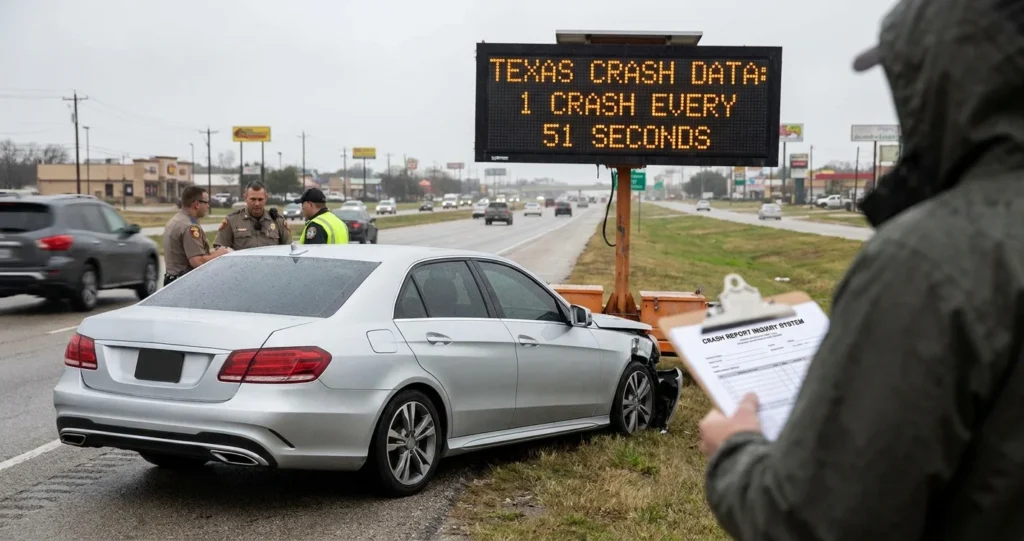
Ultimate Car Accident Guide in Texas

UNDERSTANDING CAR ACCIDENTS

The physics of car accidents determine injury severity and long-term consequences. Even at moderate speeds, the forces involved can cause lasting damage. These forces cause hidden injuries that may not appear right away, making immediate medical evaluation essential after any crash.
Texas Law Creates Opportunities
Texas follows a fault-based system, which gives crash victims multiple ways to pursue compensation:
- File claims directly against the at-fault driver and insurer
- Recover damages for pain, suffering, and other losses
- Still qualify for recovery if you’re less than 51% at fault
- Access uninsured/underinsured coverage for added protection
Insurance Company Reality
⚠️ Insight: Auto insurance is a $300 billion industry that profits by collecting premiums and minimizing payouts.
Insurance companies’ strategies to reduce claim values:
Quick settlement pressure before you understand your injuries
Recorded statements designed to elicit admissions
Surveillance and social media monitoring to dispute injuries
Biased medical exams to minimize treatment needs
Delay tactics hoping financial pressure forces low settlements
Read more below
TYPES OF CAR ACCIDENTS

The type of accident you experienced affects everything from proving fault to calculating damages. Each accident type involves unique factors that influence your legal strategy and potential compensation.
Rear-End Collisions
Texas law creates a presumption that the rear driver is at fault
Common Causes:
Distracted driving and cell phone use
Following too closely
Sudden stops in traffic
Weather-related visibility issues
Legal Advantages:
- Strong presumption of rear driver fault
- Clear causation for whiplash and neck injuries
- Often witnessed by multiple parties
T-Bone Crashes
Occur at intersections & often result in severe injuries due to limited side protection in vehicles
Critical Evidence:
Traffic light timing sequences
Surveillance camera footage
Witness testimony about signal colors
Skid mark analysis
Injury Patterns:
- Strong presumption of rear driver fault
- Clear causation for whiplash and neck injuries
- Often witnessed by multiple parties
Red Light Accidents
Create clear liability but often involve serious injuries due to high-speed impacts
Proving Fault:
Traffic camera footage
Electronic data from vehicles
Witness testimony
Police citations
Read more below
COMMON CAUSES FOR CAR ACCIDENTS

Understanding what caused your accident is essential for proving negligence and securing compensation. Most accidents result from multiple contributing factors, creating opportunities to establish liability and maximize recovery.
High Risk
Distracted Driving
Distracted driving has become the leading cause of accidents, with cell phone use creating risks equivalent to drunk driving.
High Risk
Impaired Driving
Drunk driving accidents often result in higher compensation due to the availability of punitive damages and clear liability.
High Risk
Speed and Aggressive Driving
Excessive speed reduces reaction time and increases impact forces, making accidents more severe.
⚠️ Evidence Preservation Alert
Critical evidence disappears quickly. Surveillance footage is often overwritten within 30 days, and vehicle data can be lost if cars are repaired or scrapped
Read more below
UNDERSTANDING CAR ACCIDENT INJURIES

Car accident injuries range from minor to catastrophic, with many victims experiencing complications that weren’t immediately apparent. Understanding injury patterns helps ensure proper documentation and compensation.
Why Some Injuries Hide
Delayed symptoms after car accidents are common due to:
- Adrenaline masking pain in the immediate aftermath
- Soft tissue injuries that worsen over time
- Internal injuries with subtle initial symptoms
- Brain injuries with delayed cognitive effects
Common Injuries
Soft Tissue and Whiplash
Whiplash injury compensation requires careful documentation as insurance companies often minimize these “invisible” injuries
Long-term Effect:
- Chronic neck and back pain
- Recurring headaches
- Cognitive difficulties
- Sleep disruption
Head and Brain Injuries
Traumatic brain injuries (TBI) can occur without direct head impact due to rapid acceleration/deceleration
Long-term Effect:
- Concussions and post-concussion syndrome
- Cognitive and memory problems
- Personality changes
- Balance and coordination issues
Spinal Cord and Back Injuries
Back injuries are among the most common and debilitating car accident injuries
Common Injuries:
- Herniated or bulging discs
- Compression fractures
- Nerve damage and radiculopathy
- Chronic pain syndromes
⚠️ What Happens if a Car Accident Aggravates a Pre-Existing Condition?
The “eggshell plaintiff” doctrine means defendants take victims as they find them, including pre-existing vulnerabilities.
Read more below
LEGAL LIABILITY FOR CAR ACCIDENTS

Texas’s fault-based insurance system requires proving another party’s negligence caused your accident and injuries. Understanding how fault is determined and allocated directly impacts your compensation.
How Texas Determines Fault
- Police reports and citations
- Witness testimony
- Physical evidence and vehicle damage
- Traffic violations
- Expert accident reconstruction
Modified Comparative Negligence
Texas follows modified comparative negligence rules with a 51% bar, meaning:
- You can recover damages if less than 51% at fault
- Your compensation is reduced by your fault percentage
- Multiple defendants can share liability
Multiple Liable Parties
Car accidents often involve multiple defendants, each potentially bringing separate insurance coverage:
Driver Liability
Issues: Traffic violations, Distracted driving, Reckless behavior
Vehicle Owner
Issues: Negligent entrustment, Permissive use doctrine, Failure to maintain vehicle
Employer Liability
Issues: Vicarious liability, Negligent hiring, Inadequate training
Read more below
CAR ACCIDENT CLAIM PROCESS FOR MAXIMUM RECOVERY

Understanding how to successfully file a car insurance claim in Texas helps you avoid mistakes and maximize compensation. Each phase requires specific actions and strategic decisions.
Common Pitfalls
Critical mistakes that reduce compensation:
- Admitting fault or apologizing
- Giving recorded statements
- Delaying medical treatment
- Accepting quick settlements
- Missing deadlines
- Posting on social media
Immediate response
First 48 Hours
Call 911, get medical helps & collect the other driver’s information
Don’t speak to the other driver’s insurance
Obtain your official TxDot crash report
Preserve digital evidence to strengthen your case
Medical Treatment
Months 1-6
Follow all recommended treatments & appointments
Keep reports of bills and test results
Insurance Negotiations
Ongoing
Don’t delay on reporting your claim
Properly document medical & police records, and repair estimates
Review your policy’s detail to know your coverage limits
Carefully review initial offer with a car accident lawyer
Litigation
If Necessary
File a lawsuit within the Texas’s two year time window
Prepare with your Attorney for trial strategy
Understanding that litigation may consist of depositions, mediations, and hearings before trial
Go to trial for potentially higher compensation
⚠️ Social Media Warning ⚠️
Insurance companies monitor social media for evidence to minimize claims. Even innocent posts can be misinterpreted.
Read more below
CAR INSURANCE COVERAGE: UNDERSTANDING YOUR OPTIONS

Texas insurance requirements and coverage options significantly impact your ability to recover compensation after an accident.
Uninsured Motorist Coverage
⚠️ Insight: With 1 in 5 Texas drivers uninsured, UM/UIM coverage is essential
Covers damages when at-fault driver lacks insurance
Supplements inadequate liability coverage
Includes hit-and-run accidents
Stacks with multiple policies in some cases
Read more below
SPECIAL CAR ACCIDENT CIRCUMSTANCES

Some car accident cases involve special legal considerations requiring specific expertise and strategies.
UNIQUE CASE TYPES
Pedestrian Accidents
Legal advantages:
No comparative negligence issues typically
Higher damage awards
Strong jury sympathy
Clear right-of-way laws
Passenger Rights
Passengers have unique advantages:
No fault attribution
Claims against multiple drivers
Access to multiple insurance policies
Strong witness credibility
Bus and Public Transportation
Public transit accidents involve:
Government entity procedures
Common carrier higher duty
Multiple injured parties
Special notice requirements
Read more below
CAR LEGAL REPRESENTATION

Car accident cases benefit from experienced legal representation, particularly when injuries are serious or liability is disputed.
The Value of Legal Representation
Studies show represented clients receive 3.5x more compensation than unrepresented victims, even after attorney fees
ANGEL REYES ADVANTAGES
35+years car accident experience
$1 Billion recovered for clients
1,000+ car accident cases handled
Board-certified personal injury specialist
Read more below
FREQUENTLY ASKED QUESTIONS
What should I do immediately after a car accident?
Your first priority is safety and medical care. Call 911 for police and medical response. Proceed in gathering photos, getting witness information, and exchanging insurance details with other drivers. Don’t admit fault or give statements to insurance companies. Seek medical evaluation even if you feel fine, as many injuries have delayed symptoms. Contact an attorney within 24-48 hours to preserve evidence and protect your rights. quickly.
Should I talk to the other driver’s insurance company?
No. Insurance adjusters are trained to minimize claims and will use your statements against you. Politely decline and refer them to your attorney. Texas law doesn’t require you to give a statement to the other party’s insurance. They may seem helpful, but their goal is to pay as little as possible.
How is fault determined in Texas?
Fault determination involves analyzing police reports, witness statements, physical evidence, traffic violations, and sometimes accident reconstruction. Texas uses modified comparative negligence, allowing recovery if you’re less than 51% at fault.
What is the average car accident settlement in Texas?
Settlements vary widely based on injuries, liability, and insurance coverage. Minor injury cases might settle for $5,000-$25,000, while serious injuries often result in six-figure settlements. Catastrophic injuries can exceed $1 million.
Do I need a lawyer for a minor accident?
Even minor accidents may benefit from legal representation if there are injuries, disputed liability, or insurance complications. Many “minor” injuries worsen over time. A consultation can help you understand your options.
TAKE CONTROL OF YOUR RECOVERY
Car accidents changes lives in an instant, but your response in the days and weeks following determines your financial recovery and future well-being.
24/7 AVAILABILITY
Car accidents don’t wait but business hour. We’re available around the clock for emergency consultations and immediate evidence preservation.
NO FEES UNLESS WE WIN
We work on contingency and advance all case expenses. You pay nothing unless we secure compensation for your injuries and damages
Over 35 years of experience • $1 Billion recovered • 1,000+ cases won