The Ultimate Guide to Motorcycle Accidents in Texas
Were you involved in a motorcycle accident? Your life was likely fundamentally changed in an instant. This guide can help you make sense of the madness. Here are links to helpful blogs and other resources that can help you take action and fight to reclaim what you have lost.
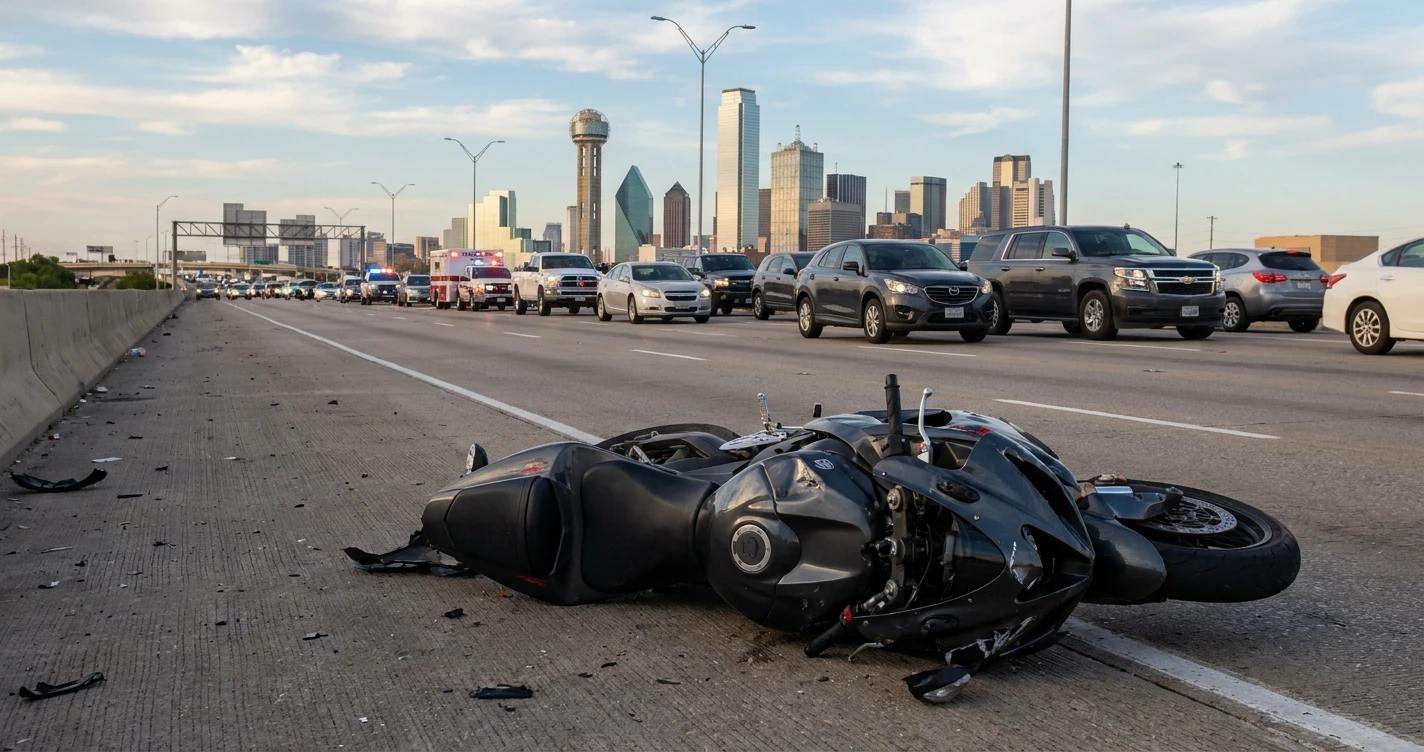
8,943
Reportable Crashes in Texas in 2025 (TxDOT)
574
Motorcycle Fatalities in Texas in 2025 (TxDOT)
2,158
Reported Serious Motorcycle Injuries in 2025 (TxDOT)
What to Do Next
Steps to Take After a Motorcycle Accident
Seek Medical Treatment
Get help and have your condition documented
Get Photo Evidence
Document injuries, damage, and other key evidence.
Keep a Pain Journal
Thoroughly document pain and how your condition changes.
File a Claim
File a claim with all insurers involved and be prepared to submit evidence.
Types of Motorcycles Accidents
Learn More About Types of Motorcycle Accidents
Motorcycles are vulnerable to a wide variety of different accident types. Learn more about them and what makes them unique here.
Hit & Run Accidents
Another motorist hits a motorcycle then flees the scene.
Lane-Change Accidents
Another driver changes lanes into space occupied by a motorcycle.
DWI Accidents
A drunk driver hits a motorcyclist, causing injuries.
Tire Blowouts
A tire blowout causes a rider to lose control and crash.
T-Bone Accidents
Another motorist broadsides a rider at an intersection.
Blind Spot Accidents
A driver unknowingly moves into space occupied by a motorcycle.
Single-Vehicle Accidents
A single-vehicle fall may not have been unprovoked.
Rear-End Accidents
Getting rear-ended can total a bike and badly injure its rider.
Red Light & Stop Sign Accidents
Being hit at a light or stop sign can cause significant injuries.
Guardrail & Infrastructure Accidents
Guardrails are designed for cars; they often injure riders.
Group Ride Accidents
One downed rider can cause a cascading accident in a group.
Dooring Accidents
A collision between a rider and an open vehicle door.
Intersection Accidents
Accidents from collisions where two roads cross.
Common Causes of Motorcycle Accidents
Accidents Happen for Many Reasons, Especially for Motorcycles
Because motorcycles are small, lightweight, and fast, a lot of things can cause them to crash.
Rider Visibility
Bikes can be difficult for drivers around them to see, especially at night.
Blind Spots
A bike's smaller size can make them easier to lose in vehicle blind spots.
Speed & Speeding
Riding too fast increases risk, particularly around unpredictable drivers.
Distracted Drivers
Driver distractions can cause a momentary lapse of attention that could injure a rider.
Mechanical Failures
Unexpected malfunctions or part failures can cause a serious, unpredictable crash.
Drunk Drivers
Driving drunk puts all other motorists at risk, particularly riders who lack the protection of a car.
Bad Weather
Wet roads, high winds, or low visibility all increase risk for riders.
Rider Fatigue
Tired or drowsy drivers make mistakes that can turn deadly.
Road Hazards
Potholes, unexpected bumps, or fallen debris can damage a bike or throw a rider from the saddle.
Animals
Squirrels, possums, and deer have all been known to cause accidents from collisions or riders swerving to avoid a collision.
Motorcycle Accident Injuries
Common Injuries Caused by Motorcycle Crashes
Motorcycle accidents are significantly more likely to lead to serious injuries. According to the TxDOT, nearly 90 percent of all motorcycle crashes in 2025 caused someone to get hurt—usually the rider.
Road Rash
Severe skin damage that could require surgical treatment to avoid infection.
Burn Injuries
Burns are both immensely painful and can be permanently disfiguring.
Broken Bones
Broken arms, legs, wrists, fingers, and other bones.
Neck & Spine Injuries
Neck and spinal cord injuries can have lifelong impacts.
Passenger Injuries
Injuries sustained by a passenger on your bike.
Internal Injuries
Internal injuries can be devastating and hard to diagnose.
Amputation Injuries
From losing part of a finger to losing an entire limb.
Brain Injuries
Traumatic brain injuries (TBI) are life changing and difficult to treat.
Wrongful Death
Riders can lose their life in accidents that aren't their fault.
Scarring & Disfigurement
Scarring and disfigurement injuries might be permanent and some require lifelong treatment.
Overcoming Biker Bias
Letting Facts & Evidence Dictate Your Case
Insurance companies and juries often perceive bikers to be reckless or aggressive. Overcoming this bias, both conscious and unconscious, is a challenge in nearly any motorcycle accident claim.
Helmet Cams & Dash Cams
Video evidence confirms you were riding safely.
Stay Off Social Media
Don't post anything that could compromise your story.
Follow the Law When Riding
Riding legally limits an insurer's ability to blame you for the crash.
Collect Evidence from Third Parties
Traffic cameras can provide valuable evidence that proves your side of the story.
Obtain a Police Report
Police reports contain valuable information compiled by law enforcement.
Insurance Coverage
Insurers are not your friend. Bikers often face an uphill battle.
Overcoming biker bias and uncharitable framing can be a challenge. Here's what to expect from a motorcycle accident claim.
Texas law gives you two years to file a suit after being involved in a motorcycle accident. Insurers know this, so take action quickly!
How Much Insurance Do You Need?
Are minimums different from a standard car?
How Long Do You Have to File a Claim?
Texas law places limits. Don't miss your deadline!
What's the Difference Between a Claim & a Lawsuit?
Most cases start as claims, but some progress to lawsuits later.
What Is an Expert Witness?
An accident reconstructionist can help prove your claim is what you say it is.
How Do Settlement Negotiations Work?
The process is often complex and can take a considerable amount of time. Know what to expect.
How Does Medical Treatment Impact My Claim?
Gaps in treatment or failure to follow doctor orders can negatively impact an injury claim.
Riding Law FAQs
What Does Texas Law Say About Riding?
Is It Legal to Split Lanes in Texas?
No. Lane-splitting and lane-filtering are strictly illegal in Texas. Riders may not pass another vehicle in the same lane, nor may they operate between lanes.
Are Helmets Required in Texas?
Sometimes. Riders over the age of 21 are permitted to ride with a helmet as long as they have completed an approved motorcycle operator safety course and they have documented medical insurance that covers motorcycle injuries. All other riders are required by law to wear a helmet.
Do Riders Have to Carry Insurance?
Yes. Motorcyclists are subject to minimum liability insurance requirements, though liability does not cover their own injuries and often doesn't cover the full extent of damage caused in an accident.
Do Riders Need a Special License in Texas?
Yes. Motorcyclists need a Class M license from the Texas Department of Public Safety, which involves completing a safety course and certificate exam.
Do Motorcycles Need Mirrors in Texas?
Yes. Motorcycles are required to have at least one mirror that provides at least 200 feet of visibility behind them.
Is It Legal to Drive Beside a Motorcycle in Texas?
Yes, motorcycles are allowed to share lanes with one another, so long as they agree to do so and operate their bikes safely.
Contact Angel Reyes & Associates
Injured in a Motorcycle Wreck?
Angel Reyes & Associates has helped thousands of accident victims pursue the compensation they are entitled to. If you have been injured, we can help make you whole while you focus on what matters most: your recovery.