Can You Sue a Mechanic for Negligence in Texas?


Every article on this site is researched by our internal team, reviewed for legal accuracy against current Texas law, and held to State Bar of Texas advertising standards before publication. We do not publish content that overstates outcomes or makes promises about results.
Learn more about our
editorial standards .
Key Takeaways
- You may have a claim if a mechanic or repair shop performed unsafe work, their work caused the failure, and you suffered damages.
- Strong mechanic negligence cases usually depend on preserving repair records, photos, failed parts, and a clear timeline.
- Texas deadlines can approach quickly, so early legal review can protect both your evidence and your right to recover compensation.
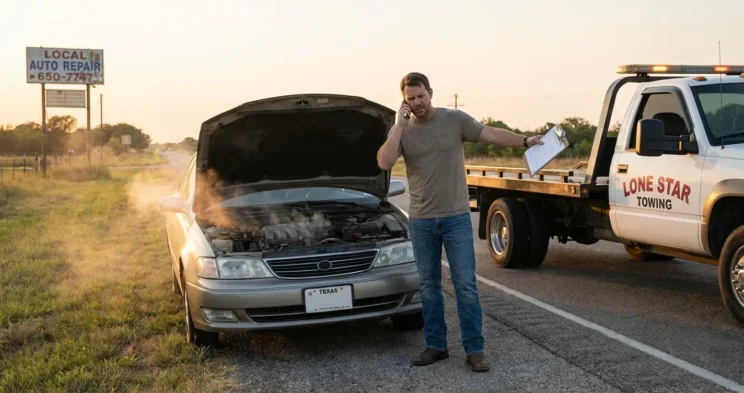
You picked up your SUV from a repair shop in San Antonio after having your brakes worked on. At the next intersection, the pedal drops, the vehicle doesn’t stop, and you crash into traffic stopped at the signal.
When careless repair work causes a wreck or another dangerous failure, you may have the right to sue the mechanic, the shop, or both.
In Texas, a mechanic negligence claim usually comes down to four questions: Was the vehicle entrusted for inspection or repair, did the mechanic fail to use reasonable care, did that failure cause the breakdown or collision, and did you suffer losses? If the answer to all four is yes, the case may fit within a car accident claim.
When a Bad Repair Becomes a Claim
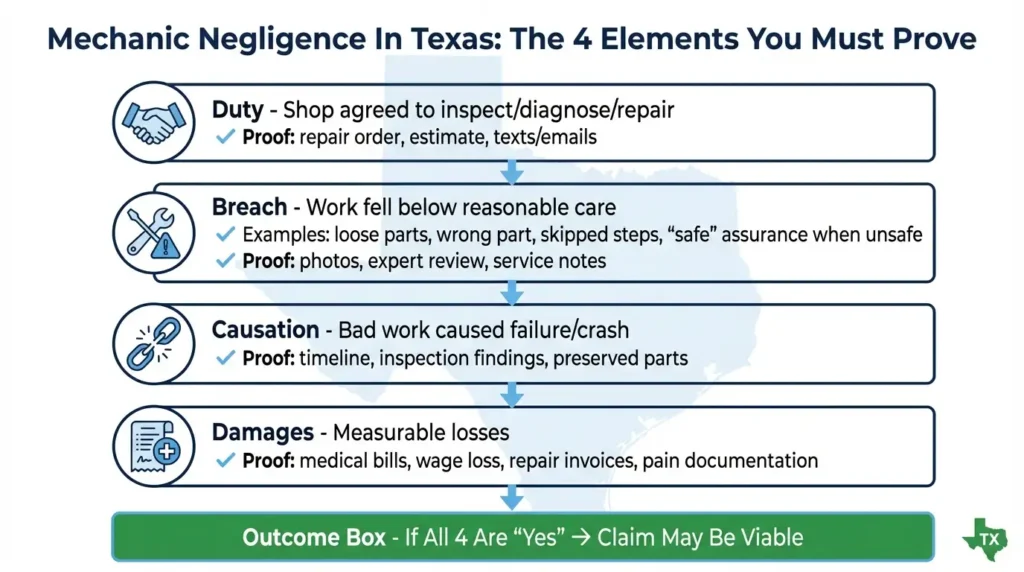
Use the points below to check whether the facts support negligence:
- Duty: The mechanic or shop agreed to inspect, maintain, diagnose, or repair the vehicle.
- Breach: The work was done carelessly, such as leaving parts loose, skipping a required step, using the wrong part, or telling you the vehicle was safe when it was not.
- Causation: The bad work caused a crash, roadside failure, engine damage, or another unsafe event.
- Damages: You suffered measurable damages, such as medical bills, lost income, pain, or property damage.
Common Repair Errors & Safety Failures
The examples below show the kinds of mistakes that often lead to claims, and the proof they leave behind:
- Brake repairs performed incorrectly.
- Tires or wheels installed improperly.
- Lug nuts left loose or undertorqued.
- Steering or suspension components not secured.
- Oil or transmission service done incorrectly, leading to engine failure or drivetrain malfunction.
- A dangerous condition missed during inspection or never communicated to the customer.
- A defective replacement part installed.
A mechanic is not automatically liable just because a vehicle breaks down later. The key issue is whether the shop failed to use reasonable care, and whether that failure caused verifiable harm or loss.
Evidence That Strengthens Your Case
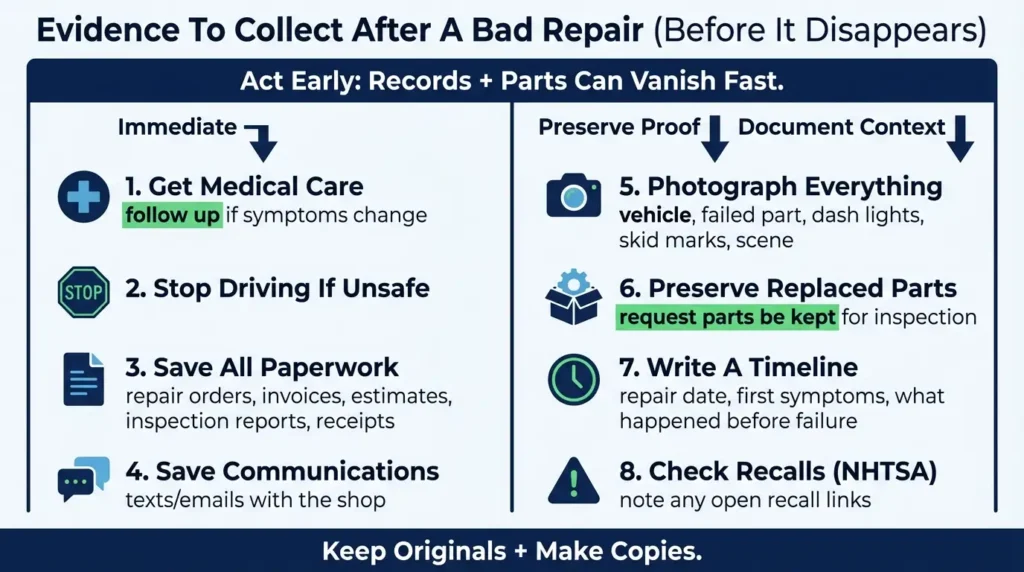
Use this checklist early. It can help preserve the proof your claim may depend on.
- Get medical care right away and follow up if symptoms get worse.
- Stop driving the vehicle if it is unsafe.
- Save repair orders, invoices, estimates, inspection reports, receipts, and text messages or email correspondence with the shop.
- Photograph the vehicle, failed part, dashboard warnings, skid marks, and the scene.
- Ask for replaced parts and damaged components to be preserved for inspection.
- Write down when the repair was done, when the problem appeared, and what happened right before the failure.
- Check the NHTSA recall database if a failed part may also involve an open recall or manufacturer issue.
Who May Be Liable
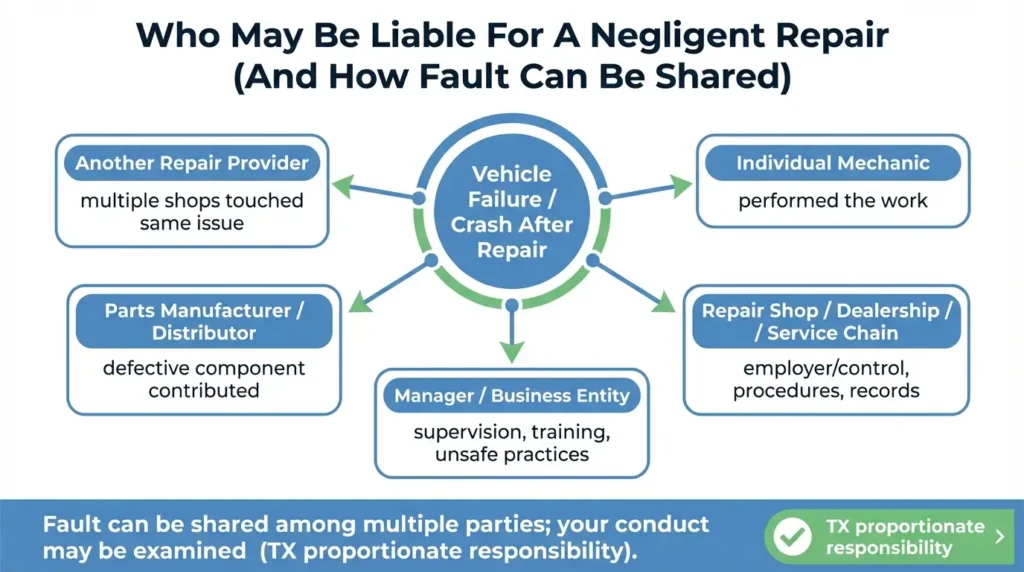
This list shows who may be responsible, and how it can change the investigation:
- The individual mechanic who performed the work.
- The repair shop, dealership, or service chain that employed the mechanic.
- The shop manager or business entity that allowed unsafe procedures or poor supervision.
- The parts manufacturer or distributor (if a defective component contributed to the failure).
- Another repair provider (if multiple shops worked on the same problem).
Texas follows proportionate responsibility under Texas Civil Practice and Remedies Code § 33.001. Fault can be divided among multiple parties, and your own conduct may also be examined.
Damages You May Be Able to Recover
Use these categories to measure the full impact of the negligent repair, not just the cost of fixing the car:
- Medical expenses.
- Future medical care.
- Lost wages.
- Reduced earning capacity.
- Vehicle and other property damage.
- Physical pain.
- Mental anguish.
The value of the case depends on what the bad repair caused after the vehicle left the shop. In a serious injury case, those losses can extend far beyond the original service bill.
Deadlines & Early Legal Review
Timing is critical in these cases because repair records disappear, vehicles get altered, and witnesses become difficult to reach.
Most Texas personal injury claims must be filed within two years under CPRC § 16.003. Different facts can affect how the deadline is calculated, so it is smart to get the case reviewed before the vehicle is repaired again or the failed parts are discarded.
Talk to a Lawyer Before the Repair Evidence Is Gone
A mechanic negligence case is strongest when the vehicle, parts, and paperwork are preserved early. Angel Reyes & Associates has over 30 years of experience helping injured Texans, and you pay no fee unless we win. Reach out through our free consultation form to tell us what happened and learn what evidence should be protected now.
Witness Statement FAQs
Can you sue a mechanic in Texas even if the bad repair only caused vehicle damage, and not a crash injury?
Potentially, yes. A negligence claim does not require a collision if careless repair work caused measurable losses, but the available damages and proof can look different when the harm is limited to the vehicle itself.
Can negligent repairs also lead to a consumer-protection claim in Texas?
Sometimes. A customer may have a separate claim under the Texas Business & Commerce Code § 17.50 if the shop’s conduct involved misleading representations or other actionable consumer violations in addition to careless work.
Do you need an expert to prove a mechanic was negligent?
Not always, but your cases may be stronger with expert review. When the repair issue involves technical questions about proper procedures, causation, or whether the shop used reasonable care, expert testimony may be necessary.
Can a dealership, franchise, or chain repair shop be liable for a mechanic’s mistake?
Yes, but not automatically in every case. Liability often depends on who employed or controlled the person who did the work, who supervised the repair, and what entity handled the service records and customer communications.
What if a defective replacement part and bad installation both contributed to the failure?
In this case, more than one party may share responsibility. Texas’ proportionate-responsibility rules allow fault to be divided among multiple defendants when the evidence shows that both the repair work and the part itself were at fault.
About the Authors

Angel Reyes
Writer
Angel L. Reyes, III is the Founder and Managing Partner of Angel Reyes & Associates. A nationally recognized trial attorney and business leader, Angel has helped over 70,000 injury victims recover more than $1 billion since founding the firm in 1993. Named to the Texas Super Lawyers list annually since 2008, Angel brings Wall Street experience, Ivy League education, and a deep commitment to client advocacy. He is a frequent legal commentator and published author with extensive contributions to legal scholarship, trial strategy, and consumer protection.

Kyle Nicolas
Editor
Kyle Nicolas is the Web Content & SEO Manager at Angel Reyes & Associates. He has more than 10 years of experience as a marketing co...

Angel Reyes
Reviewer
Angel L. Reyes, III is the Founder and Managing Partner of Angel Reyes & Associates. A nationally recognized trial attorney and business...