How NHTSA Crash Investigations Work for Self-Driving Cars


Every article on this site is researched by our internal team, reviewed for legal accuracy against current Texas law, and held to State Bar of Texas advertising standards before publication. We do not publish content that overstates outcomes or makes promises about results.
Learn more about our
editorial standards .
Key Takeaways
- NHTSA investigations and your Texas injury claim run on separate tracks: federal activity can support your case but doesn't prove fault or replace the need to establish liability under state law.
- Evidence from driver-assist crashes can disappear quickly through software updates, repairs, or vehicle disposal, making early preservation critical.
- Texas personal injury claims generally must be filed within two years, regardless of whether NHTSA has completed its investigation or issued a recall.
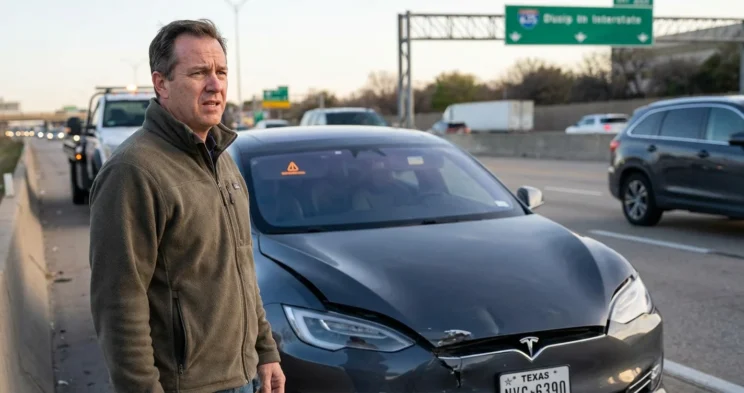
You were driving home on I-635 when the car ahead stopped suddenly. Your vehicle’s driver-assist system didn’t react the way you expected. Now you’re dealing with injuries, a damaged car, and news headlines about federal investigations into similar crashes.
The insurance company is already calling, and you’re wondering whether that NHTSA investigation you read about changes anything for your situation.
Federal safety activity and your personal injury claim run on separate tracks. Understanding how they work together can help you protect your rights and preserve critical evidence before it disappears.
Why NHTSA Activity is Important After a Driver-Assist Crash
When a crash involves automated or driver-assist technology, two separate processes may unfold at the same time. Your injury claim seeks compensation for your specific losses under Texas law. NHTSA’s investigation focuses on whether a vehicle defect poses a broader public safety risk.
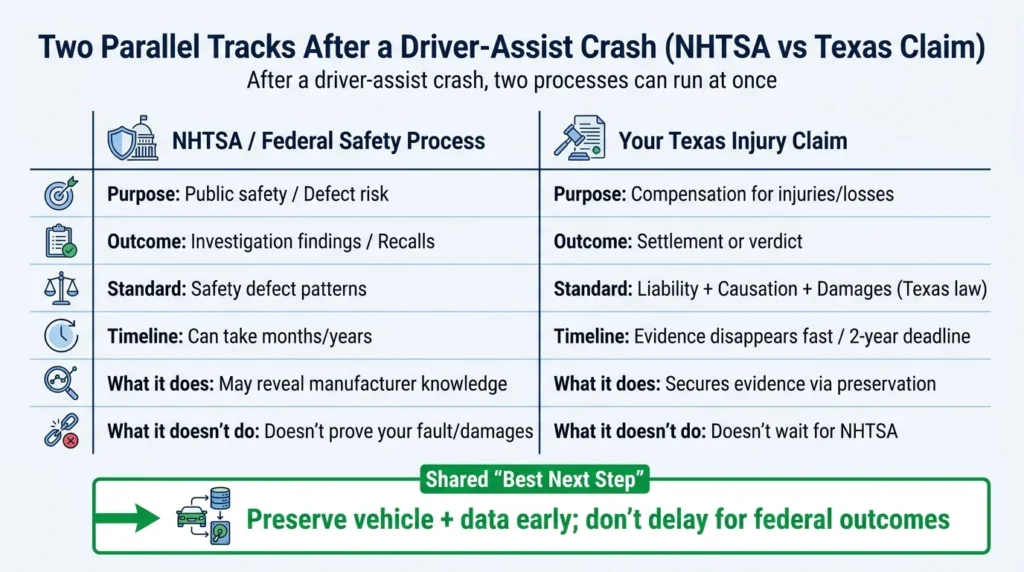
These tracks can overlap in useful ways. Federal investigation materials may support arguments about what a manufacturer knew and when. Recall announcements can strengthen claims that a defect existed. But NHTSA activity does not automatically prove fault or increase your damages. You still need to establish liability, causation, and harm under Texas rules.
The practical concern for Dallas car crash victims is evidence. Vehicle data, system logs, and electronic records can be overwritten during routine maintenance or software updates. Acting quickly to preserve this information is more important than waiting to see what federal investigators conclude.
Understanding the Technology: ADS vs Level 2 Driver-Assist
Before diving into reporting requirements, it helps to understand how NHTSA categorizes these systems. The distinction affects what gets reported, what data exists, and what legal theories may apply.
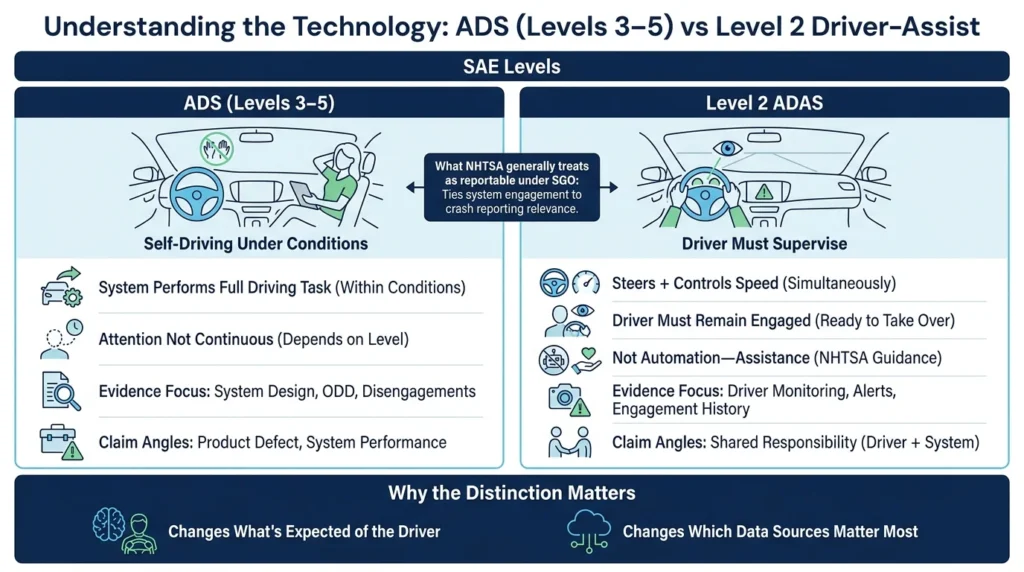
Automated Driving Systems (ADS) refer to vehicles at Levels 3 through 5 of automation. These systems can handle the full driving task under certain conditions without requiring human attention. True “self-driving” vehicles fall into this category.
Level 2 Advanced Driver Assistance Systems (ADAS) include features marketed under names like Autopilot, BlueCruise, or Super Cruise. These systems can steer and control speed simultaneously, but the human driver must remain engaged and ready to take over at all times.
According to NHTSA’s automated vehicle safety guidance, Level 2 is not automation. It’s assistance. This distinction will likely be important for your claim.
A crash involving Level 2 technology may raise questions about driver behavior, system performance, or both. Different evidence and different legal theories may apply depending on what the system was doing and what the driver was expected to do.
NHTSA’s Standing General Order: When Crashes Must Be Reported
NHTSA’s Standing General Order on Crash Reporting requires certain manufacturers and operators to report qualifying crashes involving automated driving systems and Level 2 ADAS features.
The reporting obligation falls on manufacturers and commercial operators, not individual drivers. A crash qualifies for reporting if the automated system or Level 2 feature was engaged at the time of impact or within 30 seconds before impact. This means a crash may be reportable even if the driver took back control just before the collision.
Reporting deadlines are measured in days, not weeks. Initial reports may be due within 24 hours for serious incidents, with follow-up updates required as more information becomes available. This compressed timeline means relevant data often exists early in the process.
What Information Crash Reports May Contain
Crash reports submitted under the Standing General Order typically include basic crash details, vehicle and system status information, and updates as the manufacturer learns more. However, these reports are not the same as the detailed engineering data stored in the vehicle itself.
The raw system logs, sensor data, and performance records usually remain with the manufacturer unless formally requested through legal process. You won’t automatically receive a copy of what was reported. An attorney can help send preservation letters and pursue discovery to access similar information for your claim.
Your own documentation is crucial too. Photos, timestamps, screenshots of any warnings or alerts, and EMS transport records all help establish what happened. Collecting this information promptly creates an independent record that doesn’t depend on manufacturer cooperation.
How NHTSA’s Office of Defects Investigation Works
NHTSA’s Office of Defects Investigation (ODI) is responsible for identifying safety defects and ensuring recalls happen when needed. The ODI investigation process follows a structured pipeline from initial screening through potential recall.
ODI monitors multiple data sources: consumer complaints, Early Warning Reporting from manufacturers, crash reports including those submitted under the Standing General Order, and information from other government agencies. When patterns emerge suggesting a potential defect, ODI may open a formal investigation.
What Triggers an Investigation?
According to Department of Transportation testimony on the defect investigation process, ODI screens incoming information looking for trends that suggest a safety-related defect affecting multiple vehicles. A single crash report rarely triggers an investigation on its own. ODI looks for patterns across complaints, crashes, and manufacturer data.
Consumers can also file defect petitions asking ODI to investigate a specific issue. ODI evaluates these petitions and decides whether to grant them based on available evidence.
An investigation being opened does not mean a defect has been confirmed. It means ODI has identified enough concern to look more closely.
PE, EA, and Recall Query: What Each Phase Means
Preliminary Evaluation (PE) is the initial fact-gathering phase. ODI defines the scope of the potential issue, collects information from the manufacturer, and determines whether the concern warrants deeper analysis. A PE may close without further action if the evidence doesn’t support a defect finding.
Engineering Analysis (EA) involves more intensive technical review. ODI may request detailed engineering documents, conduct testing, and evaluate whether a safety defect exists. This phase can involve substantial back-and-forth with manufacturers over data and technical questions.
Recall Query applies when a recall already exists. ODI monitors whether the remedy is effective and whether the manufacturer is meeting its obligations.
How Long NHTSA Investigations Take
NHTSA publishes general target timeframes for investigation phases, but actual timelines vary significantly. A straightforward issue with clear data might move quickly. Complex technical questions, disputes over data access, or emerging patterns that expand the scope can extend investigations for months or years.
This timing mismatch creates a practical problem for crash victims. Your evidence retention windows and Texas filing deadlines don’t pause while NHTSA works. Waiting for a federal investigation to conclude before taking action on your own claim can mean losing access to critical evidence or missing legal deadlines entirely.
What Federal Actions Mean for Your Texas Claim
Federal investigation activity can support your case, but it doesn’t replace the work of proving your claim under Texas law.
An open investigation suggests NHTSA identified a pattern worth examining. A recall announcement confirms the manufacturer acknowledged a defect and agreed to a remedy.
A closed investigation without recall may mean ODI didn’t find sufficient evidence of a widespread defect, though it doesn’t necessarily mean your specific vehicle performed correctly.
Even with a recall on record, you still need to prove that the defect caused your crash and your injuries. Texas car accident claims require establishing liability, causation, and damages. Federal materials can help build that case, but they don’t substitute for it.
The Hidden Risk: Repairs and Updates Can Destroy Evidence
If your vehicle is still drivable or gets repaired after the crash, critical data may be lost. Software updates can overwrite system logs. Physical repairs can alter the condition of sensors and modules. Even routine service visits can change what’s stored in the vehicle’s memory.
Before authorizing repairs, consult with an attorney about preserving the vehicle’s condition and data. If the car is totaled or impounded, act quickly to prevent disposal. A preservation letter to the tow yard or storage facility can buy time to arrange proper inspection.
If a recall exists for your vehicle, document the VIN status, remedy instructions, and dates before any work is done. This creates a record of what was known and when.
Evidence Checklist for Technology-Involved Crashes
Crashes involving driver-assist systems require preserving evidence that may not exist in traditional accidents. Acting within the first 48 hours can make a significant difference.
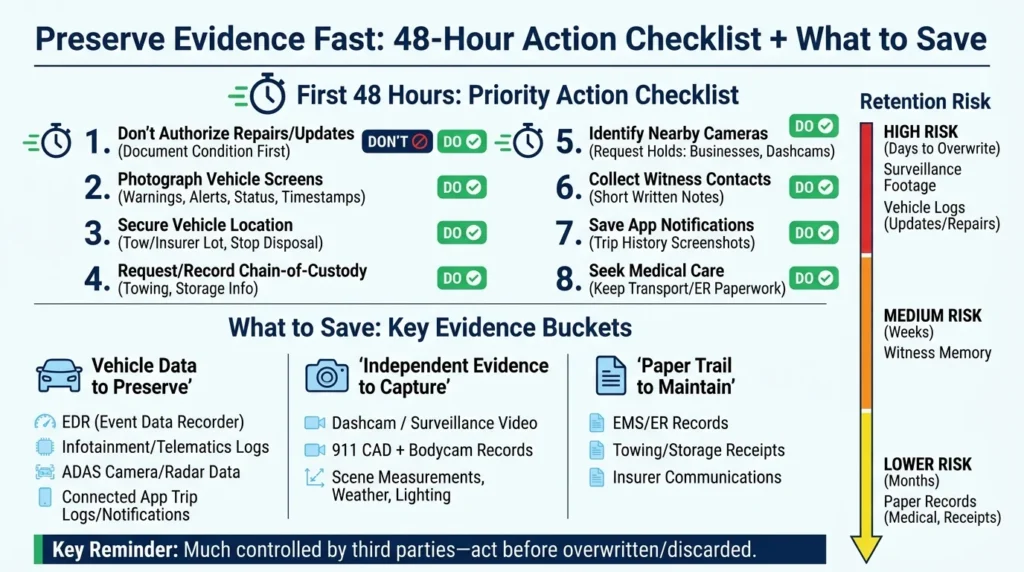
Vehicle data sources to preserve:
- Event Data Recorder (EDR) information
- Infotainment and telematics logs
- ADAS camera and radar module data
- Connected app trip logs and notifications
Independent evidence to capture:
- Dashcam or surveillance footage from nearby businesses
- 911 CAD records and bodycam footage
- Witness contact information
- Scene measurements, weather, and lighting conditions
Paper trail to maintain:
- Medical transport and emergency room records
- Towing and storage receipts
- All communications with insurers
- Photos of any warnings or alerts displayed on screens
Much of this data is controlled by third parties. Manufacturers hold proprietary system logs. Tow yards may dispose of vehicles. Businesses overwrite surveillance footage. Police agencies have their own retention schedules.
Formal legal process is often required to secure access before evidence disappears.
Texas Deadlines Don’t Wait for Federal Investigations
Under Texas Civil Practice and Remedies Code § 16.003, personal injury claims generally must be filed within two years of the date of injury. This deadline applies regardless of whether NHTSA has finished investigating, issued a recall, or taken any action at all.
Evidence retention creates even tighter practical deadlines. Surveillance footage may be overwritten in days. Vehicle data can be lost to repairs or disposal within weeks. Witness memories fade.
The gap between when evidence becomes unavailable and when your legal deadline arrives can be substantial.
Early legal steps protect your position. Preservation letters put manufacturers and third parties on notice to retain evidence. Early investigation by experienced attorneys can identify and secure critical information before it’s gone. Filing suit when necessary preserves your rights even if the full picture isn’t yet clear.
When to Talk to a Lawyer
Technology-involved crashes often benefit from early legal involvement. Consider reaching out promptly if:
- You or a passenger suffered serious injuries
- A loved one was killed
- The vehicle was totaled or is being held by insurance or a tow yard
- A commercial vehicle, ride-hail company, or fleet operator was involved
- You’re uncertain whether driver-assist features were engaged
- You’ve heard about recalls or investigations involving your vehicle model
- The other driver’s story conflicts with what you experienced
An attorney can coordinate evidence preservation, arrange expert evaluation of vehicle systems, and develop a claim strategy that accounts for both driver conduct and potential product issues. With over 30 years of experience and more than $1 billion recovered for clients, Angel Reyes & Associates has the resources to handle complex technology-involved crashes across Texas.
We offer free consultations and work on contingency, meaning no fee unless we win. Our team is available 24/7 and can handle most of your case remotely. Reach out to us today to discuss your situation and learn how we can help protect your rights.
NHTSA Investigation FAQs
Can I report a suspected vehicle defect to NHTSA myself after a Texas crash?
Yes. Consumers can submit a safety complaint to NHTSA, and while one complaint usually does not prove a defect, it can help the agency spot patterns across similar crashes.
What is a defect petition, and can a driver file one?
A defect petition is a formal request asking NHTSA to investigate a possible safety defect, and members of the public can file one. NHTSA reviews the information submitted and decides whether the issue warrants a formal investigation.
If my car had a post-crash software update, does that matter for my case?
It can. An update may change stored settings, warnings, or logs, which is why it is important to keep records showing when the update happened and what work was performed.
Can a closed NHTSA investigation still be useful in a personal injury case?
Sometimes. Even if NHTSA closes an investigation without a recall, the underlying records, technical questions, or manufacturer responses may still contain facts relevant to how the vehicle or system performed.
Are NHTSA recalls and NTSB investigations the same thing?
No. NHTSA regulates vehicle safety and can pursue recalls, while the NTSB investigates crashes and issues safety recommendations but does not order recalls or decide civil liability.
About the Authors

Angel Reyes
Writer
Angel L. Reyes, III is the Founder and Managing Partner of Angel Reyes & Associates. A nationally recognized trial attorney and business leader, Angel has helped over 70,000 injury victims recover more than $1 billion since founding the firm in 1993. Named to the Texas Super Lawyers list annually since 2008, Angel brings Wall Street experience, Ivy League education, and a deep commitment to client advocacy. He is a frequent legal commentator and published author with extensive contributions to legal scholarship, trial strategy, and consumer protection.

Kyle Nicolas
Editor
Kyle Nicolas is the Web Content & SEO Manager at Angel Reyes & Associates. He has more than 10 years of experience as a marketing co...

Angel Reyes
Reviewer
Angel L. Reyes, III is the Founder and Managing Partner of Angel Reyes & Associates. A nationally recognized trial attorney and business...