Self-Driving Uber Crash Liability in Texas


Every article on this site is researched by our internal team, reviewed for legal accuracy against current Texas law, and held to State Bar of Texas advertising standards before publication. We do not publish content that overstates outcomes or makes promises about results.
Learn more about our
editorial standards .
Key Takeaways
- Autonomous Uber crashes in Texas can involve multiple liable parties, including the TNC, the autonomous technology operator, other drivers, and product-defect defendants.
- Texas Insurance Code Chapter 1954 requires up to $1 million in TNC liability coverage when a passenger is in the vehicle, but coverage depends on trip status and timing.
- Texas proportionate responsibility rules can reduce or prohibit recovery if the injured person is assigned more than 50% fault, which makes thorough evidence preservation critical.
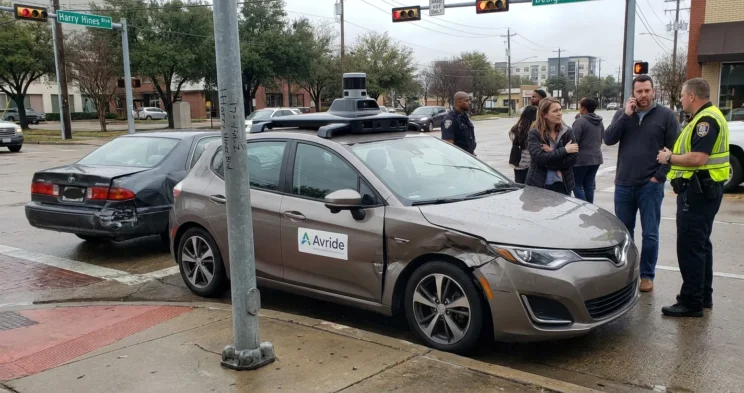
You requested an Uber ride in Dallas and were matched with one of their new self-driving vehicles operating in Deep Ellum. Somewhere along the way, another driver ran a red light and collided with your robotaxi. Now, you’re dealing with injuries, medical bills, and a confusing question: who exactly is responsible when there’s no human driver behind the wheel?
Autonomous rideshare crashes introduce layers of complexity that traditional car accidents don’t have. Multiple parties may share fault, multiple insurance policies may apply, and Texas law has specific rules that determine how responsibility gets divided and who ultimately pays.
What Makes an Autonomous Uber/Robotaxi Crash Different
When Uber launched its robotaxi service in Dallas through a partnership with Avride in early 2025, it marked a significant shift in how rideshare operates in Texas. These vehicles use automated driving systems to navigate city streets, but a human monitoring specialist may be present during initial rollout phases.
This is relevant to your claim because the “who was driving” question becomes complicated when robotaxis are involved. In a traditional Uber crash, you’re typically looking at the rideshare driver’s actions and Uber’s insurance coverage. However, in an autonomous vehicle crash, potential responsibility can also extend to:
- Uber and its TNC (Transportation Network Company) insurance coverage
- The autonomous technology owner or operator (the company controlling the self-driving system)
- Other motorists whose negligence contributed to the crash
- Product-defect defendants if a sensor, software, or vehicle component failed
Understanding this multi-defendant reality is the first step toward protecting your right to compensation after a car accident.
What to Do Immediately After an Autonomous Uber Crash
The actions you take immediately after a robotaxi crash can significantly impact your ability to recover damages later.
Call 911 and get medical attention. Even if your injuries seem minor, some symptoms may take hours or days to appear. A medical record linking your injuries to the crash is essential.
Document everything at the scene. Take photos of vehicle damage, the intersection, traffic signals, and any visible injuries. Get contact information from witnesses.
Screenshot your Uber app immediately. This is critical. Your trip status, pickup and dropoff times, and ride receipts will establish which insurance coverage applies. The difference between “app on, waiting for a ride” and “passenger in transit” can mean the difference between minimal coverage and $1 million in available liability limits.
Save all communications with Uber support, including chat logs and incident reports. Request a copy of your trip receipt through the app before details become harder to access.
Evidence Specific to Robotaxi Cases
Autonomous vehicles generate data that traditional cars don’t. This information can prove what the vehicle’s systems detected (or failed to detect) before the crash.
Relevant data sources may include:
- Event data recorders and telematics
- Camera and sensor footage from the vehicle
- Autonomous system decision logs
- Remote monitoring records
Your attorney can send preservation letters to prevent this data from being overwritten or deleted. Act quickly because data retention policies vary, and some records may only be kept for limited periods.
Third-party evidence also helps. Nearby businesses along streets like Preston Rd. or in neighborhoods like Deep Ellum may have security cameras. Traffic camera footage and 911 dispatch audio can also corroborate your account.
How Texas Law Treats the “Operator” When Automation Is Engaged
Texas Transportation Code § 545.451 and related provisions address automated motor vehicles and establish how the state treats the concept of an “operator” when a self-driving system is engaged.
In plain terms: Texas law recognizes that the owner of an automated vehicle (or the entity that caused the automation to engage) can be considered the “operator” for the purposes of traffic laws and liability. This means the company deploying robotaxis in Dallas may bear operator-level responsibility, not just the vehicle manufacturer.
This doesn’t automatically make them liable for every crash. Negligence still has to be proven, but it does establish a framework for holding autonomous vehicle operators accountable when their systems fail to operate safely on Texas roads.
Who Can Be Liable in a Texas Autonomous Uber/Robotaxi Crash
The Uber/TNC Insurance Pathway
Uber maintains insurance coverage for rides booked through its platform, but coverage levels depend on the trip stage. If you were a passenger when the crash occurred, the highest coverage tier typically applies.
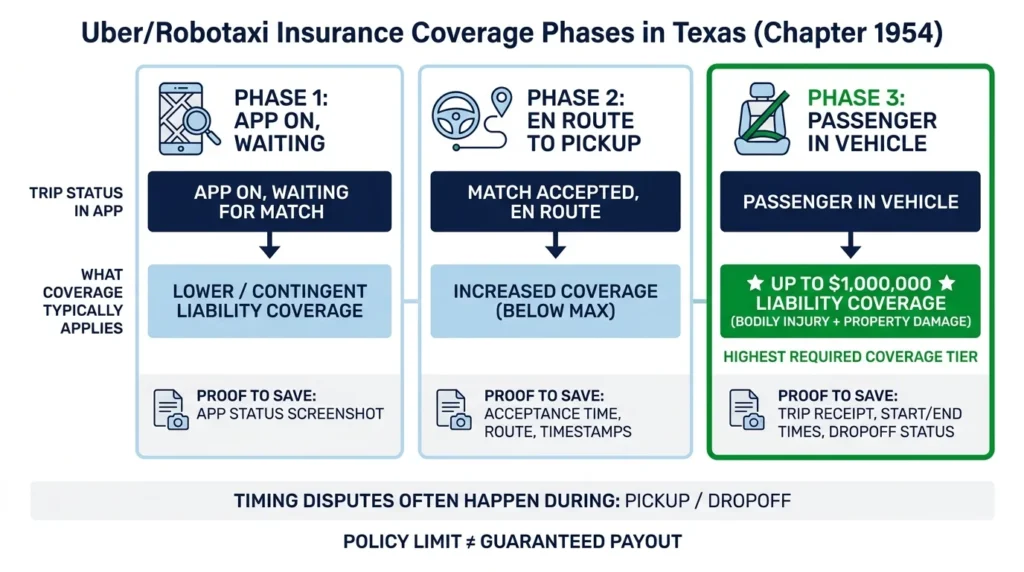
Texas Insurance Code Chapter 1954 requires TNCs like Uber to maintain $1 million in liability coverage during the period when a driver (or in this case, an autonomous vehicle) is transporting a passenger. This coverage can pay for injuries caused by the TNC vehicle’s operation.
However, “Is coverage available?” and “Was Uber negligent?” are different questions. The $1 million policy is a liability limit, not a guaranteed payout. If another driver caused the crash, their insurance may be primary. If multiple parties share fault, claims may be filed against multiple policies.
The Autonomous Technology Operator Pathway
When the self-driving system itself may have contributed to the crash, the company operating that technology becomes a potential defendant.
Common allegations in autonomous vehicle cases include:
- Perception failures (the system didn’t detect a pedestrian, vehicle, or obstacle)
- Unsafe automated behaviors (inappropriate braking, acceleration, or lane changes)
- Mapping or localization errors
- Inadequate human monitoring or remote support response
The entity controlling deployment, route selection, maintenance, and software updates may be responsible for operational failures. This is often a separate company from Uber itself, as with the Avride partnership in Dallas.
Other Driver Negligence
Many autonomous vehicle crashes still involve traditional negligence by other motorists. Speeding, running red lights, distracted driving, and driving while intoxicated remain the leading causes of collisions on highways like the LBJ Freeway and throughout Dallas.
If another driver’s negligence caused or contributed to your crash, their liability insurance is a primary source of recovery. Your claim may proceed against multiple defendants simultaneously.
Product Liability Defendants
If a defective component caused the crash, product liability claims may apply. This could involve the vehicle manufacturer, sensor suppliers, or software developers.
Product defect claims require different proof than negligence claims. Rather than showing that someone acted carelessly, you must demonstrate that the product was defective in design, manufacturing, or warnings. These cases often require expert testimony about how the system should have performed.
How Uber’s $1 Million Insurance Applies in Texas
Texas Insurance Code Chapter 1954 also establishes the minimum insurance requirements for transportation network companies operating in the state.
Coverage works in phases:
Phase 1 (App on, waiting for a match): Lower coverage limits apply. The TNC must provide contingent liability coverage, but amounts are reduced.
Phase 2 (Match accepted, en route to pickup): Coverage increases, though it is still below the maximum.
Phase 3 (Passenger in vehicle): $1 million in liability coverage must be maintained for bodily injury and property damage.
If you were a passenger in a robotaxi when the crash occurred, Phase 3 coverage should apply, but there may be disputes about exact timing, especially if the crash happened during pickup or dropoff. In this case, your app screenshots and trip receipts are essential evidence.
The $1 million figure represents a policy limit, not a settlement guarantee. If your damages exceed available coverage, or if multiple injured parties are making claims against the same policy, the amount you recover may be affected. Understanding what factors influence Uber accident settlements can help you set realistic expectations.
Texas Proportionate Responsibility in Multi-Party Crashes
Texas follows a proportionate responsibility system under Texas Civil Practice and Remedies Code Chapter 33. When multiple parties share fault for a crash, the jury assigns a percentage of responsibility to each party.
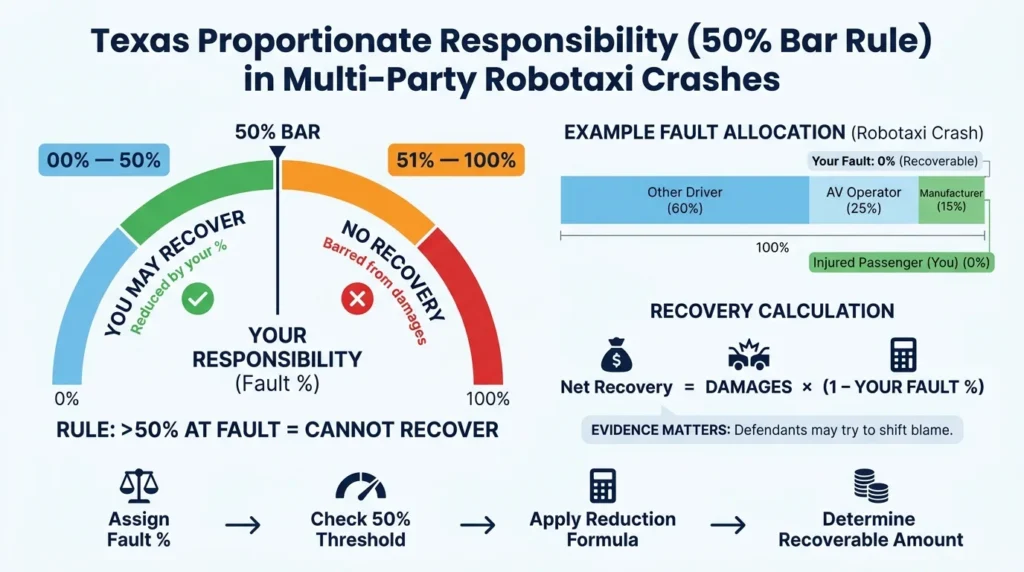
The critical threshold: if you’re found more than 50% responsible for your own injuries, you cannot recover damages. If you’re 50% or less at fault, your recovery is reduced by your percentage of responsibility.
In a robotaxi crash, fault might be allocated among the following parties:
- The autonomous vehicle operator (for system failures)
- Another driver (for running a red light)
- A component manufacturer (for a defective sensor)
- Potentially, even the injured party (for alleged contributory conduct)
Defense attorneys often try to shift blame between defendants or onto the injured person. Thorough investigation and evidence preservation can help you counter these strategies.
Deadlines: How Long You Have to File in Texas
Texas Civil Practice and Remedies Code § 16.003 establishes a two-year statute of limitations for most personal injury claims. This means you generally have two years from the date of the crash to file a lawsuit.
Two years may sound like plenty of time, but autonomous vehicle cases require early action. Evidence may go missing, video footage may get overwritten, vehicle data may be purged due to corporate retention policies, and witnesses may forget details.
It’s important to procure insurance claim notices, medical treatment documentation, and preservation letters within weeks of the crash, not months. The sooner you begin building your case, the stronger your position becomes.
When to Talk to a Texas Lawyer
Autonomous rideshare crashes often involve issues that are difficult to navigate alone, such as:
- Multiple potential defendants with separate legal teams
- Disputes over which insurance policy applies
- Technical evidence requiring expert analysis
- Corporate defendants with significant legal resources
If you suffered serious injuries, face disputed liability, or are dealing with an autonomous vehicle crash involving unclear fault, consulting an attorney early on will help protect your interests.
At Angel Reyes & Associates, we’ve spent over 30 years helping injured Texans recover compensation after serious crashes. Our firm has recovered more than $1 billion for clients, and we work on contingency, which means you pay no fee unless we win. We offer free consultations and can handle the majority of your case remotely, as we serve clients across all 16 of our Texas locations.
If you were hurt in an autonomous Uber or robotaxi crash in Dallas or anywhere in Texas, contact us to discuss your options. We’re available 24/7 and offer bilingual services in Spanish.
Uber Robotaxi Crash FAQs
Will my own car insurance help if I was hurt as a passenger in an Uber robotaxi?
Sometimes. It depends on your policy. Personal injury protection, MedPay, or uninsured/underinsured motorist coverage may help with medical bills or losses if the at-fault coverage is delayed, denied, or insufficient.
What if the robotaxi crash happened while I was getting in or out of the vehicle?
Coverage and fault can become more contested in pickup and dropoff accidents, so the exact timing and whether the trip was still active are important here. Photos, app screenshots, and the trip receipt can help show what stage of the ride you were in.
Do I need the police report to start an insurance claim after a robotaxi crash?
Usually no, but it can be important evidence later. You can often start a claim with basic crash details, then add the report, medical records, and other documents as they become available.
Can a road hazard or construction zone be partly responsible for a self-driving car crash in Texas?
Yes. In some cases, poor signage, unsafe lane shifts, missing markings, or debris can contribute to a crash. That does not automatically mean a government or contractor will be liable, but those issues may still need to be investigated.
Are robotaxi crashes harder to settle than regular Uber accident claims?
They can be, because these cases may involve multiple insurers, technical vehicle data, and disputes over whether the problem was human error, system failure, or both. That often means investigations take longer than a typical two-car crash claim.
About the Authors

Angel Reyes
Writer
Angel L. Reyes, III is the Founder and Managing Partner of Angel Reyes & Associates. A nationally recognized trial attorney and business leader, Angel has helped over 70,000 injury victims recover more than $1 billion since founding the firm in 1993. Named to the Texas Super Lawyers list annually since 2008, Angel brings Wall Street experience, Ivy League education, and a deep commitment to client advocacy. He is a frequent legal commentator and published author with extensive contributions to legal scholarship, trial strategy, and consumer protection.

Kyle Nicolas
Editor
Kyle Nicolas is the Web Content & SEO Manager at Angel Reyes & Associates. He has more than 10 years of experience as a marketing co...

Angel Reyes
Reviewer
Angel L. Reyes, III is the Founder and Managing Partner of Angel Reyes & Associates. A nationally recognized trial attorney and business...