When to Hire a Car Accident Lawyer in Texas


Every article on this site is researched by our internal team, reviewed for legal accuracy against current Texas law, and held to State Bar of Texas advertising standards before publication. We do not publish content that overstates outcomes or makes promises about results.
Learn more about our
editorial standards .
Key Takeaways
- Contact a lawyer within 24-72 hours if you’re injured, the insurance company is pressuring you, or fault is disputed
- Texas’s 2-year statute of limitations has exceptions – some claims require action within weeks, not years
- Early legal representation typically results in 3-5x higher settlements than handling claims alone

Why Timing Matters More Than You Think
The clock starts ticking the moment metal hits metal.
Your actions in the first few days after a crash can determine whether you receive fair compensation or get steamrolled by insurance tactics.
While Texas law gives you two years to file a lawsuit, the real deadlines that matter are measured in hours and days, not years.
Insurance companies dispatch teams immediately after accidents. Adjusters gather evidence, take statements, and build defenses while you’re still dealing with shock and pain.
They know that controlling the narrative early often determines the outcome. Every hour you wait to protect your rights gives them another advantage.
Critical evidence vanishes faster than most people realize. Surveillance footage gets overwritten within days.
Skid marks fade. Witnesses forget details or become unreachable.
Texas has a 2-year statute of limitations for personal injury claims, but some deadlines arrive much sooner. Claims against government entities require notice within 90 days.
Commercial vehicle accidents involve federal regulations with specific preservation requirements. Missing these hidden deadlines can eliminate your rights entirely, regardless of how badly you were hurt.
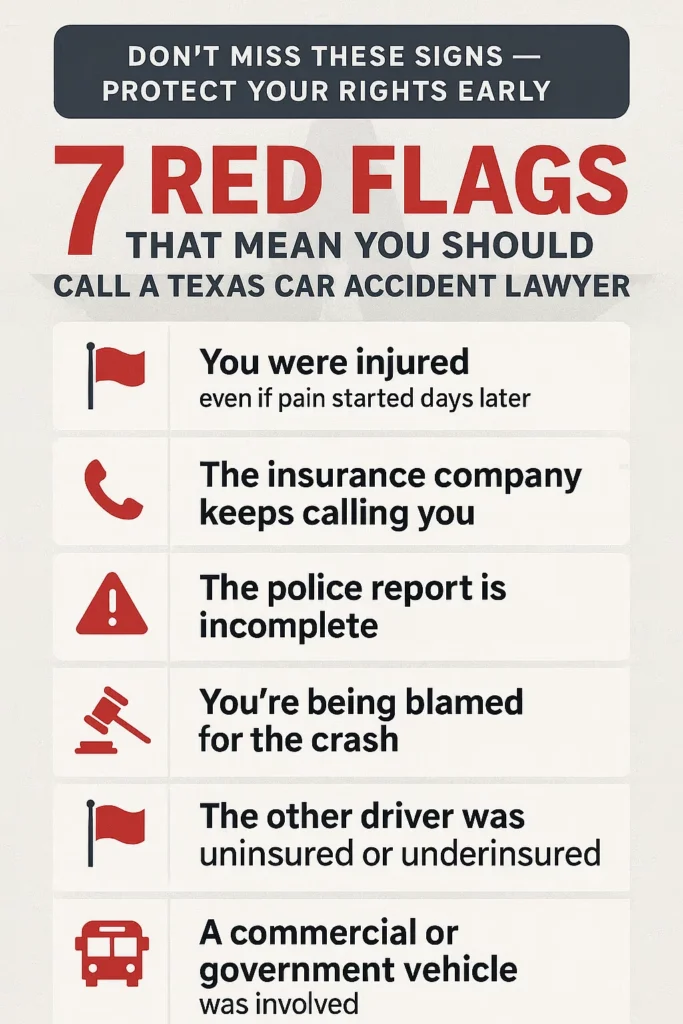
7 Red Flags That Mean You Should Call a Lawyer Immediately
Certain situations demand immediate legal protection. These red flags indicate that waiting even a few days could seriously damage your claim and reduce your compensation.
Recognizing these warning signs helps you act decisively when it matters most.
1. You Were Injured – Even Slightly
Pain that seems minor today could indicate serious injuries that manifest over days or weeks.
Whiplash symptoms often don’t appear for 24-72 hours. Concussions can take days to show full effects.
Back injuries might feel like simple soreness before developing into chronic conditions requiring surgery.
Insurance companies exploit this delayed onset by pushing quick settlements before you understand your injuries’ full extent.
They know soft tissue injuries and traumatic brain injuries often worsen over time. Accepting their early offer forfeits your right to additional compensation when the true damage becomes clear.
Delaying legal help while waiting to see if injuries worsen is a costly mistake. An attorney can ensure proper medical documentation from the start, connecting later symptoms to the original trauma.
This early intervention protects your rights to full compensation for all injuries, not just those immediately apparent.
2. The Insurance Company Is Calling You – A Lot
Persistent insurance company contact isn’t friendly concern. It’s a calculated strategy to gather ammunition against your claim.
They want recorded statements before you’ve processed what happened or consulted with anyone who understands your rights. These conversations seem helpful but are designed to minimize their liability.
Common tactics include asking for “just a quick recorded statement to process your claim faster.” They’ll phrase questions to elicit admissions of fault or downplay your injuries.
“You’re feeling better today, right?” becomes evidence that you weren’t seriously hurt. “Could you have stopped sooner?” becomes partial admission of fault.
Never provide recorded statements without legal representation. Texas law doesn’t require you to speak with the other driver’s insurance company at all.
Even your own insurer must accept reasonable delays for legal consultation. When adjusters pressure you for immediate statements, that’s your signal to call an attorney immediately.
3. The Police Report Is Incomplete or Disputed
Police reports carry enormous weight in determining fault and compensation. Officers arriving after an accident rely on limited evidence and often hurried statements.
If you were injured or shaken, you might not have effectively communicated your version of events. The other driver’s account might dominate the narrative.
Common problems include missing witness information, incorrect diagram of vehicle positions, or failure to note traffic violations by the other driver.
Sometimes officers don’t issue citations despite clear violations. Other times, they cite both drivers when only one was truly at fault.
These errors become “official” records that insurance companies use against you.
Correcting police reports requires quick action and proper procedures. Texas comparative negligence rules mean that fault percentages directly reduce your compensation.
An attorney can supplement incomplete reports with additional evidence and witness statements, ensuring the official record reflects what actually happened.
4. You’re Being Blamed for the Crash
Texas’s modified comparative negligence law allows recovery if you’re 50% or less at fault, but your compensation reduces by your fault percentage.
Insurance adjusters aggressively push fault onto victims, knowing that inflating your percentage from 40% to 60% eliminates their entire liability. This blame-shifting often begins immediately after accidents.
Even if you made minor mistakes, that doesn’t mean you’re primarily responsible. Following slightly too closely doesn’t excuse someone cutting you off.
Exceeding the speed limit by 5 mph doesn’t justify another driver running a red light. Insurance companies intentionally conflate minor infractions with major fault to avoid paying claims.
Fighting back against unfair blame requires understanding both the law and insurance tactics.
An attorney can demonstrate how the other driver’s actions primarily caused the crash, protecting your right to compensation. Don’t accept fault assignments without legal review.
What seems like accepting responsibility for a small mistake could eliminate your entire claim.
5. The Other Driver Was Uninsured or Underinsured
Texas’s minimum insurance requirements of $30,000 per person barely cover a single emergency room visit for serious injuries.
Many drivers carry only these minimums or drive completely uninsured despite the law. When your damages exceed their coverage or they have no insurance, recovery becomes complicated.
Your own uninsured/underinsured motorist (UM/UIM) coverage provides crucial protection, but claiming these benefits isn’t simple.
Your own insurance company becomes your adversary, using the same tactics as any other insurer to minimize payouts. They’ll dispute your damages, argue about fault, and delay payment.
Additional recovery options might exist through employer liability, dram shop claims against bars that overserved drunk drivers, or government liability for dangerous road conditions.
Identifying and pursuing these alternatives requires immediate investigation. An attorney can maximize recovery from all available sources, not just obvious insurance policies.
6. The Accident Involved a Commercial Vehicle or Government Entity
Commercial vehicles including 18-wheelers, delivery trucks, and company cars involve additional regulations and insurance complexities.
Federal motor carrier rules require specific evidence preservation. Multiple insurance policies might apply. The driver’s employer could share liability.
These cases demand immediate legal action to preserve rights.
Government vehicles create even tighter deadlines. Texas sovereign immunity laws require formal notice within 90-180 days depending on the entity.
Missing these deadlines completely bars recovery regardless of injury severity or clear government fault. City buses, police cars, and maintenance vehicles all trigger these special requirements.
These cases also involve higher stakes. Commercial policies often have million-dollar limits compared to personal minimums.
Government entities have deep pockets but fight hard using taxpayer resources. Early legal representation levels the playing field, ensuring proper procedures and maximum recovery from these well-defended defendants.
7. You’re Losing Work or Facing Mounting Medical Bills
Lost wages extend beyond missing a few days of work. They include overtime opportunities, bonuses, and potential career advancement.
If injuries affect your ability to perform your job long-term, you deserve compensation for diminished earning capacity. These calculations require expert analysis of your career trajectory.
Medical bills represent just the beginning of your damages. Future surgeries, ongoing therapy, and lifetime pain management all deserve compensation now.
Texas law allows recovery for both economic and non-economic damages including pain, suffering, mental anguish, and loss of enjoyment of life.
Insurance companies minimize these damages by focusing only on current bills and ignoring future needs. They’ll argue you can return to work before doctors clear you.
They’ll claim your pain doesn’t justify ongoing treatment. An attorney ensures full documentation of all losses, maximizing both current and future compensation.
The Texas Car Accident Claim Timeline
Understanding the timeline helps you recognize critical decision points. While every case differs, certain milestones consistently determine case outcomes.
Missing early opportunities rarely gets corrected later.
Immediately After the Accident
Your first priority is medical treatment, even if injuries seem minor. Adrenaline and shock mask serious injuries that appear hours or days later. Emergency room visits create time-stamped medical records proving causation between the accident and your injuries.
This documentation becomes crucial evidence insurance companies can’t dismiss.
Take comprehensive photos before vehicles are moved.
Document all damage, road conditions, traffic signs, and injury visible injuries. Get contact information from every witness.
Don’t discuss fault with anyone except police. Most importantly, don’t sign anything or accept any payments without legal review.
Call a lawyer if you experience injuries, confusion about what happened, or immediate insurance company pressure. The consultation costs nothing and provides immediate protection.
Having an attorney’s contact information before you need it prevents panic decisions when insurance adjusters start calling.
Within 24-72 Hours
This critical window often determines your entire case outcome. Insurance adjusters work fast during this period, knowing victims are vulnerable and uninformed.
They’ll request recorded statements, press for quick settlements, and gather evidence supporting their narrative. Without representation, you’re fighting a professional system alone.
Don’t sign anything from insurance companies during this period. Forms presented as “routine paperwork” often include liability releases or limitations on future claims.
Quick settlement offers of a few thousand dollars might seem helpful for immediate expenses but forfeit rights to hundreds of thousands in future compensation.
An attorney can handle all insurance communication immediately, preventing costly mistakes. They’ll send preservation letters ensuring evidence isn’t destroyed.
They’ll coordinate proper medical treatment and documentation. Most importantly, they’ll protect you from tactics designed to minimize or eliminate your rightful compensation.
Within 7 Days
The first week reveals the true extent of many injuries. Soft tissue damage fully develops. Concussion symptoms become apparent.
The full impact on your daily life emerges as you try returning to normal activities. This information shapes your claim’s value, making proper documentation crucial.
Damage estimates during this period often uncover hidden vehicle problems. Frame damage might not be immediately visible. Safety systems might be compromised.
Diminished value affects your car’s worth even after repairs. These additional damages deserve compensation beyond just repair costs.
A lawyer helps document everything properly during this crucial week. They ensure medical providers connect symptoms to the accident.
They coordinate proper vehicle inspections. They gather witness statements while memories remain fresh. This early foundation supports maximum compensation months or years later.
Within 30 Days
Some injuries take weeks to fully manifest. Post-traumatic stress from violent collisions might not appear immediately. Herniated discs might feel like minor back pain before requiring surgery.
Traumatic brain injuries can have delayed cognitive effects. The 30-day mark often reveals your injuries’ true extent.
Insurance companies push hard for settlement during this period. They know unrepresented victims feel financial pressure from missed work and medical bills.
Their offers seem generous compared to mounting expenses but represent fractions of true case value. They’re betting you’ll take quick money over fair compensation.
Legal representation provides breathing room during this stressful period. Attorneys can arrange medical treatment on liens, eliminating immediate payment pressure.
They can negotiate with creditors about accident-related bills. This financial stability lets you focus on recovery while your case develops properly.
Up to 2 Years
Texas’s statute of limitations gives you 2 years from the accident date to file a lawsuit.
But waiting anywhere near this long usually devastates your case. Evidence disappears, witnesses vanish, and insurance companies argue delays prove you weren’t really hurt.
The legal deadline represents the absolute last chance, not optimal timing.
Some claims face much shorter deadlines. Government entity claims require notice within 90-180 days. Commercial vehicle cases have federal evidence preservation requirements. UM/UIM claims might have contractual notice requirements.
Missing any of these earlier deadlines can eliminate your rights entirely.
Don’t confuse having two years to file suit with having two years to act. The most successful cases involve immediate attorney engagement, thorough early investigation, and strategic claim development.
Waiting months or years typically results in significantly reduced compensation or complete claim failure.
Learn more about when it becomes too late to hire a lawyer.
What If the Accident Seemed “Minor”?
“Minor” accidents often cause major injuries that only become apparent over time. Low-speed collisions can cause severe whiplash, herniated discs, and traumatic brain injuries.
The force transmitted through your body depends on multiple factors beyond just vehicle speed. Assuming minor damage means minor injuries is a costly mistake.
Property damage appearance doesn’t correlate with injury severity. Modern vehicles absorb impact through crumple zones, hiding the forces transmitted to occupants.
A barely dented bumper could mask serious frame damage or compromised safety systems. More importantly, your spine and brain don’t have crumple zones.
If you’re asking “Do I really need a lawyer?” the answer is usually yes.
This question itself indicates uncertainty about your rights or concerns about the situation. Minor accidents with clear fault and truly no injuries might not need legal help.
But if you’re questioning whether your situation qualifies, professional evaluation provides certainty without cost or obligation.
Common Myths About Hiring a Lawyer After a Car Accident
Misconceptions about legal representation prevent many accident victims from protecting their rights. Understanding the reality helps you make informed decisions when it matters most.
“I can’t afford a lawyer.”
Personal injury attorneys work on contingency fees, meaning you pay nothing upfront and nothing if they don’t win. The attorney’s fee comes from your settlement or verdict, aligning their interests with yours.
This arrangement gives everyone access to quality legal representation regardless of financial situation.
“It’s too early to get a lawyer involved.”
The opposite is true. Early representation prevents mistakes that can’t be fixed later.
Insurance companies love when victims wait to get help because evidence disappears and memories fade. They know delayed representation typically means reduced compensation.
Legal mistakes in the first 72 hours often cost thousands or eliminate claims entirely. Giving recorded statements, signing documents, or missing evidence preservation opportunities creates permanent damage.
Early attorney involvement protects against these costly errors while building the strongest possible case.
“I wasn’t badly hurt, so I don’t need a lawyer.”
Even seemingly small injuries lead to significant medical bills, missed work, and ongoing pain.
Texas law recognizes that all injuries deserve compensation, not just catastrophic ones. Insurance companies count on victims undervaluing their own suffering and accepting inadequate offers.
Many injuries worsen over time or require extended treatment. What seems like minor whiplash might require months of physical therapy.
A “small” back injury could need surgery. Without legal representation, you might accept a settlement that doesn’t cover future medical needs, leaving you personally responsible for ongoing costs.
What to Expect When You Hire Angel Reyes
The process begins with a free case evaluation, often available within 30 minutes of your call. You’ll speak with an experienced legal professional who understands Texas accident law and can immediately assess your situation.
This consultation happens at no cost and creates no obligation to proceed.
We handle cases on a contingency fee basis. You pay nothing unless we win your case.
No hourly bills accumulate while we fight for your rights. This arrangement ensures everyone has access to experienced legal representation regardless of their current financial situation.
Don’t Wait to Protect Your Rights
Every passing hour after your accident gives insurance companies more advantage. They’re building their case while you’re dealing with pain, medical appointments, and life disruption.
The decisions you make in these early days echo throughout your entire claim. Waiting too long could cost you the compensation you need and deserve.
Angel Reyes & Associates stands ready to protect your rights 24 hours a day, 7 days a week. With offices throughout Texas and over 30 years of experience, we understand exactly what you’re facing.
Call our experienced team today and take the first step toward the compensation you deserve.
FAQs About When to Hire a Car Accident Lawyer
How soon should I contact a lawyer after my accident?
Ideally within 24-72 hours, especially if you’ve been injured or face insurance pressure. Early contact doesn’t commit you to hiring anyone but provides crucial protection during the most vulnerable period.
The consultation is free and provides immediate guidance about protecting your rights. Waiting risks evidence loss and costly mistakes that can’t be corrected later.
Can I switch lawyers if I already hired someone else?
Yes, you can change attorneys if you’re not receiving proper communication or results. Your case file belongs to you, not your current lawyer.
The new attorney coordinates the transition including handling any fee splits between firms. If your current representation isn’t meeting your needs, don’t let that prevent you from getting proper help.
What if the insurance company already offered me a check?
Don’t cash it yet. Initial offers typically represent a fraction of your case’s true value and come with strings attached.
Cashing insurance checks often includes signing away rights to future compensation. A lawyer can evaluate whether the offer is fair and negotiate for proper compensation.
Even if you’ve received an offer, legal review protects against accepting inadequate settlements.
Do I need a lawyer if I was partially at fault?
Yes, especially if fault is disputed. Texas’s modified comparative negligence law allows recovery if you’re 50% or less at fault.
Insurance companies aggressively inflate victim fault percentages to reduce or eliminate payouts. An attorney protects against unfair fault assignments and ensures you receive all compensation allowed under Texas law.
About the Authors

Spencer Browne
Writer
Spencer Browne is a partner at Angel Reyes & Associates and a Board Certified personal injury trial lawyer with nearly 100 jury trials across Texas. He focuses on car, truck, and wrongful death cases, with notable verdicts including a landmark win in the Choctaw Casino bus crash case. A recognized speaker and legal educator, Spencer is a member of the American Board of Trial Advocates and has been honored as a Texas Super Lawyer and one of D Magazine’s Best Lawyers in Dallas. He brings deep trial experience and relentless advocacy to every client he represents.

Kyle Nicolas
Editor
Kyle Nicolas is the Web Content & SEO Manager at Angel Reyes & Associates. He has more than 10 years of experience as a marketing co...

Angel Reyes
Reviewer
Angel L. Reyes, III is the Founder and Managing Partner of Angel Reyes & Associates. A nationally recognized trial attorney and business...