How the Texas Dram Shop Act Affects Car Accident Cases


Every article on this site is researched by our internal team, reviewed for legal accuracy against current Texas law, and held to State Bar of Texas advertising standards before publication. We do not publish content that overstates outcomes or makes promises about results.
Learn more about our
editorial standards .
Key Takeaways
- Texas dram shop law lets injury victims sue the alcohol provider, not just the driver.
- Providers must have served an obviously intoxicated, dangerous patron to be liable.
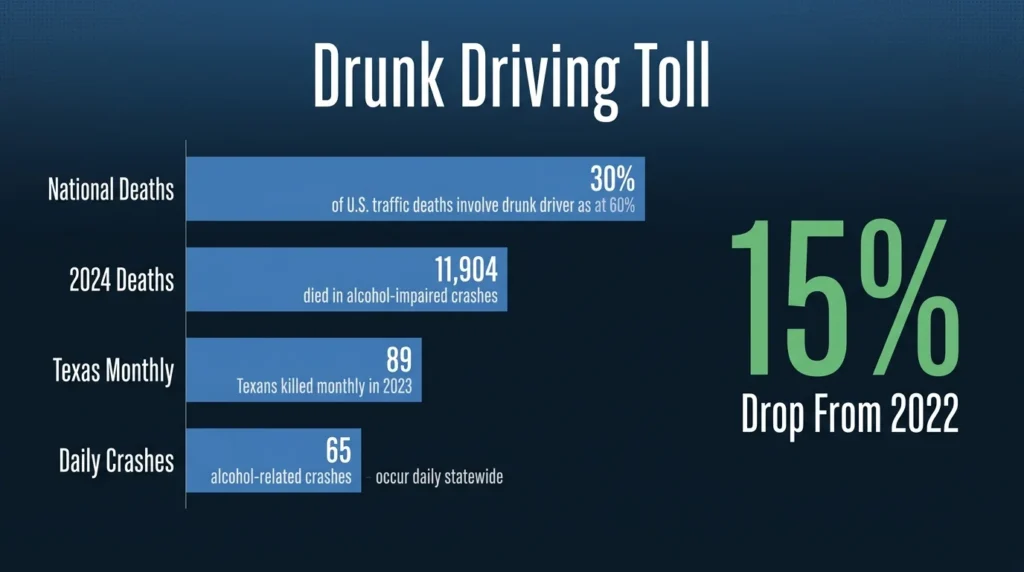
- Alcohol-related crashes killed about 89 Texans monthly in 2023, TxDOT reports.
You’re out at a local watering hole with a few friends when you see a patron from a different table get up, nearly fall over into the table next to theirs, and then stumble out the door alone. You hope they’re getting a ride home from a friend or rideshare service because anyone can tell they’re in no state to drive.
But what would happen if they did? Would they be responsible? Obviously, but they also might not be the only responsible party. The Texas Dram Shop Act makes it possible to hold a bar, restaurant, or any other alcohol-serving establishment liable for damages should they over-serve someone and that person be involved in an accident.
Alcohol plays a role in a significant share of Texas crashes. Nationally, about 30% of all traffic deaths involve a drunk driver, and 11,904 people died in alcohol-impaired-driving crashes in 2024.
What Is the Texas Dram Shop Act?
The Texas Dram Shop Act, found in Texas Alcoholic Beverage Code Chapter 2, outlines the civil liability of individuals or establishments that serve alcoholic beverages anywhere in the state. In short: any entity that serves alcohol to guests or customers could be held liable if their over-service contributes to a car accident.
The term “dram shop” refers to any commercial establishment that sells or serves alcoholic beverages, such as a bar or nightclub. The name comes from a measurement type for alcohol: a dram.
It’s important to note that a “dram shop” does not have to be a shop, store, restaurant, or even a commercial establishment. According to Texas law, alcohol providers at a social event, such as a party host, could also be implicated under these laws as well.
While dram shop laws only target alcohol providers, other laws on the books exist to place civil liability against intoxicated individuals.
Who Can Be Held Liable in Accident Cases?
In civil cases for personal injury or property damage, many different entities could be liable, not just the person who caused the accident. Depending on the type of case, parties such as property owners or employers may have legal liability because they possess a duty of care to keep people safe.
In cases involving alcohol, dram shop laws identify providers of alcohol as potentially liable parties. Texas law puts them into two categories: those who serve alcohol to of-age persons and those who serve alcohol to minors. Anyone hurt by a driver in a drunk driving accident may have more than one party to hold responsible.
Serving Alcohol
Simply serving alcohol doesn’t make a person or business liable for accidents that later happen because of intoxication. They must meet two conditions:
- They must have served alcohol to an intoxicated person who was a clear danger to themselves or others.
- The intoxication must be a proximate cause of the damage.
Under Texas Alcoholic Beverage Code § 2.02, “proximate cause” means the alcohol must be sufficiently related to the reason for the accident.
Serving Minors
Minors present a unique case under these laws. An adult over the age of 21 may be liable for damages caused by an intoxicated minor if they meet specific criteria.
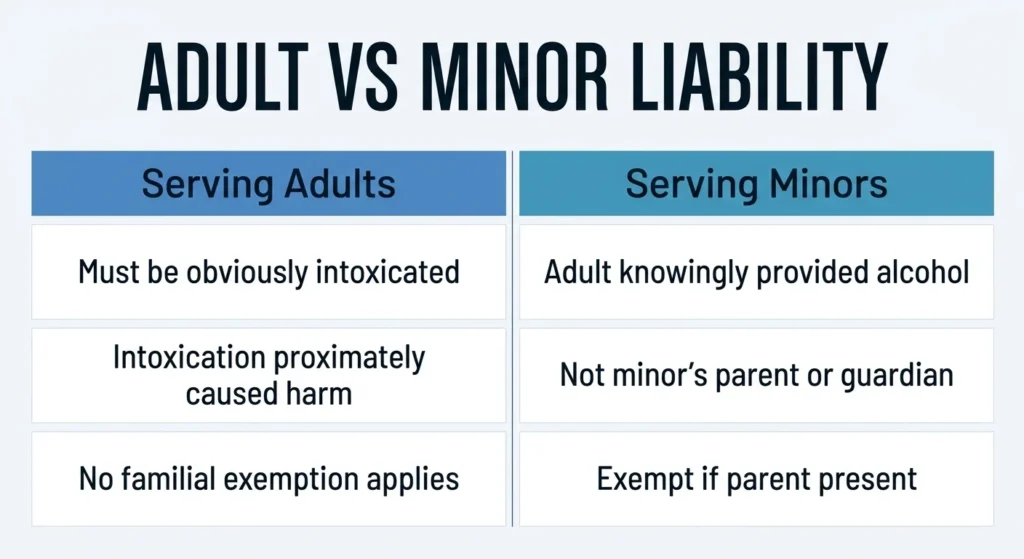
To be found liable under these laws, the adult must:
- Not be the minor’s parent, guardian, spouse, or other legal custodian
- Knowingly provide alcohol to the minor or allow another party to provide it
The law carves out a narrow exemption for parents, guardians, spouses, or legal custodians who provide alcohol to minors between the ages of 18 and 21, provided they are there to witness the alcohol consumption themselves. However, that exemption ends if they either are not present for the consumption or the alcohol is consumed by someone who they are not the guardian of. For example, a parent supervising a house party does not gain this liability exemption if a partygoer between 18 and 21 years of age gets drunk and then is involved in a crash.
How Is Liability Determined?
Liability is determined by identifying who was at fault in an accident. To hold a person or business liable under dram shop laws, the accident must have been caused by impairment because of alcohol consumption.
Once impairment has been established, you must also establish that the person who served the alcohol broke dram shop laws in doing so. A crash caused by an intoxicated driver may support a gross negligence claim rather than ordinary negligence, depending on factors like the driver’s blood alcohol level or prior DWI history, which can affect the damages available to the injured party.
Burden of Proof
Because these are civil cases, the burden of proof falls on the plaintiff (the person seeking compensation). A pending DWI charge or conviction is strong evidence that alcohol consumption led to an accident.
Witness testimony, security footage, or purchase receipts may be valuable evidence against servers. Additional evidence about their age may be relevant in the case of serving minors. Your lawyer can help you determine who may be liable and how to establish their actions in a legal case.
Potential Defenses
One of the things that makes dram shop liability difficult to establish is the large number of acceptable defenses that are difficult to overcome. Some of these defenses can include:
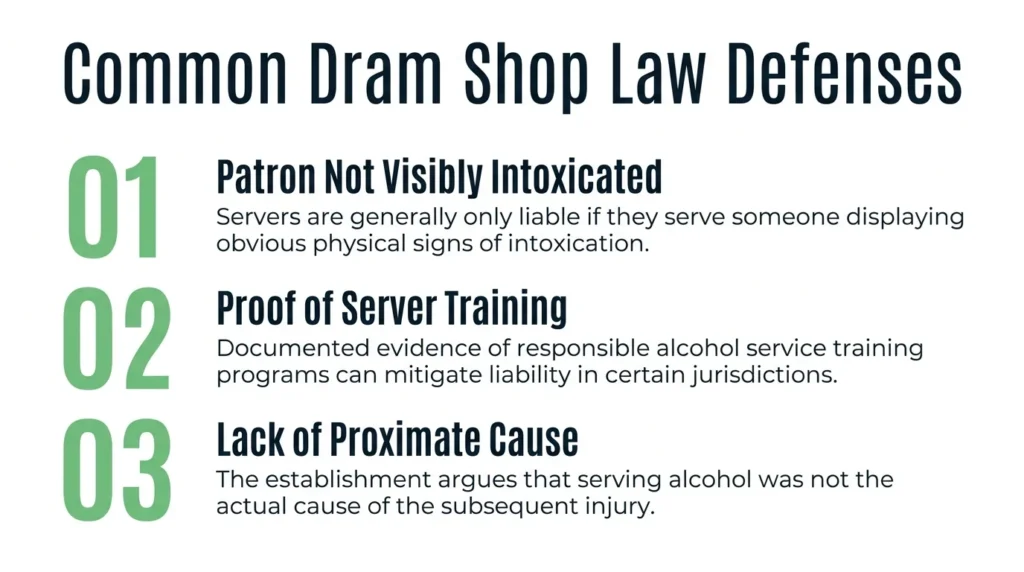
- They did not serve the alcohol
- The patron was not obviously intoxicated at the time of service
- Something else not related to the intoxication caused the accident
This is the key part of dram shop liability under Texas Alcoholic Beverage Code § 2.02: plaintiffs must definitively show that the driver’s intoxication directly resulted in an accident. If a drunk driver suffered a tire blowout, causing them to lose control and strike another driver, the dram shop could argue that the tire damage caused the accident, not the alcohol they served.
Why Hold Dram Shops Liable?
Holding servers liable for damages serves two purposes. First, it protects future individuals from being over-served or involved in accidents because of alcohol. Bar operators, bartenders, and other service industry members are trained not to serve anyone who is visibly intoxicated because of this law, and many take it extremely seriously.
Second, it maximizes the compensation you can recoup for an accident involving alcohol intoxication. Understanding what affects a drunk driving settlement can help you see why holding every responsible party liable matters, including compensation for medical treatment or lost wages.
How a Lawyer Helps in Dram Shop Cases
If you’ve been in an accident due to a drunk driver, it can turn your world upside down. You deserve proper compensation to get your life back on track. A Texas lawyer can help you get compensation from the driver and the alcohol provider through dram shop laws.
Texas mirrors that pattern. TxDOT reports an average of 89 Texans killed every month in alcohol-related crashes in 2023, with 65 alcohol-related crashes and three deaths occurring every day statewide, a 15% drop from 2022. Statewide crash data shows the pattern holds across major Texas cities, not just one metro area.
Pursuing a claim on your own is difficult, and adding a dram shop claim on top of a driver claim means dealing with multiple defendants and their own legal teams. An experienced lawyer can help you pursue every liable party and recover for:
- Medical expenses
- Lost wages
- Vehicle damage
- Pain and suffering
Support From Angel Reyes & Associates
If you’ve been in a car accident involving an intoxicated driver, you deserve justice. A lawyer experienced with dram shop laws in Texas can help you pursue a claim involving all relevant parties.
Angel Reyes & Associates has represented car and truck accident victims across Texas for more than 30 years, with more than $1 billion recovered for clients across the state. Our client reviews reflect that same commitment to clear communication and strong results.
We focus primarily on car and truck accident cases, so our experience handling these matters has been finely honed through years of real-world experience both in and out of the courtroom. Plus, we work on contingency, meaning you owe nothing unless we win.
Contact us today to get started with a free, no obligation consultation.
Dram Shop Liability FAQs
Can social hosts be held liable for drunk driving accidents in Texas?
No, Texas dram shop law only applies to licensed establishments that sell alcohol. Private individuals hosting parties cannot be held liable under the Dram Shop Act for guests who cause accidents after drinking at their home.
What happens if the drunk driver was served at multiple bars before the accident?
Each establishment that served the obviously intoxicated person can potentially be held liable. Texas law allows for joint and several liability, meaning you can recover from any or all responsible establishments up to your total damages.
Do dram shop claims require the drunk driver to be convicted of DWI?
No, a DWI conviction is not required for a successful dram shop claim. The civil case focuses on whether the establishment served an obviously intoxicated person, which requires different proof than criminal DWI charges.
Can establishments be liable if they served someone who appeared sober but had a high blood alcohol level?
No, Texas dram shop liability requires that the person was obviously intoxicated at the time of service. If someone appeared sober to reasonable observers, the establishment typically cannot be held liable regardless of their actual blood alcohol content.
What if the establishment has a valid liquor license and followed all TABC regulations?
Having a valid license and following general TABC regulations does not automatically protect an establishment from dram shop liability. The key question remains whether they served alcohol to someone who was obviously intoxicated.
About the Authors

Angel Reyes
Writer
Angel L. Reyes, III is the Founder and Managing Partner of Angel Reyes & Associates. A nationally recognized trial attorney and business leader, Angel has helped over 70,000 injury victims recover more than $1 billion since founding the firm in 1993. Named to the Texas Super Lawyers list annually since 2008, Angel brings Wall Street experience, Ivy League education, and a deep commitment to client advocacy. He is a frequent legal commentator and published author with extensive contributions to legal scholarship, trial strategy, and consumer protection.

Kyle Nicolas
Editor
Kyle Nicolas is the Web Content & SEO Manager at Angel Reyes & Associates. He has more than 10 years of experience as a marketing co...

Angel Reyes
Reviewer
Angel L. Reyes, III is the Founder and Managing Partner of Angel Reyes & Associates. A nationally recognized trial attorney and business...