Can a Car Accident Cause Vision Loss?


Every article on this site is researched by our internal team, reviewed for legal accuracy against current Texas law, and held to State Bar of Texas advertising standards before publication. We do not publish content that overstates outcomes or makes promises about results.
Learn more about our
editorial standards .
Key Takeaways
- Airbags, shattered glass, and sudden deceleration can all cause lasting vision loss.
- Visual field testing can provide objective evidence of how much vision you have lost.
- Medical and vocational evidence can help show how vision loss affects your ability to work and earn income.
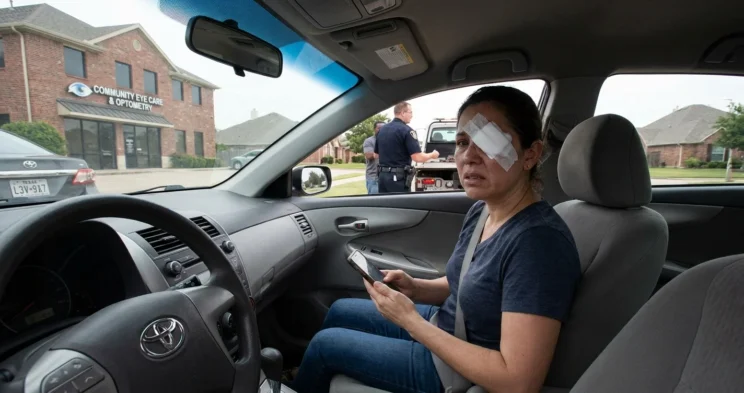
The airbag has deflated, the tow truck is on its way, and something about your vision does not feel right. Maybe part of your field of view seems missing, colors look strangely washed out, or one eye burns, even though there is no obvious injury. At the scene, you may not realize how serious the problem is. Some vision injuries after a car accident are immediately visible, while others can occur without any obvious damage to the outside of the eye.
A crash can cause vision loss through direct trauma to the eye, damage to the optic nerve, or injuries deeper inside the eye or brain. Some problems may not be obvious immediately after a collision, so changes in your vision should be medically evaluated, rather than dismissed as temporary effects of the crash.
Three Types of Vision Loss After a Car Crash
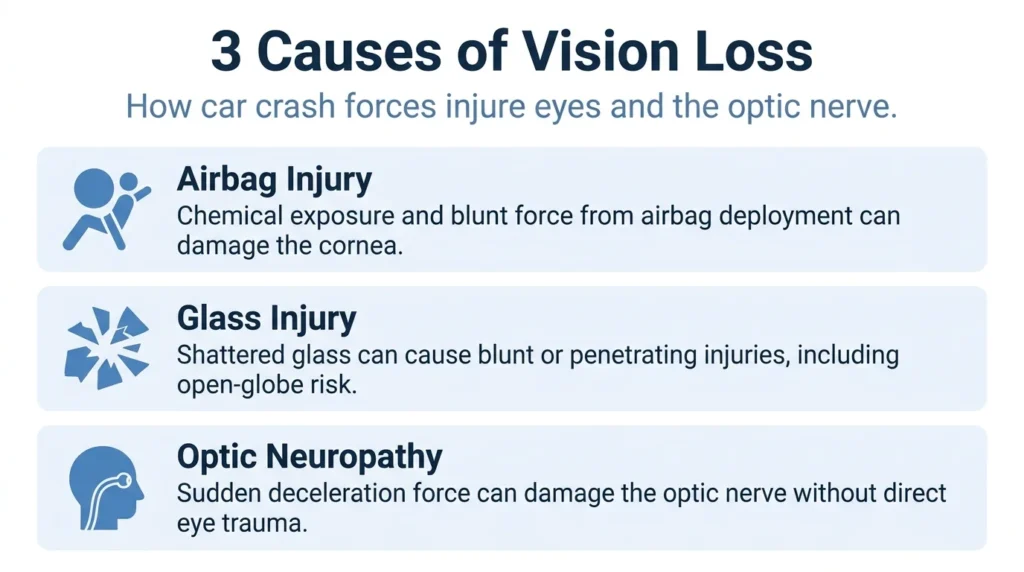
Three crash-related mechanisms account for most cases of vision loss after a collision:
- Airbag chemical and impact injury: An airbag can injure the eye through both chemical exposure and the force of impact. The chemicals released during deployment can damage the cornea, while the airbag itself can strike the eye and cause blunt trauma. Injuries can range from surface irritation to serious corneal damage. Prompt irrigation is important when chemical exposure occurs.
- Glass and open globe injury: Shattered windshield or side glass can cause blunt or penetrating injuries to the eye. Warning signs of a serious injury include sudden pain with vision loss, blood in the front of the eye, an irregular pupil, or visible eye tissue coming through a wound. A suspected open-globe injury requires prompt evaluation by an eye specialist.
- Traumatic optic neuropathy from deceleration: Traumatic optic neuropathy is damage to the optic nerve caused by the force of a crash, rather than a direct blow to the eye. It can happen when your head or face is thrown forward and then stops suddenly, creating intense force through the skull. Symptoms can include reduced vision, faded or washed-out colors, blind spots, and an abnormal pupil response to light when only one eye is affected. The optic nerve may look normal during the first eye exam. Visible damage to the optic disc may not appear until weeks after the injury. That delay means a normal-looking eye at the hospital does not necessarily rule out an optic nerve injury. Treatment varies, and current evidence has not shown steroids or surgical decompression to consistently improve vision compared with observation in indirect traumatic optic neuropathy.
Using Visual Field Testing to Document Vision Loss
Visual field testing (also called “perimetry”) can provide objective evidence of vision loss. The test maps which areas you can and cannot see and records the results as measurable data. It can identify blind spots, reduced sensitivity, or a narrowed field of vision.
Follow-up testing allows doctors to compare your results over time and determine whether your vision improves, remains stable, or worsens. A visual field test combined with a dilated eye exam can establish a useful baseline after a crash.
How Vision Loss Can Affect Your Earning Capacity
Serious vision loss can affect your ability to work and earn income in the future. If your job requires driving, precise visual work, or a particular license, then documented vision loss may affect your ability to continue working in that occupation.
Your work history, education, training, and professional credentials can help establish what your earning potential was before the crash.
Medical and vocational experts can explain how your documented vision problems affect your ability to perform specific job duties and what work restrictions may result.
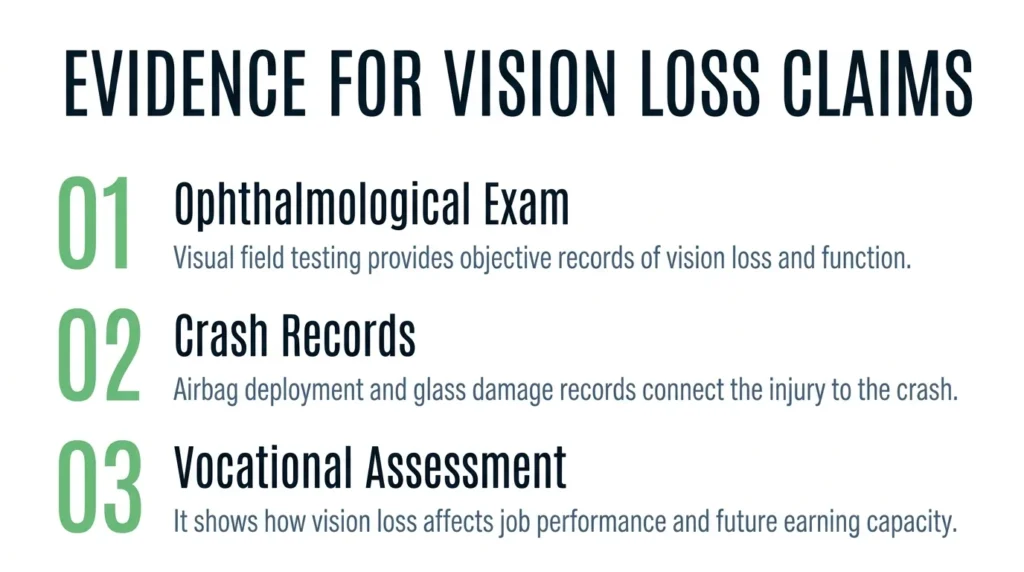
Three types of evidence can help support a vision loss claim:
- Ophthalmological exam and visual field testing: These provide objective records of your vision loss and how it affects your visual functioning.
- Records of airbag deployment and glass involvement: These can help connect the eye or optic nerve injury to the crash.
- Vocational assessment: This can help show how your vision loss affects your ability to perform your job and earn income in the future.
Preserving these records early can help establish the connection between the crash, your vision loss, and its effect on your ability to work.
Talk to Angel Reyes & Associates About Your Vision Loss Claim in Texas
If a crash changed your vision, you may be dealing with treatment decisions, changes at work, and financial concerns at the same time. You do not have to navigate those issues on your own.
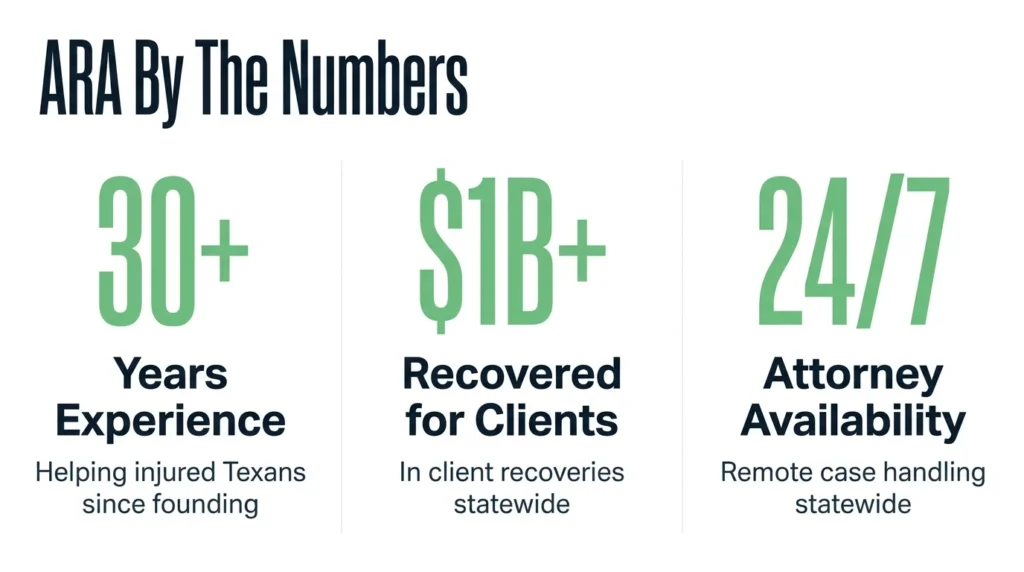
Angel Reyes & Associates has guided injured Texans through situations like this for over 30 years, and we have recovered more than $1 billion for our clients. We have offices across the state, our attorneys are available 24/7 to answer your questions, and we can handle the majority of your case remotely.
Contact Angel Reyes & Associates for a free consultation today to discuss your injury, your options, and your next steps.
Past results do not guarantee future outcomes.
Vision Loss FAQs
Can you lose vision without an obvious eye injury?
Yes. A person can have vision problems even if there is no visible damage to the outside of the eye. A crash can injure the optic nerve or brain areas that process vision without causing an obvious wound.
What are the signs of an eye injury after a car accident?
Symptoms may include blurred or double vision, eye pain, flashes of light, new floaters, loss of part of your visual field, light sensitivity, or changes in how you see colors. Any sudden change in vision after a crash should be evaluated promptly.
Can vision loss happen days after a car accident?
Yes. Some injuries may not cause noticeable vision problems immediately, and symptoms can become more apparent as swelling or other effects develop. New or worsening vision changes after a crash should be evaluated by a medical professional.
Can I file a personal injury claim for vision loss after a car accident?
Possibly. You may be able to file a personal injury claim if another person’s negligence caused the crash, and the crash caused your vision injury. Medical records and other evidence can help establish the connection between the accident and your vision problems.
What types of compensation can I seek for vision loss after a car accident?
Depending on the circumstances, a personal injury claim may seek compensation for medical expenses, lost income, pain and suffering, and other losses caused by the vision injury. The damages available depend on the facts of the case and applicable Texas law.
About the Authors

Angel Reyes
Writer
Angel L. Reyes, III is the Founder and Managing Partner of Angel Reyes & Associates. A nationally recognized trial attorney and business leader, Angel founded the firm in 1993, which has gone on to help over 70,000 injury victims recover more than $1 billion. Named to the Texas Super Lawyers list annually since 2008, Angel brings Wall Street experience, Ivy League education, and a deep commitment to client advocacy. He is a frequent legal commentator and published author with extensive contributions to legal scholarship, trial strategy, and consumer protection.

Graham Griffin
Editor
Graham Griffin is the Web & Content Manager at Angel Reyes & Associates, where he oversees content strategy, AI-powered workflows, a...

Angel Reyes
Reviewer
Angel L. Reyes, III is the Founder and Managing Partner of Angel Reyes & Associates. A nationally recognized trial attorney and business...