How Bad Is a Sternum Fracture From a Seat Belt?


Every article on this site is researched by our internal team, reviewed for legal accuracy against current Texas law, and held to State Bar of Texas advertising standards before publication. We do not publish content that overstates outcomes or makes promises about results.
Learn more about our
editorial standards .
Key Takeaways
- Doctors say a seat belt sternum fracture typically heals in about 10 weeks.
- Every documented sternum fracture should trigger an ECG and troponin blood test.
- A belt-pattern sternum fracture shows your seat belt was on and functioning properly.
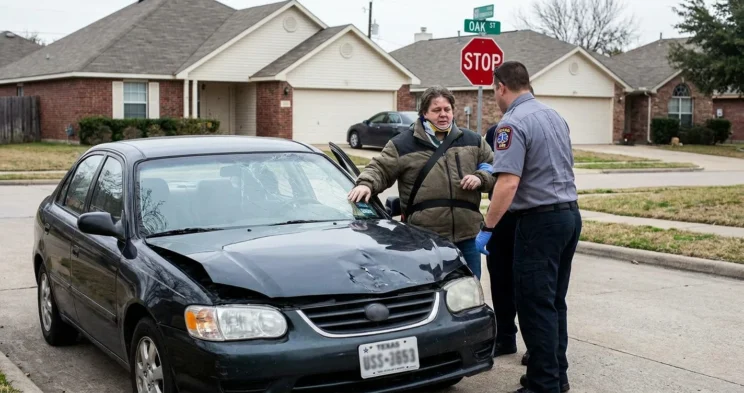
Your chest burns with every breath since the crash. A diagonal bruise runs across your sternum where the shoulder belt held you in place, and the imaging now shows a fracture underneath it.
A sternum fracture from a seat belt usually heals on its own in about 10 weeks. But because the bone sits directly over your heart, doctors need to rule out a deeper injury before anyone can tell you that with real confidence.
What Causes a Sternum Fracture From a Seat Belt?

The diagonal shoulder strap crosses your sternum for a reason. It spreads crash force across your chest instead of letting your body fly into the steering wheel or dashboard.
During a sudden stop, that same strap concentrates deceleration force directly on the bone. The sternum can crack even though the belt did exactly what it was designed to do.
This kind of chest wall injury from a crash shows up in roughly 3% to 6.8% of motor vehicle collision patients, and motor vehicle crashes account for about 68% of all sternum fracture cases in one large study. It is a known trade-off of shoulder restraint use.
Sternal fractures have become more common since shoulder belts became mandatory, even as seat belts overall cut fatal injury risk by roughly 43%.
Women and older drivers face somewhat higher risk. A less elastic chest wall absorbs impact energy less effectively, so the same crash force does more damage to the bone.
Doctors sometimes describe this within the broader “seat belt sign” or “seat belt syndrome,” a pattern of belt-caused bruising and injury first described back in 1962. A sternum fracture is one specific, well-documented piece of that larger picture.
If your crash happened anywhere from I-35 traffic in Dallas to a farm road outside Fort Worth, this is one of the most common serious injuries a properly worn belt can still cause.
How Serious Is It? Healing Time & the Hidden Cardiac Risk

An isolated sternum fracture, meaning no other major injury, is usually not life threatening. Most heal in about 10 weeks with pain control and breathing exercises, and mortality for an isolated fracture sits below 1%.
The bigger concern is what else the crash might have damaged. Up to two-thirds of sternum fracture patients have another injury, such as broken ribs, a bruised lung, a collapsed lung, or damage to the heart itself. When another injury is present, mortality climbs sharply, which is exactly why every sternum fracture gets treated as a possible warning sign rather than a simple broken bone.
A sternum fracture alone does not reliably predict heart damage. But doctors treat it as a real risk factor that demands screening, not something to wait out. Here is the standard workup:
- An ECG and a troponin blood test on admission, since a normal result on both tests approaches near-perfect accuracy for ruling out a blunt cardiac injury.
- Roughly 24 hours of heart monitoring if either test comes back abnormal, since dangerous heart rhythms almost always show up on that first day.
- An echocardiogram, which is not routinely needed when the ECG and troponin are both normal, but becomes necessary if either test is abnormal or you become unstable.
- Surgery, reserved for fractures that are unstable, badly displaced, or failing to heal properly, with a strong success rate when it is needed.
How Doctors Confirm the Diagnosis & Build the Evidence Spine

A chest CT scan finds sternum fractures that plain X-rays miss entirely. In one study, 94% of confirmed fractures showed up only on CT, not on the standard chest X-ray:
- A lateral chest X-ray is the traditional targeted view, since the fracture and any displacement typically run front to back rather than side to side.
- A standard frontal chest X-ray catches only about half of these fractures on its own.
- The same CT scan that finds the fracture also detects other chest injuries in more than 80% of patients, making it the single most useful test after this kind of crash.
Together, three pieces of documentation form the medical backbone of a sternum fracture claim: imaging that confirms the break, the ECG and troponin results (plus an echocardiogram when one was needed), and the record showing you were properly restrained. Each piece answers a different question an insurance adjuster or a jury will eventually ask.
What a Sternum Fracture Means for a Texas Car Accident Claim
Texas follows a modified comparative fault rule. If you are found more than 50% responsible for your own injuries, Texas law bars you from recovering anything, and any at-fault defendant only owes the share of damages that matches their own percentage of fault.
Texas also requires most vehicle occupants age 15 and older to wear a seat belt. For decades,
Texas courts would not let a defendant use a plaintiff’s failure to buckle up as evidence of fault. That changed in 2015.
In Nabors Well Services, Ltd. v. Romero, the Texas Supreme Court ruled that evidence of seat belt nonuse can be used to reduce a plaintiff’s recovery, but only if the defendant proves that not wearing the belt actually caused or contributed to the injury. The burden sits with the defendant, and the evidence still has to survive normal fairness rules and usually requires expert testimony to connect the dots.
This is where your sternum fracture works in your favor. A belt-pattern fracture across your chest is physical evidence that your seat belt was on your body and engaged at the moment of impact. That evidence tends to take a seat-belt-nonuse defense off the table for this specific injury, even as it documents a real, painful, and compensable injury in its own right.
Talk to a Lawyer About Your Sternum Fracture
A sternum fracture is never just a bone injury. It comes with a cardiac workup you need to finish and evidence that can shape how much your claim is worth.
Angel Reyes & Associates has guided injured Texans through crashes like this for over 30 years. An attorney can review your imaging, your cardiac test results, and your restraint documentation, then walk you through your options at no cost. Get a free consultation today.
Past results do not guarantee future outcomes.
Seatbelt-Related Sternum Fracture FAQs
Can a sternum fracture cause long-term pain after a car accident?
Most sternal fractures heal without surgery, but some people can experience persistent chest pain, tenderness, or discomfort after the bone has healed, particularly when the fracture was displaced or accompanied by other chest injuries.
What other injuries can happen with a sternum fracture in a car accident?
A sternum fracture can occur alongside rib fractures, lung injuries, or other trauma, so doctors may evaluate the entire chest rather than treating the fracture in isolation.
Can you work with a sternum fracture after a Texas car accident?
Whether you can return to work depends on the severity of the fracture, your symptoms, and the physical demands of your job; activities involving lifting, pushing, pulling, or strenuous movement may need to be restricted during recovery.
What damages can you recover for a sternum fracture after a Texas car accident?
Depending on the circumstances, a Texas injury claim may include medical expenses, lost income, physical pain, and other legally recoverable losses caused by the collision.
How does a sternum fracture affect a Texas car accident settlement?
The fracture can provide documented evidence of a significant physical injury, but the value of a claim depends on factors such as the medical treatment required, recovery, other injuries, lost income, and the evidence establishing responsibility for the crash.
About the Authors

Angel Reyes
Writer
Angel L. Reyes, III is the Founder and Managing Partner of Angel Reyes & Associates. A nationally recognized trial attorney and business leader, Angel founded the firm in 1993, which has gone on to help over 70,000 injury victims recover more than $1 billion. Named to the Texas Super Lawyers list annually since 2008, Angel brings Wall Street experience, Ivy League education, and a deep commitment to client advocacy. He is a frequent legal commentator and published author with extensive contributions to legal scholarship, trial strategy, and consumer protection.

Kyle Nicolas
Editor
Kyle Nicolas is the Web Content & SEO Manager at Angel Reyes & Associates. He has more than 10 years of experience as a marketing co...

Angel Reyes
Reviewer
Angel L. Reyes, III is the Founder and Managing Partner of Angel Reyes & Associates. A nationally recognized trial attorney and business...