Can a Public Adjuster Help After a Crash?


Every article on this site is researched by our internal team, reviewed for legal accuracy against current Texas law, and held to State Bar of Texas advertising standards before publication. We do not publish content that overstates outcomes or makes promises about results.
Learn more about our
editorial standards .
Key Takeaways
- A Texas public adjuster may help with your own vehicle-damage claim, not your injury claim.
- Texas generally caps public adjuster fees at 10%, which may apply to the whole settlement.
- Check the TDI license record, the written contract, and your claim letters before signing.
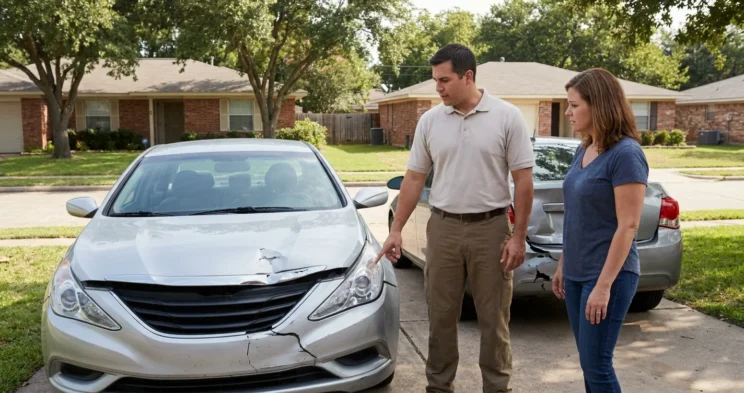
You’re home after a wreck on I-35. Your car is in the shop, and the insurance letters keep coming. Someone suggests hiring a public adjuster.
In Texas, a public adjuster can help in one narrow way after a crash. They can help with a property claim under your own policy, such as a dispute over collision damage to your car. A public adjuster cannot perform actions a lawyer would..
Knowing that distinction helps you choose the right help before paying for it.
What a Texas Public Adjuster Does & Whom They Represent
A Texas public adjuster is licensed to represent an insured, for a fee, on a property insurance claim. Texas Insurance Code Chapter 4102 creates that license and sets its limits. Sections 4102.001 and 4102.101(a) tie the role to paid representation of insureds on property claims:
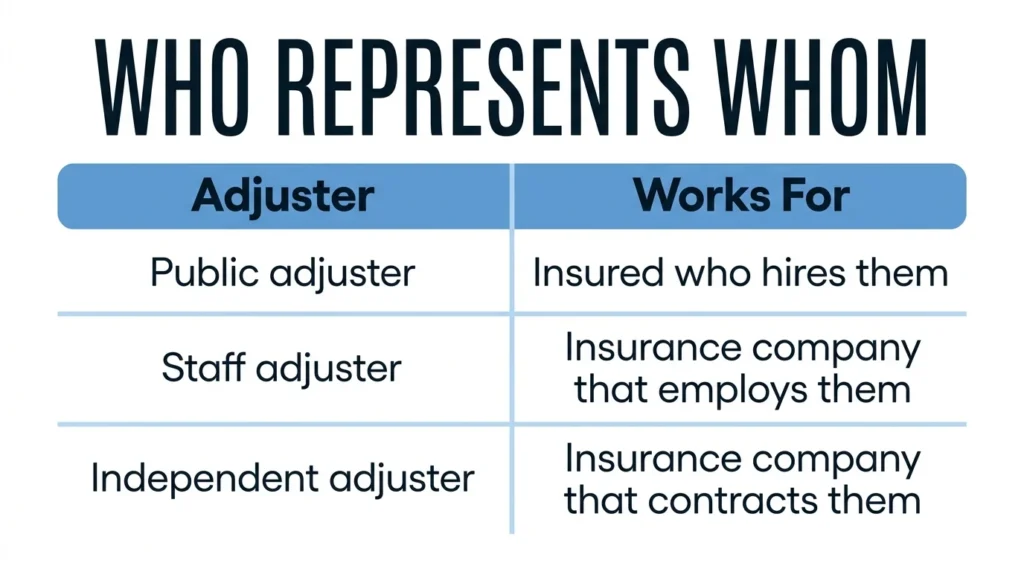
The word “independent” trips up many people. Under Texas Insurance Code Chapter 4101, the definition of adjuster covers insurer employees and independent contractors acting for insurers. An independent adjuster does not represent you just because of the title.
The insurer’s adjuster reviews what happened and estimates what the company will pay. The Texas Department of Insurance (TDI) says that review may include examining damage, police reports, and witness information. That adjuster works for the insurance company.
So what does a public adjuster do? The contract TDI prescribes describes helping the insured prepare, present, and adjust an identified loss. That is the service. It is not a promise of a bigger check.
The license also has firm limits. Section 4102.156 bars public adjusters from practicing law.
If you’re unsure who represents whom, check your claim correspondence. Look for the insurer, claim number, and representation details in assignment letters and other correspondence.
Why a Public Adjuster Has a Limited Role After a Car Crash
The possible fit is a property claim under your own policy, such as collision damage to your vehicle. Chapter 4102 does not authorize a public adjuster to negotiate an injury claim. It also does not let them pursue the other driver’s liability insurer when you are not an insured under that policy.
Vehicle Damage & Injuries Are Separate Claims
One crash can create several claims. Damage to your car is a property loss. Your physical injuries, treatment costs, and lost earnings from being hurt are not property losses, even though they came from the same collision.
That split means a lot because the public adjuster’s license covers property claims. Injury compensation falls outside that role.
First-Party & Third-Party Claims
A first-party claim is one you make under your own policy as an insured. A third-party claim is one you make against someone else’s policy, usually the at-fault driver’s liability coverage.
Section 4102.157 bars a public adjuster from handling a claim for someone who is not an insured under the policy. That prevents them from representing you against the at-fault driver’s liability insurer when you are not insured under that policy.
Your Own Coverage Still Has Limits
TDI’s auto insurance guide separates liability, collision, medical payments, personal injury protection (PIP), and uninsured/underinsured motorist coverage. Collision pays to repair or replace your car after an accident.
A PIP or medical-payments claim under your own policy is still an injury benefit. It does not become a property claim because it comes from your own policy.
These legal limits, along with the fee math, mean hiring a public adjuster after a car accident fits only a small set of situations. Not every crash requires a lawyer. Questions about injury compensation, fault, or your legal rights belong with an attorney, though.
When Help With Your Own Vehicle Damage Claim May Make Sense
A public adjuster experienced with vehicle claims may be worth considering if you have collision coverage and disagree with your insurer’s repair or replacement valuation. Whether that help is worth the cost depends on the dispute, your other options, and the proposed fee.
Say your insurer’s estimate leaves out frame damage your body shop found after taking apart the front end. The gap is real, and you want someone to present the full loss to your insurer.
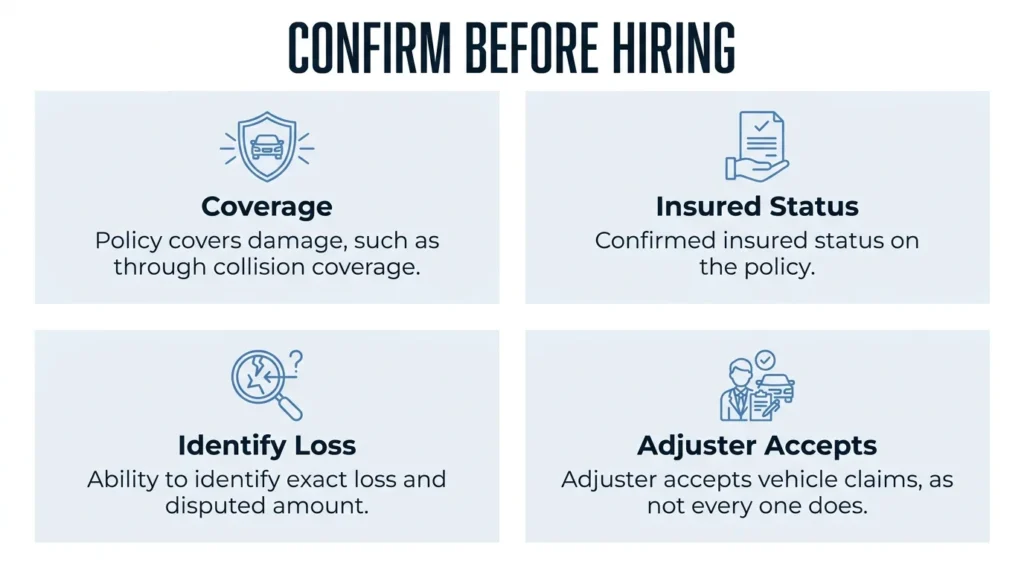
Before you sign with anyone, confirm these points:
- Your policy covers the damage, such as through collision coverage.
- You are insured on that policy.
- You can identify the exact loss and amount in dispute.
- The adjuster accepts vehicle claims, since not every licensed public adjuster may take them.
You may not need paid help at all. TDI explains that you or your repair shop can raise omitted damage with the insurer’s adjuster and discuss a revised estimate. Your policy may also offer an appraisal process for a valuation dispute with your own insurer.
An appraiser plays a different role from a public adjuster. You do not need to hire a public adjuster to discuss omitted damage with your insurer.
Compare the Public Adjuster’s Fee With an Injury Lawyer’s Fee
Section 4102.104 generally caps a public adjuster’s pay at 10% of the insurance settlement. That cap is a ceiling, not a standard rate, and the contract sets the actual fee. An injury lawyer’s fee comes from a separate written agreement, so the two percentages are not interchangeable.
How Public Adjuster Fees Work
TDI’s guide to hiring a public adjuster warns that the percentage may apply to the whole settlement, not just an increase. You may owe a fee even without an improved offer, and you remain responsible for your deductible. Fees can be negotiated.
The TDI public adjuster contract, FIN535, counts expenses and direct costs within the fee limit. It requires a stated calculation method and an explanation of how earlier insurer payments affect the fee.
How an Injury Lawyer’s Fee Works
An injury lawyer’s written fee agreement explains the charges for legal representation. For a fee based on a percentage of the recovery, the State Bar of Texas explains that the agreement must address expense deductions, and the client should receive a closing statement showing the calculation.
Before signing, check the percentage and whether it changes by case stage. Confirm whether you must pay court costs and expenses, including if there is no recovery, and whether the percentage is calculated before or after those deductions.
Chapter 4102’s 10% cap does not set lawyers’ fees. The more useful comparison is the work you are paying for. A public adjuster helps adjust a property claim with your own insurer. An injury lawyer provides legal representation on your injury claim, including claims against the at-fault driver’s insurer.
Check the License, Contract & Claim Correspondence Before Hiring
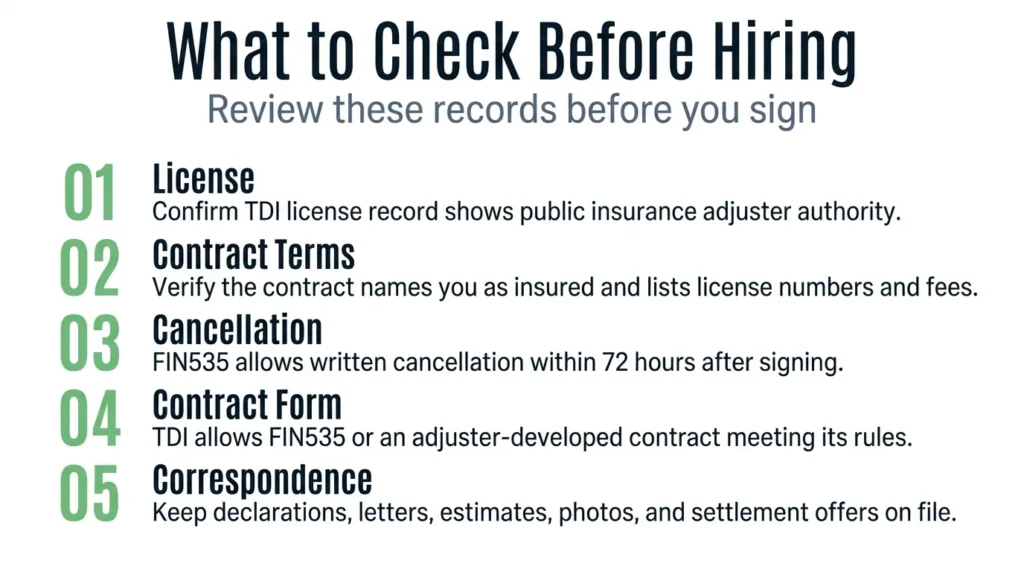
Three records tell you whether a public adjuster fits your situation, the license record, the written contract, and your claim correspondence. Review all three before you sign:
- License. Follow TDI’s license lookup instructions to search by name or license number. Confirm the record shows public insurance adjuster authority, then save the result with the person’s name and number.
- Contract terms. Check that the contract identifies you as the insured, lists license numbers, describes the loss and services, explains the fee calculation and prior-payment treatment, addresses costs, and carries signatures.
- Cancellation. FIN535 lets you cancel in writing within 72 hours after signing. Follow its notice procedure rather than assuming a phone call cancels the contract.
- Contract form. TDI’s license management guidance allows FIN535 or an adjuster-developed contract that meets TDI’s rule requirements. Either way, the contract should cover these terms.
- Correspondence. Keep your declarations page, insurer letters, estimates, photos, settlement offers, and any representation notices. These records show whose policy and which loss are involved.
Talk With Angel Reyes & Associates About an Injury Claim
A public adjuster may help with your car. Your injuries call for a different kind of help.
If you have questions about crash injuries, who was at fault, your legal rights, or an insurer dispute over injury compensation, Angel Reyes & Associates can walk you through your options. The firm has served injured Texans for over 30 years, and you can reach the team 24/7.
Contact Angel Reyes & Associates for a free consultation.
Past results do not guarantee future outcomes.
Public Adjuster Help After a Crash FAQs
What is the difference between a public adjuster and an auto damage appraiser in Texas?
A public adjuster represents an insured in preparing, presenting, and adjusting a property insurance claim, while an appraiser evaluates the amount of damage or loss. Your auto policy may provide an appraisal process for a disagreement over your vehicle’s value or repair costs, so review the policy before paying for additional help.
Can I negotiate with my own auto insurance company without hiring a public adjuster?
Yes. You can submit repair estimates, photographs, and documentation of additional damage directly to your insurer and request a revised estimate. If your policy includes an appraisal provision, you may also be able to use that process to resolve a disagreement over the amount of a covered loss.
Can a public adjuster help if my car insurance claim is delayed in Texas?
A public adjuster may help organize documentation and communicate about a covered property claim under your own policy. Texas insurance claim-handling laws may impose deadlines on insurers, depending on the circumstances, but a public adjuster cannot provide legal representation or resolve every type of coverage dispute.
About the Authors

Angel Reyes
Writer
Angel L. Reyes, III is the Founder and Managing Partner of Angel Reyes & Associates. A nationally recognized trial attorney and business leader, Angel has helped over 70,000 injury victims recover more than $1 billion since founding the firm in 1993. Named to the Texas Super Lawyers list annually since 2008, Angel brings Wall Street experience, Ivy League education, and a deep commitment to client advocacy. He is a frequent legal commentator and published author with extensive contributions to legal scholarship, trial strategy, and consumer protection.

Kyle Nicolas
Editor
Kyle Nicolas is the Web Content & SEO Manager at Angel Reyes & Associates. He has more than 10 years of experience as a marketing co...

Angel Reyes
Reviewer
Angel L. Reyes, III is the Founder and Managing Partner of Angel Reyes & Associates. A nationally recognized trial attorney and business...