What Happens if the At-Fault Driver Dies in a Texas Car Accident?


Every article on this site is researched by our internal team, reviewed for legal accuracy against current Texas law, and held to State Bar of Texas advertising standards before publication. We do not publish content that overstates outcomes or makes promises about results.
Learn more about our
editorial standards .
Key Takeaways
- The at-fault driver's insurance stays active and must still pay valid claims after death.
- Claims beyond policy limits become a claim against the driver's estate through probate.
- The two-year filing deadline pauses for up to twelve months after the driver's death.
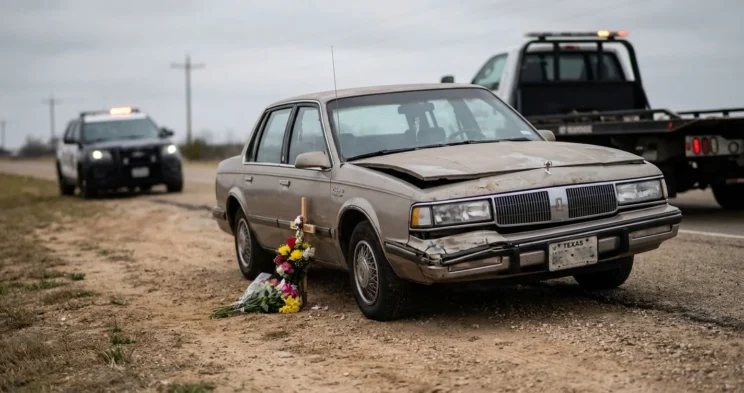
You are sorting through emergency room bills after a wreck on I-35 when you learn the at-fault driver died. Your injuries, the mounting medical bills, and the vehicle damage remain just as real despite that outcome. The tragic turn does not erase your legal options, and Texas law still gives you a path to compensation.
Your Rights When the At-Fault Driver Dies
Texas law protects your right to compensation no matter what happens to the at-fault driver. The driver’s insurance policy stays in force after death, and Texas estates take on the liabilities of the person who died, including car accident damages.
This is still fundamentally a Texas car accident claim, and the driver’s death does not erase it. Your medical bills will not pause, and your lost wages keep adding up.
The at-fault driver’s insurance coverage remains active and available to pay valid claims up to the policy limits.
Insurance Claims After the At-Fault Driver Dies
The deceased driver’s auto insurance remains fully active after death. Texas law requires the insurer to process your claim the same way it would handle any other accident claim.
Insurance adjusters cannot deny your claim simply because the policyholder died. They still investigate using police reports, witness statements, and other evidence within their usual timeframes.
You will now deal with the insurance company, and sometimes with the estate’s legal representative, instead of the driver. Document every conversation, and push back on unnecessary delays.
Policy Limits & Coverage Types Still Apply
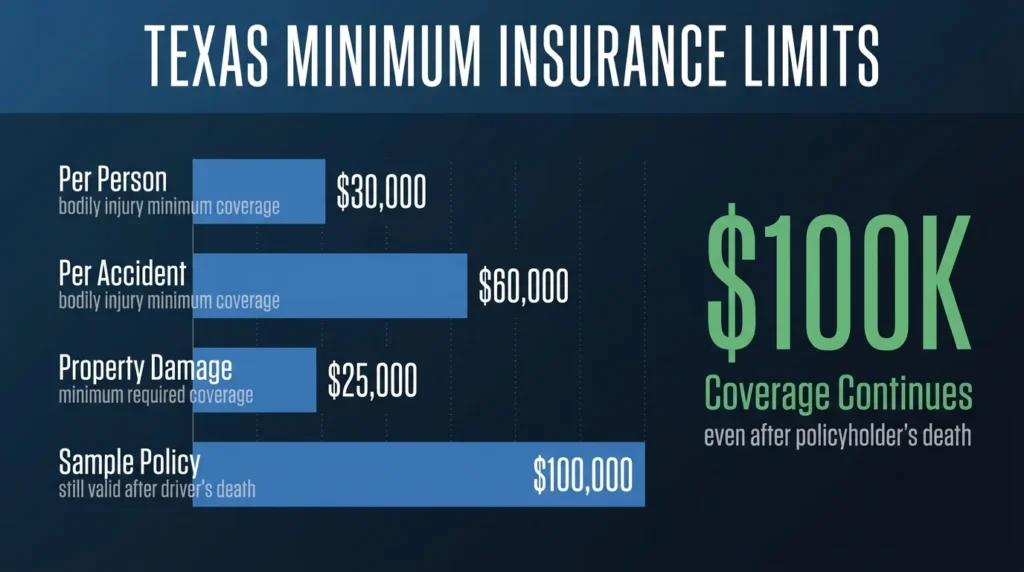
A $100,000 bodily injury policy is still worth $100,000 after the policyholder’s death. Property damage coverage, uninsured motorist benefits, and other coverages carry over unchanged.
Texas sets minimum liability limits under Texas Transportation Code § 601.072. Those minimums are $30,000 per person and $60,000 per accident for bodily injury, plus $25,000 for property damage. Many drivers carry higher limits than that floor.
Commercial coverage may also apply if the driver was working at the time of the crash. The vehicle owner’s insurance could add further coverage if the driver was using someone else’s car.
Timeline Considerations for Filing
Insurance notice deadlines do not pause for the driver’s death. Most policies require you to report the accident within days or weeks, so file your initial claim within 30 days when you can.
That two-year lawsuit deadline works differently once probate is involved, as the section below explains. Evidence fades and witnesses forget details as time passes, so acting quickly protects your claim.
Filing a Claim Against the Estate
The deceased driver’s liability policy responds to your claim first, up to its limits. Only the amount beyond those limits becomes a claim against the driver’s estate.
Texas estates inherit both assets and liabilities from the person who died. Your accident claim becomes a formal claim against the estate, handled through probate rather than through the driver directly.
Financial recovery depends on the estate having enough assets left after higher-priority debts are paid. A small estate may use simplified procedures, and some families try to move assets outside probate to avoid creditors.
The Texas Probate Court Process
Probate typically begins within weeks or months after death. The court appoints an executor or administrator to manage the estate and handle creditor claims like yours.
Once that representative sends you notice, you generally must present your claim within 120 days under Texas Estates Code § 308.054. Miss that window, and your unsecured claim becomes barred under Texas Estates Code § 355.060, regardless of how much time remains before the estate closes.
The probate court then reviews your claim much like a personal injury lawsuit. Medical records, the accident report, witness statements, and expert opinions all support your case.
Priority of Claims & Asset Distribution
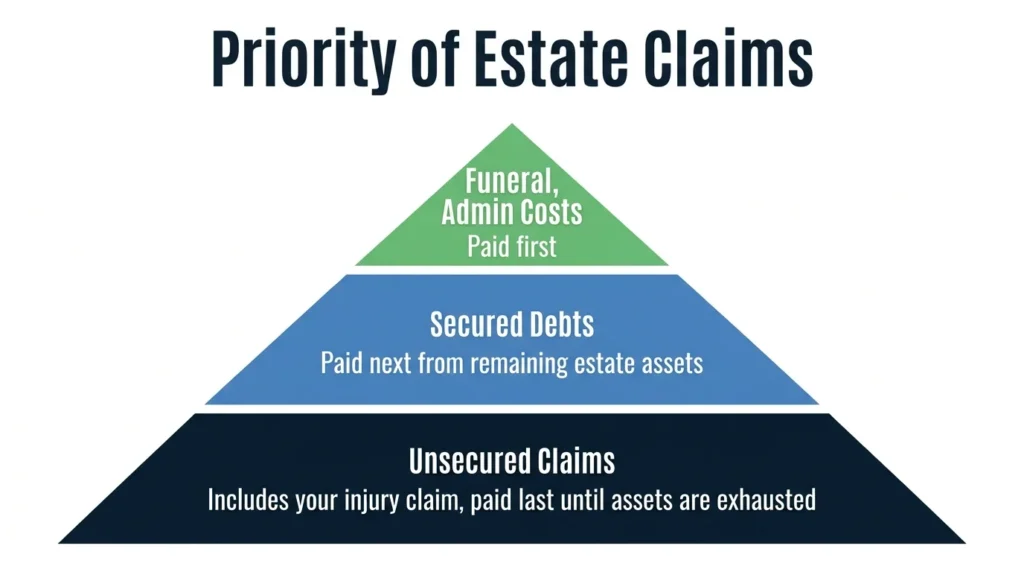
Funeral and administration costs get paid first from the estate. Secured debts come next, then unsecured claims, including your personal injury claim, in priority order until the assets run out.
Life insurance with a named beneficiary bypasses probate entirely. Other assets, like real estate, vehicles, and bank accounts, remain available to pay valid claims.
The Two-Year Deadline & Probate Timing
Your filing deadline does not simply stop at two years once an estate is involved. It pauses, then resumes on a specific schedule tied to probate.
How the Deadline Interacts with Probate
Texas gives you two years to file a personal injury lawsuit under Texas Civil Practice and Remedies Code § 16.003. That clock keeps running even when the at-fault driver dies, with one key exception.
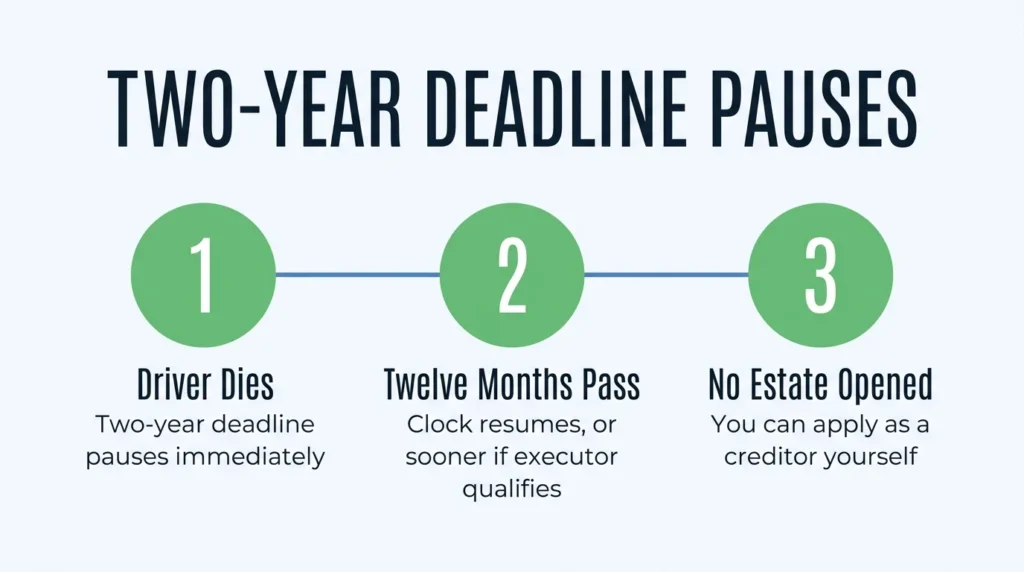
Under Texas Civil Practice and Remedies Code § 16.062, the driver’s death pauses that two-year clock for twelve months. It resumes sooner if an executor or administrator qualifies first. Either way, this gives an estate time to get organized before your deadline starts moving again.
What to Do if No Estate Is Opened
You do not have to wait indefinitely for someone else to open probate. Texas law lets a creditor, including an injured accident claimant, apply for letters of administration under Texas Estates Code Chapter 304. This applies when no executor has stepped forward.
Here is how the two mechanics fit together:
- Your two-year deadline pauses the moment the at-fault driver dies.
- It resumes twelve months later, or sooner if an executor or administrator qualifies first.
- If no one has opened probate as that window closes, you can apply yourself as a creditor to move the estate forward.
Track that twelve-month window closely, and talk to an attorney promptly if probate has not started so your claim stays protected.
Common Scenarios & Special Circumstances
Not every case follows the same script. An uninsured driver, a drunk driver, or a commercial vehicle each change the coverage available to you.
When the At-Fault Driver Was Uninsured
About one in seven Texas drivers has no insurance at all. When the deceased driver was one of them, your own uninsured motorist coverage becomes your main source of financial recovery.
UM coverage protects you regardless of the at-fault driver’s insurance status. Without it, you are left to pursue the deceased driver’s estate directly. Uninsured drivers can still leave behind property, bank accounts, or other assets a claim can reach.
DUI-Related Fatal Accidents
Drunk driving strengthens your claim, and it may open the door to punitive damages for gross negligence. Blood alcohol results, witness statements, and other criminal investigation evidence can support your civil claim too.
Dram shop liability may apply if the driver was drinking at a bar or restaurant before the crash. That business’s commercial insurance can add another source of coverage beyond the driver’s own policy.
Commercial Vehicle & Employer Liability
An employer is vicariously liable when an employee causes a crash during work duties. Commercial policies typically carry much higher limits than personal auto policies.
Delivery drivers, truck operators, and service technicians are clearly working while driving between stops. Employment records and vehicle tracking data can establish that connection.
Ethical & Emotional Considerations
Pursuing compensation after a fatal crash is not selfish, even when the driver’s family is grieving too. Insurance exists for exactly this situation.
Why Pursuing Compensation Is Appropriate
Your injuries and bills exist regardless of what happened to the driver. You may still be unable to work, and your family still depends on that income.
The driver paid insurance premiums specifically to protect other people from their own negligence. Protecting your family’s financial security through that coverage is responsible, not selfish.
Respectful Communication Throughout the Process
Professional, attorney-led communication keeps stress lower for everyone, including the grieving family. Your attorney handles the estate representatives and the insurance company so you do not have to.
Avoid discussing the accident or the deceased driver on social media. Keep the focus on documented damages and legal liability rather than blame.
Support Resources for Complex Emotions
Counseling and support groups can help with the trauma, driving anxiety, or survivor’s guilt that often follow a fatal accident. Related mental health treatment costs count as compensable damages too.
A legal team with decades of experience handling cases like this can also help you feel less alone during a difficult claim.
How Angel Reyes & Associates Can Help
Angel Reyes & Associates has spent over 30 years handling complex Texas car accident cases, including claims that involve a deceased at-fault driver.
We have more than $1 billion recovered for clients across Texas. We know how to coordinate with insurers, verify coverage, and manage estate and probate procedures at the same time.
We work on contingency, so you pay nothing unless we recover compensation for you. We also advance your case costs, removing financial barriers during a stressful time.
Contact Angel Reyes & Associates today for a free consultation about your claim.
Past results do not guarantee future outcomes.
When the At-Fault Driver Dies: FAQs
How do wrongful death claims differ from my injury claim?
A wrongful death claim compensates a surviving spouse, children, or parents for losing a loved one, while your injury claim compensates your own damages. If you also lost a family member in the same crash, Texas law may let you pursue both.
What evidence do I need without the other driver's testimony?
Police reports, witness statements, and physical evidence can establish fault without the driver’s own testimony. Scene photos, vehicle damage, traffic camera footage, and 911 recordings are especially useful since the driver cannot be questioned.
Should I talk to the deceased driver's insurance company?
It is best to avoid giving a recorded statement without legal representation. Adjusters may ask questions designed to minimize your claim, so having an attorney handle those conversations protects you.
About the Authors

Spencer Browne
Writer
Spencer Browne is a partner at Angel Reyes & Associates and a Board Certified personal injury trial lawyer with nearly 100 jury trials across Texas. He focuses on car, truck, and wrongful death cases, with notable verdicts including a landmark win in the Choctaw Casino bus crash case. A recognized speaker and legal educator, Spencer is a member of the American Board of Trial Advocates and has been honored as a Texas Super Lawyer and one of D Magazine’s Best Lawyers in Dallas. He brings deep trial experience and relentless advocacy to every client he represents.

Kyle Nicolas
Editor
Kyle Nicolas is the Web Content & SEO Manager at Angel Reyes & Associates. He has more than 10 years of experience as a marketing co...

Angel Reyes
Reviewer
Angel L. Reyes, III is the Founder and Managing Partner of Angel Reyes & Associates. A nationally recognized trial attorney and business...