Does Instacart Insurance Cover Car Accidents?


Every article on this site is researched by our internal team, reviewed for legal accuracy against current Texas law, and held to State Bar of Texas advertising standards before publication. We do not publish content that overstates outcomes or makes promises about results.
Learn more about our
editorial standards .
Key Takeaways
- Instacart's auto insurance disclosure does not prove a particular shopper crash is covered.
- A shopper's duty to buy insurance does not establish which insurer must pay first.
- Compare batch records, policy terms, and written insurer decisions to investigate coverage.
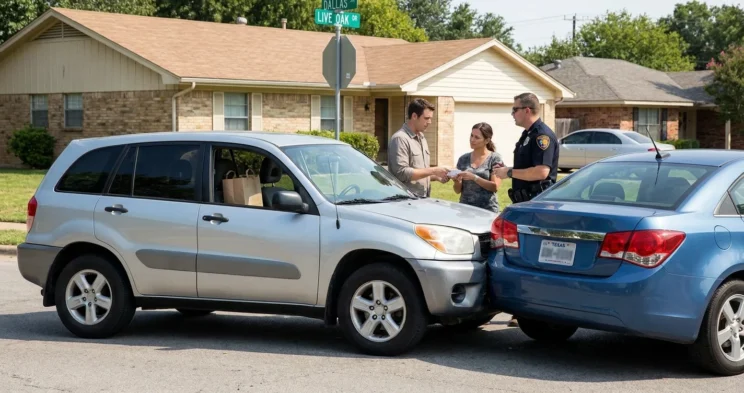
Whether you are the person a shopper hit or the shopper facing medical bills after a collision, conflicting insurance answers can add to your stress. The starting point is to separate each loss and compare the crash facts with the actual coverage documents.
Instacart-related insurance may cover particular losses after a car accident, but no single policy automatically pays every claim. Coverage depends on who was hurt, what was damaged, who caused the crash, the shopper’s activity, and the policies that apply.
Does Instacart Insurance Cover a Shopper’s Car Accident?
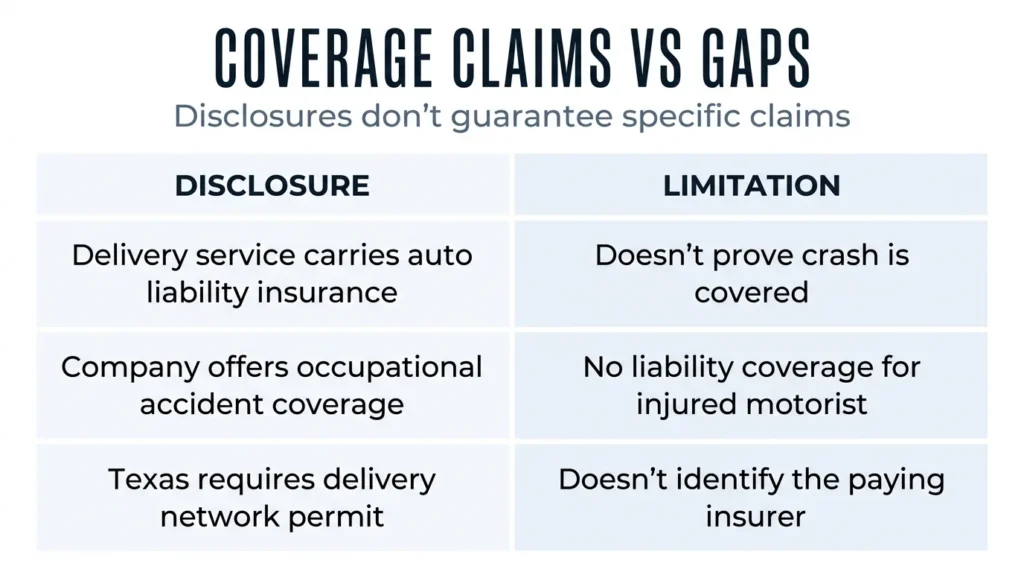
Coverage is possible, but it is not automatic. Instacart reports carrying automobile liability insurance, and its shopper agreement requires shoppers to obtain auto insurance. Neither fact proves that a particular shopper or crash is covered or that one insurer must pay first.
Instacart’s U.S. Independent Contractor Agreement makes shoppers responsible for obtaining and paying for necessary liability and legally required auto insurance, unless local law requires otherwise. The agreement also warns that some auto policies do not cover the services. A duty to buy insurance does not establish that the shopper’s personal insurer always pays first.
Instacart’s parent company, Maplebear, states in its 2025 Form 10-K that it carries automobile and general liability insurance, though not all claims are covered. That disclosure does not establish that a particular shopper is insured or that someone injured by the shopper has a covered claim. It does not provide the policy terms needed to answer those questions.
Why the Type of Loss Matters
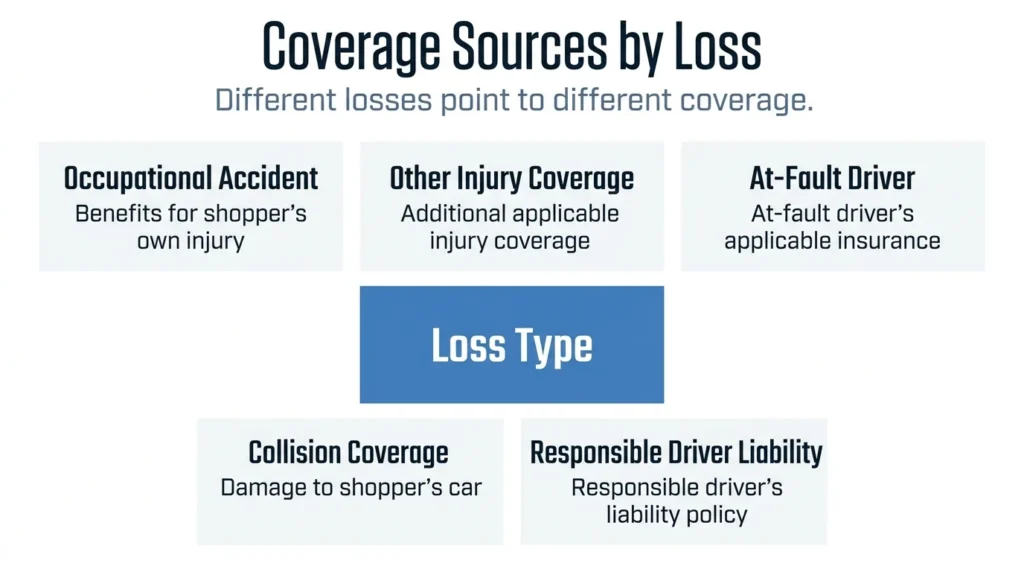
When a shopper injures someone or damages their car, investigate liability coverage under the shopper’s policy and any applicable Instacart policy. Whether either responds depends on its terms and the accident facts.
For the shopper’s own injuries, potential sources include occupational accident benefits, other applicable injury coverage, and an at-fault driver’s insurance. For damage to the shopper’s car, investigate applicable collision coverage or the responsible driver’s liability policy.
Why the Shopper’s Activity Matters
Driving to the store, collecting items, and heading to a customer’s door are facts to compare with policy language. These activities are not fixed Instacart insurance periods.
Instacart provides an auto liability claim form that asks about third-party injuries, each party’s insurer, and supporting documents. Submitting the form reports the crash; it does not promise coverage or payment.
What Does Texas’s Delivery-Network Law Change?
HB 4215 brought app-arranged retail deliveries into Texas’s delivery-network framework, effective September 1, 2025. The framework matters for an Instacart shopper accident, but it does not identify the paying insurer for a specific claim.
Under Texas Occupations Code Chapter 2402, a digitally prearranged delivery may include selecting or collecting items and incidental tasks. Shopping for an order can therefore mean something alongside driving to the customer. The chapter also requires delivery network companies to hold a permit.
The Texas Department of Licensing and Regulation says transportation and delivery network companies must provide proof of insurance with coverage under Insurance Code Chapter 1954. Yet §2402.101 still refers to transportation network companies and drivers, and the definitions in Texas Insurance Code Chapter 1954 are framed around passenger rides.
The current Chapter 95 administrative rules do not resolve how those passenger-ride terms apply to a grocery delivery crash. The permit requirement does not prove that a particular Instacart crash is covered. Passenger-rideshare limits, coverage periods, and an automatic company backstop should not be assumed for an Instacart claim.
Could the Shopper’s Personal Auto Policy Leave a Delivery Gap?
Yes, a gap is possible. Some personal policies may cover paid deliveries while others exclude business driving. Business coverage can also have gaps between picking up goods and carrying them.
The policy, any delivery endorsement, and the shopper’s activity determine whether a gap exists. An active Instacart batch alone does not prove an insurer will deny the claim. A delivery endorsement or commercial policy may change the result, subject to its terms.
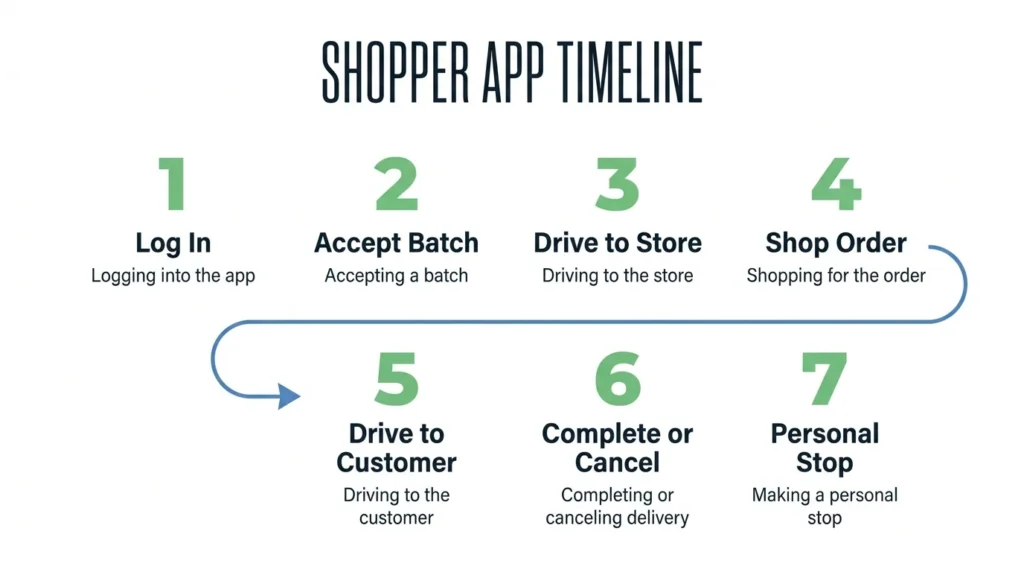
Compare the policy with the shopper’s app timeline, including these events:
- Logging into the app
- Accepting a batch
- Driving to the store
- Shopping for the order
- Driving to the customer
- Completing or canceling the delivery
- Making any personal stop along the way
Preserve batch acceptance, store arrival, delivery, and completion or cancellation records. Request the shopper’s signed agreement effective on the crash date and the complete auto policy, including declarations, endorsements, exclusions, and other-insurance provisions that address how policies interact.
Also seek any applicable Instacart auto policy or occupational accident certificate. Keep each insurer’s written acceptance, reservation of rights, or denial with crash reports, photos, medical records, and repair estimates. A reservation of rights means the insurer is preserving its ability to dispute coverage.
These records help connect the shopper’s activity to the available coverage.
What Does Instacart’s Occupational Accident Coverage Do for an Injured Shopper?
Occupational accident coverage offers benefits for qualifying shopper injuries. Instacart’s 10-K reports that it carries this insurance for shoppers. Its older Shopper Injury Protection announcement describes medical expense, disability, and eligible survivor benefits for U.S. full-service shoppers hurt while shopping or delivering.
Eligibility, covered activities, exclusions, and benefit amounts depend on the certificate in effect on the crash date. Check the current Shopper app and help materials for that certificate and claim instructions; the older announcement does not establish current Texas benefit amounts.
Occupational accident benefits are separate from liability coverage for a motorist the shopper injures. They also do not provide collision coverage to repair the shopper’s car.
Where Can an Injured Person Turn if No Insurer Accepts the Claim?
Compare each insurer’s written decision with the policy and activity record, then check other coverage you hold. A phone denial alone does not explain every potential source of payment:
- Get every decision in writing. Ask each insurer for the claim number and the specific policy provision it relies on.
- Separate your losses. Injuries, vehicle damage, and liability for others involve different coverage questions.
- Seek missing policies. Request the shopper’s policy and any Instacart coverage documents that may apply.
- Check your own coverage. The Texas Department of Insurance (TDI) explains coverage options. Uninsured or underinsured motorist coverage, personal injury protection, medical payments, collision, or health coverage may apply to different losses under their own terms. Collision addresses vehicle damage; injury benefits address different expenses. A liability denial does not automatically trigger these policies.
- Consider a TDI complaint. TDI accepts complaints about insurers, but it cannot decide who caused the crash or what your damages are worth.
- Evaluate legal action. Insurance availability and legal responsibility are separate questions. A lawsuit may be needed to pursue the person responsible, without any guarantee of recovery.
Get Help Reviewing an Instacart Accident Claim
Bring the batch and app records, the shopper’s policy and signed agreement, any Instacart coverage documents, and written insurer decisions to your consultation. Those documents help identify which coverage questions still need answers.
Contact Angel Reyes & Associates for a free consultation to review your options after an Instacart accident. Our attorneys are here to assist you at more than 30 office locations across Texas. We work on a contingency basis, which means there is no fee unless you win.
Past results do not guarantee future outcomes.
Instacart Insurance & Car Accident FAQs
How long do you have to file a lawsuit after an Instacart car accident in Texas?
Texas generally provides a two-year statute of limitations for personal injury and property damage claims arising from a car accident, although exceptions may apply. Because missing a filing deadline can bar a claim, injured people should confirm the deadline that applies to their specific circumstances.
Does Instacart insurance cover a hit-and-run accident involving a shopper?
Coverage depends on who was injured, which vehicle was damaged, and the policies available. An injured person may be able to pursue uninsured motorist coverage or other applicable benefits after a hit-and-run, subject to policy requirements and Texas law.
Can an Instacart shopper receive workers' compensation after a car accident in Texas?
Instacart shoppers are generally classified as independent contractors, so they should not assume they qualify for workers’ compensation through the company. Occupational accident benefits may be available under a separate plan, depending on the shopper’s eligibility, the covered activity, and the certificate in effect on the accident date.
About the Authors

Spencer Browne
Writer
Spencer Browne is a partner at Angel Reyes & Associates and a Board Certified personal injury trial lawyer with nearly 100 jury trials across Texas. He focuses on car, truck, and wrongful death cases, with notable verdicts including a landmark win in the Choctaw Casino bus crash case. A recognized speaker and legal educator, Spencer is a member of the American Board of Trial Advocates and has been honored as a Texas Super Lawyer and one of D Magazine’s Best Lawyers in Dallas. He brings deep trial experience and relentless advocacy to every client he represents.

Kyle Nicolas
Editor
Kyle Nicolas is the Web Content & SEO Manager at Angel Reyes & Associates. He has more than 10 years of experience as a marketing co...

Angel Reyes
Reviewer
Angel L. Reyes, III is the Founder and Managing Partner of Angel Reyes & Associates. A nationally recognized trial attorney and business...