How Long Do I Have to File a Personal Injury Lawsuit in Texas?


Every article on this site is researched by our internal team, reviewed for legal accuracy against current Texas law, and held to State Bar of Texas advertising standards before publication. We do not publish content that overstates outcomes or makes promises about results.
Learn more about our
editorial standards .
Key Takeaways
- Most Texas personal injury lawsuits must be filed within two years of the date the injury occurs.
- Certain cases, including claims involving government entities or health care, can have different deadlines and notice requirements.
- Missing the statute of limitations can result in dismissal even when the injury and fault are clear.
How Long Do I Have to File a Personal Injury Lawsuit in Texas?
If you have been injured and you want to file a claim to pursue compensation, you only have a limited amount of time to take action. Whether your crash happened on Interstate 35 near Dallas or you were hurt when you fell at a business in Pflugerville, the time limit to file can affect your ability to recover compensation.
Texas Personal Injury Statute of Limitations for Most Cases
In most Texas personal injury cases, you have two years to file a lawsuit. This deadline is set by the Texas Civil Practice and Remedies Code § 16.003, which generally requires a lawsuit to be filed within two years after the claim “accrues.” In legal terms, this is known as the statute of limitations.
In most standard cases, a claim accrues on the date of the injury. However, some cases may involve different accrual rules, so the date the limitations period begins is not always straightforward.
This and plenty of other situations can be more complicated, so it is important to confirm the correct start date as early as possible.
When the Two-Year Deadline Might Change
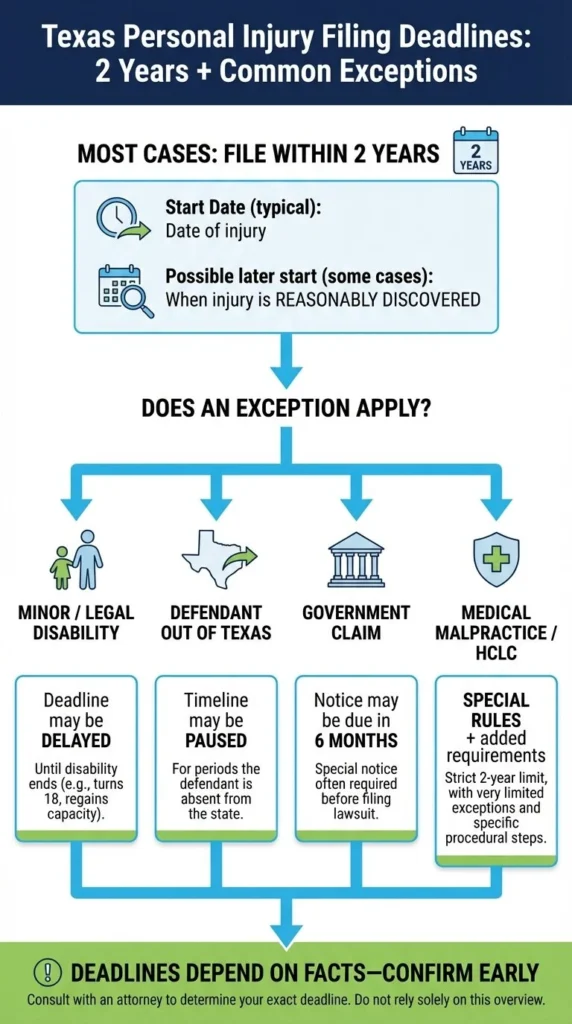
Some personal injury claims follow different rules, and some circumstances can pause or shorten the timeline.
- Minors or legal disability: Texas law can delay certain deadlines when the injured person is under a legal disability, including being under 18 or of unsound mind (§ 16.001).
- At-fault party temporarily out of Texas: Time may be suspended while the person you would sue is absent from the state (§ 16.063).
- Claims involving a city, county, or other government unit: State law typically mandates a notice deadline of just six months for claims against government entities under the Texas Tort Claims Act (§ 101.101).
- Medical malpractice and other health care liability claims: These cases can have special timing rules and additional requirements (§ 74.251).
Because the right deadline depends on the facts, you should avoid assuming you have “plenty of time.”
What Happens If You Miss the Deadline?
If you file your claim or lawsuit after the statute of limitations expires, the court can dismiss it. In many cases, that ends the legal claim even if the injury was serious and the other party was clearly at fault.
Steps to Protect Your Claim Before the Deadline
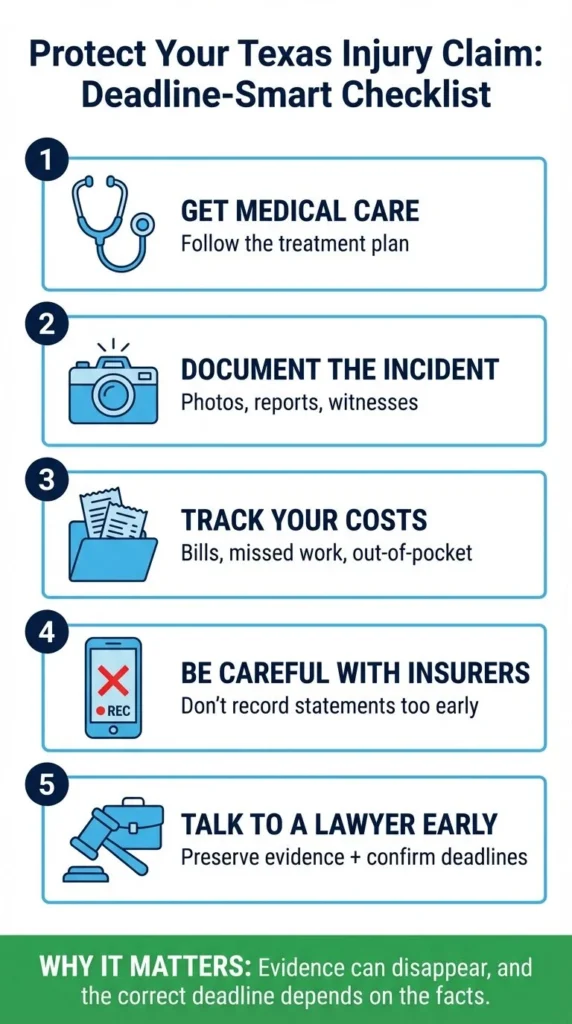
If you think you may have a claim, these steps can help preserve it:
- Get medical care right away and follow your treatment plan.
- Document what happened with photos, incident reports, and witness contact information.
- Keep records of medical bills, time missed from work, and out-of-pocket costs.
- Avoid giving recorded statements to an insurer until you understand the risks.
- Speak with a lawyer early so evidence can be collected before it disappears and deadlines can be confirmed.
Talk With Angel Reyes & Associates About Your Deadline
If you were injured anywhere in Texas, Angel Reyes & Associates can help you understand which deadline applies and what to do next. We offer free initial consultations to help you evaluate your options and move your case forward. With over 30 years of experience helping injured Texans, we know what it takes to hold those responsible for your injuries accountable. Contact us today to get started.
Texas Statute of Limitations FAQs
Does filing an insurance claim stop the Texas statute of limitations from running?
No. In most cases, negotiating with an insurer or opening a claim does not pause the deadline to file suit.
What is the difference between a statute of limitations and a notice deadline in Texas injury cases?
A statute of limitations is the deadline to file a lawsuit, while a notice deadline is an earlier requirement that can apply in certain cases, especially claims against government entities. Missing a notice deadline can damage or bar a claim even before the lawsuit deadline arrives.
Can the deadline be different in a wrongful death case in Texas?
Yes. A wrongful death claim usually accrues on the date of death, which may be different from the date of the underlying accident or injury.
Does leaving Texas by the at-fault party always extend the filing deadline?
Not always. Whether absence from the state affects limitations can depend on the facts and on whether the defendant can still be served through other legal means.
What should you do if you are close to the Texas filing deadline?
You should act immediately because waiting for more treatment, more records, or a better settlement offer can put your rights at risk. A lawyer can evaluate the deadline quickly and determine whether suit needs to be filed to preserve the claim.
About the Authors

Angel Reyes
Writer
Angel L. Reyes, III is the Founder and Managing Partner of Angel Reyes & Associates. A nationally recognized trial attorney and business leader, Angel has helped over 70,000 injury victims recover more than $1 billion since founding the firm in 1993. Named to the Texas Super Lawyers list annually since 2008, Angel brings Wall Street experience, Ivy League education, and a deep commitment to client advocacy. He is a frequent legal commentator and published author with extensive contributions to legal scholarship, trial strategy, and consumer protection.

Kyle Nicolas
Editor
Kyle Nicolas is the Web Content & SEO Manager at Angel Reyes & Associates. He has more than 10 years of experience as a marketing co...

Spencer Browne
Reviewer
Spencer Browne is a partner at Angel Reyes & Associates and a Board Certified personal injury trial lawyer with nearly 100 jury trials a...