Is It Illegal to Drive Barefoot in Texas?


Every article on this site is researched by our internal team, reviewed for legal accuracy against current Texas law, and held to State Bar of Texas advertising standards before publication. We do not publish content that overstates outcomes or makes promises about results.
Learn more about our
editorial standards .
Key Takeaways
- Driving barefoot is fully legal in Texas and every other state, despite the persistent myth.
- Driving barefoot is considered risky and can become a liability factor if it contributes to a crash.
- Your recovery for a personal injury claim can be impacted by driving barefoot.
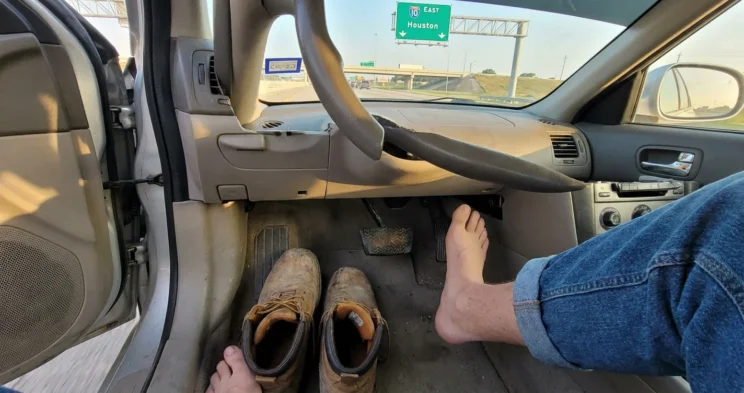
You slide into your car after a long shift in Houston, kick off your work boots, and head home. Halfway down I-10, you remember hearing that troopers can pull you over for driving without your shoes. This myth has circulated for decades through word of mouth and social media posts. Many drivers assume something so widely discussed must be rooted in law. It is not.
Driving Barefoot Is Legal in Texas
Driving barefoot is completely legal in Texas. No state or federal statute, municipal ordinance, or traffic regulation prohibits operating a vehicle without shoes.
You can confirm this by reviewing the Texas Department of Transportation driving safety guidelines, which focus on safe practices rather than specific footwear rules.
Safety Considerations for Barefoot Driving
Just because it’s legal doesn’t mean it’s safe. While bare feet can provide a decent grip on dry pedals, they offer little protection if your foot slips off the brake.
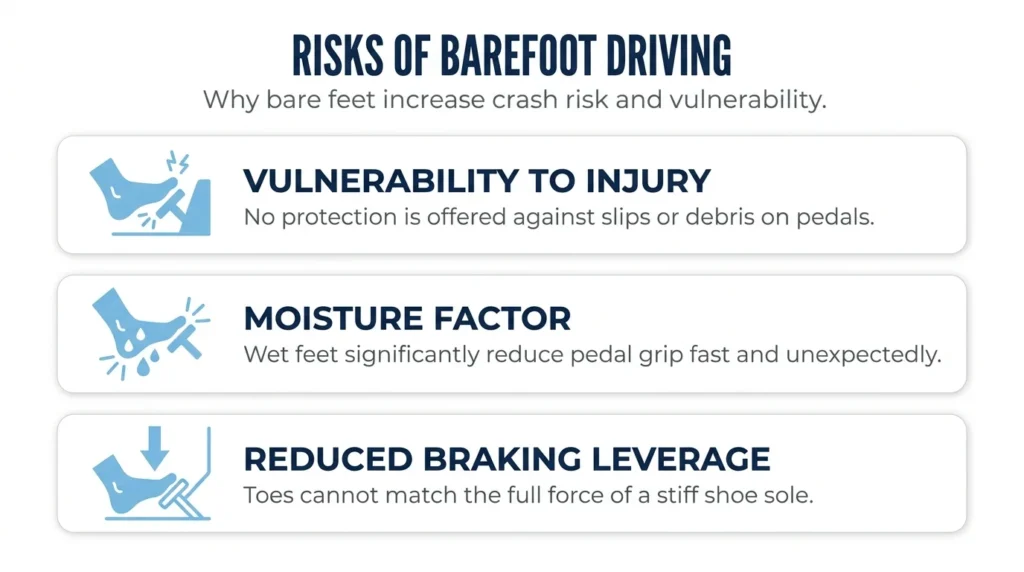
Risks of driving barefoot include:
- Vulnerability to injury: Your feet have zero protection. If your foot slips off a pedal, or if there is sharp debris, glass, or small stones on the floorboard, sudden pain can cause you to instinctively flinch and lose control.
- The moisture factor: Wet or sweaty feet drastically reduce grip. If your sole slips off the rubber pedal surface during a sudden stop, your reaction time is compromised.
- Reduced braking leverage: Driving shoes are engineered with stiff soles to help evenly distribute pressure when you slam on the brakes. Bare feet require your small toe joints to absorb the entire force of an emergency stop, which can prevent you from applying maximum braking pressure.
The National Highway Traffic Safety Administration (NHTSA) emphasizes that any factor reducing your precise control over the vehicle’s pedals significantly increases your crash risk.
When you’re cruising down a fast-moving highway, a split second is the difference between a near-miss and a severe car accident.
Barefoot Driving & Accident Liability
Texas uses a modified comparative fault system, where each party’s percentage of responsibility determines recovery. So, while driving barefoot does not automatically make you at fault in a crash, it can reduce your chances of recovery.
An insurance adjuster may argue that your driving barefoot contributed to the collision, and use that argument to assign you partial blame for the accident. For example, if your foot slipped off the brake during a rear-end crash, this can impact your recovery.
Insurance companies investigate every detail. That’s why knowing what to do after a car accident in Texas helps protect your claim. If footwear comes up in a fault dispute, consulting an experienced attorney can help protect your rights and your claim value.
Best Practices for Safe Driving
The safest footwear for driving is a flat, snug shoe with a thin sole. Sneakers, loafers, and driving shoes give you pedal feel without the risk of slipping off.
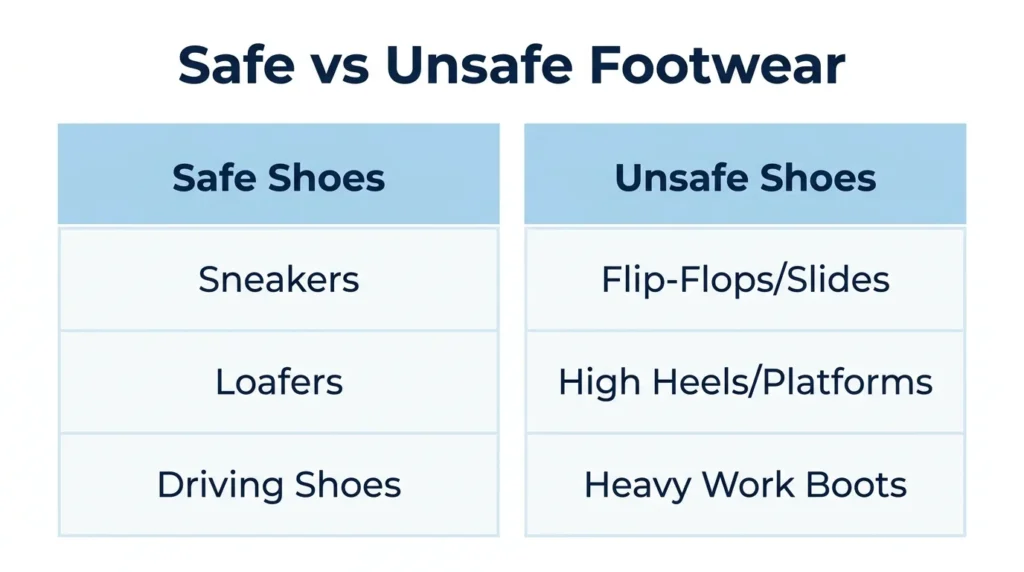
Avoid wearing these types of shoes while driving:
- Flip-flops and slides
- High heels or platform shoes
- Heavy work boots with thick soles
- Wet or muddy footwear
Your choice of footwear (or lack thereof) may seem insignificant, but it directly affects how quickly you can brake or shift between pedals. Studies show that driver error contributes to most Texas collisions, with factors like speeding, distracted driving, and failure to control speed being the leading causes of crashes tracked by TxDOT.
This simple habit can help reduce the risk of an accident: keep a pair of driving shoes in your vehicle. Slip them on before you start the car to get to your destination safely.
Speak with an Attorney Today
If you were hurt in a crash and the other side is trying to pin blame on you for driving barefoot, legal guidance can make all the difference.
Angel Reyes & Associates has helped injured Texans handle car, truck, and rideshare accident claims for decades. Our attorneys work on a contingency fee basis, so you pay nothing unless we win your case. Contact our firm today to discuss your situation during a free consultation. We are available to discuss your case 24/7.
Past results do not guarantee future outcomes.
Driving While Barefoot FAQs
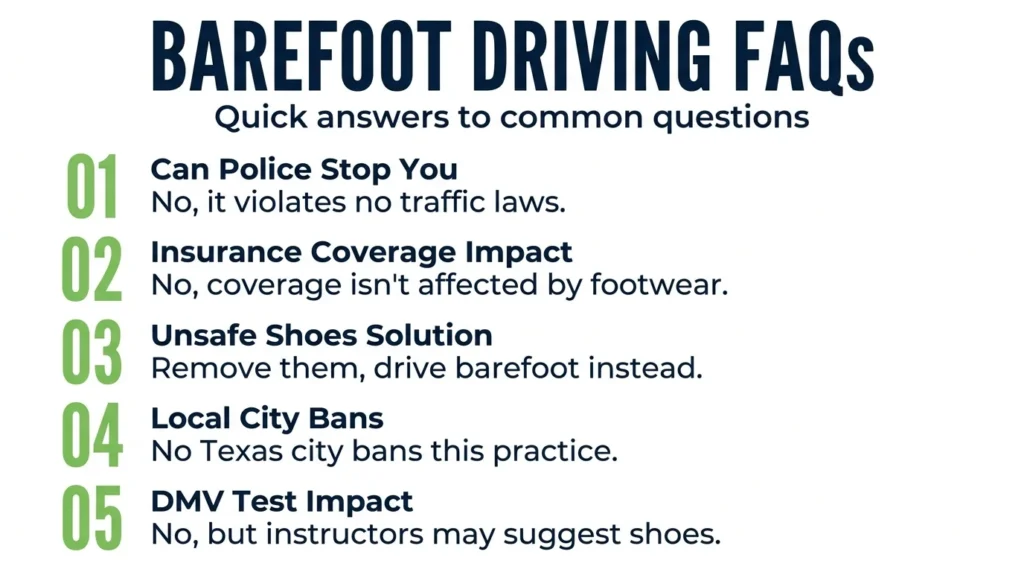
Can police officers pull you over just for driving barefoot?
No, police cannot pull you over solely for driving barefoot since it violates no traffic laws. Officers need reasonable suspicion of an actual traffic violation to initiate a stop.
Does driving barefoot affect your car insurance coverage?
Driving barefoot does not void your insurance coverage or affect your premiums. Insurance companies cannot deny claims based solely on legal driving practices like going shoeless.
What should you do if you need to drive but only have unsafe shoes?
Remove unsafe shoes like high heels or flip-flops and drive barefoot instead. Keep a pair of flat, secure shoes in your car for future trips.
Are there any Texas cities that ban barefoot driving locally?
No Texas cities have local ordinances prohibiting barefoot driving. Municipal traffic laws cannot create driving restrictions that state law does not recognize.
Can driving instructors or DMV testers fail you for being barefoot during a driving test?
Texas driving tests do not include footwear requirements, but individual instructors may recommend proper shoes for safety. Check with your testing location about their specific policies.
About the Authors

Angel Reyes
Writer
Angel L. Reyes, III is the Founder and Managing Partner of Angel Reyes & Associates. A nationally recognized trial attorney and business leader, Angel has helped over 70,000 injury victims recover more than $1 billion since founding the firm in 1993. Named to the Texas Super Lawyers list annually since 2008, Angel brings Wall Street experience, Ivy League education, and a deep commitment to client advocacy. He is a frequent legal commentator and published author with extensive contributions to legal scholarship, trial strategy, and consumer protection.

Graham Griffin
Editor
Graham Griffin is the Web & Content Manager at Angel Reyes & Associates, where he oversees content strategy, AI-powered workflows, a...

Spencer Browne
Reviewer
Spencer Browne is a partner at Angel Reyes & Associates and a Board Certified personal injury trial lawyer with nearly 100 jury trials a...