Subrogation in Rideshare Accident Claims


Every article on this site is researched by our internal team, reviewed for legal accuracy against current Texas law, and held to State Bar of Texas advertising standards before publication. We do not publish content that overstates outcomes or makes promises about results.
Learn more about our
editorial standards .
Key Takeaways
- Subrogation lets a health insurer seek repayment out of your rideshare accident settlement.
- The "Made Whole Doctrine" can block repayment until you are fully paid for all losses.
- You can avoid subrogation if the at-fault party is insured.
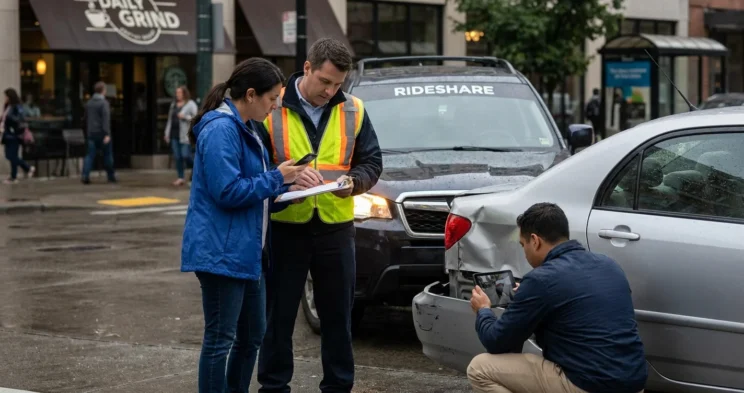
You finally settled your rideshare accident case after the Uber crash on the Southwest Freeway near Sugar Land. Then a letter arrives from your health insurer demanding a chunk of that money back. You used that coverage to pay for treatment while the claim dragged on, and now they want repayment.
What Subrogation Means for Your Settlement
Subrogation is your insurance company’s legal right to be paid back using the money from your personal injury settlement. If your private health insurance plan covers your medical bills immediately after a rideshare crash, they can legally claim a portion of your final payout to recoup exactly what they spent on your care.
Subrogation acts as the final claim standing between you and your money. The main lawsuit against the rideshare company must be fully resolved first. Only after a settlement is reached does your health insurer step in to collect what they argue you owe them.
This process is more complicated than a standard Texas car accident. Because a rideshare crash involves multiple overlapping insurance policies—including the driver’s personal auto coverage, Uber or Lyft’s corporate liability policy, and your own health insurance—navigating who gets paid back first requires careful legal strategy.
How the “Made Whole Doctrine” Protects Your Settlement
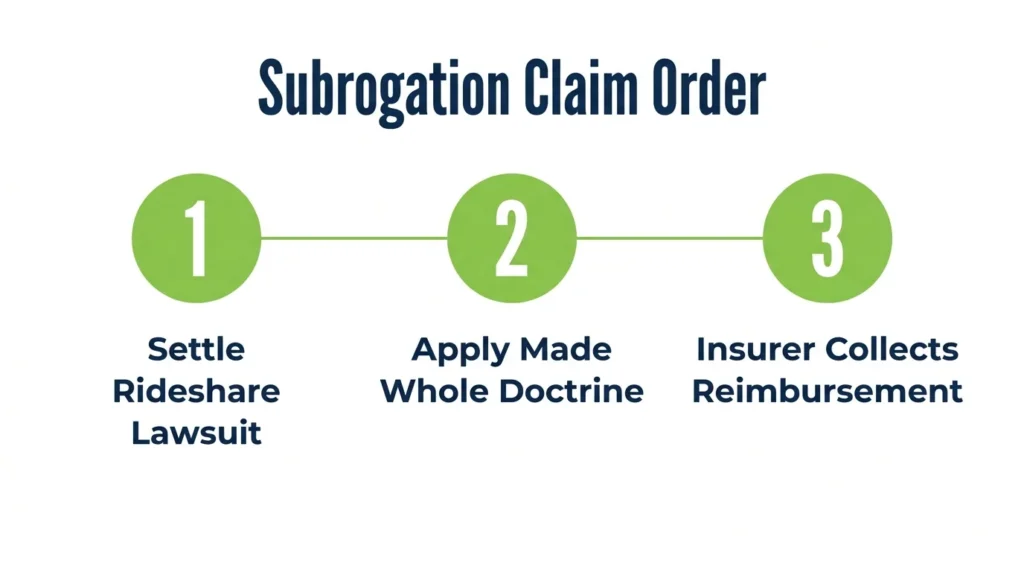
The Made Whole Doctrine is a powerful shield in Texas that protects your settlement from aggressive insurance reimbursement demands. This rule states that an insurance company cannot take a single penny from your settlement until you have been completely compensated (or “made whole”) for every single one of your losses.
Being truly made whole means more than just covering the medical bills your health insurer paid. It also includes full compensation for your lost wages, future medical treatments, and your pain and suffering. If your settlement or insurance policy limits do not provide enough money to reach that total amount, this doctrine can legally reduce or completely erase what you owe back to your insurance provider.
The Catch: Not All Insurance Plans Follow This Rule
While this rule is a major asset for accident victims, its protection depends entirely on the specific type of health insurance coverage you have.
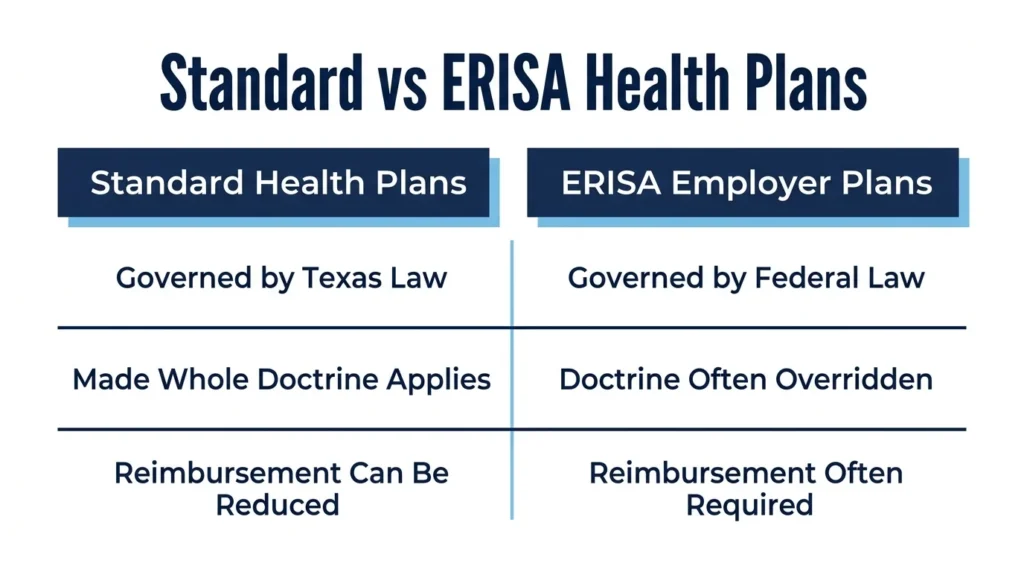
- Standard Health Policies: Private health insurance plans purchased independently or through state exchanges are fully bound by Texas law and the Made Whole Doctrine.
- Self-Funded Employer Plans (ERISA): Large, corporate employer-sponsored health plans are governed by federal law, not state law. These policies almost always contain strict language that explicitly overrides the Made Whole Doctrine, allowing them to demand repayment even if you did not get enough money to cover all of your losses.
Because your financial recovery depends so heavily on your policy’s fine print, you should never sign a reimbursement agreement until an attorney reviews the demand against what you actually recovered.
What If the At-Fault Party Carries Insurance?
Fortunately, Texas law includes a powerful protection that works in your favor regarding Personal Injury Protection (PIP). Under Texas Insurance Code §1952.155, if the at-fault driver carries auto insurance, your own insurance company is strictly prohibited from clawing back your PIP benefits through subrogation. This means the money you receive from your PIP coverage to pay for immediate medical bills or lost wages belongs entirely to you, and it cannot be deducted from your final settlement payout to reimburse your insurer.
Talk with a Texas Rideshare Accident Attorney
Receiving a reimbursement letter does not mean you have to hand over a massive slice of your hard-earned settlement. The complex order of payouts, the competing rights of multiple insurance companies, and the specific Texas legal protections you can assert all dictate how much money actually lands in your bank account.
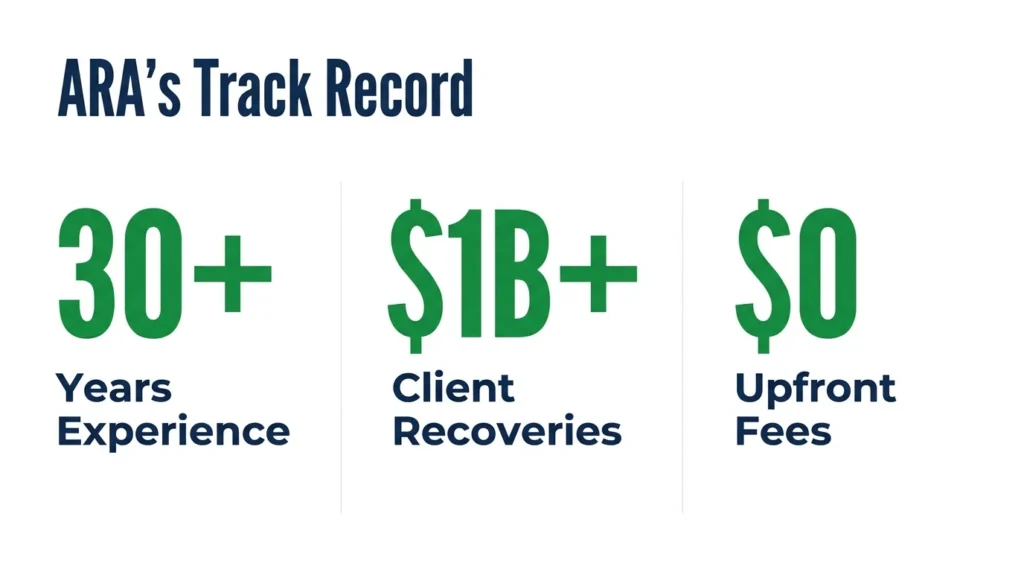
For over 30 years, Angel Reyes & Associates has been helping injured Texans hold the line against aggressive insurance providers. We operate strictly on a contingency fee basis (meaning you pay absolutely nothing unless we win your case), and we have successfully recovered more than $1 billion for our clients across the state. You can see our track record of fighting these complex battles by reviewing our case results.
If a health plan or insurance company is demanding a portion of your rideshare recovery, protect yourself first. Reach out to our team today for a free consultation before you agree to repay a single dollar.
Rideshare Accident Subrogation FAQs
How can I tell if my employer's health plan is self-funded or fully insured?
Request your Summary Plan Description from your employer’s HR department. If your benefits are paid from company assets or a trust, the plan is likely self-funded; if they list a named insurance carrier as the payer, it is likely fully insured.
Do I have to notify my health insurer before I settle my rideshare accident case?
Most health plan documents require you to cooperate with the plan and give notice before settling any claim that may involve a reimbursement right. Settling without that notice can leave you liable for the full repayment amount even after the money is gone.
What happens if I ignore a subrogation demand after my settlement is paid out?
Ignoring a valid subrogation claim does not make it disappear. The insurer can pursue collection action or file suit to recover the amount it is owed, and unresolved liens can delay or complicate the closing of your settlement.
Does subrogation still apply if the rideshare coverage cap limited what I could recover?
Yes, but a limited recovery often strengthens your negotiating position on the reimbursement amount. If the coverage caps left you far short of your full losses, the Made Whole Doctrine may reduce what the insurer can collect, since repayment cannot come before you are fully compensated.
About the Authors

Angel Reyes
Writer
Angel L. Reyes, III is the Founder and Managing Partner of Angel Reyes & Associates. A nationally recognized trial attorney and business leader, Angel has helped over 70,000 injury victims recover more than $1 billion since founding the firm in 1993. Named to the Texas Super Lawyers list annually since 2008, Angel brings Wall Street experience, Ivy League education, and a deep commitment to client advocacy. He is a frequent legal commentator and published author with extensive contributions to legal scholarship, trial strategy, and consumer protection.

Kyle Nicolas
Editor
Kyle Nicolas is the Web Content & SEO Manager at Angel Reyes & Associates. He has more than 10 years of experience as a marketing co...

Angel Reyes
Reviewer
Angel L. Reyes, III is the Founder and Managing Partner of Angel Reyes & Associates. A nationally recognized trial attorney and business...