Can a Head Injury Take Away Your Sense of Smell?


Every article on this site is researched by our internal team, reviewed for legal accuracy against current Texas law, and held to State Bar of Texas advertising standards before publication. We do not publish content that overstates outcomes or makes promises about results.
Learn more about our
editorial standards .
Key Takeaways
- Head trauma shears olfactory nerves at the cribriform plate, often permanently.
- Even a mild crash or a ground-level fall can cause permanent, total loss of smell.
- Standardized smell testing documents the deficit for treatment and for your claim.
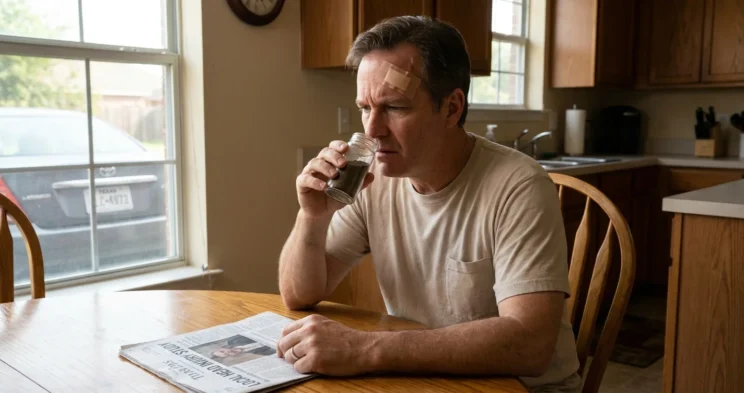
You walked away from a rear-end collision on I-35 with a headache and a sore neck, and weeks afterward you notice the coffee has no aroma, your shampoo smells like nothing, and dinner tastes flat.
A blow to the head can permanently take your sense of smell, and it happens more often than most injured people are told.
Loss of smell after head injury has a name, post-traumatic anosmia, and a well-documented physical cause. It is also something doctors can measure and put in writing, which counts a great deal if someone else caused the crash or fall that took it from you.
How a Head Injury Damages Your Sense of Smell
The damage happens at the base of your skull, where the nerve fibers that carry smell are at their most fragile.
Those fibers run from your nasal cavity up through the cribriform plate, a thin, perforated shelf of bone, on their way to the olfactory bulb in your brain. The cribriform plate is the thinnest part of the skull base, which is exactly why it fractures.
When your head is thrown forward and back in a collision, your brain shifts inside a skull that does not move with it. That coup-contrecoup motion stretches and shears the olfactory fibers where they pass through the bone. Electron microscopy studies have found severed olfactory nerve fibers at the cribriform plate in patients with post-traumatic anosmia.
Because the fibers cross near the midline, the shearing usually affects both sides. That bilateral pattern is one of the things that separates a trauma injury from the one-sided smell loss caused by a blocked sinus.
The force required is lower than most people assume. Published reviews of head trauma and olfactory function describe this injury occurring after relatively mild trauma, including ground-level falls, and roughly two-thirds of cribriform plate fractures come from motor vehicle collisions, with falls and assaults accounting for the rest.
You do not need a skull fracture on a CT scan or a night in the ICU for the nerve to be cut.
That causation link is why anosmia after a car accident belongs in the same conversation as any other crash injury when you are evaluating car accident claims.
How Common Is This & Does the Sense of Smell Come Back?
It is common enough to be a recognized consequence of brain injury, and recovery is limited rather than assured. Reported rates differ by study and by how each one graded injury severity, so the honest answer is a range:
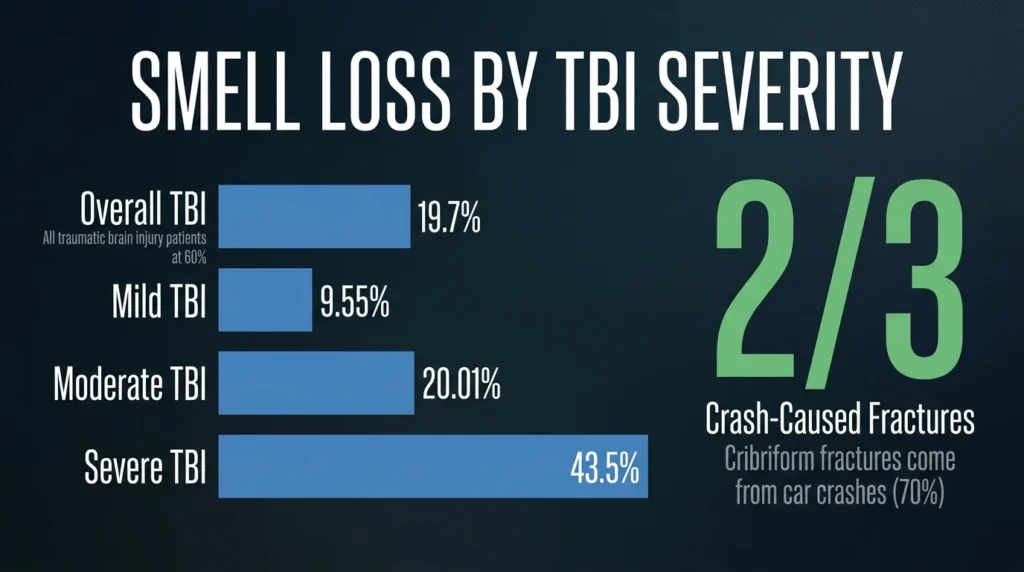
- Overall incidence. A hospital cohort study of 774 consecutive traumatic brain injury admissions, the SHEFBIT cohort, found anosmia in 19.7% of patients.
- By severity in that cohort. Anosmia appeared in 9.55% of mild traumatic brain injuries, 20.01% of moderate injuries, and 43.5% of severe injuries.
- In a separate clinical review. Complete anosmia followed roughly 13% of mild head injuries, with about 27% of those patients having trouble identifying odors, rising to about 25% complete anosmia after severe head injury.
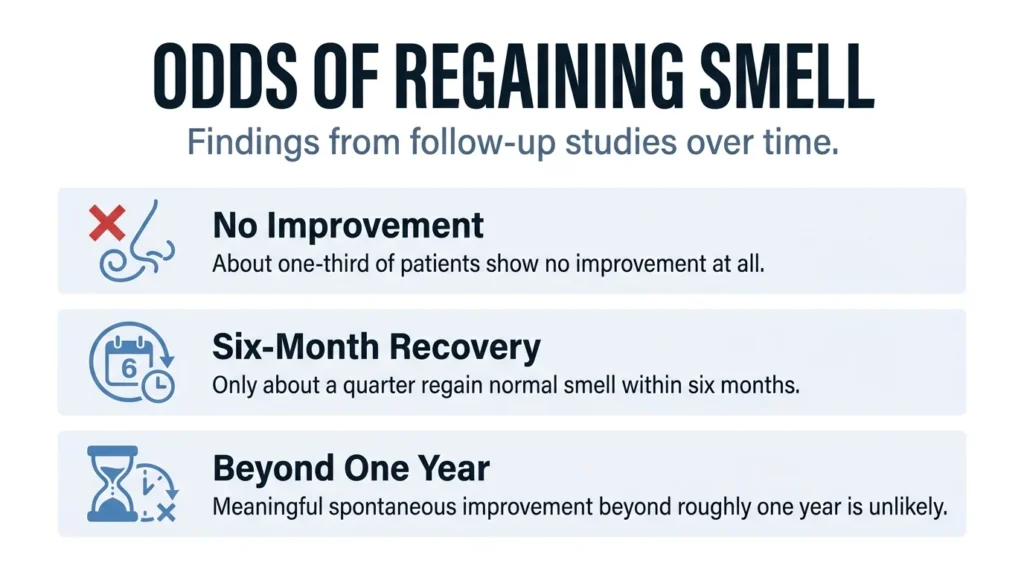
- Prospects for recovery. Across follow-up studies, about one-third of patients show no improvement at all, only about a quarter regain normal smell within six months, and meaningful spontaneous improvement beyond roughly one year is unlikely.
The practical takeaway is that waiting it out is not a plan. If your smell has not returned in the first several months, the loss you are living with may be the loss you keep, which is also true of the high-force impacts behind many truck accident injuries.
How Doctors Prove Loss of Smell Is Real, Not Just a Complaint
Smell loss is measurable. It is documented with standardized testing, not with your description of what dinner tasted like.
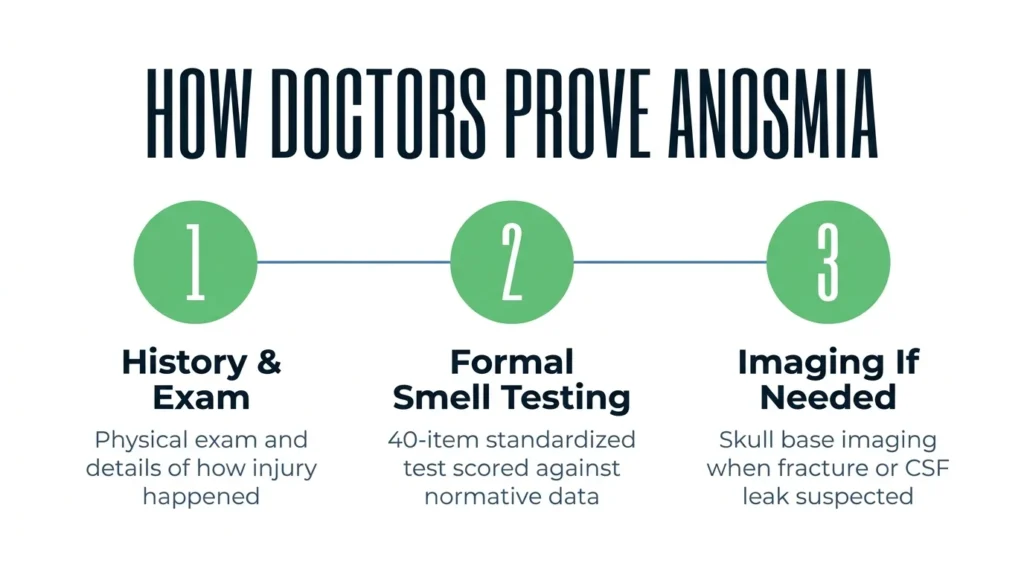
The main tool is the University of Pennsylvania Smell Identification Test, or UPSIT. It is a 40-item scratch-and-sniff booklet in which you identify each microencapsulated odor from four choices, and your score is compared against a normative database of thousands of people matched for age and sex.
Clinical reviews of chemosensory impairment after traumatic brain injury describe it as reliable, valid, and the test used most often in brain injury research.
Quicker bedside screens exist, including pocket smell tests and simple detection checks. Those are useful for spotting a problem. Thorough documentation of how much function you lost relies on threshold and identification testing like the UPSIT.
The evaluation itself belongs with an otolaryngologist or a neurologist. As the National Institute on Deafness and Other Communication Disorders explains in its guidance on smell disorders, a proper workup combines your history, including how the injury happened, a physical exam, and formal smell testing. Imaging of the anterior skull base is added when a fracture or a cerebrospinal fluid leak is suspected.
There is one more reason testing counts so much. A meaningful share of patients with measurable smell loss understate it or do not recognize it, so self-report alone is an unreliable record. Getting tested protects your treatment and your credibility at the same time.
Why Losing Your Sense of Smell Is More Than an Inconvenience
Smell is a safety system and, for some people, a livelihood. Losing it changes how safely you live and what work you can still do:
- Early warning. Smell is how people detect a natural gas leak, smoke from a fire, and food that has spoiled. Losing it removes that warning entirely.
- Work you can no longer do. Cooks and chefs, firefighters, gas fitters, plumbers, and cosmeticians depend on an intact sense of smell for competence and for safety, and returning to work is a documented problem for these workers after brain injury.
- Daily life. Research on quality of life with olfactory disorders documents reduced enjoyment of food, loneliness, anxiety, and disruption of ordinary social and family routines.
Clinicians are advised to counsel anosmia patients directly about fire, gas, and spoiled food hazards, which tells you how seriously the medical field treats this loss.
The same injury shows up after falls, not just collisions, which is why smell loss can belong in premises liability claims against a property owner whose unsafe condition caused the fall.
Is Permanent Loss of Smell a Compensable Injury Under Texas Law?
Texas law already recognizes this category of harm. Permanent loss of smell fits squarely within the noneconomic damages the Legislature defined by statute.
Texas Civil Practice and Remedies Code §41.001(12) defines non-economic damages to include physical pain and suffering, physical impairment, inconvenience, and loss of enjoyment of life, along with other nonpecuniary losses.
A permanent smell deficit is a physical impairment in plain terms. It affects your safety at home, your enjoyment of meals, and in some trades your ability to earn a living, and the separate economic consequences of a career change are their own category of loss.
What that statute does not do is set a number. The value of any claim depends on your testing, your medical records, your work history, and the facts of how you were hurt, and no article can tell you what your case is worth.
Talk to Angel Reyes & Associates About Your Claim
If a crash or a fall took your sense of smell, it deserves more than a shrug from an adjuster. Standardized testing, an otolaryngology or neurology evaluation, and documentation of what the loss cost you at work turn it into a claim that can be proven.
Insurance companies tend to treat injuries they cannot see on an X-ray as small ones. The adjuster’s job is to close your file for as little as possible, and an invisible sensory loss is an easy thing for them to discount.
Angel Reyes & Associates has guided injured Texans through situations like this for over 30 years, with board-certified personal injury attorneys, investigators, and accident reconstruction specialists on the team. The firm works on contingency, so there is no upfront cost to you and no attorney’s fee unless we win your case.
Contact Angel Reyes & Associates for a free consultation.
Past results do not guarantee future outcomes.
Head Injury & Sense of Smell Loss FAQs
Can a concussion cause permanent loss of smell even without a skull fracture?
Yes. Trauma can damage or shear the olfactory nerve fibers at the skull base even when imaging does not show a cribriform plate fracture or other obvious structural damage.
What other symptoms can occur with post-traumatic anosmia?
Head-injury-related smell loss may occur alongside changes in taste, headaches, dizziness, memory problems, or other sensory and neurological symptoms, depending on the extent and location of the brain injury.
Can you lose your sense of smell after a whiplash injury?
Yes, although the mechanism depends on the forces involved and the specific injuries sustained; a medical evaluation is important to determine whether the smell loss is related to trauma or another condition.
How long should you wait before seeing a doctor for loss of smell after a head injury?
You should report new or persistent smell loss to a healthcare provider rather than waiting for it to resolve, particularly after a significant head injury, because formal testing can document the impairment and help identify its cause.
About the Authors

Angel Reyes
Writer
Angel L. Reyes, III is the Founder and Managing Partner of Angel Reyes & Associates. A nationally recognized trial attorney and business leader, Angel has helped over 70,000 injury victims recover more than $1 billion since founding the firm in 1993. Named to the Texas Super Lawyers list annually since 2008, Angel brings Wall Street experience, Ivy League education, and a deep commitment to client advocacy. He is a frequent legal commentator and published author with extensive contributions to legal scholarship, trial strategy, and consumer protection.

Graham Griffin
Editor
Graham Griffin is the Web & Content Manager at Angel Reyes & Associates, where he oversees content strategy, AI-powered workflows, a...

Angel Reyes
Reviewer
Angel L. Reyes, III is the Founder and Managing Partner of Angel Reyes & Associates. A nationally recognized trial attorney and business...