Can a Car Accident Cause Seizures?


Every article on this site is researched by our internal team, reviewed for legal accuracy against current Texas law, and held to State Bar of Texas advertising standards before publication. We do not publish content that overstates outcomes or makes promises about results.
Learn more about our
editorial standards .
Key Takeaways
- Post-traumatic seizures can appear up to two years after a crash.
- Texas gives you two years to file, even if seizures appear later.
- Neurology records, EEG results, and vocational proof build your claim.
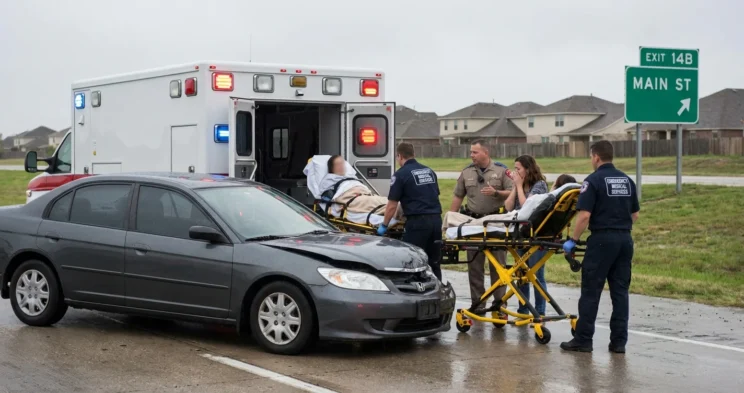
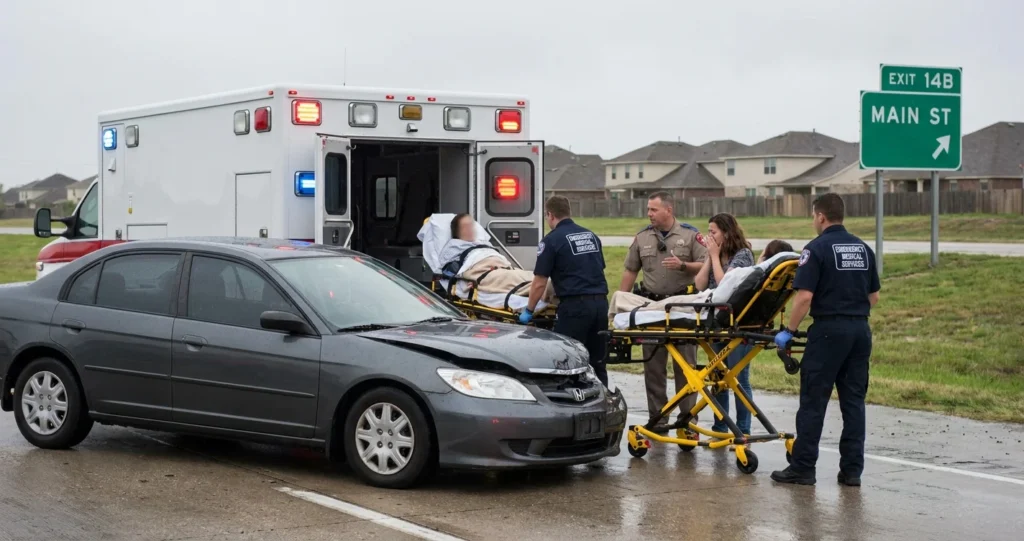
You walked away from the crash, grateful the damage looked survivable. Weeks or months later, a seizure hits without warning, and the wreck you thought was behind you is suddenly the center of a new medical crisis.
Immediate, Early, & Late Post-Traumatic Seizures
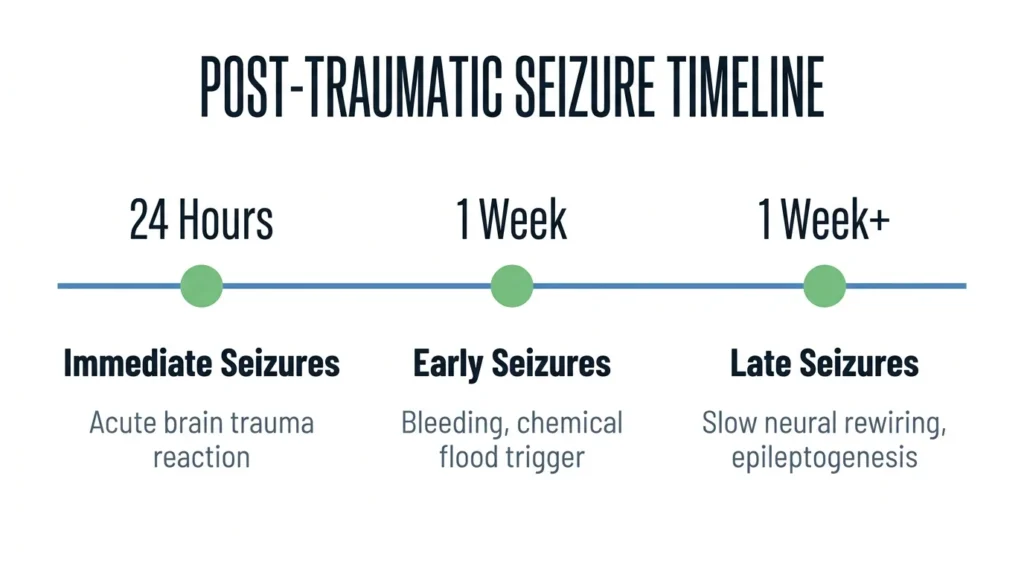
A traumatic brain injury from a car accident can cause seizures, and doctors classify them by how soon they appear after the injury.
- Immediate seizures happen within 24 hours of the injury.
- Early seizures happen within the first week.
- Late seizures happen more than a week after the injury, sometimes months or years later.
That seven-day line between early and late is a widely used convention, though doctors acknowledge it is somewhat arbitrary. The distinction still matters, because the two types of seizures come from different causes.
Immediate and early seizures are usually the brain’s acute reaction to the trauma itself. Bleeding, a disrupted blood-brain barrier, and a flood of excitatory brain chemicals can all trigger them.
Late seizures work differently. They stem from epileptogenesis, a slow rewiring of neural pathways that can take months to develop fully. That is why doctors treat a late seizure as a distinct condition rather than a leftover symptom of the crash.
That distinct condition has a name. Post-traumatic epilepsy is defined as one or more unprovoked seizures occurring at least a week after a traumatic brain injury, according to NCBI Bookshelf and a peer-reviewed overview in PMC. Because the risk of a second seizure after one late seizure is up to 70 percent (one study found it as high as 86 percent within two years), doctors generally treat a single late seizure as enough to diagnose it.
How Long After a Crash Can Seizures Appear?
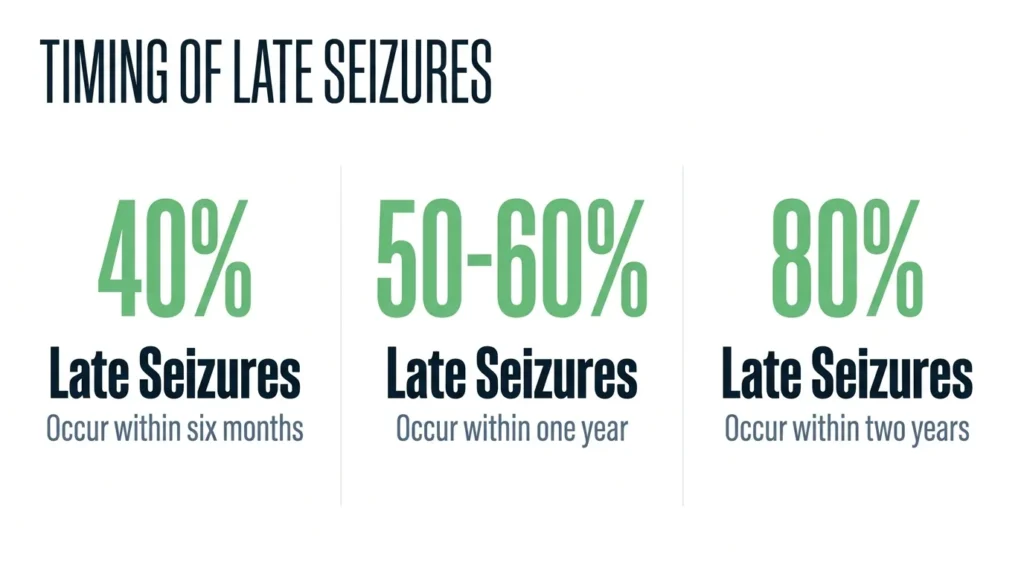
Post-traumatic seizures can surface far later than most people expect. Roughly 40 percent of first late seizures occur within six months of the injury, 50 to 60 percent within a year, and about 80 percent within two years. That means you can feel fully recovered at the time of a typical settlement and still develop a seizure disorder afterward.
Risk also tracks the severity of the original injury, according to the Model Systems Knowledge Translation Center:
- Mild traumatic brain injury carries roughly a 2 percent 30-year cumulative risk of late seizures.
- Moderate traumatic brain injury carries roughly a 4 percent cumulative risk.
- Severe traumatic brain injury carries over a 15 percent cumulative risk, with post-traumatic epilepsy reported in about 25 percent of severe cases by five years and 32 percent by fifteen years.
The type of seizure also predicts what comes next. About 25 percent of people who have an early seizure go on to develop epilepsy, compared with about 80 percent of people whose first seizure is a late one.
These figures vary by study and by injury severity. Read them as a range that shapes your planning, not a guarantee of what will happen in your specific case. If you already noticed warning signs after a crash, our post on delayed injury symptoms after a motorcycle accident covers seizures as one of the symptoms that can show up days after the impact.
The Texas Timing Trap When a Seizure Disorder Develops Late
Texas gives you two years from the date of the accident to file a personal injury lawsuit under Tex. Civ. Prac. & Rem. Code § 16.003. That clock starts on the day of the crash, not the day a seizure disorder shows up.
A legal doctrine called the discovery rule can sometimes push back on when a claim’s clock starts running, but the Texas Supreme Court applies it only narrowly. In Via Net v. TIG Ins. Co., the court held that the discovery rule only delays accrual when an injury is inherently undiscoverable and objectively verifiable.
A car crash is not hidden. You know it happened the moment it happens, so the discovery rule is unlikely to extend your filing deadline just because a seizure disorder happens to develop later. This is the general legal test, not a case decided on post-traumatic seizures specifically, so it should guide your planning as caution rather than a promised extension.
Because half to eighty percent of late seizures do not appear until six months to two years after the crash, resolving your claim too early can close the door on including a seizure disorder in that same case later. This is the timing trap built into your case. The safer path is to evaluate, and if necessary file, within the standard two-year window while building the possibility of post-traumatic epilepsy into your damages model from the start.
Proving Future Damages With the Evidence Spine
Texas law requires proof, in all reasonable probability, that you will need future medical care and what it will reasonably cost before a jury can award it. A bare risk of future seizures will not meet that standard on its own.
That standard has teeth. In Rosenboom Machine & Tool, Inc. v. Machala, a Texas appeals court reversed a future-medical-expenses award because no expert testimony established that standard, even though the jury had otherwise found real, lasting harm.
Electroencephalography (EEG) is the standard tool doctors use to evaluate a suspected seizure disorder after a brain injury. It helps locate the source of seizure activity and gauge prognosis, and an abnormal reading is highly specific to epilepsy.
EEG sensitivity runs only 30 to 50 percent, though, so a normal result does not rule out a seizure disorder. Ongoing documentation of seizure frequency matters just as much as the test itself.
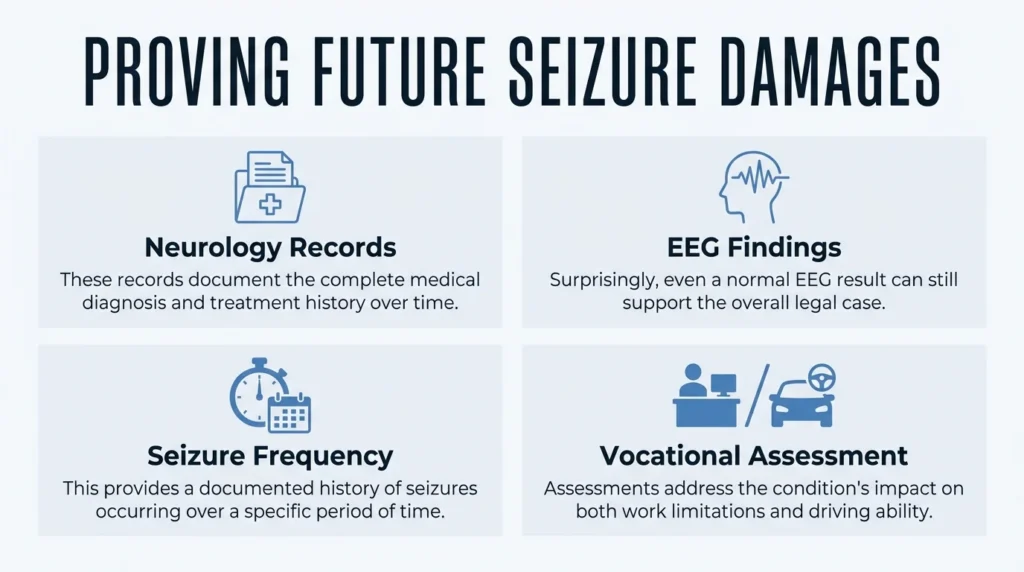
Meeting the reasonable-probability standard takes a specific set of proof:
- Neurology records documenting your diagnosis and treatment.
- EEG findings, even when a single test comes back normal.
- A documented history of seizure frequency over time.
- A vocational assessment addressing how seizures affect your ability to work and drive.
Texas also recognizes loss of earning capacity as a separate, provable element of damages, though it is left largely to the jury’s judgment. Meeting that standard takes the same kind of concrete, non-speculative proof, not a general statement that seizures make working harder.
Driving Restrictions & Career Impact After a Seizure Diagnosis
Under 37 Tex. Admin. Code § 15.58, anyone applying for or holding a Texas driver’s license who has had a seizure within the past year is referred to the Texas Medical Advisory Board for evaluation before driving privileges are confirmed. Commercial applicants with a history of recurring seizures face the same referral.
The Medical Advisory Board decides whether and when driving privileges should continue. That review process alone can put your license on hold while your case is still developing, separate from anything a court decides.
For a delivery driver, rideshare driver, field technician, or commercial trucker, that single referral can end or narrow a career overnight. This is exactly why a vocational assessment addressing driving and occupational restrictions belongs in a future-earning-capacity claim as core evidence, not as an afterthought.
Talk to a Texas Car Accident Lawyer Before the Seizure Window Closes
You do not have to work through this timing trap alone. Angel Reyes & Associates has guided injured Texans through situations like this for over 30 years, and our team can help you weigh the filing deadline against a seizure disorder that has not fully revealed itself yet. You can reach the firm 24/7 to speak with our team.
Our firm brings together more than 600 dedicated professionals across more than 20 offices in Texas, offering service in English and Spanish. We fight to maximize your recovery and operate with no fees unless we win, having secured more than $1 billion for our clients.
Contact Angel Reyes & Associates for a free consultation to talk through your accident, your medical records, and what the timing trap means for your case. Every case is different, and past results do not guarantee future outcomes.
Past results do not guarantee future outcomes.
Car Accidents Can Trigger Seizures FAQs
What evidence can connect a seizure disorder to a car accident?
Medical records showing the traumatic brain injury, imaging findings, seizure history, neurological evaluations, and the treating specialist’s opinion about causation can help establish whether the seizure disorder is related to the crash rather than another cause.
Can a seizure diagnosis affect a Texas car accident injury settlement?
It can affect the value and scope of damages when medical evidence supports a connection between the crash and an ongoing seizure disorder, including potential future medical expenses and effects on earning capacity.
What happens if I develop seizures after settling my Texas car accident claim?
A signed settlement and release may limit or eliminate the ability to pursue additional compensation for injuries that were covered by the agreement, so the language of the release and the circumstances surrounding the settlement can be critical. Texas courts generally construe broadly worded releases according to their terms.
Could a seizure diagnosis affect my Texas driver's license?
Yes, under Texas Administrative Code Title 37, Rule 15.58, anyone applying for or holding a Texas driver’s license with a seizure in the past year is referred to the Texas Medical Advisory Board for evaluation before driving privileges are confirmed. Commercial applicants with recurring seizures face the same referral, which can affect delivery, rideshare, field-service, and trucking jobs.
About the Authors

Angel Reyes
Writer
Angel L. Reyes, III is the Founder and Managing Partner of Angel Reyes & Associates. A nationally recognized trial attorney and business leader, Angel has helped over 70,000 injury victims recover more than $1 billion since founding the firm in 1993. Named to the Texas Super Lawyers list annually since 2008, Angel brings Wall Street experience, Ivy League education, and a deep commitment to client advocacy. He is a frequent legal commentator and published author with extensive contributions to legal scholarship, trial strategy, and consumer protection.

Kyle Nicolas
Editor
Kyle Nicolas is the Web Content & SEO Manager at Angel Reyes & Associates. He has more than 10 years of experience as a marketing co...

Angel Reyes
Reviewer
Angel L. Reyes, III is the Founder and Managing Partner of Angel Reyes & Associates. A nationally recognized trial attorney and business...