Who Pays After a FedEx Truck Crash?


Every article on this site is researched by our internal team, reviewed for legal accuracy against current Texas law, and held to State Bar of Texas advertising standards before publication. We do not publish content that overstates outcomes or makes promises about results.
Learn more about our
editorial standards .
Key Takeaways
- A FedEx logo does not identify the driver's employer, the proper defendant, or the insurer.
- Photograph markings, DOT numbers, and plates, then compare the report's owner and carrier.
- Review employment, route records, and actual policies to identify responsible businesses.
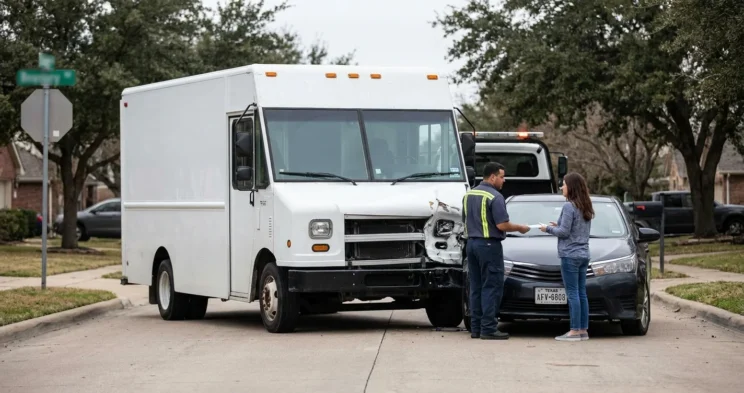
After a FedEx truck crash in Texas, the driver, the driver’s employer, or another business may be responsible for your injuries. Liability insurance may cover the claim, but you first need to identify the business involved and the policy in effect on the date of the crash.
The FedEx logo alone does not identify who must pay. You need to determine who employed the driver, operated the vehicle, controlled the delivery work, and insured the vehicle.
Who May Be Responsible After a FedEx Delivery Truck Crash?
Responsible parties may include the driver, an employer, or another legally responsible business. The insurer handling the claim is a separate party from the people or businesses potentially liable for the crash.
The Defendant & the Insurer
After a FedEx accident, you may present a claim to an insurance adjuster. If you file a lawsuit, you generally name the responsible people and businesses, not their insurer. Texas generally does not allow a direct suit against the alleged wrongdoer’s insurer before a judgment or agreement establishes liability.
An adjuster evaluates the claim for the insurer. Identifying the responsible business and its coverage helps ensure that you submit the claim to the correct insurer.
A Service Provider Can Employ the Driver
FedEx’s contracting materials describe independent businesses that employ their own drivers and obtain their own equipment. In that arrangement, the driver works for the service provider.
Being employed by a contractor does not make the driver an independent contractor.
How Texas Decides Who Controlled the Work
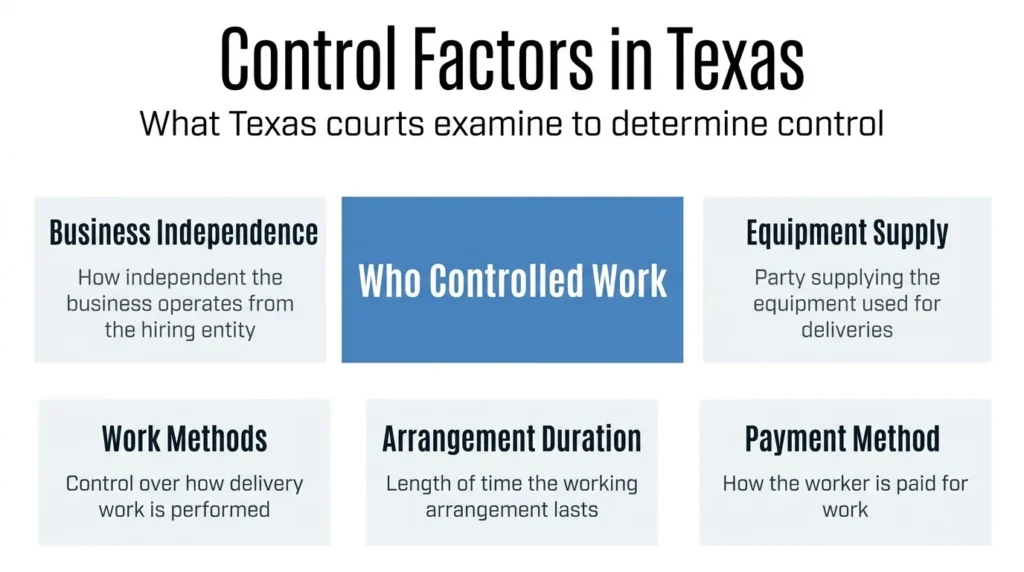
Texas courts consider who had the right to control how the work was performed. In Limestone Products Distribution v. McNamara, the Texas Supreme Court distinguished control over the result of a delivery from control over the methods used to complete it. Relevant factors include the independence of the business, who supplies the equipment, control over work methods, the duration of the arrangement, and how the worker is paid.
Limestone did not involve FedEx or determine the drivers’ status. It shows why the contract and the parties’ working arrangement require review. A delivery destination alone does not establish who controlled the work.
Examine the contractor-to-driver relationship separately from FedEx’s relationship with the contractor or driver. Under Painter v. Amerimex Drilling I, Ltd., once employment is established, the next question is whether the driver was performing assigned work. You do not have to prove the employer directed the exact turn that caused the crash.
Other carrier or supervisory duties may also require review. The contractor label does not eliminate every possible liability theory in a Texas truck accident claim.
Which FedEx Operation Was Involved?
The vehicle may have been part of a contractor-operated package route, a Federal Express operation with direct employees, or FedEx Freight. Verify the employer, operating carrier, and vehicle owner on the crash date.
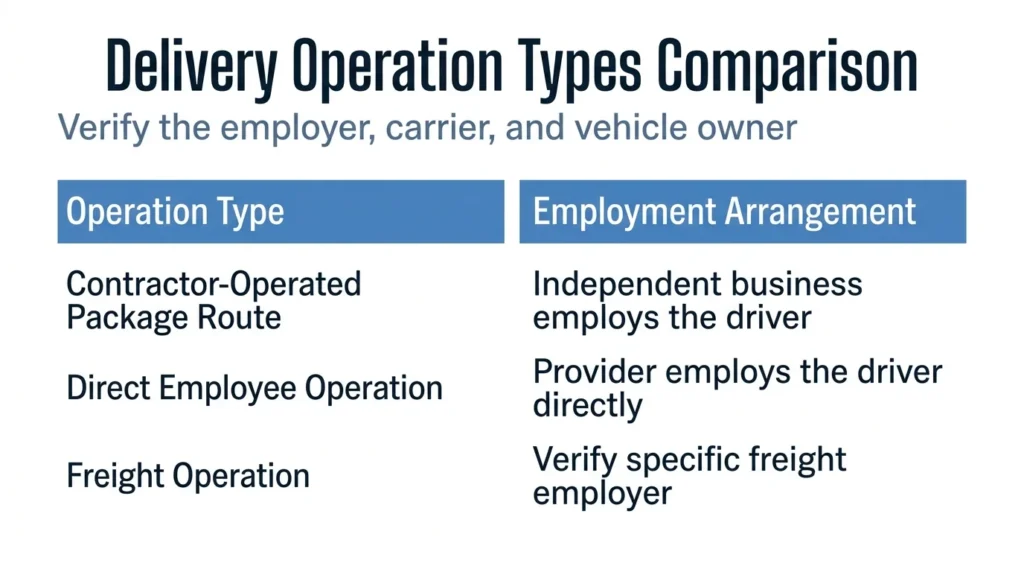
According to FedEx’s fiscal 2026 annual report, FedEx Ground merged into Federal Express Corporation on June 1, 2024. The network uses employees and service providers, and FedEx acknowledges disputes over whether it also employs provider drivers. A Ground or Express label does not reliably establish the driver’s employer.
FedEx Freight became a separate public company on June 1, 2026. Freight’s filing describes its less-than-truckload business, employee driver training, and licensed FedEx branding. A crash before the separation may involve a different corporate structure.
Evidence To Gather After a FedEx Truck Crash
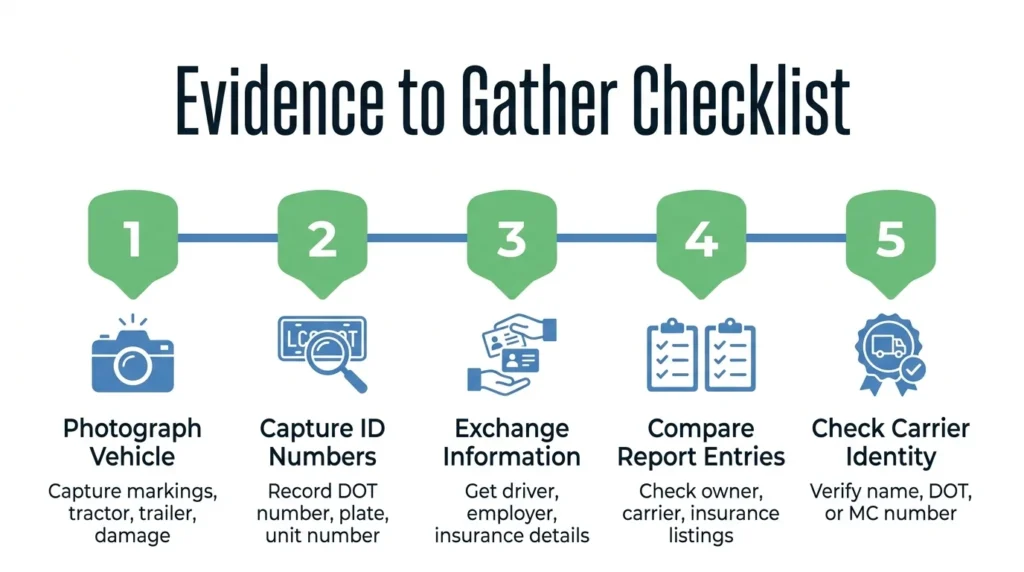
1. Photograph both sides of the vehicle, including smaller business names and carrier markings.
2. Capture the USDOT number if displayed, license plate, and vehicle or unit number.
3. Photograph the tractor and trailer separately when present, plus damage and crash location.
4. Exchange driver, employer, and insurance information. Do not enter the truck or walk into unsafe traffic.
5. Compare the report’s owner, carrier, and insurance entries and investigate conflicting or missing names.
6. Check carrier identity using the name, USDOT number, or MC number.
What the DOT Number Shows
For vehicles covered by 49 CFR 390.21, required markings identify the operating carrier. They do not settle ownership, employment, or civil liability. Not every small delivery van falls under that rule.
FedEx’s contracting materials indicate that some service providers operate under FedEx motor-carrier authority. A FedEx USDOT number therefore does not rule out a contractor as the driver’s employer.
How to Read the Texas Crash Report
The TxDOT CR-100 instructions distinguish the vehicle owner or lessee from the commercial carrier’s identification and corporate name. Those fields can list different businesses. A smaller delivery vehicle may not have a completed commercial-vehicle section.
FMCSA’s free Company Snapshot lookup can help you identify the carrier. You will still need employment records and the applicable policy to determine who employed the driver and which insurance may cover the claim.
What Could the Contractor’s Commercial Auto Insurance Cover?
A service provider’s commercial auto liability policy may cover bodily injury and property damage when a covered driver causes a crash. Payment depends on liability and the policy terms. Other available policies may also apply.
FedEx says service providers must obtain automobile or truckers’ bodily injury and property damage coverage and that FedEx maintains public liability coverage. These statements do not identify a universal insurer, commercial policy limit, or payment order. They also do not mean FedEx automatically pays any amount remaining after a contractor’s policy is exhausted.
Start with the insurer’s name, policy number, named insured, and effective dates. Then review the covered vehicle and driver provisions, endorsements, exclusions, and limits. Check for other potentially applicable policies before assuming one insurer provides all available coverage.
Which Delivery Records Can Show Who Controlled the Work?
Route and employment records can link the driver, vehicle, and business to the delivery activity at the time of the crash. They can also help show who had the right to control that work.
Request available driver assignments, delivery manifests or stop lists, package-scan timestamps, dispatch messages, GPS or telematics data, and video. Obtain employment or payroll records and the service agreement effective on the crash date. Not every delivery vehicle or business will have every type of record.
Compare the route instructions and actual working practices with the contract. A scheduled stop or delivery deadline may show the expected result without establishing who controlled how the driver performed the work.
Get Help Identifying the Responsible Parties
Sorting out the driver, contractor, carrier, and insurance can be difficult while you are recovering. Bring the crash report, scene photos, and exchanged insurance details to a consultation.
Angel Reyes & Associates has guided injured Texans for more than 30 years. Our board-certified attorneys are available 24/7 to discuss your case, and we work on contingency, which means you don’t pay unless we win. Read our client testimonials to see how we’ve helped people like you.
Contact Angel Reyes & Associates for a free consultation about your FedEx delivery truck accident and the records needed to identify responsible parties and applicable coverage.
Past results do not guarantee future outcomes.
FedEx Truck Crash FAQs
How Long Do I Have to File a FedEx Truck Accident Lawsuit in Texas?
Under Texas Civil Practice and Remedies Code § 16.003, you generally have two years from the accident date to file a personal injury lawsuit. Certain exceptions may change that deadline.
Can I Recover Compensation if I Was Partially at Fault for a FedEx Truck Accident?
Under Texas law, you may recover compensation if your percentage of responsibility is 50% or less. Texas Civil Practice and Remedies Code § 33.012 reduces your damages by your assigned percentage of fault.
What Happens if a FedEx Truck Accident Involves Multiple Injured People?
When several people are injured in the same crash, their claims may involve shared insurance limits. The available coverage may be insufficient to fully compensate everyone, depending on the injuries, damages, and applicable policies.
Can I Sue FedEx After an Accident Involving a Parked Delivery Truck?
You may have a negligence claim if a delivery truck was parked unlawfully or unreasonably created a foreseeable hazard that contributed to your injuries. Whether FedEx or another business can be held responsible depends on the circumstances and the legal duties involved.
Can a FedEx Truck Accident Claim Include Compensation for Future Medical Expenses?
Texas law allows injured people to seek compensation for reasonably probable future medical expenses caused by another party’s negligence. Medical records and expert testimony may help establish the need for future treatment and its anticipated cost.
About the Authors

Alex Ivanov
Writer
Alex Ivanov is a personal injury attorney at Angel Reyes & Associates, focused on car, truck, and motorcycle accident cases. Licensed in Texas and multiple federal districts, Alex brings international legal experience and a global education to his practice. He earned his LL.M. from Texas A&M University School of Law after graduating from Belarussian State University in 2016. Alex is fluent in Russian, English, Ukrainian, and Belarussian, and is recognized by multiple national trial lawyer associations for his results and leadership under 40.

Kyle Nicolas
Editor
Kyle Nicolas is the Web Content & SEO Manager at Angel Reyes & Associates. He has more than 10 years of experience as a marketing co...

Angel Reyes
Reviewer
Angel L. Reyes, III is the Founder and Managing Partner of Angel Reyes & Associates. A nationally recognized trial attorney and business...