Air Taxis & Powered-Lift Aircraft: FAA Rules & Texas Liability Basics


Every article on this site is researched by our internal team, reviewed for legal accuracy against current Texas law, and held to State Bar of Texas advertising standards before publication. We do not publish content that overstates outcomes or makes promises about results.
Learn more about our
editorial standards .
Key Takeaways
- The FAA's 2024 rule sets air taxi pilot standards but doesn't decide who pays after an accident.
- Operators, pilots, manufacturers, and vertiport owners can all share liability after a taxi crash.
- Texas gives you two years to file injury claims, and aviation evidence disappears fast if you wait.

Air taxi service isn’t here yet in Texas, but it’s coming fast. And when it arrives, crashes will happen.
New technology fails. Pilots make mistakes. Companies cut corners. It happened with cars, with commercial airlines, and it will happen with air taxis too.
The FAA has been working to make these aircraft safe to fly commercially. But safety rules don’t automatically tell you who pays for your injuries. Knowing your rights now, before you ever board, matters.
What Air Taxis Are and How They Differ from Traditional Aircraft
Air taxis fall under the FAA’s Advanced Air Mobility (AAM) initiative, designed for short, on-demand passenger trips between designated landing sites called vertiports. They’re a new category of urban and regional transportation, not traditional charter flights or helicopters.
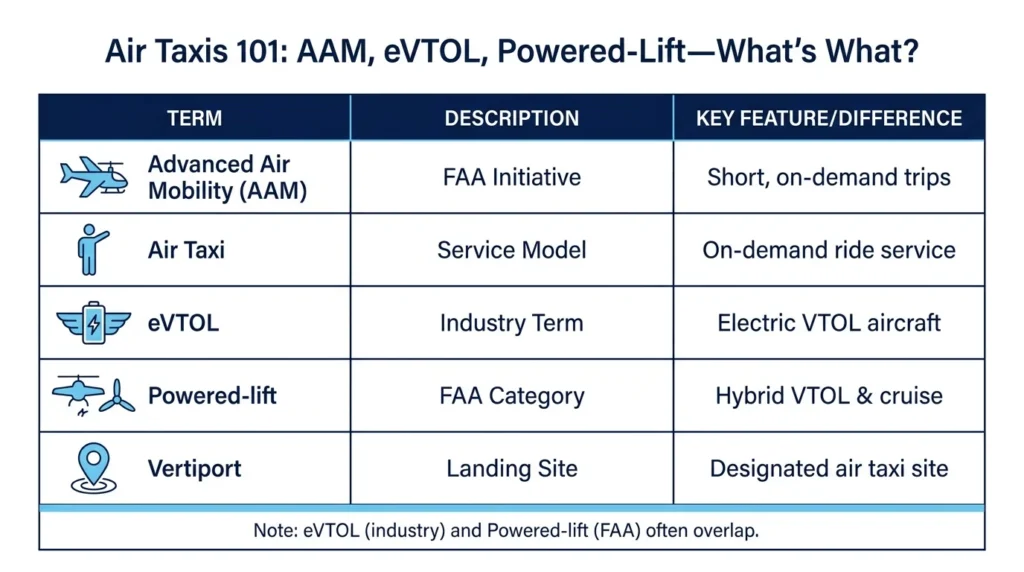
Most air taxi concepts use electric vertical takeoff and landing technology. The industry calls these vehicles “eVTOL.” The FAA calls them “powered-lift.” Both terms often describe the same aircraft.
The Powered-Lift Category Explained
A powered-lift aircraft can take off and land vertically, operate at low speeds during certain flight phases, and cruise in an airplane-like manner. The FAA created this category because these aircraft don’t fit neatly into “airplane” or “rotorcraft” classifications.
Pilot training for fixed-wing planes doesn’t cover vertical operations, and helicopter training doesn’t address the transition to forward cruise flight. The powered-lift classification lets the FAA tailor safety requirements to these hybrid characteristics.
The FAA’s 2024 Powered-Lift Rule: What Changed
On October 22, 2024, the FAA finalized a rule establishing pilot certification, training, and operating requirements for powered-lift aircraft. This rule fills a regulatory gap that previously made commercial air taxi operations impractical.
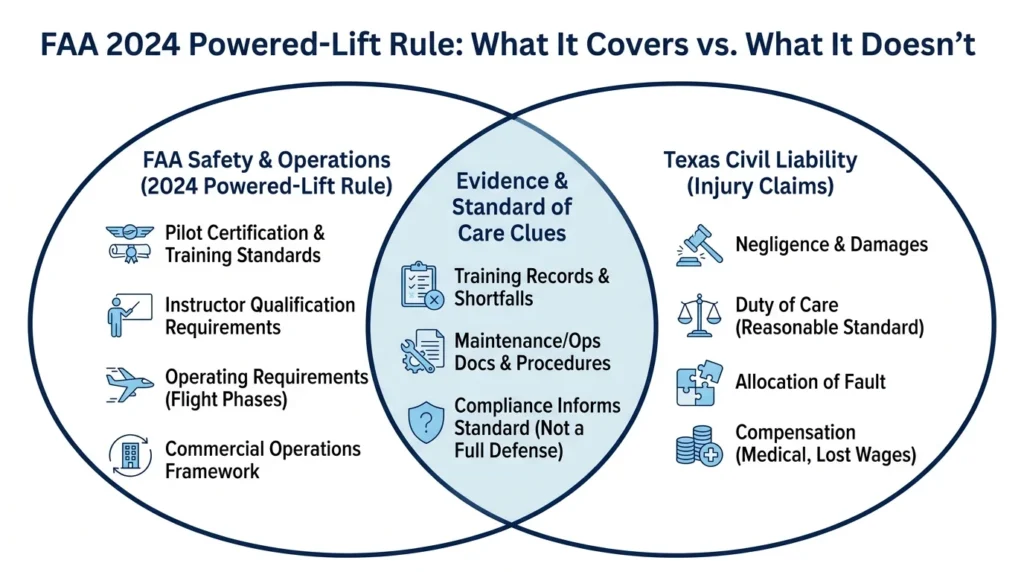
The rule addresses two main areas:
- Pilot qualifications and training. New certificate and rating requirements specific to powered-lift operations. Instructors must meet defined standards before training others.
- Operating requirements. Rules governing how powered-lift aircraft can be flown commercially, including procedures for the unique flight phases these aircraft experience.
The Federal Register publication contains the complete rule text and effective dates. Operators planning commercial service must build compliance into their training programs and operational procedures.
What the Rule Doesn’t Cover
FAA regulations govern safety and operational authorization, not civil liability after an accident. A pilot can be fully FAA-compliant and still be found negligent under Texas law if their conduct fell below the standard of reasonable care. Regulatory compliance is relevant evidence in a lawsuit, but it’s not a complete defense.
Who Could Be Responsible After a Texas Air Taxi Incident
Air taxi accidents can involve multiple potentially liable parties. Identifying all of them early protects your ability to recover full compensation.
Operators and Pilots
The company operating the air taxi service owes passengers a duty of care. If the operator cut corners on maintenance, pushed pilots to fly in unsafe conditions, or failed to implement proper safety procedures, the company may bear responsibility. Pilots can be individually liable for negligent decisions — poor weather judgment, procedural errors, or inadequate pre-flight checks could all support a negligence claim. When a pilot works for an operator, the company typically shares responsibility under vicarious liability principles.
Key evidence includes training records, duty and rest logs, dispatch communications, and maintenance sign-offs.
Manufacturers and Component Suppliers
If a design flaw, manufacturing defect, or inadequate warning contributed to the incident, product liability claims may apply. These aircraft contain complex electrical systems, flight controls, and battery technology. A failure in any component can cause catastrophic results. Preserving physical evidence is critical — components, onboard data recorders, and maintenance history can all reveal whether a defect played a role.
Maintenance Providers and Contractors
Air taxi operations often use third-party maintenance contractors. If negligent work or missed inspections contributed to a failure, those contractors may share liability. Work orders, inspection records, and parts traceability documentation become important evidence.
Vertiport Operators and Property Owners
Not every air taxi injury happens in flight. Slip-and-fall incidents at vertiports, unsafe boarding procedures, or inadequate crowd control can all cause harm. The entity controlling the property may bear premises liability depending on the circumstances.
Texas Deadlines: The Two-Year Statute of Limitations
Texas Civil Practice and Remedies Code § 16.003 gives you two years from the date of injury to file most personal injury and wrongful death claims. Missing this deadline typically bars recovery entirely.
Two years sounds like plenty of time. Aviation incidents require identifying all potentially responsible parties, preserving physical evidence before it’s lost or destroyed, obtaining maintenance records and operational data, coordinating with technical experts, and navigating potential federal jurisdiction issues. Starting early protects both your evidence and your legal options.
What to Do After an Air Taxi Incident
- Get medical attention immediately and keep records of all treatment, prescriptions, and expenses.
- Report the incident to the operator in writing and request confirmation.
- Preserve photos of the scene, your injuries, and any visible damage.
- Save booking confirmations, receipts, and all communications with the operator or their representatives.
- Be careful with recorded statements. Insurance adjusters may contact you quickly, and providing a statement without legal guidance can hurt your case. See our guide on what to do immediately after an accident for more.
How FAA Rules & Texas Liability Connect
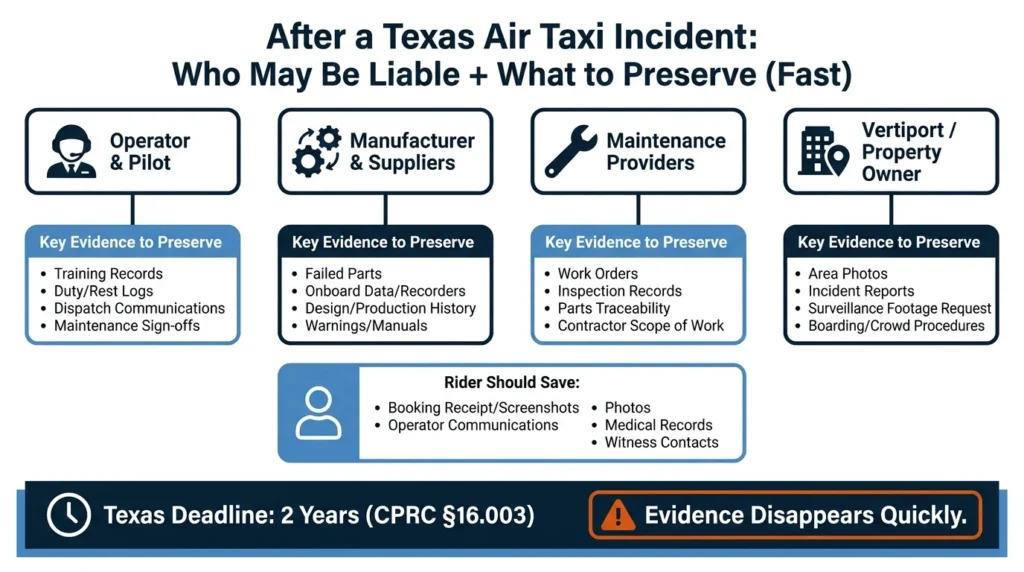
FAA compliance and civil liability operate on parallel tracks. An operator’s FAA-required training records can show whether a pilot was properly qualified. Maintenance documentation required by federal regulations can reveal whether inspections were performed correctly. Operating procedures mandated by the FAA can help establish what the standard of care should have been.
But meeting minimum FAA requirements doesn’t automatically mean an operator exercised reasonable care. A jury evaluating a negligence claim will consider all the facts, not just whether boxes were checked on a compliance form.
Insurance Complications
Air taxi incidents often involve multiple insurance policies. The operator, the manufacturer, the vertiport owner, and maintenance contractors may all carry separate coverage. Each insurer will try to shift blame to someone else’s policy. Quick settlement offers may not account for injuries that haven’t fully manifested or future medical needs that aren’t yet clear.
When to Contact a Texas Injury Attorney
Consider speaking with a lawyer if you suffered serious injuries, multiple parties may share responsibility, the operator or insurer is disputing fault, or you’re receiving rapid outreach from adjusters seeking statements.
An attorney can identify all potentially liable parties, secure records before they disappear, coordinate with aviation and medical experts, and make sure you don’t miss critical deadlines.
Angel Reyes & Associates has guided Texans through complex injury cases for over 30 years. We offer free consultations and work on contingency, so you pay nothing unless we win. If you’ve been hurt in an air taxi incident or any aviation-related accident, contact us today to discuss your options. Past results do not guarantee future outcomes.
Air Taxi & Powered Lift Aircraft FAQs
When does the FAA's powered-lift final rule take effect?
The final rule was published in the Federal Register on November 21, 2024, and generally became effective 30 days later, on December 21, 2024. Some operators may still face separate certification, approval, or compliance steps before carrying passengers commercially.
Are air taxis already carrying paying passengers in Texas?
Not yet. Even with the FAA’s powered-lift framework in place, commercial passenger service depends on the operator’s certification status, the aircraft’s approvals, and where local infrastructure like vertiports is available.
Who investigates an air taxi crash or serious incident?
The NTSB typically leads investigations of civil aviation accidents, while the FAA plays a regulatory role. Those investigations focus on cause and safety, which is separate from determining civil liability or compensation.
What evidence should a rider preserve after an air taxi incident?
Save your booking receipt, app screenshots, operator communications, photos, medical records, and witness contact information. If the injury happened while boarding or at the landing site, details about the condition of that area also matter.
Can a pre-ride waiver stop an injured passenger from bringing a claim?
Not always. Whether a waiver is enforceable depends on its wording, how it was presented, and the specific facts of the incident. It doesn’t automatically block every claim.
About the Authors

Angel Reyes
Writer
Angel L. Reyes, III is the Founder and Managing Partner of Angel Reyes & Associates. A nationally recognized trial attorney and business leader, Angel has helped over 70,000 injury victims recover more than $1 billion since founding the firm in 1993. Named to the Texas Super Lawyers list annually since 2008, Angel brings Wall Street experience, Ivy League education, and a deep commitment to client advocacy. He is a frequent legal commentator and published author with extensive contributions to legal scholarship, trial strategy, and consumer protection.

Graham Griffin
Editor
Graham Griffin is the Web & Content Manager at Angel Reyes & Associates, where he oversees content strategy, AI-powered workflows, a...

Angel Reyes
Reviewer
Angel L. Reyes, III is the Founder and Managing Partner of Angel Reyes & Associates. A nationally recognized trial attorney and business...