Texas Robotaxi & Self-Driving Car Accident Guide


Every article on this site is researched by our internal team, reviewed for legal accuracy against current Texas law, and held to State Bar of Texas advertising standards before publication. We do not publish content that overstates outcomes or makes promises about results.
Learn more about our
editorial standards .
Key Takeaways
- Texas law can treat the automated driving system as the "operator," potentially extending liability to fleet operators, vehicle owners, and manufacturers.
- Preserving digital evidence like onboard video and system logs quickly is critical because retention policies may cause this data to be deleted.
- Texas personal injury claims generally have a two-year deadline, but acting early can protect evidence and strengthen your claim.
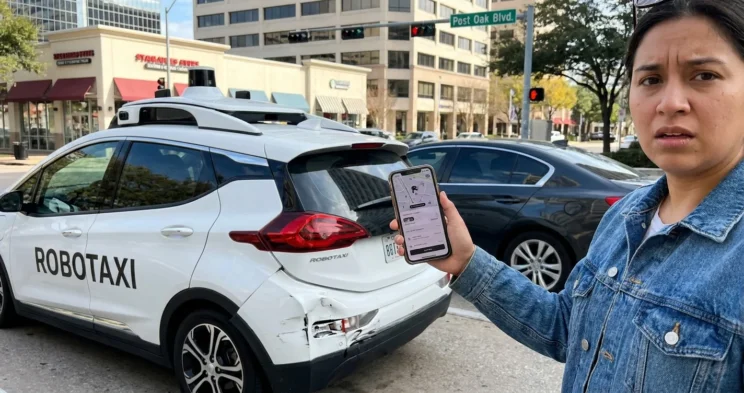
You were riding in a robotaxi through the Galleria/Uptown area when the vehicle braked hard, and another car slammed into you from behind. Now, you’re dealing with neck pain, a confusing app interface, and calls from an adjuster you’ve never heard of. You’re not sure who was at fault or whose insurance should pay.
Robotaxi and autonomous vehicle crashes raise questions that traditional car accidents don’t. Texas law has specific rules about who is the “operator” when software is driving. Understanding these rules can help you protect your claim from the start.
What Makes a Robotaxi Crash Different in Texas
When a human driver causes a crash, the path forward is usually straightforward. You identify the at-fault driver, file a claim with their insurer, and document your injuries.
Robotaxi crashes work differently.
The investigation considers more than just whether the driver made a mistake. It may involve the automated driving system’s sensors, the software’s decision-making process, remote support teams, and fleet maintenance policies. These factors create more potential sources of responsibility.
Common scenarios include:
- You were a passenger inside the robotaxi when it crashed.
- You were driving another vehicle that got hit by a robotaxi.
- You were a pedestrian or cyclist struck by an autonomous vehicle.
- A robotaxi and a human-driven car collided, and fault is unclear.
Each scenario changes which insurance policies may apply and what evidence is the most crucial. A passenger’s claim can look different from another driver’s claim, even in the same crash.
Texas Transportation Code Chapter 545 and Texas Civil Practice and Remedies Code Chapters 16 and 33 govern how these claims proceed. The rest of this guide explains how these rules apply to your situation.
Texas Law & the “Operator” Question
Texas law can treat the automated driving system itself as the “operator” under certain conditions. This is a key consideration because police reports, insurance adjusters, and courts all focus on operator conduct when assigning fault.
When there’s no human driver to point to, investigations often expand to include:
- The authorization holder or vehicle owner
- The fleet operator managing the robotaxi service
- The companies responsible for maintenance and software updates
- Potentially, the manufacturer of hardware or software components
Multiple parties can share fault in a single crash. The statements you make early on, whether to insurers or through apps, can affect how fault gets allocated later.
What “Authorized to Operate” Means for Robotaxi Fleets
Robotaxis typically operate under a company’s authorization. The company makes decisions about maintenance schedules, dispatch protocols, and operational boundaries. These decisions can become issues in your claim.
“No human driver” doesn’t mean “no one is responsible.” Fleet operators and their insurers still evaluate whether operational decisions and system performance met required standards.
Preserve your app and account details. Screenshots of your booking, the route, support chats, and trip confirmations show who controlled the trip and when. This information is crucial in determining whether multiple parties may share responsibility.
Who May Be Liable in a Texas Robotaxi Crash
Robotaxi cases often involve layered responsibility. The potentially liable parties may include:
| Party | Potential Basis for Liability |
| Another human driver | Negligent driving that caused or contributed to the crash |
| Robotaxi company/fleet operator | Operational decisions, dispatch protocols, safety compliance |
| Vehicle owner/authorization holder | Maintenance obligations, operational oversight |
| Maintenance or repair vendors | Negligent service that affected vehicle safety |
| Manufacturers or suppliers | Defective hardware or software (product liability) |
Legal theories in these cases can include negligent driving or operations, negligent maintenance, and potential product liability claims. The specific theory depends on what the evidence shows.
Liability is fact-specific. It’s driven by evidence like system logs, onboard video, and post-crash inspections. Assumptions that “the car drove itself” don’t determine outcomes. Speaking with an attorney early can help ensure that the right evidence gets preserved.
Passenger vs. Driver: How Your Role Affects the Claim
If you were a passenger: You weren’t controlling the vehicle, but you may still be asked for statements. Document the trip and your injuries quickly. Save your trip receipt and any in-app communications. Passenger claims have their own considerations.
If you were driving another vehicle: Preserve your own evidence. Take photos of damage, save any dashcam footage, and get repair estimates. Avoid speculating about what the robotaxi “should have done” in early reports.
If you were a pedestrian or cyclist: Get witness contact information immediately. Seek prompt medical documentation. These cases often hinge on visibility, speed, and right-of-way details at the specific location.
How Insurance May Work in Texas Robotaxi Crashes
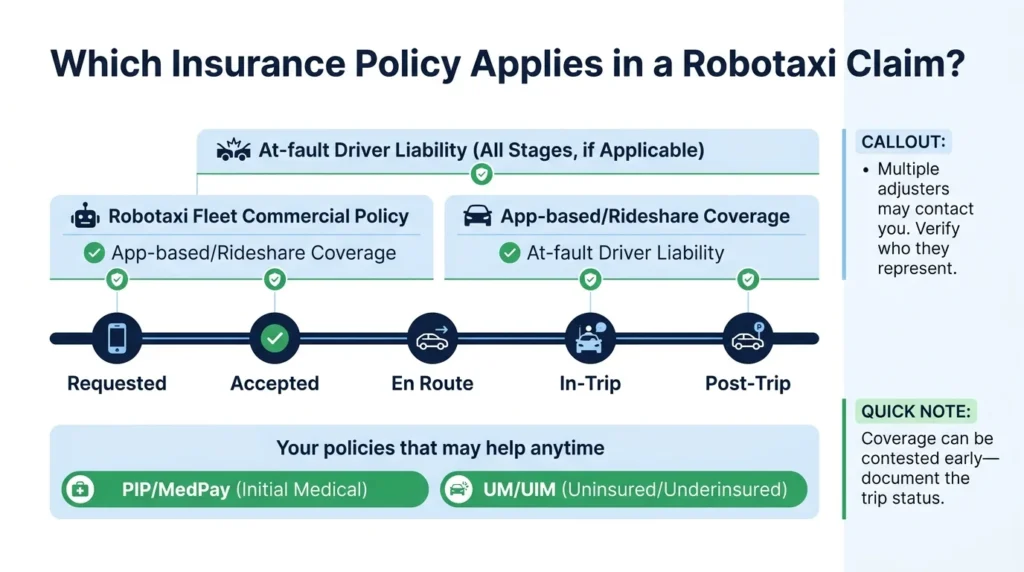
Insurance is usually the most immediate concern after a crash. Several coverage layers may apply, including:
- Robotaxi/fleet commercial policy: The company operating the vehicle typically carries commercial coverage.
- Rideshare-style coverage: If booked through an app like Uber, coverage may depend on trip status.
- At-fault driver’s liability: This may apply if another driver caused the crash.
- Your own PIP/MedPay: This may cover initial medical expenses, regardless of fault.
- UM/UIM coverage: This may apply if the at-fault party is uninsured or underinsured.
When a robotaxi ride is booked through a rideshare app, coverage can depend on the trip phase: requested, accepted, en route, in-trip, or post-trip. This timing issue is similar to traditional rideshare insurance questions.
What to request from the robotaxi company or insurer:
- Policy and claim contact information
- Incident reference number
- Confirmation of any onboard recordings or telematics
- Data retention timeline for video and logs
Uber/Lyft-Style Robotaxi Rides
When you book a robotaxi through a rideshare app, capture everything, including:
- The trip receipt with vehicle identifier
- Screenshots showing the vehicle was autonomous
- Any in-app safety tools you used
- Any support chat transcripts
The question of “who insures it” may be contested early. Multiple adjusters might call. Avoid giving detailed recorded statements until you understand whose adjuster is calling and what coverage they represent. Past clients have found that early legal guidance helps navigate these conversations.
What to Do Immediately After a Robotaxi Accident
Your priorities are safety, medical care, and preserving evidence.
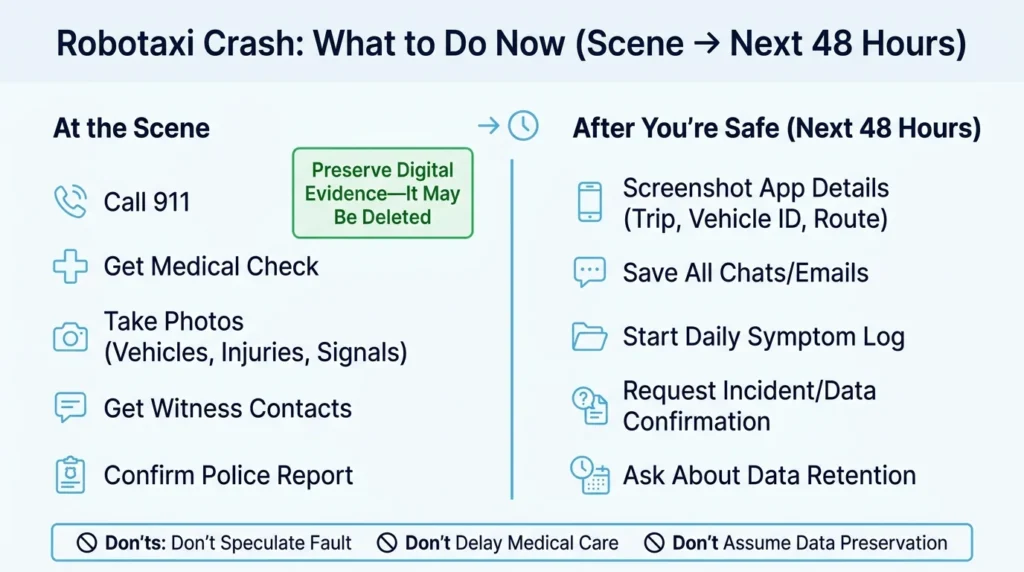
At the scene:
- Call 911 and report the crash.
- Accept medical attention, even if your injuries seem minor.
- Document visible injuries with photos.
- Ensure a police crash report is generated.
- Get contact information from any witnesses.
Document the vehicle and environment, including:
- Wide shots showing the full scene
- Close-ups of damage to all vehicles
- Traffic signals, signs, and roadway markings
- Any unusual robotaxi behavior you observed (such as sudden stops, alerts, or “stopped” mode)
Report through the app:
If it is safe to do so, use the robotaxi provider’s in-app reporting. Tesla’s robotaxi help page provides an example of provider guidance for collision reporting. Keep all confirmation emails and messages.
What Not to Do After a Robotaxi Crash
Don’t speculate about fault. Statements like “the car glitched” or “I wasn’t paying attention” can hurt your claim. Stick to the facts you directly observed.
Don’t delay medical care. Feeling “mostly fine” right after a crash is common. Gaps in treatment are frequently used to challenge whether the crash actually caused your injuries. Start a symptom log and update it daily.
Don’t assume data will be preserved automatically. Robotaxi companies may have retention policies that delete footage or logs after a set period. Request preservation of video and system data as soon as possible. An attorney can send a formal preservation letter on your behalf.
Evidence to Preserve in Robotaxi Crashes
Digital evidence can make or break AV cases. Key types of evidence include:
| Evidence Type | What to Capture |
| App records | Trip receipt, booking confirmation, route |
| Communications | Support chat, emails, in-app messages |
| Scene documentation | Photos, videos, witness contacts |
| Official records | Police report number, 911 information |
| Medical records | ER visit, follow-up care, prescriptions |
| Financial records | Medical bills, lost wage documentation, receipts |
Vehicle-specific data may include onboard camera footage, sensor data, event data recorder information, system disengagement logs, and remote assistance records. This data often exists but isn’t automatically shared with crash victims.
Timing is everything. Companies may have retention policies that overwrite data. Therefore, early preservation requests can be critical. Contact an attorney promptly to ensure AV data is preserved before it disappears.
Building a Clear Crash Timeline
Write down everything you remember, including:
- Pickup time and location
- The route that the vehicle took
- Weather and traffic conditions
- Vehicle behavior before the crash (including alerts, braking, and steering)
- What you felt and heard during the collision
Capture responder information: Include the names and badge numbers of officers, tow company details, and where the vehicle was taken. This information will come in handy for later vehicle inspections.
Keep a symptom and work-impact diary: Document how your injuries affect your daily activities, sleep, and ability to work.
Texas Fault Rules That Shape Robotaxi Claims
Texas uses proportionate responsibility to allocate fault among responsible parties. Under Texas Civil Practice and Remedies Code § 33.001, fault can be split among multiple defendants.
Your recovery can be reduced by your percentage of fault. If you’re found more than 50% responsible, you may not recover anything.
Evidence is more important in AV cases because parties may try to shift blame. Without full system context, defendants might argue that a human (such as another driver, the rider, or an “unexpected obstacle”) caused the crash. Thorough documentation will protect your claim against these arguments.
Deadlines for Texas Robotaxi Accident Claims
Texas personal injury claims are generally subject to a two-year statute of limitations under Texas Civil Practice & Remedies Code § 16.003.
However, waiting can hurt your claim even before the deadline arrives. Witnesses may move or forget details. Vehicles may get repaired or scrapped. Digital logs can be overwritten within weeks or months.
Special notice rules and shorter timelines can apply in some situations, such as claims involving government entities. Getting legal advice quickly will help confirm the deadlines that apply to your specific case.
What Compensation May Include
Economic damages cover measurable financial losses, including:
- Medical bills (past and future)
- Lost wages and diminished earning capacity
- Out-of-pocket costs (such as transportation or home modifications)
- Property damage and vehicle repairs or replacement
Non-economic damages address impacts that don’t have receipts, such as:
- Physical pain and discomfort
- Mental anguish
- Physical impairment
- Loss of enjoyment of life
Document everything. Treatment notes, daily symptom logs, and statements from family members or coworkers about how your injuries have affected you can all support your claim.
When to Contact a Texas Autonomous Vehicle Accident Lawyer
Consider getting legal help if:
- You suffered serious injuries
- Fault is unclear or disputed
- Multiple insurers are calling
- There’s any indication of system or vehicle malfunction
- The robotaxi company isn’t preserving evidence
Early legal representation can make a significant difference. An attorney can send preservation letters to protect digital evidence, coordinate vehicle inspections, identify all applicable insurance coverage, and manage communication with adjusters.
At Angel Reyes & Associates, we’ve spent over 30 years helping Texas injury victims. We offer free consultations and work on contingency, meaning there is no fee unless we win. Our team has helped clients recover more than $1 billion in compensation. We have more than 20 office locations across Texas and can handle the majority of your case remotely.
If you’ve been injured in a robotaxi or autonomous vehicle crash, reach out to us today to discuss your options.
Robotaxi & Self-Driving Accident FAQs
Can I still recover compensation if I wasn’t wearing a seatbelt in a robotaxi?
Possibly, but this can also affect how fault and damages are argued in Texas, especially if the defense claims that the injuries would have been less severe if you were wearing a seatbelt. With that said, this usually does not automatically end a claim.
What if the robotaxi company says the crash is still “under review”?
You do not have to wait for the company’s internal review to start gathering your own records, medical documentation, and witness information. Internal reviews can take time, and they are not the same as a legal determination of fault.
Can my own auto insurance help if I was a passenger in a robotaxi?
Sometimes, yes, depending on your policy. Coverages like PIP, MedPay, or UM/UIM may help in some situations even if you were riding in someone else’s vehicle.
Are black box or event data recorder records the same as robotaxi system logs?
Not always. A traditional event data recorder may capture limited crash information, while a robotaxi may additionally generate separate camera, sensor, routing, and system-status data that can be important in a claim.
Do I need the robotaxi driver’s name to make a claim in Texas?
Not necessarily. In a driverless ride, the key identifying details may be the vehicle ID, trip receipt, app screenshots, crash report number, and the company that is operating the service.
About the Authors

Angel Reyes
Writer
Angel L. Reyes, III is the Founder and Managing Partner of Angel Reyes & Associates. A nationally recognized trial attorney and business leader, Angel has helped over 70,000 injury victims recover more than $1 billion since founding the firm in 1993. Named to the Texas Super Lawyers list annually since 2008, Angel brings Wall Street experience, Ivy League education, and a deep commitment to client advocacy. He is a frequent legal commentator and published author with extensive contributions to legal scholarship, trial strategy, and consumer protection.

Kyle Nicolas
Editor
Kyle Nicolas is the Web Content & SEO Manager at Angel Reyes & Associates. He has more than 10 years of experience as a marketing co...

Angel Reyes
Reviewer
Angel L. Reyes, III is the Founder and Managing Partner of Angel Reyes & Associates. A nationally recognized trial attorney and business...