Are Personal Injury Settlements Considered Marital Property in Texas?


Every article on this site is researched by our internal team, reviewed for legal accuracy against current Texas law, and held to State Bar of Texas advertising standards before publication. We do not publish content that overstates outcomes or makes promises about results.
Learn more about our
editorial standards .
Key Takeaways
- A personal injury settlement is usually separate property in Texas, except for any recovery for loss of earning capacity during marriage.
- Property on hand during divorce is presumed to be community property, so the spouse claiming separate property must prove it with clear, convincing evidence.
- Clear settlement language, separate accounts, and complete records can make it easier to protect the separate-property portion of a settlement.
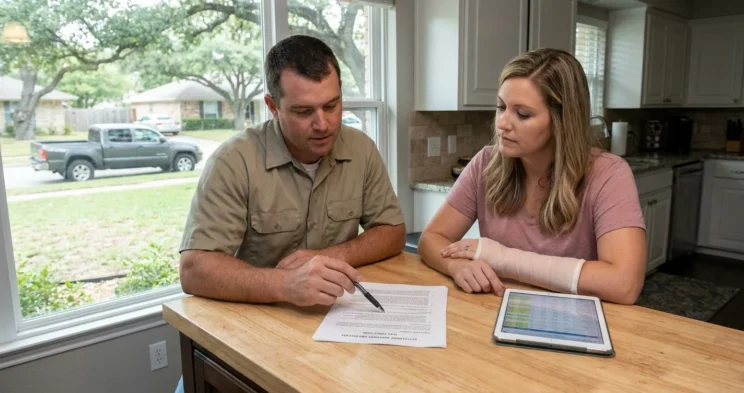
If you have been through a divorce or are going through the process right now, you’re probably very familiar with the term “marital property.” Essentially, marital property is any property that is jointly owned and subject to division as a part of the divorce process.
If you have been injured in an accident and have received a settlement, either in a lump sum or in a structured payment plan, you might be wondering if that settlement could be exposed to the division process associated with marital property. Since the value of your settlement is supposed to make you whole and compensate you for pain, medical bills, and future treatment, having to divide these assets may seem counterintuitive.
If you’re unsure how your settlement could be treated in a divorce, this guide will help you understand when it may be protected, when it might be divided, and what factors Texas courts consider in the process.
If You Are Married, Part of Your Recovery May Be Community Property
In Texas, a personal injury claim is not automatically classified as either entirely separate property or community property. Texas Family Code § 3.001 generally treats recovery for personal injuries during marriage as the injured spouse’s separate property; however, Texas law also treats some parts of the recovery as community property, especially when those damages compensate for losses suffered during the marriage.
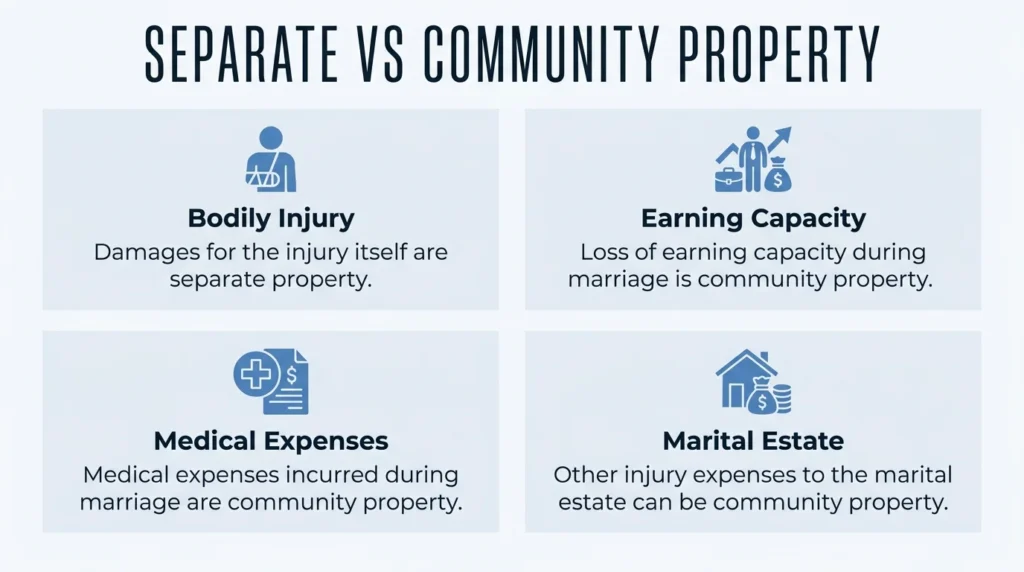
Here are some examples of how a split usually works:
- Damages for the bodily injury itself are generally the injured spouse’s separate property.
- Recovery for loss of earning capacity during marriage is community property.
- Recovery for medical expenses incurred during marriage is also community property.
- Texas courts have also treated other expenses associated with injury to the marital estate as community property.
This distinction is important in divorce and settlement disputes. Property possessed during a marriage is presumed to be community property, and the spouse claiming a separate-property interest must prove that it is separate property using clear, convincing evidence.
If a settlement does not clearly allocate the different categories of damages, then determining what belongs to the injured spouse and what belongs to the community estate can become much harder.
What Part of a Settlement Can Be Divided?
The answer depends on what the settlement paid for. Most compensation for the injury itself belongs to the injured spouse as separate property. The main exception is the portion tied to loss of earning capacity during the marriage.
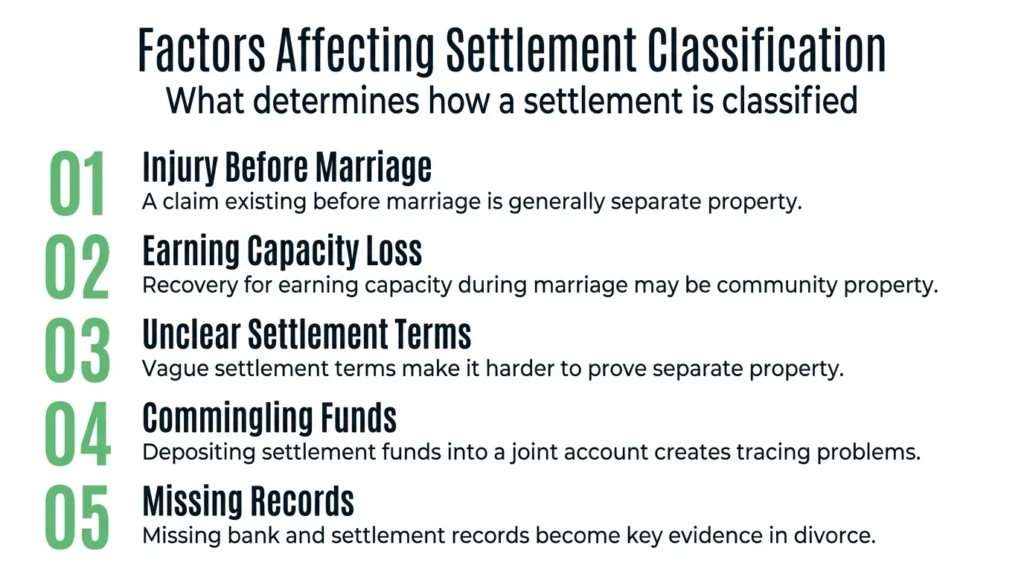
These factors usually determine how it is classified:
- Injury before marriage: A claim that existed before marriage is generally considered separate property.
- Loss of earning capacity during marriage: This portion may be treated as community property under § 3.001.
- Unclear settlement terms: If the release or settlement papers do not explain what the money covers, it can become harder to prove what portion is separate.
- Commingling: Depositing settlement funds into a joint account can create a tracing problem.
- Missing records: Bank statements, settlement statements, and release documents often become key evidence in a divorce.
The more clearly the settlement is documented, the easier it will be to protect the portion that qualifies as separate property.
How Texas Courts Investigate This Issue
Texas courts do not simply ask when the check arrived. They look at how the recovery is classified, and whether the spouse claiming separate property can prove it. Under § 3.003, the spouse claiming separate property must prove it with clear, convincing evidence.
If part of the recovery is community property, the court can divide it in a way that is just and right under § 7.001.
This is why tracing is so important. A settlement that started as mostly separate property can become harder to protect if the money is mixed with marital funds or the documents do not identify how the settlement was allocated.
Steps to Protect a Separate-Property Claim
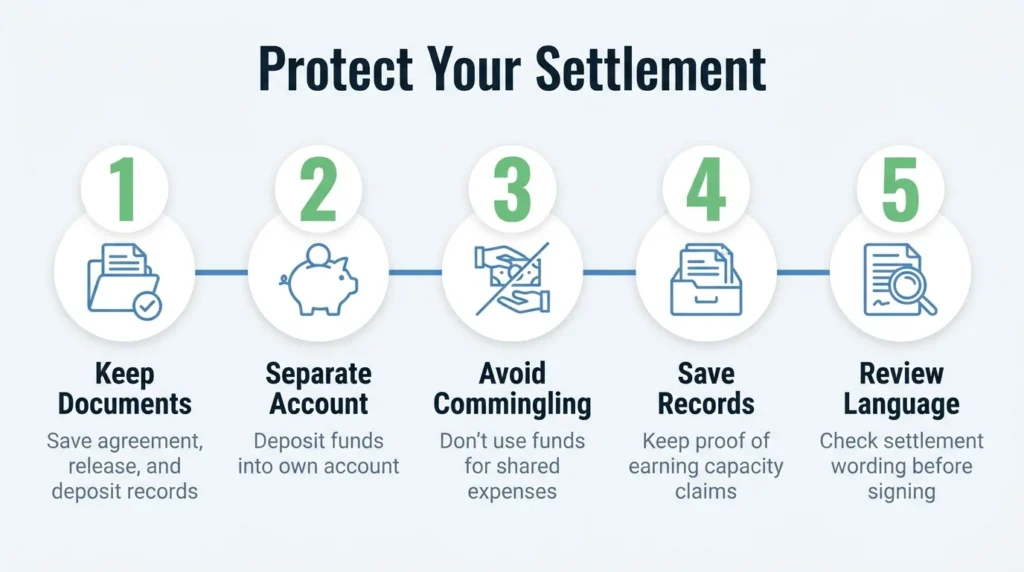
These steps can help you preserve the evidence you may need if your divorce complicates your injury claim:
- Keep the settlement agreement, release, disbursement sheet, and deposit records.
- Put the funds into a separate account, instead of a joint account.
- Avoid using the settlement money for regular shared household expenses without first seeking legal advice on tracing.
- Save documents that show whether any part of the recovery was assigned to loss of earning capacity.
- Review the settlement language before signing the final papers.
Taking these steps early can reduce disputes later and give your lawyer better proof to work with.
Protect Your Settlement Before Divorce Changes the Result
A personal injury settlement can affect divorce negotiations, property division, and long-term financial security. If there is a dispute about whether part of the recovery is community property, waiting too long to organize the records can make the issue harder to fix.
Angel Reyes & Associates offers free initial consultations, and there is no fee unless we win. If you have questions about an injury claim or how a settlement may be treated in a divorce, contact our team for a free consultation.
Injury Settlements in Divorce FAQs
Can a settlement from a lawsuit filed after separation still be partly community property in Texas?
Yes. Texas courts look at what the settlement compensates, not just when the lawsuit was filed or the money was paid, so damages tied to losses during the marriage may still be treated as community property.
What happens if the settlement agreement does not classify the payment by category of damages?
That can make disputes over property much more complicated. Without a clear allocation, the spouse claiming a separate-property share may have a tougher time tracing which portion was for personal injury damages versus community losses.
Are future payments from a structured settlement treated differently than a lump-sum settlement in a Texas divorce?
Not automatically. A structured settlement is still analyzed by the purpose of the payments, and each stream of payments may need to be traced to show whether they compensated separate-property damages or community losses.
Can using settlement money to buy a house, car, or investment account change how it is treated in divorce?
It can create proof problems, even if the money began as separate property. When settlement funds are used to purchase other assets, records are often needed to trace the source of the money and preserve the separate-property claim.
Does a non-injured spouse have a separate claim that can affect settlement division in Texas?
Sometimes. In certain cases, a spouse may have an independent claim, such as loss of consortium (when the injured spouse can no longer provide emotional or physical support to the non-injured spouse), and that can make settlement negotiations and property characterization more complicated.
About the Authors

Angel Reyes
Writer
Angel L. Reyes, III is the Founder and Managing Partner of Angel Reyes & Associates. A nationally recognized trial attorney and business leader, Angel has helped over 70,000 injury victims recover more than $1 billion since founding the firm in 1993. Named to the Texas Super Lawyers list annually since 2008, Angel brings Wall Street experience, Ivy League education, and a deep commitment to client advocacy. He is a frequent legal commentator and published author with extensive contributions to legal scholarship, trial strategy, and consumer protection.

Kyle Nicolas
Editor
Kyle Nicolas is the Web Content & SEO Manager at Angel Reyes & Associates. He has more than 10 years of experience as a marketing co...

Angel Reyes
Reviewer
Angel L. Reyes, III is the Founder and Managing Partner of Angel Reyes & Associates. A nationally recognized trial attorney and business...