Why Passenger Claims Matter
You were just along for the ride. Maybe scrolling through your phone, chatting with the driver, or watching Dallas traffic crawl by on I-35.
Then suddenly, the crash.
Now you’re dealing with injuries, medical bills, and a situation you had absolutely no control over. As a passenger in a Texas car accident, you hold a unique position that many don’t fully understand.
Passengers are injured through no fault of their own.
You weren’t speeding, texting, or failing to yield. You were simply sitting in a vehicle when someone else’s mistake changed everything.
This puts you in the strongest possible position for recovering compensation under Texas law.
Many passengers hesitate to pursue claims, especially when the driver is a friend or family member. The thought of “suing” your best friend or sister feels wrong.
But here’s what most people don’t realize: you’re not taking money from your loved one’s pocket. Insurance companies pay these claims.
That’s exactly why Texas requires drivers to carry liability insurance.
Understanding your rights, coverage sources, and settlement options empowers you to get the help you need without damaging important relationships.
At Angel Reyes & Associates, we’ve guided thousands of injured passengers through this process over our 30+ years serving Texas families.
Passenger Rights Under Texas Law
Texas operates as an at-fault state, meaning the driver who caused the accident bears financial responsibility for injuries and damages. As a passenger, this system works strongly in your favor.
Your Strongest Legal Position
Under Texas’s modified comparative negligence rules, you can recover damages as long as you’re less than 51% at fault for the accident. For passengers, this threshold is almost never an issue.
While drivers argue about who had the right of way or who was distracted, you were simply present in the vehicle. Courts recognize passengers had no control over the driving decisions that led to the crash.
Texas Transportation Code §601.072 requires all drivers to maintain minimum liability insurance specifically to cover situations like passenger injuries.
The law recognizes that passengers deserve protection when drivers make mistakes. Section §545.062 further establishes that all vehicle occupants have rights to safety and compensation when traffic laws are violated.
This stronger legal position compared to drivers means insurance companies take passenger claims more seriously. They can’t argue you were speeding, following too closely, or checking your phone.
Your claim stands on the simple fact that someone else’s negligence caused your injuries.
Insurance Coverage Paths for Injured Passengers
Understanding your insurance options transforms a confusing situation into a clear path forward. Texas law provides multiple avenues for passenger compensation, each with different advantages.
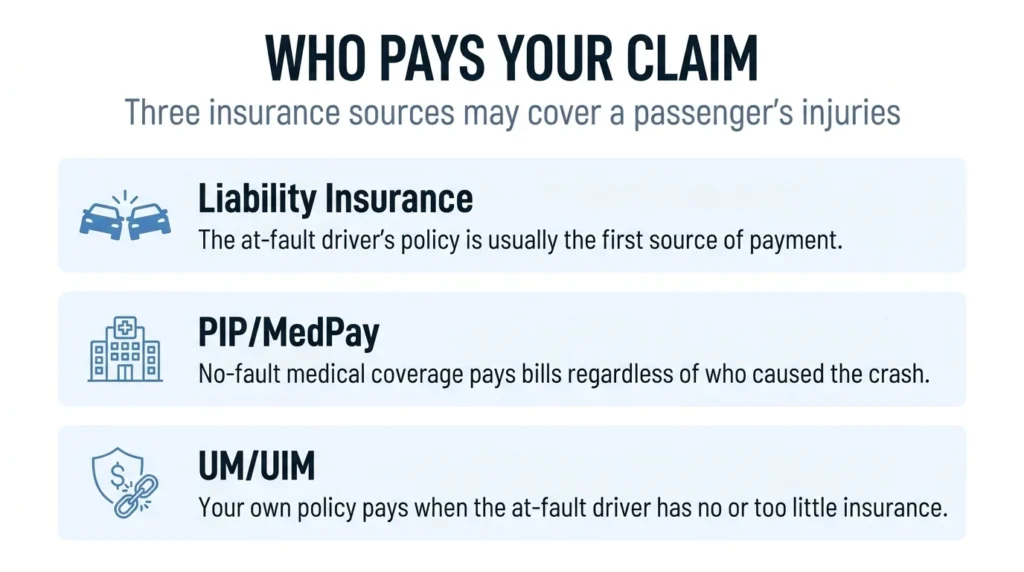
At-Fault Driver’s Liability Insurance
The primary source of compensation comes from whoever caused the accident. If your friend ran a red light and caused a T-bone collision, their liability insurance covers your injuries.
If another driver slammed into your Uber on the North Dallas Tollway, that driver’s insurance becomes responsible for your damages. This coverage applies whether the at-fault driver is your spouse, parent, friend, or complete stranger.
Accessing Other Drivers’ Policies
Multi-vehicle accidents open additional coverage options. When fault gets divided between multiple drivers, you can pursue claims against each at-fault party’s insurance.
A three-car pileup where two drivers share fault means two insurance policies potentially available for your recovery. This dramatically increases available compensation, especially for serious injuries.
Your Own PIP and UM/UIM Coverage
Many Texans don’t realize their own auto insurance helps even when riding in someone else’s car. Personal Injury Protection (PIP) pays regardless of fault, covering immediate medical bills and lost wages up to your policy limits.
This optional coverage (which we strongly recommend) provides crucial early financial relief while liability claims process.
Uninsured/Underinsured Motorist (UM/UIM) coverage on your policy kicks in when at-fault drivers lack adequate insurance.
If the responsible driver carries only Texas minimums and your injuries exceed those limits, your UM/UIM coverage bridges the gap.
Health Insurance Coordination
Your health insurance can cover initial treatment, with auto insurance reimbursing those costs later through subrogation. This coordination ensures you receive immediate medical care without waiting for claim resolution.
Understanding how these policies work together prevents coverage gaps and maximizes your total recovery. Who pays medical bills after a car accident in Texas? becomes less confusing when you understand this coordination.
Rideshares Million-Dollar Protection
Uber and Lyft passengers benefit from commercial insurance far exceeding typical auto policies. When your rideshare driver has accepted your ride request or is actively transporting you, both companies provide $1 million in liability coverage.
This coverage applies regardless of fault, protecting passengers whether your driver caused the accident or another vehicle hit you during your ride.
Texas Insurance Minimums Explained
Understanding Texas’s required insurance minimums helps explain why additional coverage sources matter for passenger injuries.
State Minimum Requirements
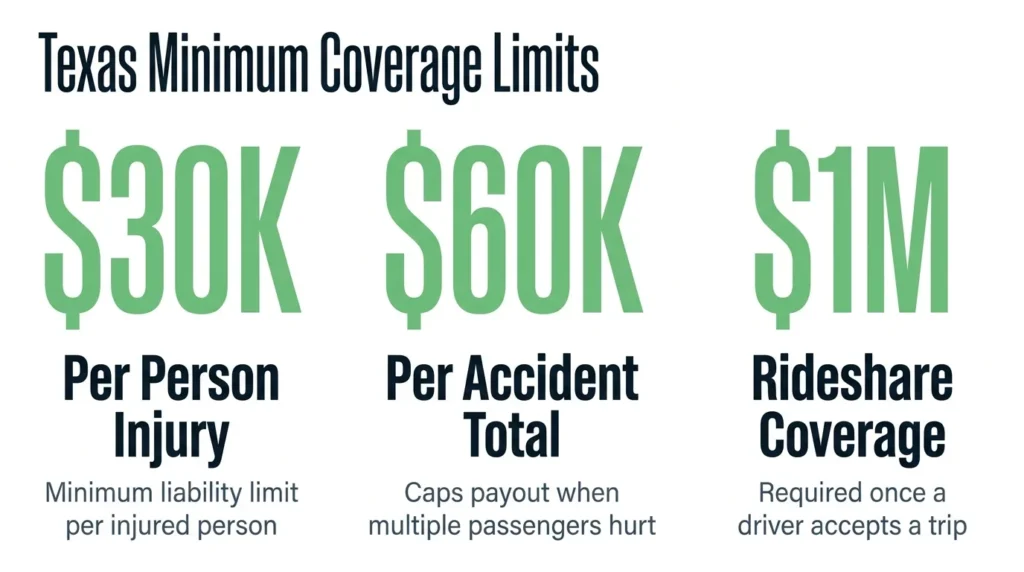
Texas mandates $30,000 per person for bodily injury, $60,000 per accident for multiple injuries, and $25,000 for property damage. These numbers represent the absolute minimum drivers must carry.
Many responsible drivers purchase higher limits, but you can’t count on it.
Why Limits Often Fall Short
Modern medical costs quickly exhaust minimum coverage. An ambulance ride to a Dallas emergency room costs $1,500-$3,000. The ER visit itself, including CT scans and initial treatment, easily reaches $15,000-$25,000.
If you need surgery, physical therapy, or extended treatment, costs balloon far beyond the $30,000 per-person minimum.
Consider a passenger requiring back surgery after a rear-end collision on I-45. Surgery alone might cost $50,000-$75,000.
Add three months of physical therapy, lost wages during recovery, and pain and suffering compensation, and damages could exceed $150,000. The gap between minimum coverage and actual costs makes understanding all available insurance sources critical.
The Importance of Underinsured Motorist Coverage
This gap is exactly why underinsured motorist coverage exists. When at-fault drivers carry only minimums, your UM/UIM coverage provides additional compensation up to your policy limits.
Angel Reyes & Associates helps passengers identify and access every available coverage source, ensuring bills don’t overwhelm your family’s finances.
Suing Friends or Family? The Relationship Question
The fear of damaging relationships stops many injured passengers from seeking rightful compensation. This misunderstanding about how insurance claims work causes unnecessary suffering.
Insurance Companies Pay, Not Personal Assets
Filing a claim against your friend’s insurance doesn’t mean taking their house or emptying their bank account. Insurance companies handle everything from claim evaluation to writing settlement checks.
Your friend or family member simply provides their insurance information and cooperates with their insurer’s investigation.
Think of it this way: your friend pays insurance premiums specifically for situations like this. They’re not personally writing you a check or selling possessions to cover your medical bills.
The insurance company they’ve been paying handles the entire financial obligation.
Preserving Relationships Through Honest Communication
Open conversation helps maintain relationships during the claims process. Most friends and family members want you to receive proper medical care and compensation.
They understand that’s why they carry insurance. Many actually feel relieved when you pursue proper channels rather than struggling with bills alone.
Angel Reyes & Associates helps facilitate these sensitive situations with compassion and professionalism. We’ve guided countless Texas families through passenger claims while preserving important relationships.
Our approach focuses on insurance recovery, not personal conflict.
When Lawsuits Become Necessary
Sometimes formal lawsuits become necessary, particularly when insurance companies dispute coverage or offer inadequate settlements.
Even then, the lawsuit names your friend or family member only as a formality. The real defendant is their insurance company, who provides legal defense and pays any settlement or judgment.
Texas law requires filing within two years of the accident.
Don’t let relationship concerns cause you to miss this deadline. Protecting your legal rights doesn’t mean destroying relationships when handled properly.
Multi-Car and Rideshare Scenarios
Complex accident scenarios often provide additional recovery options for passengers. Understanding these situations helps maximize your compensation.
Two-Driver Accidents
When two drivers share fault, passengers can claim against both insurance policies. Texas’s proportionate responsibility system divides fault percentages between drivers.
If one driver is 70% at fault and another 30%, you can pursue both insurers for their respective portions of your damages.
Highway Pileups
Major accidents on I-35, I-45, or Loop 820 often involve multiple vehicles and insurance companies. Our Dallas car accident lawyers investigate every vehicle’s role, identifying all sources of insurance coverage.
A five-car pileup might provide access to three or four insurance policies, dramatically increasing available compensation for seriously injured passengers.
Uber and Lyft Coverage Tiers
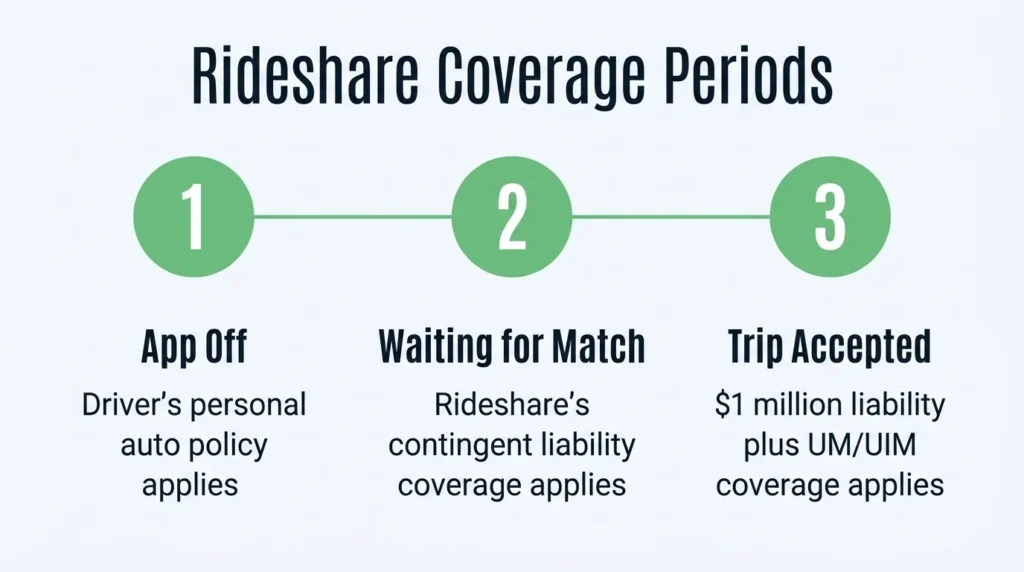
Rideshare insurance depends on the driver’s app status at accident time. When logged into the app but waiting for rides, coverage is limited.
Once accepting a ride request, coverage jumps to $1 million. During active passenger transport, full commercial coverage applies. Understanding these tiers ensures you claim against the correct policy with maximum limits.
Commercial Vehicle Passengers
Passengers in accidents involving 18-wheelers, delivery trucks, or company vehicles often access substantial commercial policies. These policies frequently provide $750,000 to several million in coverage.
Bus passengers, taxi riders, and those in company shuttles all benefit from commercial insurance requirements exceeding personal auto minimums.
Compensation and Settlements for Passengers
Understanding potential compensation helps set realistic expectations for your passenger injury claim.

Types of Damages Available
Passengers can recover all economic damages including past and future medical expenses, lost wages, and out-of-pocket costs related to the accident.
Non-economic damages compensate for pain and suffering, mental anguish, physical impairment, and loss of enjoyment of life.
In cases of permanent injury, compensation includes future medical needs, ongoing care costs, and lifetime impact on earning capacity.
Typical Settlement Ranges
While every case is unique, certain patterns emerge in passenger settlements. Minor injuries like whiplash or soft tissue damage typically settle between $15,000 and $50,000.
Injuries requiring surgery or extended treatment often result in settlements from $100,000 to $250,000. Severe injuries with permanent effects can exceed $500,000, particularly with commercial vehicle involvement or multiple insurance policies.
Why Passenger Cases Often Resolve Faster
Clear liability accelerates passenger claim resolution. Without the fault disputes common in driver-versus-driver cases, insurance companies often settle passenger claims more efficiently.
This faster resolution helps injured passengers receive compensation when they need it most, rather than enduring lengthy legal battles.
Angel Reyes & Associates has recovered over $1 billion for injured Texans, with a 98% success rate in passenger injury cases.
Our experience navigating multiple insurance claims ensures maximum recovery without unnecessary delays.
Passenger Claims Process & Timeline
Knowing what to expect helps reduce anxiety during your recovery journey.
Immediate Steps After Your Accident
First, seek medical attention even for seemingly minor injuries.
Adrenaline masks pain, and some injuries like traumatic brain injuries or internal bleeding don’t show immediate symptoms. Document everything at the scene including photos of vehicles, injuries, and road conditions.
Collect driver information, insurance details, and witness contacts.
Report the accident to relevant insurance companies but avoid giving recorded statements without legal guidance. Insurance adjusters, even from your own company, aim to minimize payouts.
Seemingly innocent statements about feeling “fine” or “not that bad” can damage your claim later.
Filing Your Insurance Claim
Contact each relevant insurance company to open claims. This includes the at-fault driver’s insurer, your own PIP/UM/UIM carrier, and potentially rideshare companies.
Provide basic information but defer detailed statements until consulting an attorney.
Insurance companies typically acknowledge claims within 15 days and begin investigations immediately. They’ll request medical records, review police reports, and potentially conduct their own accident reconstruction.
Having legal representation ensures your interests are protected during this process.
Medical Documentation and Negotiation
Thorough medical documentation drives successful passenger claims. Follow all treatment recommendations, attend every appointment, and maintain detailed records of your recovery journey.
Insurance companies scrutinize gaps in treatment or missed appointments as evidence that injuries aren’t serious.
Initial settlement offers often arrive 30-60 days after treatment concludes.
These first offers rarely reflect full claim value. Experienced attorneys understand how to negotiate from initial lowball offers to fair settlements reflecting all your damages.
Settlement Versus Litigation Timelines
Most passenger claims settle without lawsuit filing. Simple cases with clear liability and documented injuries often resolve within 3-6 months. Complex cases involving serious injuries, multiple parties, or disputed coverage may require 12-18 months.
If litigation becomes necessary, the timeline extends. Filing a lawsuit, conducting discovery, and potentially going to trial can take 18-24 months. However, most cases still settle before trial once insurance companies face serious legal pressure.
Texas’s two-year statute of limitations provides adequate time, but earlier action preserves evidence and witness memories. Don’t wait until approaching the deadline to seek legal help.
How Angel Reyes & Associates Helps Injured Passengers
Our 30+ years serving Texas families gives us unique insight into passenger injury claims. We understand the emotional complexity of claims involving friends or family members and navigate these situations with compassion and professionalism.
Experience with Multi-Insurance Claims
Passenger cases often involve coordinating multiple insurance policies. We identify every available coverage source, from liability to PIP to UM/UIM to commercial policies.
Our attorneys understand how to stack coverage for maximum recovery, ensuring no insurance source goes untapped.
Compassionate Guidance for Sensitive Situations
We recognize the difficulty of pursuing claims when relationships are involved. Our approach prioritizes insurance recovery while minimizing personal conflict.
We handle all insurance company communications, allowing you to focus on recovery and maintaining important relationships.
Results-Driven Representation
With over $1 billion recovered for injured Texans and a 98% success rate, our track record speaks for itself. We’ve handled thousands of passenger injury cases, from simple rear-end collisions to complex multi-vehicle pileups.
Our experience translates directly into maximum compensation for our clients.
No Upfront Fees
You pay nothing unless we win your case. Free consultations let you understand your options without financial commitment. This contingency fee structure ensures everyone can access quality legal representation regardless of financial situation.
FAQs About Passenger Accident Claims in Texas
Can I sue both drivers after a Texas crash?
Yes, passengers can pursue claims against all at-fault drivers when multiple parties share responsibility. Texas’s proportionate responsibility system allows recovery from each driver based on their fault percentage.
This often provides access to multiple insurance policies, increasing total available compensation. Our passenger injury attorneys can help determine which drivers share liability.
Do I have to sue my friend if I was a passenger?
You’re not suing your friend personally – you’re making a claim against their insurance company. Insurance exists specifically for these situations.
Your friend won’t pay from personal funds. Their insurance company handles everything from investigation to settlement payment.
What happens if the driver has no insurance?
Uninsured drivers create challenges but don’t eliminate recovery options. Your own Uninsured Motorist coverage provides compensation when at-fault drivers lack insurance.
Additionally, you might pursue the driver’s personal assets or explore other insurance policies like homeowner’s coverage that might apply.
Does Uber/Lyft cover me as a passenger?
Yes, both companies provide substantial coverage for passengers. During active rides, $1 million liability policies protect passengers regardless of fault.
This commercial coverage far exceeds typical personal auto insurance, providing significant protection for rideshare passengers.
How long will a passenger claim take in Texas?
Timeline depends on injury severity and case complexity. Simple claims with clear liability often settle within 3-6 months.
Complex cases involving serious injuries or multiple insurance companies may take 12-18 months. Having experienced legal representation typically accelerates the process while maximizing recovery.
Your Rights Don’t Expire When You Leave the Vehicle
Being injured as a passenger in a Texas car accident puts you in a unique position.
You have stronger legal standing than drivers, access to multiple insurance sources, and the ability to recover full compensation without damaging important relationships.
Understanding these rights empowers you to make informed decisions about your recovery.
Don’t let confusion about insurance or concern about relationships prevent you from getting help with medical bills and lost wages.
The team at Angel Reyes & Associates has spent over 30 years helping injured passengers navigate these exact situations.
We understand both the legal complexities and emotional challenges you’re facing.
Find out what insurance covers your passenger injuries. Contact Angel Reyes & Associates today for your free case review.
Protect your rights without hurting your relationships.