E-Bike Age Laws for Minors in Texas


Every article on this site is researched by our internal team, reviewed for legal accuracy against current Texas law, and held to State Bar of Texas advertising standards before publication. We do not publish content that overstates outcomes or makes promises about results.
Learn more about our
editorial standards .
Key Takeaways
- Texas law prohibits riders under 15 from operating a Class 3 e-bike; Class 1 and Class 2 have no statewide age minimum.
- Parents face property damage liability under Texas Family Code Chapter 41 and potential personal injury exposure under negligent entrustment if they allow a child to ride in violation of age laws.
- A minor's violation of e-bike age restrictions can reduce their recovery under Texas proportionate responsibility rules.
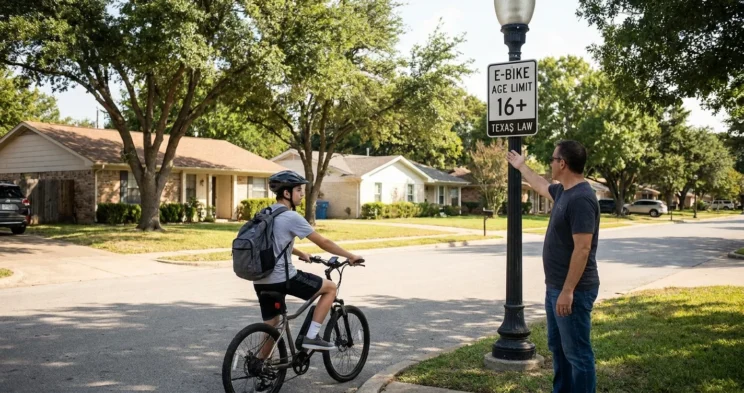
You’re thinking about buying an e-bike for your teenager, or your younger child keeps asking for one. Before you purchase, you should know that the e-bike class determines whether state law has anything to say about who can ride it.
Class 3 has an age restriction, while Class 1 and 2 do not at the state level. Yet, it is also important to understand what those classifications and Texas state rules mean for parents when something goes wrong.
Texas E-Bike Age Rules by Class
Texas Transportation Code Chapter 664 sets the age-related restrictions for electric bicycle operation in Texas.
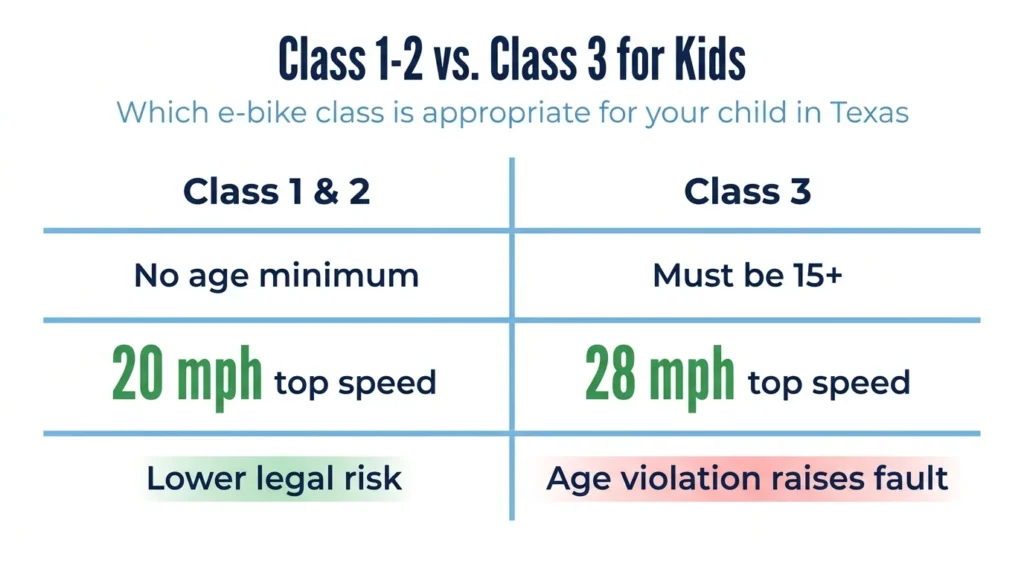
Class 3 e-bikes carry the only statutory minimum age: a rider must be at least 15 years old to operate a Class 3 e-bike in Texas. A child under 15 may ride as a passenger on a Class 3 if the bike is designed for more than one rider, but they may not operate it. Texas has no statewide helmet mandate for e-bikes, but local ordinances in Austin, Dallas, and Houston require helmets for minor riders.
Class 1 and Class 2 e-bikes carry no statewide minimum age restriction under Texas law. A younger child may legally operate a Class 1 or Class 2 e-bike under state law. Local city ordinances may add their own restrictions, so checking your city’s rules is worth doing before your child rides.
The e-bike age limit in Texas is therefore class-dependent, not universal. The one firm line is Class 3 and age 15.
One practical note on helmets: the applicable age threshold for helmets varies by city. In Austin, riders under 18 must wear helmets on micromobility devices. In Dallas, the requirement applies to riders under 17. Houston follows similar rules for minors. The electric bike age law in Texas on helmets layers on top of the class-based riding rules.
What to Know Before Buying an E-Bike for Your Child
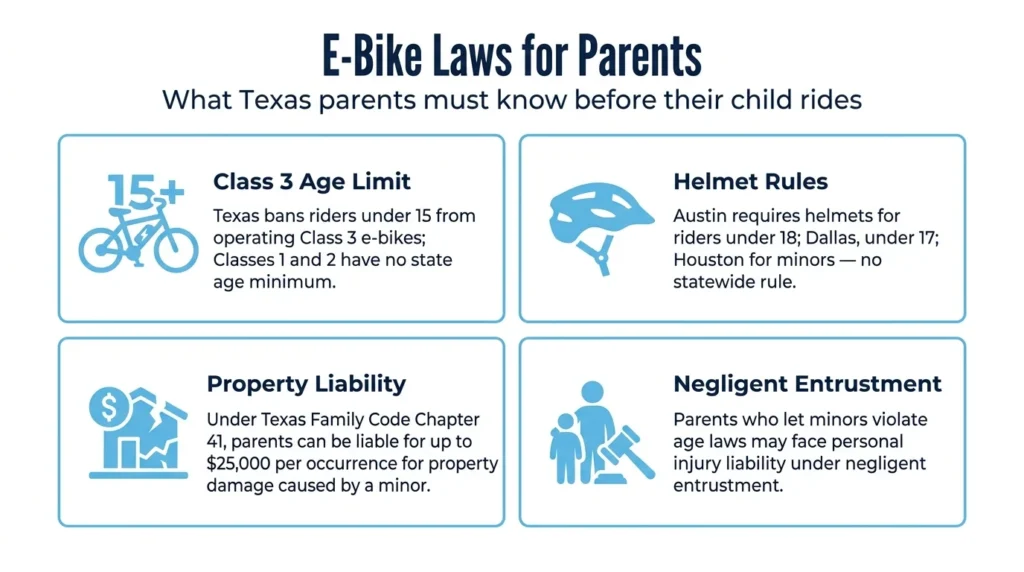
If your child is under 15, Class 3 is off the table. Allowing a child under 15 to operate a Class 3 e-bike is a violation of state law, and it creates the kind of legal exposure discussed below.
For a child under 15, Class 1 or Class 2 is the legally appropriate choice. Class 1 bikes are pedal-assist only with a 20 mph cap, which is a more appropriate speed range for younger riders regardless of legal rules. Class 2 adds a throttle and still caps at 20 mph.
Before your child rides any class of e-bike in your city, check the local ordinance. Some Texas cities add age restrictions or permit conditions that go beyond state law.
The class of an e-bike is typically stamped or labeled on the bike. Confirm the class at the time of purchase, before your child starts riding.
If your child is injured on an e-bike by a negligent driver, a defective product, or a road hazard, the same rules that apply to adults govern the claim. An attorney can help evaluate available options.
Parental Liability If Your Child Causes an Accident
If your child causes an accident while riding, your potential exposure depends on what harm was done and how the accident happened.
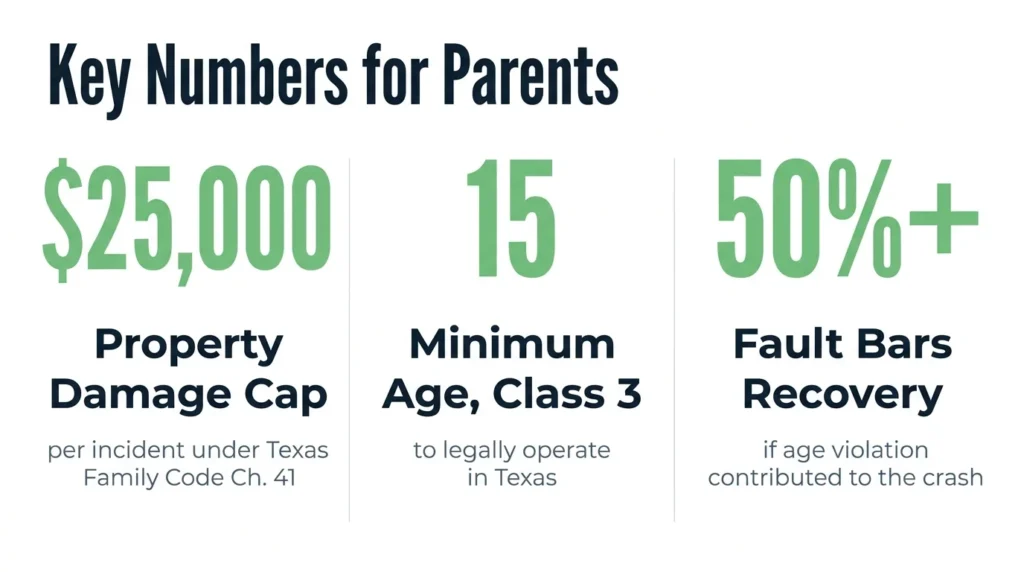
For property damage, Texas Family Code Chapter 41 provides a direct path. Parents can be held liable for property damage their minor child causes through negligent conduct, if the damage results from the parent’s failure to exercise reasonable control and discipline. The cap under Chapter 41 is $25,000 in actual damages per occurrence, plus attorney’s fees and court costs.
For personal injury to a third party, the relevant theory is negligent entrustment rather than Chapter 41. A parent who provides a minor with an e-bike may be personally liable for injuries to others if the parent knew or should have known the child would operate it in a dangerous or unlawful way. Allowing a child under 15 to operate a Class 3 e-bike is precisely the scenario that supports this theory. The parent supplied the instrumentality, knew the legal restriction, and allowed the violation.
Understanding parental liability in Texas for a child’s accident provides more context on how these theories work in practice.
What Happens When a Minor Is Injured While Riding in Violation of the Law
If your child was injured in an accident and was riding in violation of age laws, the opposing party can raise that violation as a fault argument. The most common scenario is a child under 15 operating a Class 3 e-bike.
Texas uses proportionate responsibility. Under Texas Civil Practice and Remedies Code Chapter 33, your child’s recovery is reduced by their assigned fault percentage. If a court finds your child more than 50 percent responsible, recovery is barred entirely.
A violation of the Class 3 age restriction does not automatically eliminate the claim. The other party must still show that the age-law violation contributed to the crash or the injuries. It is an argument the opposing insurer will make, and it can meaningfully reduce a recovery if it sticks.
An attorney can evaluate how strong that argument is in your specific situation, what other evidence supports your child’s claim, and whether the fault allocation is defensible.
Work with a Texas Personal Injury Attorney
E-bike injury claims involving minors often involve overlapping rules: age restrictions, helmet requirements, comparative fault, and parental liability. Understanding how they interact requires legal analysis specific to the facts.
Angel Reyes & Associates has represented injury victims across Texas for more than 30 years. We have recovered more than $1 billion for our clients. We offer free initial consultations and work on a no-fee-unless-you-win basis. You can review outcomes from past cases we have handled to see how we approach these claims. To discuss your situation, contact us for a free consultation.
Past results do not guarantee future outcomes.
FAQs
Can a kid ride an e-bike in Texas?
Yes, depending on the class. Texas state law sets no minimum age for operating a Class 1 or Class 2 e-bike. Class 3 e-bikes require the rider to be at least 15 years old. Local city ordinances may impose additional age or helmet requirements, so check your city’s rules before allowing a minor to ride.
What age do you have to be to ride a Class 3 e-bike in Texas?
You must be at least 15 years old to operate a Class 3 e-bike in Texas under Transportation Code Chapter 664. A rider under 15 may ride as a passenger on a Class 3 bike if the bike is designed to carry more than one person, but may not operate it.
Are parents liable if their child gets hurt riding an e-bike?
It depends on the circumstances. If another party caused the crash, the minor may have a personal injury claim through a parent or guardian. If the minor was riding in violation of age laws, the opposing party may raise that as comparative fault, potentially reducing the child’s recovery. An attorney can evaluate the specific facts.
What happens if a child under 15 rides a Class 3 e-bike and gets hurt?
The minor’s violation of the Class 3 age restriction can be raised as comparative fault evidence under Texas proportionate responsibility law. It does not automatically eliminate the claim, but it can reduce recovery in proportion to the assigned fault percentage. The impact depends on the circumstances of the crash and the nature of the injuries.
Can parents be sued if their child causes an e-bike accident?
Potentially, yes. Texas Family Code Chapter 41 allows property damage claims against parents for harm caused by a minor child’s negligent conduct, up to $25,000 per occurrence. For personal injury, a negligent entrustment claim may apply if the parent knew or should have known the child would operate the bike unsafely or in violation of age laws.
About the Authors

Angel Reyes
Writer
Angel L. Reyes, III is the Founder and Managing Partner of Angel Reyes & Associates. A nationally recognized trial attorney and business leader, Angel has helped over 70,000 injury victims recover more than $1 billion since founding the firm in 1993. Named to the Texas Super Lawyers list annually since 2008, Angel brings Wall Street experience, Ivy League education, and a deep commitment to client advocacy. He is a frequent legal commentator and published author with extensive contributions to legal scholarship, trial strategy, and consumer protection.

Kyle Nicolas
Editor
Kyle Nicolas is the Web Content & SEO Manager at Angel Reyes & Associates. He has more than 10 years of experience as a marketing co...

Spencer Browne
Reviewer
Spencer Browne is a partner at Angel Reyes & Associates and a Board Certified personal injury trial lawyer with nearly 100 jury trials a...