Can You Get a DUI on an E-Scooter in Texas?


Every article on this site is researched by our internal team, reviewed for legal accuracy against current Texas law, and held to State Bar of Texas advertising standards before publication. We do not publish content that overstates outcomes or makes promises about results.
Learn more about our
editorial standards .
Key Takeaways
- Texas prosecutors have charged DWI on electric scooters; the motor vehicle definition under §49.04 is broad enough to include them.
- Even if DWI does not apply, public intoxication under §49.02 requires no motor vehicle and is a criminal charge.
- An intoxicated rider who injures someone faces gross negligence exposure and potential exemplary damages under Texas law.
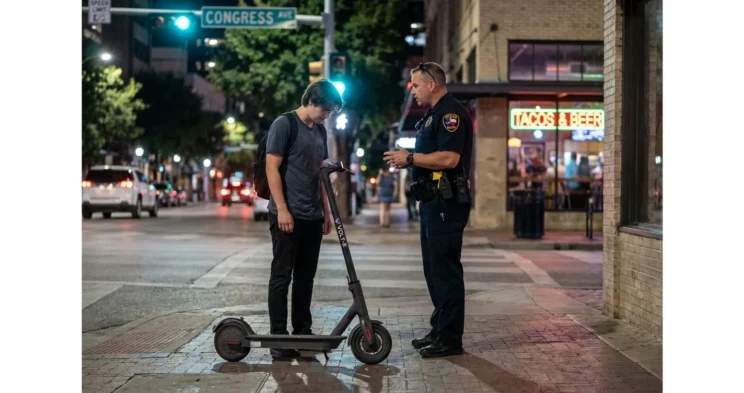
It’s a fair question to ask if you hop on an electric scooter after drinking: can I face legal trouble for this? The short answer is yes. The fuller answer requires knowing what Texas law says on the subject and how a conviction—or even an arrest—will affect you.
DUI vs. DWI & What It Means for Scooter Riders
Texas does not use the term “DUI” as a formal criminal charge for adults. The statute calls it DWI, or Driving While Intoxicated, and it’s found in Texas Penal Code Chapter 49. If you Google “can you get a DUI on an electric scooter in Texas,” you’re really asking about DWI.
Section 49.04 of the Texas Penal Code makes it an offense to operate a motor vehicle in a public place while intoxicated. But does an e-scooter qualify as a “motor vehicle” under the law?
Texas law defines a motor vehicle as any device in, on, or by which a person or property may travel on a highway. Texas prosecutors have brought DWI cases against electric scooter riders, and most Texas criminal defense attorneys treat e-scooters as qualifying motor vehicles for §49.04 purposes.
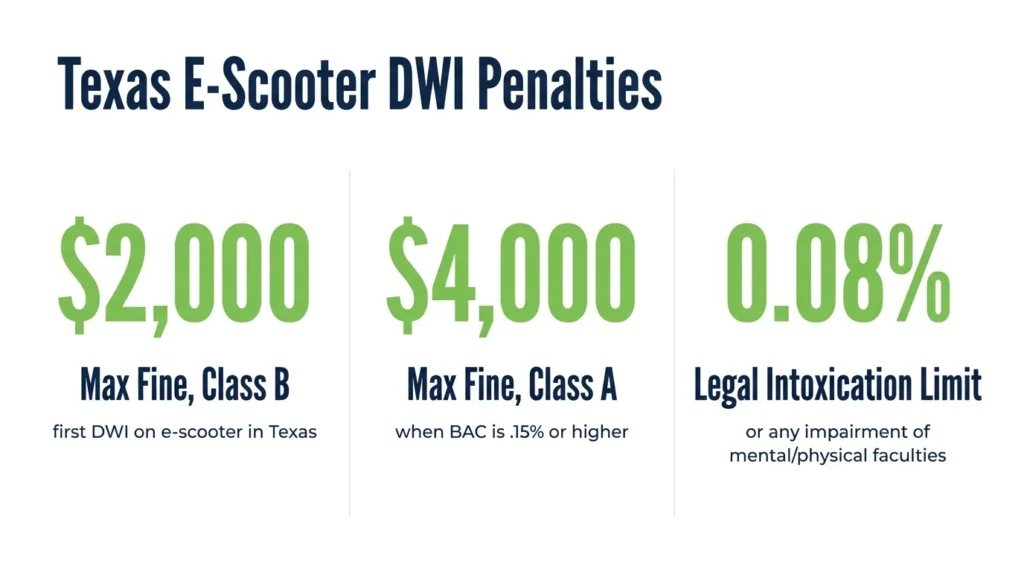
Legally, “intoxication” means having a blood alcohol concentration of .08% or higher, or any impairment that affects the normal use of a person’s mental or physical faculties.
So, yes: if you ride an electric scooter in Texas while intoxicated, you face real criminal exposure.
Charges an Intoxicated Scooter Rider Can Face
Intoxicated e-scooter riders in Texas are typically charged one of two ways.
DWI Under §49.04
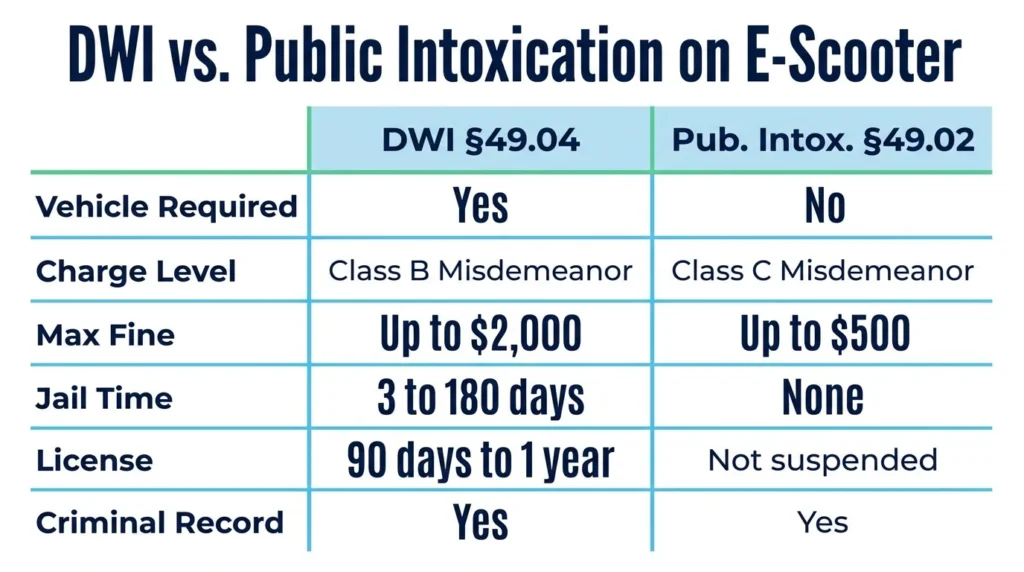
A first DWI offense is a Class B misdemeanor, carrying a fine of up to $2,000, 3 to 180 days in jail, and a driver’s license suspension between 90 days to one year.
If your blood alcohol concentration was .15% or higher at the time of the offense, the charge is enhanced to a Class A misdemeanor. This raises your maximum fine to $4,000 and your maximum jail term to one year. A court may also require an ignition interlock device on your car to reinstate your driver’s license.
Public Intoxication Under §49.02
Putting aside the legal definition of a motor vehicle, public intoxication under §49.02 does not require a vehicle of any kind. It applies to anyone who appears in a public place while intoxicated to a degree that may endanger themselves or someone else. This is a Class C misdemeanor, but it is still a criminal charge that will appear on your record.
The takeaway: riding a Bird or Lime scooter while drunk creates criminal exposure at least one way, and potentially two.
How Intoxicated Riding Affects Civil Liability
Beyond criminal charges, an intoxicated rider who injures someone can face significant consequences in civil court.
Negligence Per Se
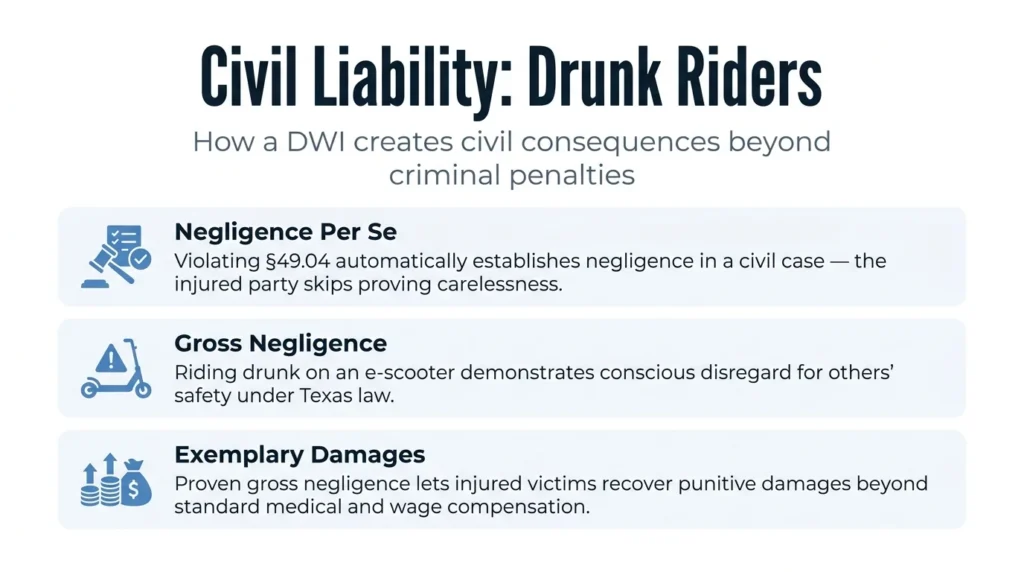
If you violate a criminal statute like §49.04, that violation itself can establish negligence as a matter of civil law. The injured party does not have to prove that you failed to use reasonable care because the criminal violation already has.
Gross Negligence & Exemplary Damages
Operating an electric scooter while intoxicated demonstrates a conscious disregard for others’ safety—in other words, the standard for gross negligence under Texas civil law. When gross negligence is proven, the injured party may recover exemplary damages, also called punitive damages. These go beyond compensation and are intended as financial punishment for reckless conduct.
What Injured Victims Can Recover
A victim injured by a drunk scooter rider can pursue medical expenses, lost wages, and compensation for pain and suffering. If gross negligence is established, exemplary damages are also available. Proportionate responsibility rules apply, but the intoxicated rider typically bears a large portion of the fault percentage.
Talk to a Texas Injury Attorney Today
If you were injured by an intoxicated scooter rider, the consequences are serious. An attorney can evaluate the facts, identify the applicable charges and civil claims, and advise you on your options.
Angel Reyes & Associates has represented injury victims across Texas for more than 30 years. We have recovered more than $1 billion for our clients. We offer free initial consultations and work on a no-fee-unless-you-win basis.
To discuss your situation, contact us for a free consultation.
Past results do not guarantee future outcomes.
FAQs
What is the difference between DUI and DWI in Texas?
Texas law uses DWI, or Driving While Intoxicated, under Penal Code §49.04. “DUI” is a term commonly used in everyday language and in other states, but it is not a separate criminal charge for adults in Texas. When people ask whether they can get a DUI on a scooter in Texas, they are asking about DWI under §49.04.
Can a pedestrian sue if hit by a drunk scooter rider in Texas?
Yes. A pedestrian struck by an intoxicated scooter rider has a personal injury claim against the rider. The rider’s DWI violation can establish negligence per se, and the intoxicated conduct may support a gross negligence finding with exemplary damages. Texas proportionate responsibility rules apply, but the intoxicated rider typically bears the majority of fault.
Does it matter if the scooter was a Bird or Lime rental?
No, not for purposes of whether you can face criminal charges. The DWI and public intoxication statutes apply based on your conduct, not the scooter’s ownership. Riding a rental Bird or Lime scooter while intoxicated creates the same criminal and civil exposure as riding a personal e-scooter.
About the Authors

Angel Reyes
Writer
Angel L. Reyes, III is the Founder and Managing Partner of Angel Reyes & Associates. A nationally recognized trial attorney and business leader, Angel has helped over 70,000 injury victims recover more than $1 billion since founding the firm in 1993. Named to the Texas Super Lawyers list annually since 2008, Angel brings Wall Street experience, Ivy League education, and a deep commitment to client advocacy. He is a frequent legal commentator and published author with extensive contributions to legal scholarship, trial strategy, and consumer protection.

Graham Griffin
Editor
Graham Griffin is the Web & Content Manager at Angel Reyes & Associates, where he oversees content strategy, AI-powered workflows, a...

Alex Ivanov
Reviewer
Alex Ivanov is a personal injury attorney at Angel Reyes & Associates, focused on car, truck, and motorcycle accident cases. Licensed in...