What to Do After a Hit-and-Run Accident in Texas


Every article on this site is researched by our internal team, reviewed for legal accuracy against current Texas law, and held to State Bar of Texas advertising standards before publication. We do not publish content that overstates outcomes or makes promises about results.
Learn more about our
editorial standards .
Key Takeaways
- You can recover compensation through your uninsured motorist coverage even if the hit-and-run driver is never identified.
- The first 72 hours after a hit-and-run are critical for gathering evidence and meeting insurance reporting deadlines.
- Texas law imposes serious criminal penalties on hit-and-run drivers, and criminal charges can strengthen your civil claim if the driver is found.
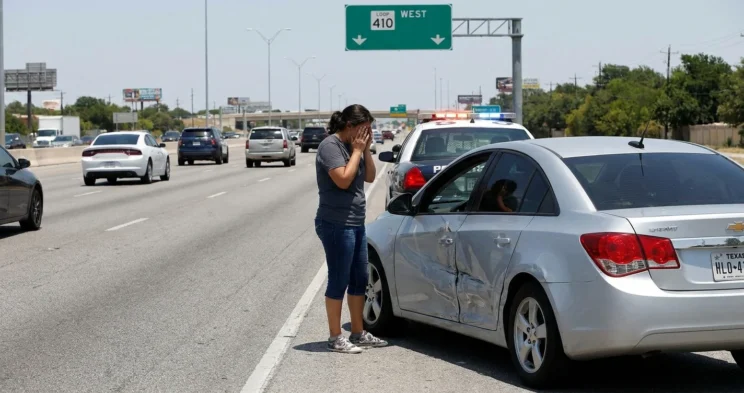
You were driving home on Loop 410 in San Antonio when another car sideswiped you and kept going. Now, you’re standing on the shoulder with a damaged vehicle, no license plate number, and no idea how you’ll pay for repairs or medical bills. The driver who caused this is gone, and you’re left wondering if you have any options at all.
Don’t worry; you do have options. Even when the at-fault driver disappears, Texas law provides paths to compensation. The key is knowing how to pursue a claim when you can’t identify the person responsible for the collision.
Immediate Steps to Take After a Hit-and-Run Accident in Texas
The first 72 hours after a hit-and-run accident are critical for your claim. What you do now can directly affect your ability to recover compensation later.
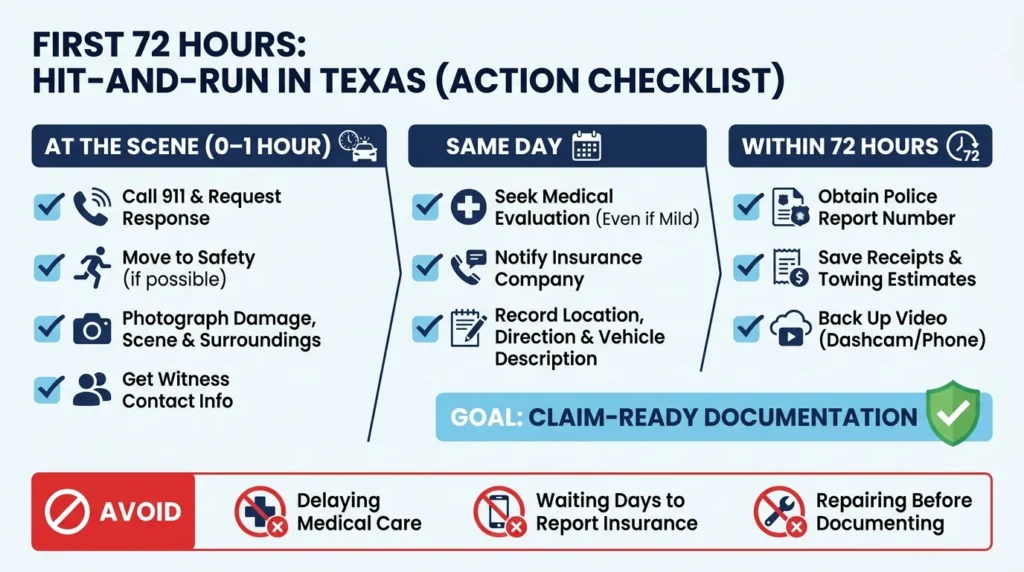
Call 911 immediately. Request police response even if your injuries seem minor. A police report creates an official record of the incident, which your insurance company will require.
Document everything at the scene. Take photos of your vehicle damage, the surrounding area, skid marks, debris, and any traffic signs or signals. If witnesses stopped, get their names and phone numbers before they leave.
Seek medical attention within hours, not days. Some injuries don’t show symptoms right away. Medical records linking your injuries to the accident will strengthen your claim significantly.
Notify your insurance company the same day. Texas policies typically require prompt reporting. Delaying this step can give insurers a reason to question your claim.
If police didn’t respond to the scene, go to your local station and file a formal report. You’ll need this documentation for your insurance claim.
Pursuing Compensation When the Driver Can’t Be Found
Here’s what many hit-and-run victims don’t realize: you may be able to recover compensation through your own insurance policy, even if the other driver is never identified.
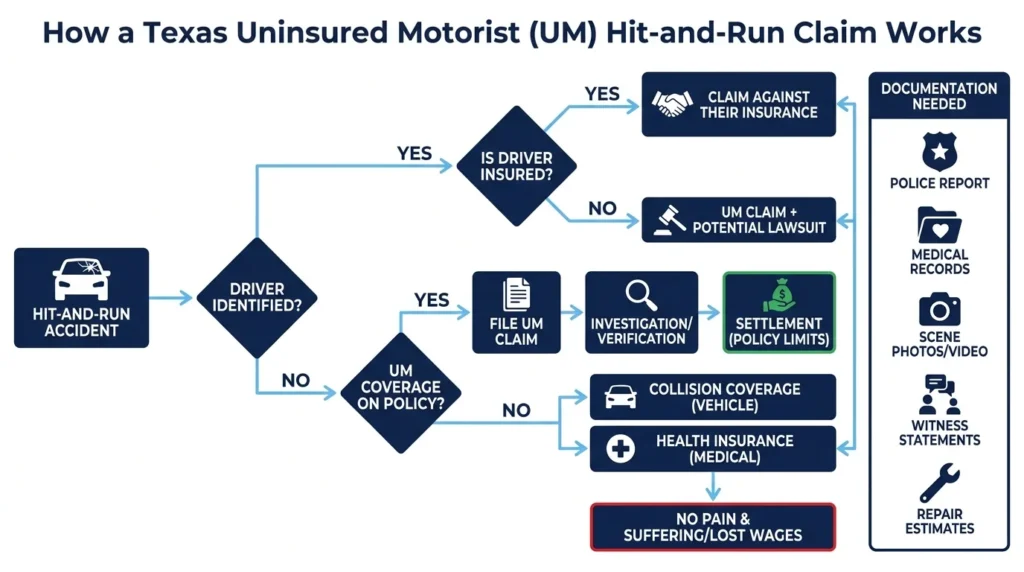
This is when uninsured motorist (UM) coverage becomes essential. In Texas, UM coverage is optional, but if you have it, your policy can pay for injuries and damages caused by a driver who flees the scene.
UM coverage treats an unidentified hit-and-run driver the same as an uninsured driver. Your insurance company steps into the role of the at-fault party’s insurer and pays your claim up to your policy limits.
To file a successful UM claim, you’ll need:
- A police report documenting the hit-and-run
- Medical records connecting your injuries to the accident
- Photos and documentation from the scene
- Witness statements (if available)
- Repair estimates for vehicle damage
The strength of your documentation will directly impact your settlement amount. Insurance companies scrutinize hit-and-run claims more closely because there’s no other driver to verify the story.
Common Insurance Company Tactics & How to Counter Them
Insurance companies are businesses. Their goal is to resolve claims for the lowest possible payout. In hit-and-run cases, they have additional leverage because they know you can’t pursue the other driver.
Delay tactics are common. Insurers may extend investigations, request redundant documentation, or simply take weeks to respond. Each delay puts pressure on you to accept a lower offer.
Coverage disputes are another strategy. Your insurer might argue that your UM coverage doesn’t apply, you failed to report promptly, or your injuries aren’t as severe as you claim.
Counter these tactics by documenting every interaction with your insurance company. Keep copies of all correspondence. Follow up in writing after phone calls. Set clear deadlines for responses.
If your insurer acts in bad faith by unreasonably delaying or denying a valid claim, Texas law provides additional remedies. An attorney can help you recognize when an insurer crosses that line.
Texas Hit-and-Run Laws & Penalties
It’s important to understand how Texas hit-and-run laws work, so you can bring criminal charges against the driver once they are found. This will benefit your civil case.
Under Texas Transportation Code § 550.021, any driver involved in an accident resulting in injury or death must stop their vehicle immediately, provide identification and insurance information, and offer reasonable assistance.
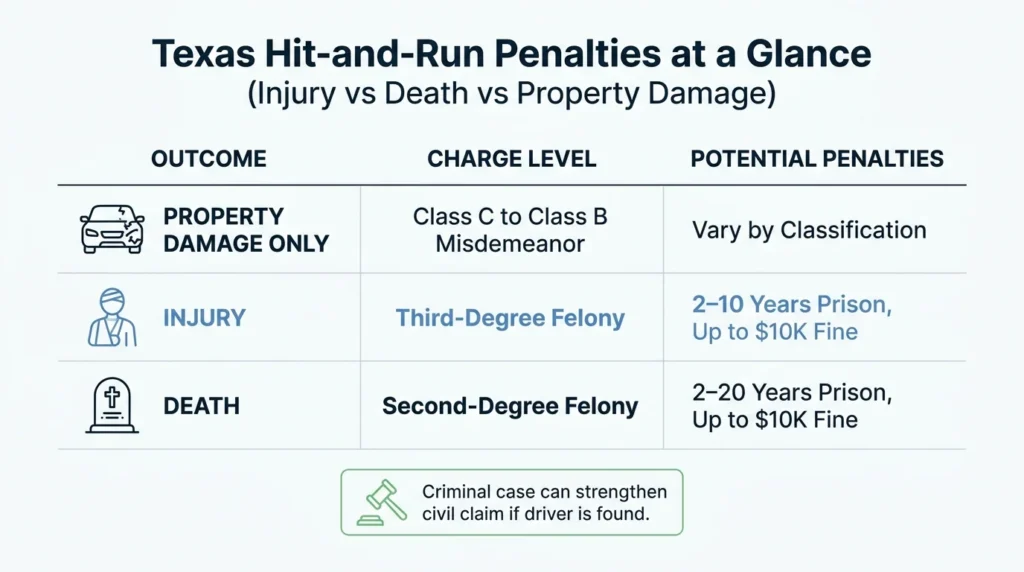
Leaving the scene of an accident is a crime in Texas. The severity depends on the outcome:
- Accident with injury: Third-degree felony (2-10 years in prison, up to $10,000 fine)
- Accident with death: Second-degree felony (2-20 years in prison, up to $10,000 fine)
- Accident with property damage only: Class C misdemeanor to Class B misdemeanor (depending on the damage amount)
If law enforcement identifies and charges the driver, their criminal case will create evidence that you can use in your civil claim. A conviction or guilty plea establishes fault, which will make it much harder for them to dispute liability in your injury case.
Building Your Case Without the At-Fault Driver
When the driver can’t be identified, your case depends entirely on the evidence you can gather independently.
Dashcam footage is often the most valuable evidence in hit-and-run cases. If you have a dashcam, preserve that footage immediately. If you don’t, consider whether nearby vehicles might have captured the incident.
Traffic cameras and surveillance footage can sometimes identify the fleeing vehicle. Businesses near the accident scene may have security cameras. Traffic cameras at intersections sometimes capture useful footage. Time is critical in this case because many systems overwrite footage within days.
Social media investigation has become increasingly effective. Posts about accidents, photos showing vehicle damage, or even check-ins near the accident location can help identify a hit-and-run driver. Investigators also monitor local online community groups where witnesses sometimes share information.
Work with law enforcement on their investigation. Provide them with any evidence you’ve gathered. Ask about the status of their investigation periodically. If they identify the driver, your options for compensation will expand significantly.
Your attorney can hire private investigators and accident reconstruction specialists to pursue leads that the police may not have the resources to follow.
Legal Deadlines & Claim Timelines in Texas
Missing a deadline can eliminate your right to compensation entirely.
The Texas statute of limitations for personal injury claims is two years from the date of the accident. If you don’t file a lawsuit within that window, you lose your right to sue.
Insurance reporting deadlines vary by policy but are typically much shorter. Most policies require you to report accidents promptly or within a specific number of days. Review your policy language carefully.
UM claim investigations typically take 30-60 days, though complex cases can take longer. Texas law requires insurers to acknowledge claims within 15 days and make decisions within a reasonable time.
Don’t wait until deadlines approach. Evidence can disappear. Witnesses may forget details. Surveillance footage can get deleted. The sooner you begin building your case, the stronger it will be.
Why You Need a Texas Hit-and-Run Attorney
Hit-and-run cases are more complex than typical car accident claims because you’re often fighting your own insurance company, rather than the at-fault driver’s insurer. That changes the dynamic significantly.
An attorney with experience in Texas insurance law will understand how to maximize UM claims. They will know the tactics that insurers use and how to counter them effectively.
When the driver isn’t found, your attorney becomes your primary advocate for fair compensation. They’ll handle the investigation, documentation, and negotiation, so you can focus on recovery.
At Angel Reyes & Associates, we’ve helped Texas accident victims recover compensation for over 30 years. With more than 20 offices around the state, we can help you pursue a positive outcome to your situation if you’ve been in an accident where the other driver fled the scene. We offer free consultations and work on contingency, which means you pay nothing unless we win your case.
If you’ve been injured in a hit-and-run accident anywhere in Texas, contact us today to discuss your options. The sooner you act, the more options you’ll have.
FAQs About Hit-and-Run Accidents
What happens if I don't have uninsured motorist coverage on my Texas auto policy?
Without UM coverage, your options are limited to collision coverage for vehicle damage and health insurance for medical bills. You cannot recover compensation for pain and suffering or lost wages.
Can I file a hit-and-run claim if the accident happened in a parking lot?
Yes, Texas hit-and-run laws apply to accidents on private property, including parking lots. You must still file a police report and follow the same claim procedures as roadway accidents.
How long do police typically investigate hit-and-run cases in Texas?
Active investigation periods vary by jurisdiction and case severity, but most property-damage-only cases receive limited investigation after the initial report. Injury cases may remain active for several months, depending on available leads.
What if the hit-and-run driver is found but has no insurance?
If the driver is identified but uninsured, you can pursue both your UM claim and a direct lawsuit against the driver. However, uninsured drivers often lack assets to satisfy judgments.
Does my insurance rate increase if I file a UM claim for a hit-and-run accident?
Texas Insurance Code prohibits insurers from raising rates based solely on not-at-fault claims, including UM claims for hit-and-run accidents. Your rates should not increase if you were not at fault.
About the Authors

Spencer Browne
Writer
Spencer Browne is a partner at Angel Reyes & Associates and a Board Certified personal injury trial lawyer with nearly 100 jury trials across Texas. He focuses on car, truck, and wrongful death cases, with notable verdicts including a landmark win in the Choctaw Casino bus crash case. A recognized speaker and legal educator, Spencer is a member of the American Board of Trial Advocates and has been honored as a Texas Super Lawyer and one of D Magazine’s Best Lawyers in Dallas. He brings deep trial experience and relentless advocacy to every client he represents.

Kyle Nicolas
Editor
Kyle Nicolas is the Web Content & SEO Manager at Angel Reyes & Associates. He has more than 10 years of experience as a marketing co...

Angel Reyes
Reviewer
Angel L. Reyes, III is the Founder and Managing Partner of Angel Reyes & Associates. A nationally recognized trial attorney and business...