Speeding and Aggressive Driving Truck Accidents in Texas


Every article on this site is researched by our internal team, reviewed for legal accuracy against current Texas law, and held to State Bar of Texas advertising standards before publication. We do not publish content that overstates outcomes or makes promises about results.
Learn more about our
editorial standards .
Key Takeaways
- Speeding and aggressive truck driving violate Texas laws and federal safety regulations
- Truck drivers and companies can face significant liability for reckless driving behaviors
- Texas victims can recover substantial compensation including punitive damages for extreme negligence
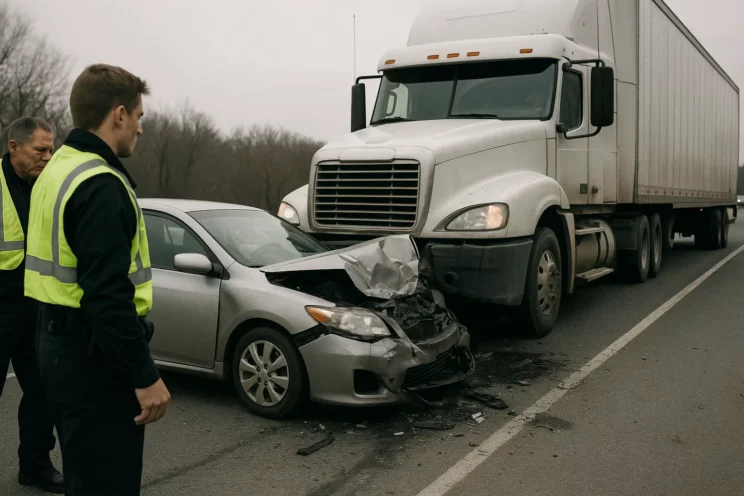
Compensation and Legal Options for Speeding and Aggressive Driving Truck Accidents in Texas
Speeding and aggressive driving by commercial truck drivers cause some of the most severe and preventable accidents on Texas highways, often resulting in life-threatening injuries when massive vehicles become uncontrollable weapons.
These accidents occur when truck drivers exceed safe speeds, engage in road rage behaviors, or make reckless maneuvers that violate both Texas traffic laws and federal safety regulations.
In Texas, victims of speeding and aggressive driving truck accidents have legal rights to substantial compensation from negligent drivers and the trucking companies that employ them.
At Angel Reyes & Associates, we’ve handled numerous speeding and aggressive driving truck accident cases throughout Texas.
These crashes often involve clear liability since truck drivers who speed or drive aggressively violate multiple safety laws designed to protect other road users on busy highways like I-35 and I-45.
Why Speeding and Aggressive Driving Are Especially Dangerous in Truck Accidents
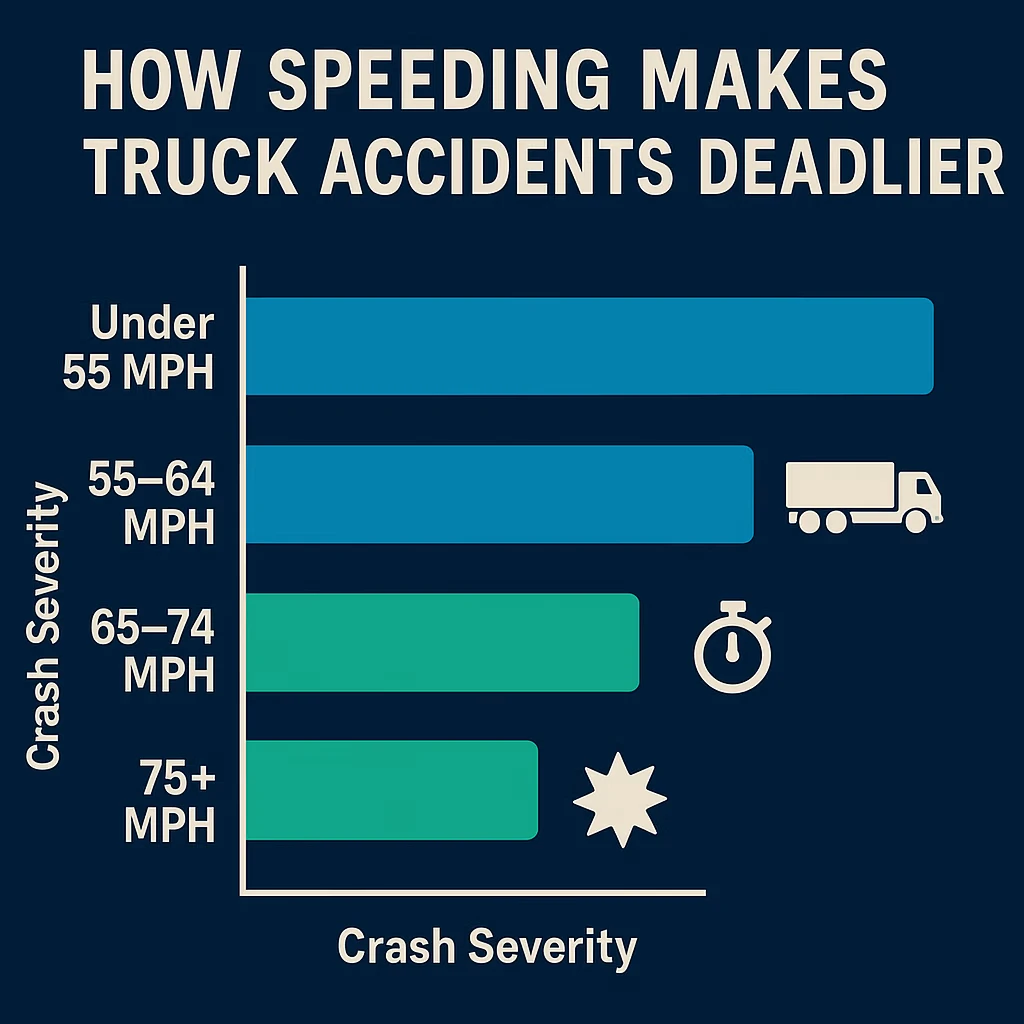
Commercial trucks become exponentially more dangerous as speeds increase, with physics working against safety when 80,000-pound vehicles exceed safe limits.
The combination of speed and aggressive behavior creates devastating crashes that often involve multiple vehicles and result in life-threatening injuries or death.
Extended Stopping Distances at High Speeds
Commercial trucks require much longer stopping distances than passenger vehicles, making speeding particularly deadly when drivers need to react to traffic conditions. An 80,000-pound truck traveling at 65 mph needs over 500 feet to stop completely, while the same truck at 75 mph requires nearly 600 feet.
When truck drivers exceed safe speeds for conditions, they often cannot avoid collisions even when they see danger ahead. The additional stopping distance required at higher speeds eliminates the safety margin that could prevent crashes.
Exponential Increase in Crash Energy
The physics of truck accidents become exponentially more devastating as speeds increase. Kinetic energy increases with the square of velocity, meaning a truck traveling 75 mph carries over 30% more destructive energy than the same truck at 65 mph.
When this energy transfers to passenger vehicles during crashes, the results are often fatal or cause permanent disabilities. The human body simply cannot withstand the forces involved when high-speed trucks collide with smaller vehicles.
Reduced Control and Maneuverability
Aggressive driving behaviors compound these dangers by reducing reaction time and creating unstable driving situations. Truck drivers who tailgate, make sudden lane changes, or engage in road rage behaviors put enormous vehicles into situations where physics and momentum work against safety.
Texas highways often see these accidents during rush hour traffic on I-35 through Dallas or I-10 through Houston. Maneuvering difficulties increase dramatically at high speeds, especially when trucks need to avoid sudden obstacles or traffic slowdowns.
Multi-Vehicle Accident Potential
The combination of speed and aggressive behavior creates perfect conditions for multi-vehicle accidents involving numerous innocent drivers. When speeding trucks lose control or make reckless maneuvers, the crashes often involve multiple lanes of traffic and several vehicles.
Aggressive lane changes at highway speeds can cause trucks to jackknife or rollover, while sudden braking from excessive speeds often leads to rear-end collisions with devastating consequences for smaller vehicles.
Pro Tip: If you notice a truck tailgating, weaving between lanes, or flashing lights aggressively, report the behavior to 911 immediately. Document the truck’s DOT number if possible, as this information can be crucial evidence later.
Common Examples of Aggressive and Reckless Driving by Truckers
These dangerous behaviors often result from delivery pressure, driver fatigue, or poor training that leaves commercial drivers unprepared for professional responsibilities. Understanding these patterns helps establish liability and proves that trucking companies failed to maintain proper oversight of their drivers.
Excessive Speeding Violations
Excessive speeding represents the most common form of aggressive truck driving, whether exceeding posted speed limits or driving too fast for weather and traffic conditions. Some drivers speed to make up time after delays or to meet unrealistic delivery schedules.
Speed violations become particularly dangerous when combined with other aggressive behaviors like tailgating or unsafe lane changes. Commercial drivers who consistently exceed safe speeds demonstrate patterns of reckless behavior that support punitive damage claims.
Unsafe Lane Changes and Weaving
Unsafe lane changes and weaving occur when truck drivers make sudden maneuvers without adequate clearance or proper signaling.
These behaviors are particularly dangerous in construction zones or heavy traffic where other drivers have limited escape routes when trucks make unpredictable movements.
Weaving between lanes at high speeds shows complete disregard for other drivers’ safety and violates professional driving standards.
When trucks make sudden lane changes, the physics of their size and weight make it impossible for other drivers to avoid collisions.
Tailgating and Following Too Closely
Tailgating and following too closely creates deadly situations when traffic suddenly slows or stops.
Truck drivers who follow passenger vehicles too closely cannot stop in time when emergency braking becomes necessary, often causing rear-end collisions with crushing force.
Professional drivers receive specific training on safe following distances, making tailgating behavior inexcusable.
When commercial drivers violate these fundamental safety principles, they demonstrate negligence that supports substantial damage awards.
Road Rage and Intimidation Behaviors
Road rage behaviors include excessive horn usage, aggressive light flashing, cutting off other vehicles, and making threatening gestures toward other drivers.
Some truck drivers use their vehicles’ size to intimidate other drivers or force lane changes through aggressive positioning.
These behaviors violate both traffic laws and professional standards that commercial drivers must maintain.
When truck drivers engage in road rage, they transform their vehicles into weapons that endanger everyone on the highway.
Ignoring Traffic Controls and Safety Rules
Ignoring traffic controls such as running red lights, failing to yield right-of-way, or disregarding construction zone speed limits demonstrates willful disregard for safety that can establish criminal liability in addition to civil damages.
Distracted aggressive driving combines dangerous behaviors with inattention, such as speeding while using mobile phones or making aggressive maneuvers while adjusting GPS systems.
Most common aggressive truck driving behaviors include excessive speeding beyond safe limits for conditions, tailgating and unsafe following distances, sudden lane changes without proper clearance, and road rage and intimidation tactics using truck size.
What Does Texas Law Say About Reckless Driving in Commercial Trucks?
Texas law treats reckless driving by commercial truck drivers as particularly serious violations that carry both criminal penalties and enhanced civil liability.
The state recognizes that professional drivers must maintain higher safety standards than regular motorists due to their specialized training and the dangers posed by commercial vehicles.
Criminal Penalties and Consequences
Texas Transportation Code § 545.401 defines reckless driving as operating a vehicle with willful or wanton disregard for the safety of persons or property.
This definition applies to all drivers but carries enhanced significance for commercial truck drivers who hold Commercial Driver’s Licenses and receive specialized training on safe driving practices.
Criminal penalties for reckless driving include misdemeanor charges, potential jail time, substantial fines, and license suspension or revocation.
When reckless driving causes serious bodily injury, charges can escalate to felony level with much more severe consequences including prison sentences.
Civil Liability and Financial Responsibility
Civil liability extends beyond criminal penalties to include financial responsibility for all damages caused by reckless behavior.
Texas courts often view aggressive driving by commercial drivers as particularly egregious since these drivers receive professional training and must maintain higher safety standards than regular motorists.
Enhanced liability standards apply to commercial drivers because they hold CDLs and operate vehicles that require special training and licensing.
Courts recognize that commercial drivers should know better than to engage in aggressive or reckless behaviors, making their actions more inexcusable than similar behaviors by regular drivers.
Company Responsibility and Corporate Liability
Company responsibility extends to trucking companies that employ reckless drivers under theories of respondeat superior and negligent supervision.
When companies know drivers have histories of aggressive behavior but continue employing them, corporate liability can include punitive damages designed to punish and deter dangerous practices.
The distinction between negligence and recklessness becomes important for damages calculations, as reckless behavior often supports claims for punitive damages that go beyond compensating victims to punish extremely dangerous conduct and deter future violations.
FMCSA Speed Regulations and Federal Oversight
Federal Motor Carrier Safety Regulations establish comprehensive rules governing commercial truck operation, including specific requirements for safe speeds and professional driving behavior.
These regulations create higher standards for commercial drivers and provide additional legal grounds for establishing liability when violations occur.
Speed Restriction Requirements
Speed restriction requirements mandate that truck drivers operate at safe speeds for conditions, regardless of posted speed limits. Drivers must reduce speeds for weather, traffic, road conditions, and vehicle characteristics such as load weight and braking capability.
These federal requirements create legal duties that go beyond state speed limits, making it possible to establish violations even when trucks don’t exceed posted limits.
Professional drivers must use judgment to determine safe speeds based on multiple factors.
Hours of Service and Fatigue Prevention
Hours of Service regulations indirectly address aggressive driving by limiting driver fatigue that often leads to impatience and reckless behavior.
Fatigued drivers are more likely to speed, make poor decisions, and engage in aggressive behaviors to compensate for reduced alertness and reaction time.
Electronic logging devices and GPS tracking systems provide objective evidence of speeding and aggressive driving patterns.
These devices record exact speeds, sudden acceleration or braking, and erratic driving behaviors that can establish patterns of reckless operation.
Driver Qualification and Training Standards
Driver qualification standards require commercial drivers to maintain clean driving records and complete ongoing training on safe driving practices. Drivers with histories of speeding or aggressive driving violations may lose their CDL privileges.
Company oversight obligations require trucking companies to monitor driver behavior, provide ongoing training, and take corrective action when drivers exhibit dangerous patterns.
Companies that ignore aggressive driving by their employees can face significant federal penalties and civil liability.
Enforcement and Safety Ratings
FMCSA enforcement includes roadside inspections, driver audits, and company safety ratings that reflect patterns of aggressive driving violations. Poor safety ratings can result in increased insurance costs, customer losses, and eventual shutdown for companies with persistent problems.
Evidence that can support your claim includes electronic logging device data showing speeding patterns, GPS tracking records of aggressive driving behaviors, driver qualification files and violation histories, and company safety ratings and FMCSA inspection reports.
Who Is Responsible for Speeding and Aggressive Driving in Texas Truck Accidents?
Unlike typical traffic accidents, speeding and aggressive driving truck crashes often involve multiple responsible parties due to the commercial nature of trucking operations and enhanced safety requirements.
The complex web of oversight and responsibility in commercial trucking creates multiple potential sources of liability and compensation.
Truck Driver Liability
Truck drivers bear primary responsibility for choosing to speed or drive aggressively in violation of their professional training, failing to maintain safe speeds for conditions, engaging in road rage or intimidation behaviors, and violating both state traffic laws and federal safety regulations.
Professional drivers receive specialized training specifically to prevent these dangerous behaviors.
Commercial drivers must maintain higher standards than regular motorists because they operate vehicles that can cause catastrophic damage when used recklessly.
Their professional licensing and training make aggressive driving behavior particularly inexcusable.
Trucking Company Responsibility
Trucking companies face liability through negligent hiring of drivers with histories of aggressive driving, inadequate training on professional driving standards and anger management, pressure on drivers to meet unrealistic delivery schedules that encourage speeding, and failure to monitor or correct aggressive driving patterns by employees.
Corporate negligence in oversight can result in substantial liability.
Many companies create cultures that encourage aggressive driving through unrealistic schedules, performance incentives based on speed, or tolerance for dangerous behaviors.
When companies prioritize profits over safety, they face significant legal consequences.
Freight Broker and Logistics Company Liability
Freight brokers and logistics companies may share responsibility when they create unrealistic delivery schedules that pressure drivers to speed, fail to allow adequate travel time for safe transportation, incentivize fast delivery over safe operation, and ignore complaints about aggressive driving by contracted carriers.
These third parties can be held liable for creating dangerous conditions.
Dispatcher and Fleet Manager Responsibility
Dispatchers and fleet managers can contribute to liability by pressuring drivers to make up lost time through speeding, ignoring driver complaints about insufficient time for safe delivery, failing to adjust schedules for weather or traffic conditions, and retaliating against drivers who refuse to engage in unsafe practices.
Management decisions that encourage aggressive driving create corporate liability.
Additional Parties and Equipment Issues
Sometimes vehicle manufacturers share responsibility when defective speed limiters, cruise control systems, or braking equipment contribute to accidents involving excessive speed or aggressive driving behaviors.
Third-party contractors such as maintenance companies may bear liability when they fail to properly maintain or calibrate speed monitoring equipment, electronic logging devices, or safety systems designed to prevent aggressive driving.
The key to successful aggressive driving claims lies in proving that parties violated their legal duties to ensure safe operation.
Commercial trucking involves multiple layers of safety oversight, and failures at any level can contribute to accidents caused by speeding or aggressive driving.
Legal Compensation Available for Victims of Reckless Truck Crashes
The severe nature of speeding and aggressive driving truck accidents often justifies substantial compensation, including punitive damages designed to punish extremely dangerous behavior. The willful nature of aggressive driving creates opportunities for enhanced damages beyond typical accident compensation.
Medical Expenses and Treatment Costs
Medical expenses typically include emergency trauma treatment for severe impact injuries, surgery for broken bones and internal damage, rehabilitation for traumatic brain and spinal cord injuries, and ongoing care for permanent disabilities caused by high-speed collisions.
Aggressive driving accidents often cause more severe injuries due to the extreme forces involved.
High-speed impacts create devastating injuries that require extensive medical treatment and long-term care.
The violent nature of these crashes often results in multiple surgeries and extended rehabilitation periods.
Lost Income and Earning Capacity
Lost income compensation covers immediate lost wages during extended recovery periods, reduced earning capacity when permanent injuries prevent returning to previous employment, lost employment benefits including health insurance and retirement contributions, and career retraining costs when physical limitations require new career paths.
Young victims face particularly devastating financial losses when injuries affect decades of future earnings.
Pain and Suffering Damages
Pain and suffering damages address the severe physical discomfort from serious injuries, emotional trauma and PTSD following violent crashes, loss of life enjoyment when injuries prevent beloved activities, and permanent disfigurement or disability that affects quality of life.
Texas law doesn’t cap these damages in most personal injury cases.
The sudden, violent nature of aggressive driving accidents often causes lasting psychological trauma in addition to physical injuries.
Victims may develop severe anxiety, depression, or PTSD that affects their daily functioning.
Punitive Damages for Extreme Behavior
Punitive damages become available when aggressive driving demonstrates willful or wanton disregard for safety. These damages punish extremely dangerous behavior and deter future violations by making the financial consequences severe enough to change behavior patterns.
Aggressive driving cases often qualify for punitive damages because the behavior demonstrates conscious disregard for others’ safety. These awards can significantly increase total compensation beyond compensatory damages.
Property Damage and Additional Costs
Property damage claims cover vehicle repair or replacement costs, personal items destroyed in high-speed crashes, rental vehicle expenses during repairs, and diminished value of damaged vehicles.
Aggressive driving accidents often cause extensive property damage due to the violent nature of high-speed impacts.
Wrongful Death Benefits
Wrongful death benefits help families when aggressive driving accidents prove fatal. Surviving family members can pursue compensation for funeral and burial expenses, loss of the deceased’s future financial support, loss of companionship and emotional guidance, and mental anguish suffered by survivors.
The availability of punitive damages in aggressive driving cases often significantly increases total compensation, as these awards can exceed compensatory damages when behavior is particularly egregious or demonstrates patterns of dangerous conduct.
How Texas Comparative Negligence Laws Affect Your Aggressive Driving Accident Claim
Understanding Texas fault laws protects your claim’s value and helps counter insurance company tactics designed to minimize compensation for aggressive driving accidents.
The clear nature of aggressive driving violations often protects victims from significant fault attribution.
Texas Comparative Fault Rules
Texas follows modified comparative negligence, meaning you can recover damages if you’re less than 51% at fault, your compensation gets reduced by your fault percentage, and if you’re 51% or more at fault, you cannot recover anything.
This system often protects aggressive driving accident victims because the truck driver’s behavior is typically so obviously dangerous.
Limited Insurance Company Defense Options
Insurance companies rarely try to blame victims in clear aggressive driving cases because the truck driver’s behavior is typically so obviously dangerous and in violation of multiple laws.
However, they may attempt to argue that you contributed to the accident through your own driving behaviors.
The reality is that aggressive driving by commercial truck drivers represents such a clear violation of professional standards that victim fault arguments often fail completely.
When truck drivers speed excessively, tailgate, or engage in road rage, their actions demonstrate such obvious negligence that other factors become irrelevant.
How Courts View These Cases
Courts recognize that aggressive driving by commercial drivers represents professional misconduct that violates specialized training and licensing requirements. This creates a strong presumption of liability that protects most victims from significant fault attribution.
Experienced attorneys counter victim-blaming tactics by:
- Gathering evidence of the truck driver’s aggressive behavior
- Working with accident reconstruction experts to demonstrate unavoidable crash conditions
- Challenging insurance investigations that minimize truck driver responsibility
- Presenting federal regulation violations that establish clear liability
Pro Tip: Never apologize or accept any blame after aggressive driving truck accidents. These crashes typically result entirely from the truck driver’s professional misconduct, and insurance companies may try to use your statements against you.
How a Texas Truck Accident Lawyer Helps in Aggressive Driving Cases
Aggressive driving truck accident cases often provide strong evidence of liability but require specialized knowledge to maximize compensation and pursue punitive damages.
The commercial nature of these cases and the potential for enhanced damages make experienced legal representation essential.
Immediate Evidence Preservation
Immediate evidence preservation becomes crucial for securing electronic logging device data, GPS tracking records, dashboard camera footage, and driver qualification files before trucking companies destroy or lose these crucial records.
Electronic evidence often provides clear proof of aggressive driving patterns.
Time is critical in preserving evidence that demonstrates patterns of aggressive behavior. Trucking companies often have routine document destruction policies that can eliminate crucial evidence within days or weeks.
Technical Expertise and Specialized Knowledge
Technical expertise is essential for analyzing federal regulation violations, understanding commercial driving standards and training requirements, interpreting electronic monitoring data, and establishing patterns of dangerous behavior that support punitive damage claims.
This specialized knowledge distinguishes experienced truck accident attorneys from general practitioners.
Witness Coordination and Investigation
Witness coordination requires immediate action to interview other drivers who observed aggressive behavior, secure surveillance footage from traffic cameras or businesses, document road conditions and traffic patterns, and preserve physical evidence from crash scenes before cleanup occurs.
Multiple witnesses often observe aggressive driving behavior before crashes occur.
Multi-Party Investigation and Complex Liability
Multi-party investigation becomes necessary when truck drivers, trucking companies, freight brokers, and dispatchers all contribute to creating conditions that encourage or enable aggressive driving behaviors.
Understanding the commercial relationships and pressures that lead to aggressive driving helps establish comprehensive liability.
How Angel Reyes & Associates Maximizes Your Recovery
At Angel Reyes & Associates, we handle comprehensive investigation of driver behavior and company policies, analysis of federal regulation compliance and safety training, coordination with accident reconstruction and trucking industry experts, and aggressive pursuit of both compensatory and punitive damages.
Our team knows how to build compelling cases that hold all responsible parties accountable.
We navigate complex federal trucking regulations and professional driving standards, coordinate with medical experts about long-term injury impacts, handle multi-party claims involving drivers, companies, and contractors, and fight for maximum compensation including punitive damages while you focus on recovery.
What Should You Do After an Aggressive Driving Truck Accident?
Protecting your health and legal rights requires immediate action after these serious crashes that often result in severe injuries and clear liability issues.
The willful nature of aggressive driving often makes these cases easier to prove, but proper evidence preservation remains crucial.
Immediate Medical and Safety Steps
Get emergency medical care immediately, as aggressive driving accidents often cause serious trauma, internal injuries, and head damage that require urgent treatment even when victims initially feel capable of functioning.
High-speed impacts can cause internal injuries that become life-threatening without prompt treatment.
Even if you feel fine after the accident, the adrenaline and shock can mask serious injuries. Professional medical evaluation ensures proper treatment and creates important records for your legal case.
Evidence Preservation at the Scene
Document everything possible at the crash scene if you’re able. Take photographs of vehicle damage and final positions, skid marks and road conditions, any visible truck monitoring equipment, and the truck’s DOT number and company information.
Record witness contact information from other drivers who observed the aggressive behavior. Multiple witnesses often observe aggressive driving patterns before crashes occur, making their testimony crucial for your case.
Protecting Your Legal Rights
Avoid discussing the incident details with anyone except police officers. Insurance adjusters will contact you quickly and may try to minimize the truck driver’s aggressive behavior or suggest you contributed to the accident somehow.
Stick to basic facts and let experienced attorneys handle all communications. Early statements can be taken out of context and used to reduce your compensation, even in clear liability cases.
Frequently Asked Questions About Aggressive Driving Truck Accidents
How does Texas law define reckless driving for commercial truck drivers?
Texas law defines reckless driving as willful or wanton disregard for safety. Commercial truck drivers face enhanced liability because they receive professional training and must maintain higher safety standards than regular drivers.
What federal regulations govern speeding and aggressive driving in commercial trucks?
FMCSA regulations require safe operation regardless of speed limits, mandate professional behavior, limit driving hours to prevent fatigue-related aggression, and require ongoing training on safe driving practices.
Who can be held liable in a truck accident caused by speeding or aggressive driving?
Multiple parties may be responsible including truck drivers, trucking companies, freight brokers who create unrealistic schedules, and dispatchers who pressure drivers to speed or drive aggressively.
What compensation can victims seek after a truck accident involving aggressive driving?
Victims can pursue medical expenses, lost income, pain and suffering, and often punitive damages designed to punish extremely dangerous behavior and deter future violations.
How can a lawyer assist in cases of truck accidents due to reckless driving?
Experienced attorneys investigate aggressive driving patterns, preserve electronic evidence, pursue punitive damages, and ensure all responsible parties are held accountable for their role in enabling dangerous behavior.
About the Authors

Spencer Browne
Writer
Spencer Browne is a partner at Angel Reyes & Associates and a Board Certified personal injury trial lawyer with nearly 100 jury trials across Texas. He focuses on car, truck, and wrongful death cases, with notable verdicts including a landmark win in the Choctaw Casino bus crash case. A recognized speaker and legal educator, Spencer is a member of the American Board of Trial Advocates and has been honored as a Texas Super Lawyer and one of D Magazine’s Best Lawyers in Dallas. He brings deep trial experience and relentless advocacy to every client he represents.

Graham Griffin
Editor
Graham Griffin is the Web & Content Manager at Angel Reyes & Associates, where he oversees content strategy, AI-powered workflows, a...

Spencer Browne
Reviewer
Spencer Browne is a partner at Angel Reyes & Associates and a Board Certified personal injury trial lawyer with nearly 100 jury trials a...