Improper Loading and Cargo Shift Truck Accidents


Every article on this site is researched by our internal team, reviewed for legal accuracy against current Texas law, and held to State Bar of Texas advertising standards before publication. We do not publish content that overstates outcomes or makes promises about results.
Learn more about our
editorial standards .
Key Takeaways
- A sealed trailer can excuse a driver from inspection duty under federal law.
- Loading manifests, ELD data, and inspection reports can prove who loaded a trailer.
- Texas bars recovery once you are found more than 50% responsible for a crash.
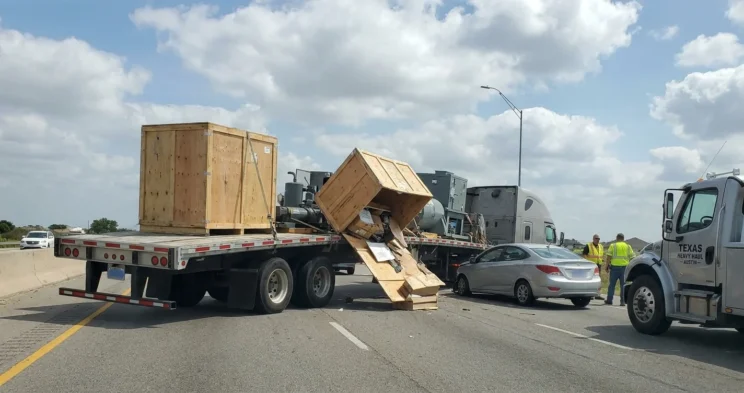
You are driving on I-45 through Houston when cargo shifts on a flatbed ahead, spilling across two lanes and causing an accident. Once you are safe, one question matters most: who caused this? The driver may not be the only party at fault, since a shipper or loading contractor may have packed that trailer.
Understanding who is responsible starts with the federal rules that govern how cargo gets secured.
Who Is Liable for Cargo Shift Accidents?
When cargo shifts or falls from a commercial truck, liability does not always rest with the driver. Responsibility can extend to the trucking company, a third-party loading contractor, or the shipper who packed the trailer.
Cargo shift accidents add a twist: the party who loaded the trailer may carry more fault than the driver hauling it.
Texas truck accident claims involving cargo shifts require tracing responsibility to whoever loaded and secured the load. That distinction shapes every step of your claim.
Federal Cargo Securement Rules
Federal law requires cargo to be secured against shifting, spilling, or falling during transport. Under 49 CFR § 393.100, commercial vehicles must be loaded and secured so the cargo cannot shift, come loose, or fall from the vehicle while it is on the road.
This baseline duty sits inside a broader framework: 49 CFR Part 393, Subpart I. That subpart sets specific securement standards for cargo like machinery, vehicles, and building materials.
Standard Driver Inspection Duties
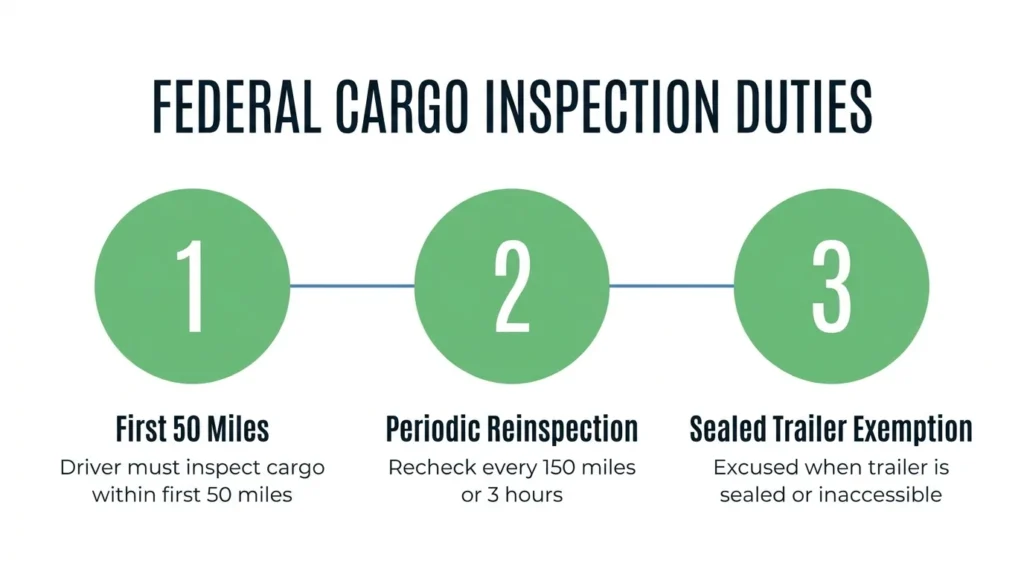
Drivers must inspect their cargo shortly after starting a trip and periodically afterward. Under 49 CFR § 392.9, a driver must examine the load within the first 50 miles. After that, the driver must reinspect it every 150 miles or three hours, whichever comes first.
This schedule assumes the driver actually has access to the cargo. That assumption does not always hold.
The Sealed Trailer Exemption
Not every driver gets the chance to inspect their own cargo. Section 392.9(b) excuses a driver from the standard inspection duty in two situations. The trailer may be sealed with orders not to open it, or the load may be packed in a way that makes inspection impracticable.
This exemption is the legal basis for shifting responsibility toward whoever loaded and sealed the trailer. When a shipper seals a trailer first, that shipper likely carries the duty to secure it properly, not the driver.
Liable Parties in a Cargo Accident
Multiple parties can share fault in a cargo shift accident, and identifying the right one takes documentation. The driver, the trucking company, a loading contractor, an equipment manufacturer, or a shipper or broker can all carry liability depending on the facts.
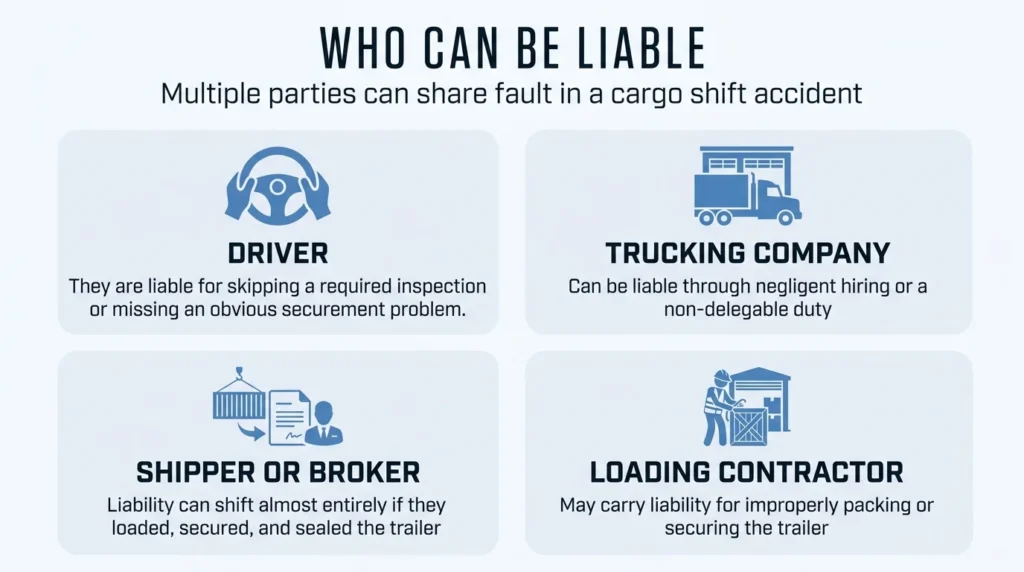
A driver who had the ability to inspect the load but skipped it, or missed an obvious securement problem, can still be held liable. Skipping a required check does not excuse an unsecured load that later shifts.
When a shipper or broker loaded, secured, and sealed the trailer, liability can shift almost entirely to that party.
Additionally, proving who loaded and inspected a trailer relies on specific records. The most essential documents include:
- Loading manifests
- Driver logbooks
- Electronic logging device (ELD) data
- FMCSA inspection reports
Insurance companies and trucking carriers often try to pin the entire crash on the driver alone.
Compensation After a Cargo Truck Accident
A cargo truck accident can result in significant compensation for injured victims. Damages typically fall into three categories: economic losses, non-economic losses, and property damage.
Economic damages cover medical costs, lost wages, and lost earning capacity when your injuries limit your ability to work. Similar case results show outcomes secured for injured clients.
Non-economic damages address pain and suffering, physical impairment, and the toll an injury takes on daily life. These losses carry no fixed dollar value.
Property damage and related out-of-pocket costs, including vehicle repairs and rental expenses, round out most claims.
How Texas Fault Laws Affect Your Claim
Texas follows a modified comparative negligence rule that can reduce or eliminate your recovery. Under Texas Civil Practice and Remedies Code § 33.001, you cannot recover damages if you are found more than 50% responsible for the accident.
When a driver, shipper, and loading contractor are all potential defendants, someone must divide fault among them. Texas Civil Practice and Remedies Code § 33.003 directs a jury or court to assign fault by percentage among each responsible party.
Discuss Your Accident an Experienced Attorney Today
Insurers often try to inflate your share of the blame to reduce a payout, especially once multiple companies are involved. Our firm pushes back against these tactics.
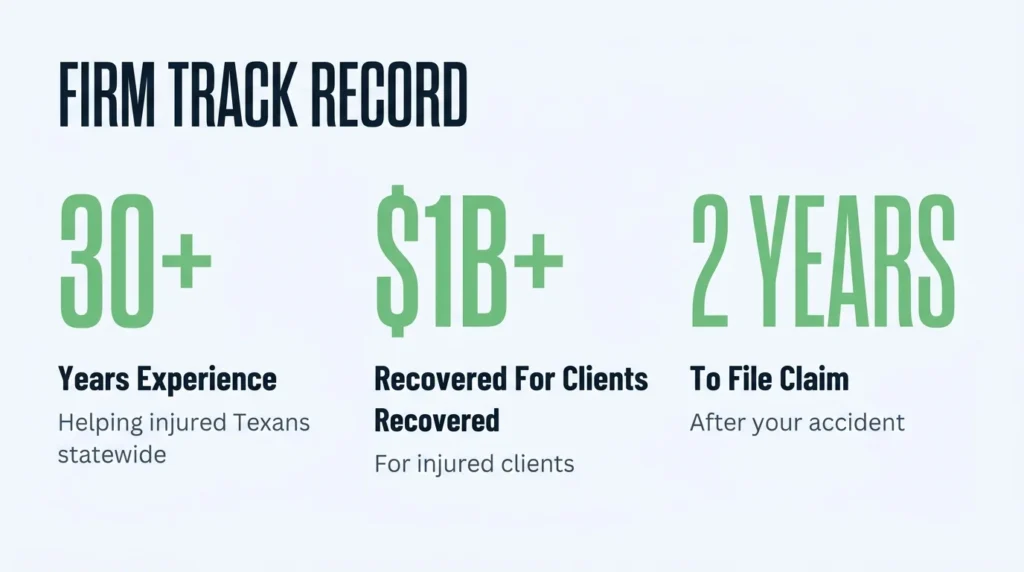
If a cargo shift accident left you injured on a Texas highway, you deserve clear answers about who is responsible. Angel Reyes & Associates has represented injured Texans for more than 30 years, with more than $1 billion recovered for clients.
We work on contingency, so you pay no fee unless we win your case. A free consultation costs you nothing and can clarify whether the shipper, the loading contractor, or the trucking company owes you compensation.
Contact us today to discuss your cargo shift accident and find out what your claim may be worth.
Past results do not guarantee future outcomes.
Improper Loading Truck Accident FAQs
How long do I have to file a claim after a cargo shift truck accident in Texas?
Texas law generally gives you two years from the date of the accident to file a personal injury lawsuit, under Civil Practice and Remedies Code Section 16.003. Missing this deadline can bar your claim even when another party was clearly at fault.
Can a trucking company avoid liability by claiming the loading crew was an independent contractor?
Not automatically. Courts can still hold a trucking company responsible through a negligent hiring claim or a non-delegable duty to make sure cargo is loaded and secured safely, regardless of how the loading crew was classified.
Can a federal cargo securement violation be used as proof in my case?
Yes. Violating a safety rule written to protect a specific group of people, such as an FMCSA securement regulation, can establish negligence per se under Texas law and help prove the violating party was at fault.
Is an overloaded truck the same problem as an improperly secured load?
No. Overloading means a truck exceeds its legal weight limit, while improper securement means the cargo itself was not fastened or braced correctly, so a truck can meet weight limits and still carry a dangerously unsecured load.
Does the trucking company's insurance cover an accident caused by a shipper's loading error?
Not always. A trucking company’s liability insurance usually covers accidents its own driver caused, so a crash caused by a shipper’s loading error may require a separate claim against the shipper’s own insurance.
About the Authors

Alex Ivanov
Writer
Alex Ivanov is a personal injury attorney at Angel Reyes & Associates, focused on car, truck, and motorcycle accident cases. Licensed in Texas and multiple federal districts, Alex brings international legal experience and a global education to his practice. He earned his LL.M. from Texas A&M University School of Law after graduating from Belarussian State University in 2016. Alex is fluent in Russian, English, Ukrainian, and Belarussian, and is recognized by multiple national trial lawyer associations for his results and leadership under 40.

Kyle Nicolas
Editor
Kyle Nicolas is the Web Content & SEO Manager at Angel Reyes & Associates. He has more than 10 years of experience as a marketing co...

Spencer Browne
Reviewer
Spencer Browne is a partner at Angel Reyes & Associates and a Board Certified personal injury trial lawyer with nearly 100 jury trials a...