Suing Uber for a Driver’s Prior Accident History


Every article on this site is researched by our internal team, reviewed for legal accuracy against current Texas law, and held to State Bar of Texas advertising standards before publication. We do not publish content that overstates outcomes or makes promises about results.
Learn more about our
editorial standards .
Key Takeaways
- Uber's independent contractor classification does not block a direct negligence claim based on its own screening or retention decisions.
- Texas law requires Uber to run national criminal, sex offender, and driving record checks on every driver before activation and annually after.
- Evidence in these cases lives inside Uber's systems, and acting quickly matters because trip records and internal complaint data can be purged.
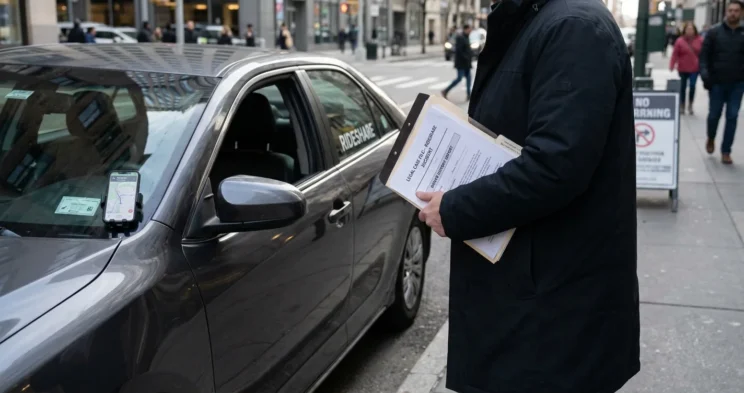
You climbed into an Uber on the Dallas North Tollway expecting a routine ride home. Instead, the driver caused a crash that left you injured and confused. Then you learned something that changes how you see the whole thing: this driver had a record that should have kept them off the road.
Why Uber Can Face Direct Liability
Uber can be held directly responsible when its own decisions put a dangerous driver on the road. This is a separate path from the usual claim, and it does not depend on Uber’s relationship with the driver.
Uber classifies its drivers as independent contractors. That label usually shields the company from being blamed for a driver’s mistakes behind the wheel.
A direct negligence claim works differently. It does not ask whether Uber is responsible for the driver’s bad driving. It asks whether Uber was careless in letting that person drive at all.
These claims focus on Uber’s own conduct. They challenge who Uber allowed onto the platform and whether the company ignored warning signs after that driver started giving rides.
The independent contractor defense does not reach these claims. You are not arguing that the driver was Uber’s employee. You are arguing that Uber’s own screening and retention choices caused your harm.
Negligent Hiring vs. Negligent Retention
Two distinct legal theories apply when a driver’s prior history is the issue. They sound similar, but they rely on different facts and different moments in time:
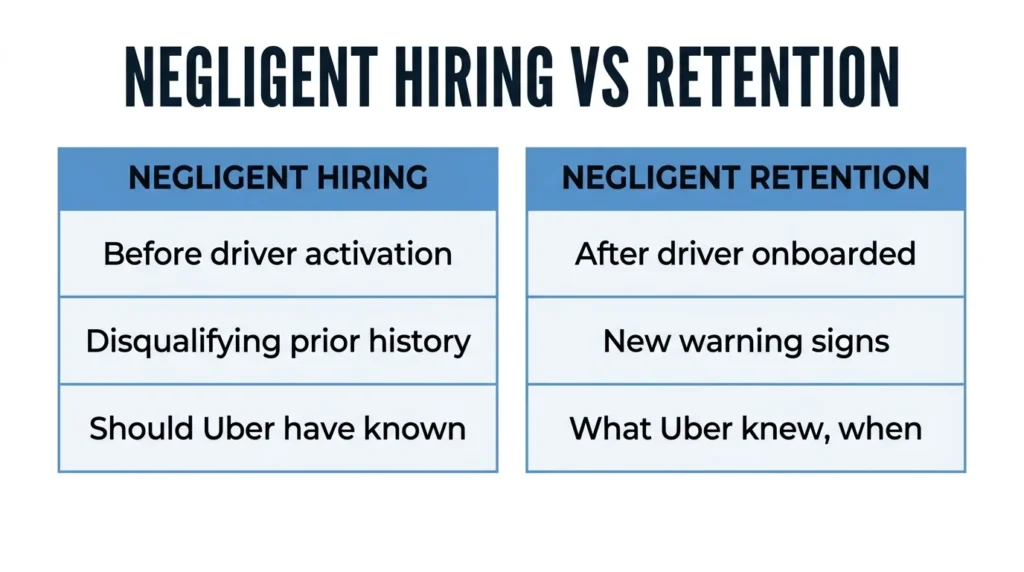
- Negligent Hiring: Negligent hiring applies when Uber lets a driver join the platform despite a history that should have disqualified them. Uber has a duty to run an adequate background check before activating any driver. Texas Occupations Code Section 2402.107 sets the mandatory disqualifying criteria Uber must apply.
- Negligent Retention: Negligent retention applies when Uber learned about a problem after onboarding but kept the driver active anyway. Warning signs can take many forms: passenger complaints, in-app incident reports, new criminal charges, or fresh traffic violations. The key question is what Uber knew and when.
Texas Screening Requirements for Uber Drivers
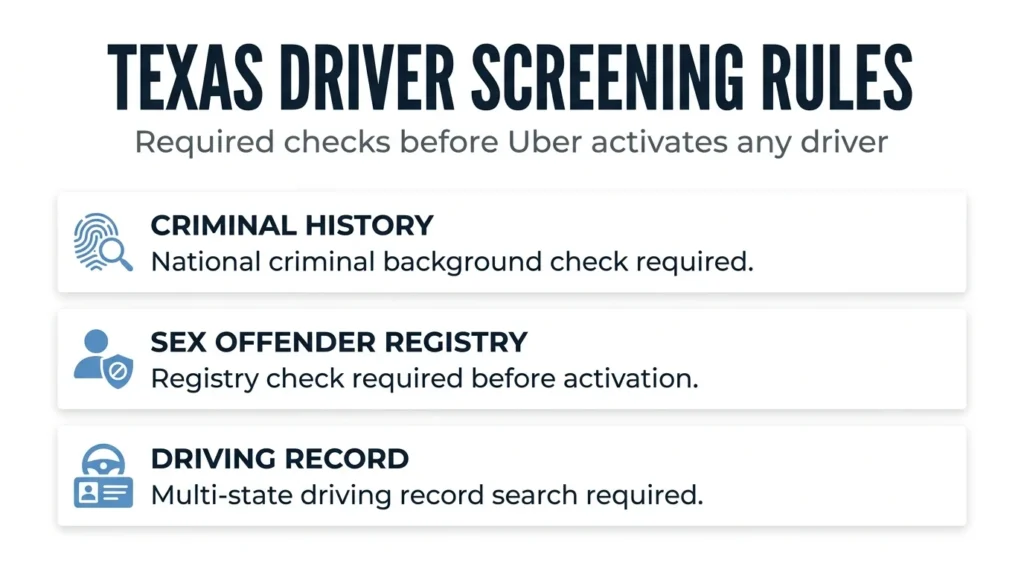
Texas Occupations Code Chapter 2402 requires a national criminal history check, a sex offender registry check, and a multi-state driving record search before activation. The Texas Department of Licensing and Regulation oversees this system.
Evidence Supporting a Prior History Claim
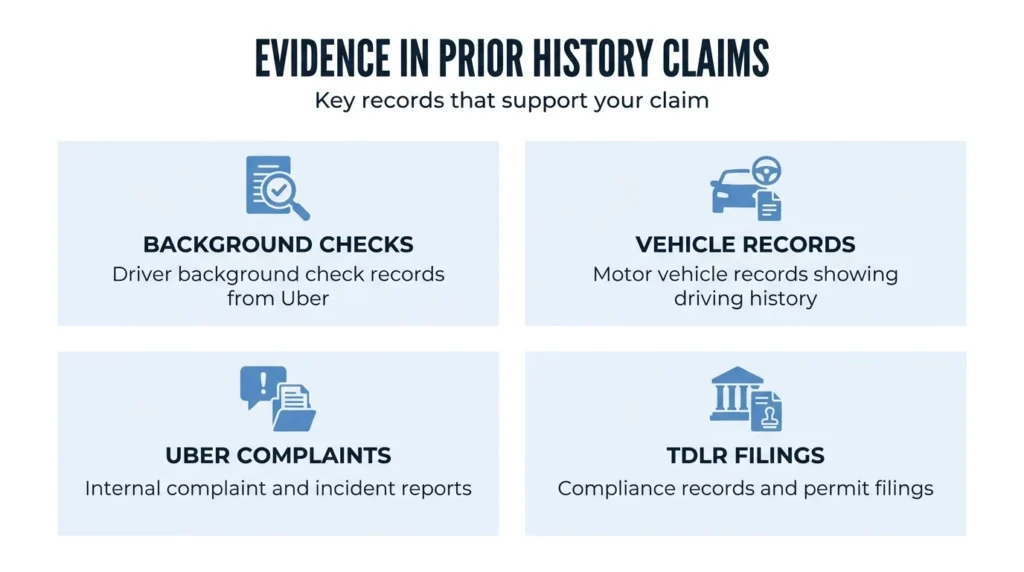
- Driver background check records
- Motor vehicle records
- Internal Uber complaint and incident records
- TDLR compliance records and permit filings
You can also review what to do following a rideshare accident and what car accident settlements typically involve.
Filing Deadlines in Texas
Texas Civil Practice and Remedies Code Section 16.003 sets a two-year deadline from the date of injury. Trip data and internal records can be purged, so acting quickly preserves evidence.
Work with an Experienced Attorney Today
Angel Reyes & Associates has spent over 30 years helping injured Texans hold rideshare companies accountable. We work on a no-fee-unless-we-win basis, with more than $1 billion recovered for clients. Contact us for a free consultation.
Past results do not guarantee future outcomes.
Uber Driver Accident History FAQs
What driving history actually disqualifies someone from driving for Uber in Texas?
Texas Occupations Code Section 2402.107 bars drivers with more than three moving violations in the past three years, a DUI conviction, reckless driving, or registration on the national sex offender database. A conviction for fleeing police also disqualifies a driver.
Does passing Uber's background check protect the company from a prior-history claim?
Not necessarily. A driver who passed screening can develop a dangerous record afterward through new violations or passenger complaints, and that is where the negligent retention theory applies. The question then becomes what Uber knew and whether it acted on that knowledge.
Does the independent contractor label prevent me from suing Uber directly?
No. The independent contractor classification defeats vicarious liability, where Uber is blamed for the driver’s actions, but it does not reach a direct negligence claim. A direct claim targets Uber’s own hiring and retention decisions, not the driver’s conduct behind the wheel.
Can punitive damages apply if Uber knowingly kept a dangerous driver active?
Possibly. Texas allows exemplary damages when a plaintiff proves gross negligence by clear and convincing evidence, and knowingly retaining a driver with a disqualifying history could meet that standard. These damages are subject to statutory caps under Texas Civil Practice and Remedies Code Chapter 41.
How does TDLR enforce Uber's screening obligations in Texas?
The Texas Department of Licensing and Regulation holds Uber’s state operating permit and can audit compliance with the screening requirements in Chapter 2402. Drivers do not file directly with TDLR — Uber holds the permit and bears responsibility for ensuring every driver it approves meets state standards.
About the Authors

Angel Reyes
Writer
Angel L. Reyes, III is the Founder and Managing Partner of Angel Reyes & Associates. A nationally recognized trial attorney and business leader, Angel has helped over 70,000 injury victims recover more than $1 billion since founding the firm in 1993. Named to the Texas Super Lawyers list annually since 2008, Angel brings Wall Street experience, Ivy League education, and a deep commitment to client advocacy. He is a frequent legal commentator and published author with extensive contributions to legal scholarship, trial strategy, and consumer protection.

Kyle Nicolas
Editor
Kyle Nicolas is the Web Content & SEO Manager at Angel Reyes & Associates. He has more than 10 years of experience as a marketing co...

Angel Reyes
Reviewer
Angel L. Reyes, III is the Founder and Managing Partner of Angel Reyes & Associates. A nationally recognized trial attorney and business...