How Uber and Lyft Data Can Be Used as Evidence in a Lawsuit


Every article on this site is researched by our internal team, reviewed for legal accuracy against current Texas law, and held to State Bar of Texas advertising standards before publication. We do not publish content that overstates outcomes or makes promises about results.
Learn more about our
editorial standards .
Key Takeaways
- Uber and Lyft GPS logs can confirm driver speed, route, and app status at the moment of impact.
- Texas law requires TNCs to keep ride records for five years, but some data may purge sooner.
- A preservation letter sent soon after a crash is the fastest way to stop data from being deleted.
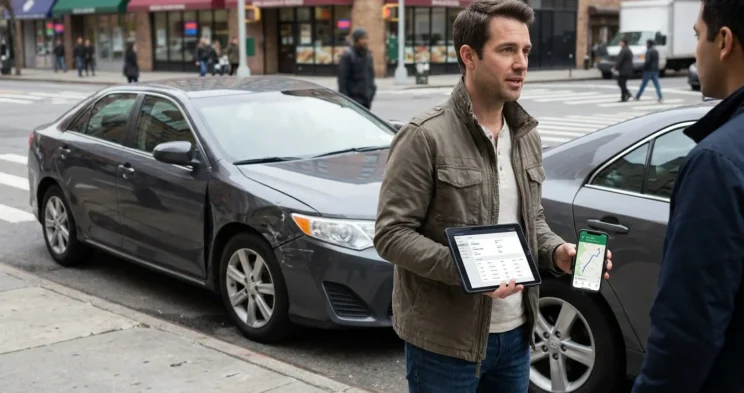
You were riding home through Midtown Houston when your Uber driver ran a red light and hit another vehicle. You know the crash happened. What you may not know is that Uber recorded exactly what happened, second by second, before the impact.
That data is a potential asset in your legal claim. Knowing how to secure it before it disappears is one of the most time-sensitive decisions you can make after a rideshare accident.
What Data Do Uber & Lyft Collect?
Every trip generates a detailed digital record, and much of it is relevant to an accident claim. The platforms capture far more than just a receipt.
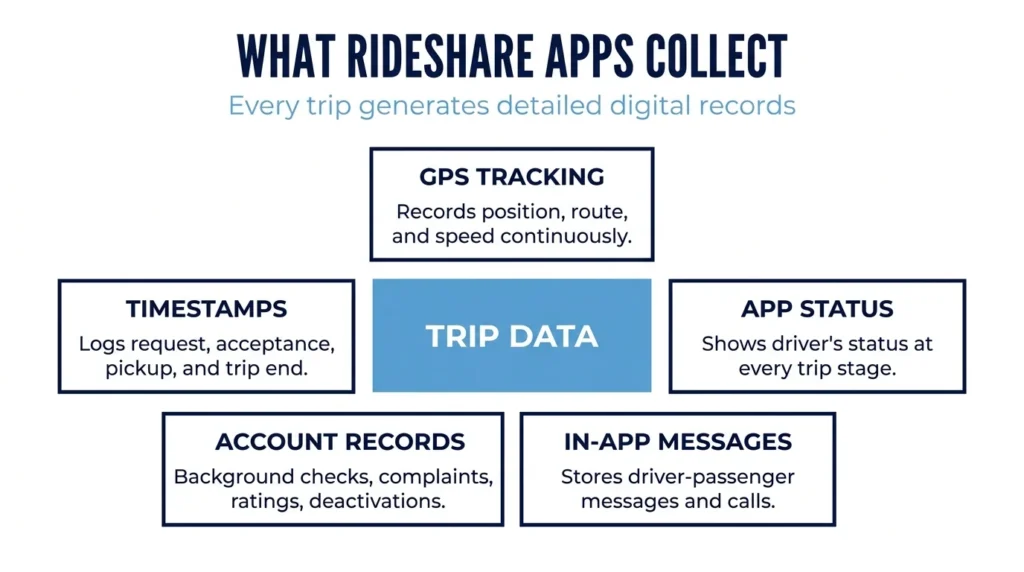
GPS coordinates track the vehicle’s position, route, and speed throughout the trip. Uber and Lyft record this data continuously, so an attorney can establish exactly where the driver was, how fast the vehicle was moving, and whether the driver deviated from the assigned route.
Alongside that, the platforms log timestamps for every stage of the ride: when you requested the trip, when the driver accepted, when pickup occurred, and when the ride ended.
Driver app status at each moment of the trip is also preserved. The platform knows whether the driver was offline, waiting for a request, en route to a pickup, or actively on a trip. That status at the moment of impact is a threshold question in every rideshare insurance coverage period dispute.
Beyond trip data, the platforms maintain driver account records: background check history, prior complaints, performance ratings, and any deactivation events. In-app communications between driver and passenger, including messages and calls routed through the platform, are also stored.
Why This Data Matters in a Lawsuit
The data is not just relevant. It can decide the outcome of your claim.
Driver app status at the moment of impact determines which insurance policy applies under the Texas Insurance Code Chapter 1954, which governs insurance requirements for transportation network company drivers. A driver who was active on a trip triggers Uber or Lyft’s $1 million liability policy. A driver who had the app off must use their personal auto coverage.
The difference in available compensation can be substantial, and the data resolves it without relying on anyone’s memory.
GPS speed logs can confirm or contradict the driver’s account of the crash. If the driver claims to have been traveling at the speed limit but the data shows otherwise, that record carries far more weight than testimony. Route logs can show whether the driver missed a turn, cut through an area without clear reason, or was operating outside the trip’s intended path.
In-app messaging records are especially significant when distracted driving is at issue. If the driver was responding to platform pings at the moment of the crash, those logs document it directly. An attorney familiar with rideshare cases can assess which specific data points are most relevant to your situation and how to request them before records become unavailable.
How Long Do Uber & Lyft Keep This Data?
Texas law sets a floor, or limit, but not every type of data is covered by the statutory minimum.
Under the Texas Occupations Code, TNCs must retain individual ride records for at least five years from the date of the ride. Driver records must be kept for at least five years after the driver is no longer authorized on the platform. That means the core trip data is not going anywhere quickly.
The problem is that certain types of operational data sit outside those minimums. Real-time location pings, server-side telemetry, and third-party system logs may not be available for as long. These can be deleted before you file a lawsuit if no one has demanded they be saved.
How to Preserve & Obtain Rideshare Data
Preserving this data requires stopping the deletion, then obtaining what was saved.
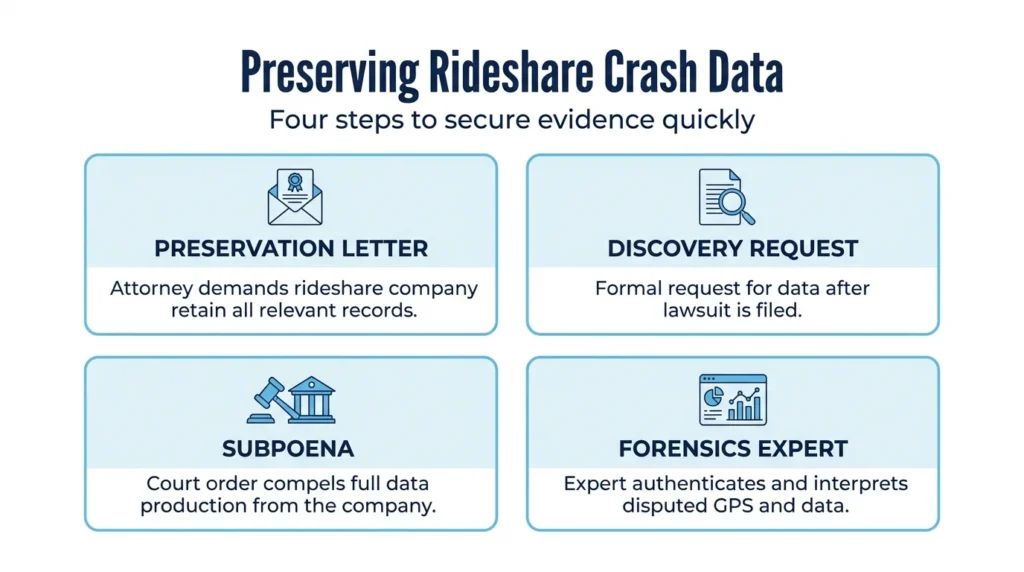
Step 1: Send a preservation letter. An attorney sends a formal written notice to Uber or Lyft within days of the crash. The letter identifies the trip by date, time, and driver, and demands that all related records be retained. Once the company receives it, they have a legal obligation to halt routine deletion of that data. The sooner this letter goes out, the better the odds that time-sensitive records are still in place.
Step 2: Request data through discovery. After a lawsuit is filed, your attorney submits formal discovery requests under the Texas Rules of Civil Procedure asking Uber or Lyft to produce the preserved data in a specified format. This is the formal legal channel for obtaining records the company controls.
Step 3: Use a subpoena if the platform resists. If Uber or Lyft objects or produces incomplete records, the attorney can seek a court order requiring full production. Platforms do not always volunteer complete data sets voluntarily, and legal pressure is sometimes what it takes.
Step 4: Engage a digital forensics expert if needed. When the accuracy or completeness of GPS data is in dispute, or when there are questions about whether records were modified, an expert can authenticate the data and interpret it for the court.
Knowing what to do after a rideshare accident in Texas can make all the difference.
What the Data Can Prove in Court
Once obtained, the data answers specific legal questions that would otherwise depend entirely on conflicting witness accounts.
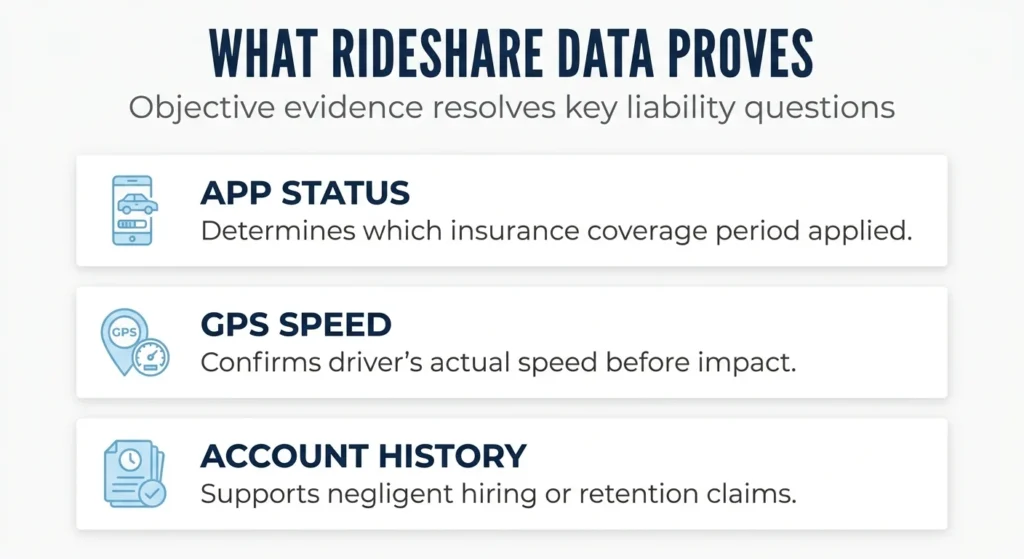
Driver app status proves which coverage period was active at the moment of impact. Texas law governs the three-period structure under the Occupations Code, and the app log removes any ambiguity about which tier applied, which directly determines the insurance policy limit you can claim against.
GPS speed data establishes whether the driver was traveling at a safe speed before impact. Speed at the moment of collision is a core element of a negligence claim, and objective platform data carries more weight than either driver’s testimony. Route deviation records can show inattention or unfamiliarity with the area.
Driver account history can support a negligent hiring or retention claim against the platform. If a driver had prior complaints or was flagged in the system and Uber or Lyft allowed them to continue operating, those records show the platform knew or should have known about the risk.
Speak with an Experienced Attorney
The digital record from a rideshare accident can determine who is liable and how much insurance coverage applies to your claim. Getting to that data before it is gone requires prompt action.
Angel Reyes & Associates has handled rideshare accident cases across Texas for over 30 years.
We can send a preservation letter to Uber or Lyft shortly after a crash and build the evidence record your case needs. Consultations are free, and we do not charge fees unless we win your case. Reach out to us to go over your options.
Past results do not guarantee future outcomes.
FAQs About Uber & Lyft Data as Lawsuit Evidence
Can I request my Uber or Lyft trip data directly from the company?
As a passenger or third party, you cannot simply ask Uber or Lyft to hand over backend trip records. You can request a copy of your own account data through each platform’s privacy settings, but comprehensive records, such as driver GPS logs and server-side telemetry, require a formal legal process or subpoena.
What happens if Uber or Lyft deletes data after receiving a preservation letter?
If a company destroys evidence after being put on notice of potential litigation, a court may sanction that conduct. Sanctions can include adverse inference instructions, which ask the jury to assume the missing data would have hurt the company’s case, along with fines or, in serious cases, default judgment against the company.
Does this data help if another driver hit the Uber I was riding in?
Yes. Even when a third-party driver caused the crash, the Uber or Lyft data can confirm that you were an active passenger at the time, which determines whether the platform’s commercial policy applies. That policy can serve as uninsured or underinsured motorist coverage if the at-fault driver’s insurance is insufficient to cover your injuries.
What if the Uber driver's app was off when the crash happened?
When the driver’s app is off, the platform’s commercial coverage does not apply. The driver’s personal auto insurance becomes the primary source of coverage, though many personal policies exclude commercial use, which can create a coverage gap and complicate the claim.
Can rideshare data be used in cases involving a Lyft driver who caused the accident?
Yes. The same categories of data, including GPS logs, driver status records, and in-app communications, apply to Lyft cases the same way they apply to Uber cases. Both platforms are governed by Texas Transportation Network Company regulations and are subject to the same data retention and discovery rules under Texas law.
About the Authors

Angel Reyes
Writer
Angel L. Reyes, III is the Founder and Managing Partner of Angel Reyes & Associates. A nationally recognized trial attorney and business leader, Angel has helped over 70,000 injury victims recover more than $1 billion since founding the firm in 1993. Named to the Texas Super Lawyers list annually since 2008, Angel brings Wall Street experience, Ivy League education, and a deep commitment to client advocacy. He is a frequent legal commentator and published author with extensive contributions to legal scholarship, trial strategy, and consumer protection.

Kyle Nicolas
Editor
Kyle Nicolas is the Web Content & SEO Manager at Angel Reyes & Associates. He has more than 10 years of experience as a marketing co...

Spencer Browne
Reviewer
Spencer Browne is a partner at Angel Reyes & Associates and a Board Certified personal injury trial lawyer with nearly 100 jury trials a...