Texas Robotaxi Requirements: TxDMV Authorization, Key Dates & What It Means for Riders


Every article on this site is researched by our internal team, reviewed for legal accuracy against current Texas law, and held to State Bar of Texas advertising standards before publication. We do not publish content that overstates outcomes or makes promises about results.
Learn more about our
editorial standards .
Key Takeaways
- TxDMV authorization is required for all commercial driverless vehicles in Texas as of May 2026.
- Texas assigns traffic citations to the robotaxi's operating company, not to the passenger inside.
- Robotaxi injury claims follow Texas negligence law, but act fast: operators control vehicle data.
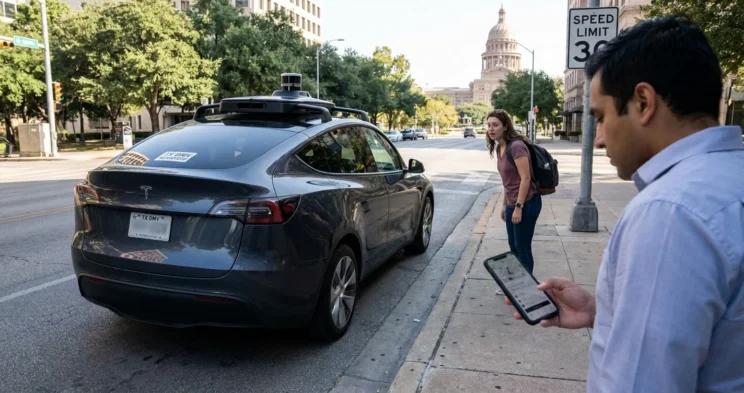
You booked a ride in Austin last week. The car that pulled up had no one behind the wheel. The trip went fine, but now you’re wondering: is this even legal? What happens if something goes wrong? Who’s responsible if a driverless car runs a red light or causes a crash?
Texas has answers to these questions. A new legal framework governs commercial robotaxi operations, and understanding it matters whether you’re a rider, a potential claimant, or just curious about what’s coming to Texas roads.
What Texas Changed for Commercial Robotaxis
Texas Transportation Code Chapter 545, Subchapter J establishes specific rules for automated motor vehicles operating without a human driver. The TxDMV Automated Vehicles Regulatory Program implements these requirements through a formal authorization process.
A few key terms help make sense of official sources:
- Automated motor vehicle: A vehicle equipped with an automated driving system
- Automated driving system (ADS): Technology that can perform the entire driving task without human input
- Commercial activity: Operating the vehicle for hire or compensation
The authorization requirement applies when a company wants to operate vehicles commercially without a human driver present. This is different from personal use of driver-assist features or commercial operations that still have a safety driver in the vehicle.
“Implementation” vs “Enforceability”
You’ll see two dates in official materials. The program became effective September 1, 2025. But enforcement doesn’t begin until May 28, 2026.
What does this mean practically? Companies can apply for authorization now. TxDMV is accepting applications and processing them. But the consequences for operating without authorization (suspension, enforcement actions) don’t kick in until the May 2026 date.
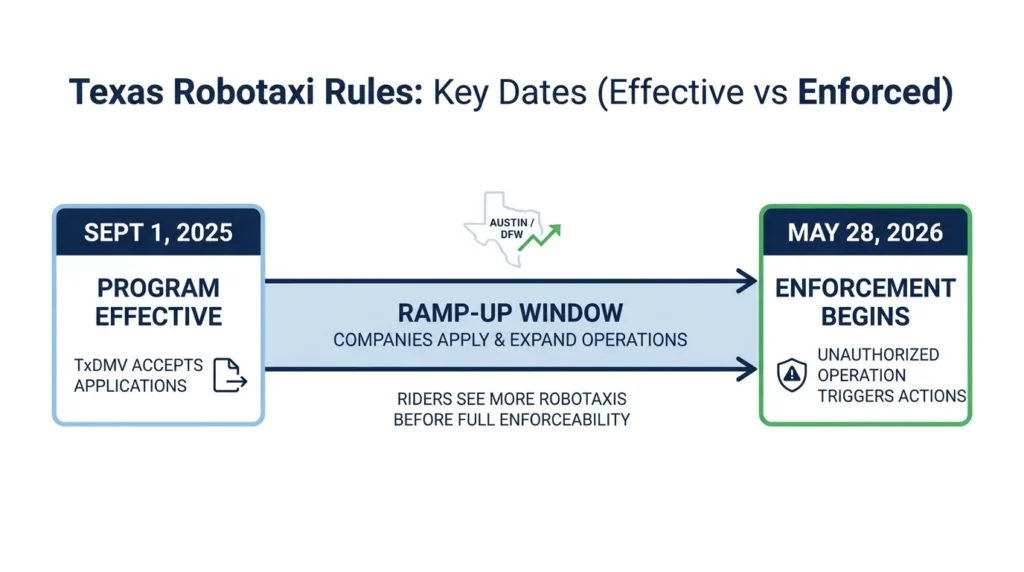
The adopted rules under 43 TAC Chapter 220 spell out the application mechanics. These rules describe what information operators must submit and what triggers update obligations.
For riders in Austin or the Dallas-Fort Worth area, this means you may encounter expanding robotaxi operations during this ramp-up period. Companies are building their fleets and operational footprints ahead of full enforceability.
When TxDMV Authorization Is Required
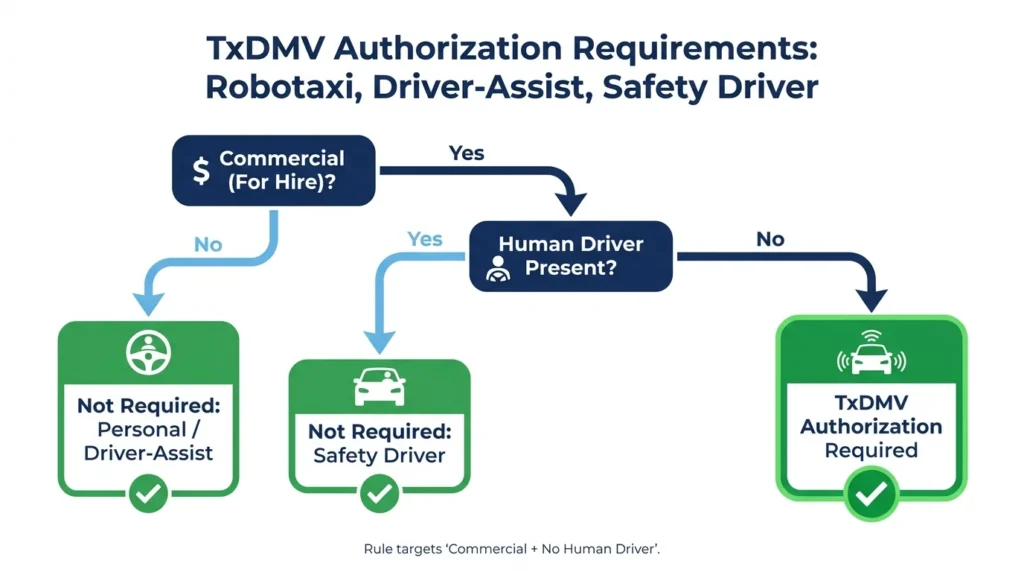
Not every automated vehicle triggers the authorization requirement. The threshold is specific: commercial activity combined with operating without a human driver.
If a company wants to offer paid rides in vehicles where no human is behind the wheel, TxDMV authorization is required. Personal use of your own vehicle with automated features doesn’t trigger this requirement. Neither does commercial operation where a safety driver remains in the vehicle.
Authorization vs Rideshare Licensing
Headlines about robotaxi companies getting “approved” or “licensed” in Texas can be confusing. Multiple regulatory layers exist, and they’re not the same thing.
A company might hold a ride-hailing or transportation network company (TNC) license. That’s separate from TxDMV automated vehicle authorization. Having one doesn’t mean you have the other.
When you read that a robotaxi company received a “license” in Texas, ask: which license? The TxDMV authorization for driverless commercial operation is the specific requirement under Subchapter J. You can verify authorization status through the TxDMV program page.
This distinction matters if you’re ever involved in a rideshare accident. Understanding which entity holds which authorization affects how claims proceed.
What the TxDMV Program Requires
The authorization process involves several components. Operators must submit an application with required information and attestations. The TxDMV’s adopted Chapter 220 rules detail the specific fields and requirements.
Key elements include:
- Company identification and contact information
- Description of the automated driving system
- Attestations about safety and operational readiness
- Ongoing update obligations when material information changes
The update requirement is significant. Operators can’t file once and forget about it. Changes to the ADS, operational areas, or other material information trigger update obligations.
TxDMV has enforcement tools available. The agency can review authorizations, request information, and suspend or withdraw authorization when warranted. The statute text provides the exact enforcement language.
What Riders Can Expect from Compliant Operations
A robotaxi operating “by the book” should provide clear rider-facing information:
- Identification of the operating company
- A way to contact support during and after your trip
- Instructions for emergencies or unusual situations
- A process for reporting incidents
If you’re injured in a robotaxi, getting medical care and preserving your trip records matters. The fact that “the driver is software” doesn’t change your need to document what happened. Save screenshots of your trip details, any in-app messages, and the vehicle identification number.
Emergency Interaction Plans & Law Enforcement Stops
Subchapter J requires operators to have an emergency interaction plan on file with the Texas Department of Public Safety. This plan addresses how the vehicle and operator will handle law enforcement stops, crash scenes, and other emergency situations.
The concept makes sense: if there’s no human driver to roll down the window and hand over a license, there needs to be a predictable protocol. First responders need to know how to interact with the vehicle safely.
As a rider, you might experience this during a traffic stop or if the vehicle is involved in an incident. The vehicle may provide instructions through the app or audio system. A remote operator may communicate with law enforcement.
TxDMV handles the authorization program. DPS and local law enforcement handle on-road enforcement. These are separate roles, and understanding them helps you know who does what if something happens.
What to Do as a Rider During a Stop or Emergency
Stay calm and follow any instructions provided through the app or vehicle audio. Your physical safety comes first. If you need to exit the vehicle, do so only when it’s safe.
Document what you can:
- Save your trip information and any in-app messages
- Note the time, location, and any officer or incident details
- Screenshot any safety logs or export options the app provides
If you’re injured or shaken, seek medical evaluation. Timing matters for both your health and any potential claim.
Who Gets the Ticket if a Self-Driving Car Breaks Traffic Law?
This question comes up constantly. If the “driver” is software, who receives the citation?
Subchapter J addresses this directly. When the automated driving system is engaged, the statute assigns responsibility to the “operator” as defined by law. For commercial robotaxis, this generally means the operating company rather than the passenger.
The practical effect: if a robotaxi runs a stop sign while you’re a passenger, you’re not the one getting the ticket. The citation and enforcement action would be directed to the responsible operating entity.
This matters for crashes and claims. Citations can affect fault narratives. If the robotaxi operator received a citation at the scene, that becomes part of the evidence in any injury claim. Insurance companies and attorneys will examine whether traffic violations contributed to the crash.
If Police Issue a Citation or Report
As a rider, you may leave the scene without key paperwork. Here’s what to ask for or document:
- The crash report or incident number
- Which agency responded (Austin PD, Dallas PD, county sheriff, DPS)
- The vehicle number or plate
- The operator name shown in your app
- Your trip ID
If you’re being contacted by insurers after a robotaxi crash, be cautious. Insurance companies are businesses. Their goal is to resolve claims for the lowest possible payout. Getting guidance early, especially if you’re injured, protects your options.
Crashes & Injury Claims Involving Robotaxis
Even with new authorization rules, core car accident claim fundamentals still apply. You need to prove negligence, causation, and damages. Texas law doesn’t change just because the at-fault vehicle was autonomous.
What often does change: the evidence sources. Robotaxis generate extensive data. Vehicle logs, camera footage, remote assistance records, and app data can all become relevant. Preserving this evidence quickly is critical. Companies control this data, and without prompt action, it may become harder to obtain.
Authorization status can also become an issue. If an operator was required to have TxDMV authorization but didn’t, that fact could be relevant to a claim. It doesn’t automatically create liability, but it can become part of the overall picture.
What to Do After a Robotaxi Crash/iamge
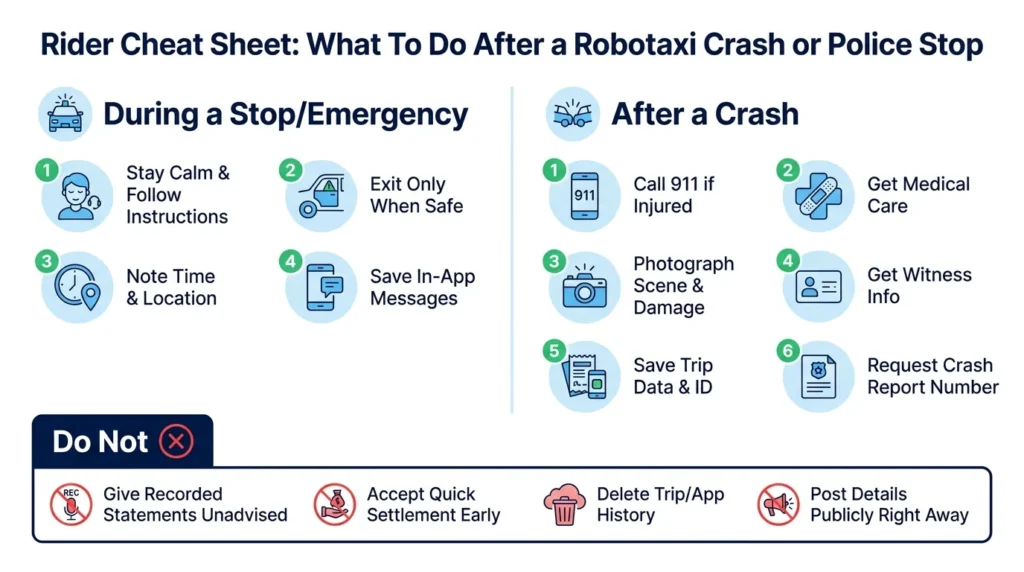
Immediate steps:
- Call 911 if anyone is injured
- Get medical care, even if injuries seem minor
- Photograph the scene, vehicle, and any visible damage
- Collect witness contact information
- Preserve your trip and app records
Avoid common pitfalls:
- Don’t give recorded statements to insurance adjusters without understanding your rights
- Don’t accept quick settlement offers before you know the full extent of your injuries
- Don’t delete app data or trip history
- Don’t post details publicly before your situation stabilizes
When injuries are serious, fault is disputed, or insurance coverage is unclear, talking to a lawyer early makes sense. Evidence in robotaxi cases can be complex, and the companies involved have significant resources. Similar principles apply to commercial vehicle accidents and other cases involving operators with extensive data systems.
[NOTE TO GRAHAM: “/blog/commercial-vehicle-accident-claims-texas/” is a placeholder. Swap in the correct second blog post URL from your cluster map before publishing.]
How We Can Help
At Angel Reyes & Associates, we’ve spent over 30 years helping Texans injured in crashes navigate complex claims. Robotaxi accidents present new evidence challenges, but the core mission remains the same: holding responsible parties accountable and getting injured people the compensation they deserve.
We offer free initial consultations and work on contingency. You pay no fee unless we win. Our team includes investigators and reconstruction specialists who understand how to preserve and analyze the data that matters in these cases.
We serve clients across Texas from more than 20 locations statewide. If you’ve been injured in a robotaxi crash or any vehicle accident, contact us today to discuss your situation.
Robotaxi Requirement FAQs
Can a city like Austin or Dallas ban robotaxis on its own?
Texas generally preempts local regulation of automated motor vehicles, so cities usually cannot create their own separate robotaxi approval system. Local police can still enforce traffic laws and respond to crashes on public roads.
Do riders need to prove the software failed to bring an injury claim after a robotaxi crash?
Not necessarily. A claim may focus on ordinary negligence, poor maintenance, unsafe operation, or other facts, and the exact legal theory depends on what caused the incident.
Will a robotaxi company need insurance in Texas?
Yes. Texas law requires automated motor vehicles operating with the automated driving system engaged to be covered by motor vehicle financial responsibility laws, but the policy details and available coverage can vary.
What information should I save from the app after a robotaxi trip problem?
Keep the trip receipt, trip ID, pickup and drop-off times, vehicle identifier, screenshots of messages, and any safety-report confirmation. Those records can help if you later need to report the event or deal with an insurance claim.
Can Texas suspend or take away a robotaxi operator's authorization?
Yes. TxDMV has authority to review an authorization and may suspend, revoke, or deny it in some situations, which can matter if questions later come up about whether a company was operating in compliance.
About the Authors

Angel Reyes
Writer
Angel L. Reyes, III is the Founder and Managing Partner of Angel Reyes & Associates. A nationally recognized trial attorney and business leader, Angel has helped over 70,000 injury victims recover more than $1 billion since founding the firm in 1993. Named to the Texas Super Lawyers list annually since 2008, Angel brings Wall Street experience, Ivy League education, and a deep commitment to client advocacy. He is a frequent legal commentator and published author with extensive contributions to legal scholarship, trial strategy, and consumer protection.

Graham Griffin
Editor
Graham Griffin is the Web & Content Manager at Angel Reyes & Associates, where he oversees content strategy, AI-powered workflows, a...

Angel Reyes
Reviewer
Angel L. Reyes, III is the Founder and Managing Partner of Angel Reyes & Associates. A nationally recognized trial attorney and business...