



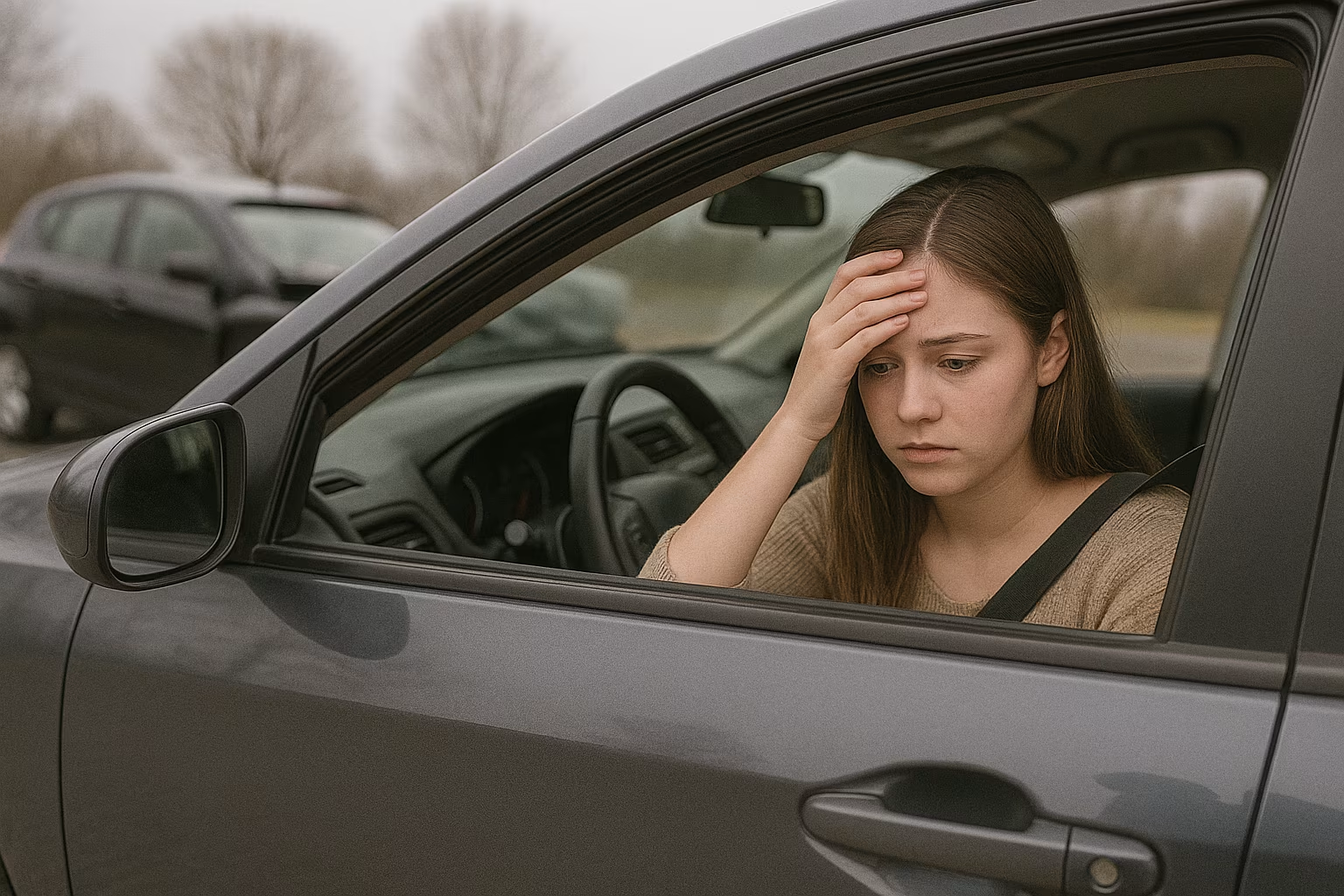
Understanding Teen Driver Accidents in Texas
Your 17-year-old just called from I-35 after rear-ending another car during rush hour. Or you’re standing on the roadside after a teenage driver ran a red light and hit you.
Teen drivers aged 16-19 have a fatal crash rate almost three times as high as drivers aged 20 and older per mile driven according to the Centers for Disease Control and Prevention.
Inexperience and risk-taking behaviors create unique legal issues. Parents can face personal liability for damage their teens cause, and victims must navigate insurance coverage limits that rarely cover serious injuries.
Who Is Liable When a Teen Driver Causes an Accident in Texas?
Teen drivers are personally liable for crashes they cause, but collecting from teenagers with limited assets usually requires pursuing parents or insurance companies.
Understanding when Texas parents are liable for car accidents their children cause determines who pays for injuries and property damage.

Negligent Entrustment Creates Parent Liability
Negligent entrustment applies when parents loan vehicles to teens they know are incompetent, reckless, or unsafe.
Texas courts examine what you knew or should have known about dangerous driving patterns like multiple speeding tickets, recent accidents, substance abuse issues, or attention disorders.
Signing the License Application Creates Automatic Liability
Texas Family Code Section 41.001 makes parents who sign driver’s license applications for teens under 18 financially responsible for property damage and injuries the teen causes. This liability exists whether you owned the vehicle, knew about the trip, or gave permission for that drive.
Taking away car keys doesn’t end this responsibility. Only filing a verified written request with the Department of Public Safety releases you from liability created by your signature.
Insurance Coverage Limits Create Parent Exposure
Texas requires minimum liability coverage of $30,000 per person and $60,000 per accident for bodily injury, plus $25,000 for property damage. Teen drivers must be listed on family policies.
Failing to list them lets insurance companies deny coverage entirely, leaving parents personally liable. Say your teen causes a crash resulting in $200,000 in medical bills but your policy caps at $60,000.
You remain personally liable for the $140,000 difference unless the victim’s underinsured motorist coverage applies.
What To Do If Your Teen Is in an Accident
Your actions in the first hours determine both your teen’s legal position and your family’s financial exposure.
Immediate Steps at the Scene
Call 911 and make sure your teen stays at the scene. Leaving violates Texas law and creates criminal exposure.
Tell your teen to exchange insurance information but not to discuss fault or apologize. Have them photograph damage, road conditions, and any visible injuries while getting witness contact information.
Notify Insurance and Protect Your Position
Contact your insurance company immediately. Delaying notification creates coverage denial risks.
Provide only basic facts: location, time, vehicles involved. Wait to give detailed statements about your teen’s actions until after consulting an attorney.
Document your teen’s driver training history before investigators ask. Driver’s education certificates, practice logs, and clean driving records help defend against negligent entrustment claims.
If Your Teen Was Injured
Parents must file injury claims on behalf of minors under 18. Gather medical documentation and track all treatment.
Minor settlements over certain amounts require court approval to protect the child’s interests.
Filing a Claim After Being Hit by a Teenage Driver
Teen drivers are liable like adults, but recovering compensation requires navigating insurance limits and parent liability rules.
Proving Teen Driver Negligence
Police reports document traffic violations, driver statements, and physical evidence. Request the official crash report from the Texas Department of Public Safety within 10 days.
Look for Graduated Driver License violations.
Learner permit holders operating vehicles without required adult supervision, provisional license holders driving with unauthorized passengers, or teens driving during restricted hours all violated Texas law at crash time.
Insurance Complications in Teen Driver Cases
Insurance companies handle teen claims like any other accident by minimizing payouts. The critical difference: teen drivers often carry only minimum coverage.
Serious injuries exceeding policy limits require pursuing parents through negligent entrustment claims or accessing your own underinsured motorist coverage. Get multiple vehicle repair estimates from reputable body shops.
Don’t sign medical authorization forms from the other driver’s insurance company. These let adjusters access your entire medical history searching for reasons to deny your claim.
When Legal Representation Matters
Excessive medical bills or permanent injuries after an accident require attorney representation to recover fair compensation. Disputed liability cases where the teen denies fault need professional investigation.
Claims involving uninsured or underinsured teen drivers require legal expertise navigating your own policy’s coverage.
Settlement Values in Teen Driver Cases
Teen accident settlements include medical expenses (current and future), pain and suffering, lost wages, and long-term effects like permanent disability or lost earning capacity. The teen-specific complication is policy limits.
Teen drivers typically carry Texas minimum coverage of $30,000 per person. Serious injuries exceeding these limits require pursuing parents’ personal assets through negligent entrustment or signature liability claims, or tapping your own underinsured motorist coverage.
Texas Laws That Impact Teen Driver Claims
Several Texas statutes enforced by Department of Public Safety offices statewide create parental liability and strengthen injury claims when teen drivers violate state law.
Negligent Entrustment Standard
Negligent entrustment requires proving the vehicle owner knew or should have known the driver was unfit. Previous accidents, traffic violations, substance abuse problems, or dangerous driving patterns are used to establish this knowledge.
Parents who let teens with suspended licenses or multiple violations drive face clear liability even if they didn’t sign the license application.
GDL Restrictions Strengthen Liability Claims
The Texas Graduated Driver License program restricts teen drivers during their first year. Violations prove illegal driving.
Learner permit holders under 18 must have a licensed adult 21 or older in the front seat per Texas Transportation Code Section 521.222.
Provisional license holders face passenger restrictions: no passengers under 21 except family for six months, then only one non-family passenger under 21 for the next six months.
Teen drivers cannot operate vehicles between midnight and 5 a.m. during their first year except for work, school, or emergencies. Crashes during restricted hours prove violations.
Texas Transportation Code Section 545.424 bans wireless device use for drivers under 18 with learner permits or provisional licenses. Section 545.4251 prohibits texting while driving for all drivers.
Cell phone records proving violations establish negligence per se.
Filing Deadlines
Adults must file personal injury lawsuits within two years from the accident date. Minors’ deadlines don’t begin until age 18.
An injured 16-year-old has until age 20 to file, allowing time to evaluate permanent injury effects.
Evidence That Proves Teen Driver Cases
Teen driver cases involve evidence types that don’t exist in adult driver accidents and can prove both fault and parental knowledge.
Cell Phone Records Show Distraction
Teen drivers have higher proportions of distraction-related crashes according to NHTSA data. Attorneys subpoena records showing every text, call, and app usage with timestamps matching crash time.
A text sent at 3:47 p.m. when the crash happened at 3:47 p.m. proves distracted driving violating Texas law. Social media posts weeks before accidents establish dangerous driving patterns supporting negligent entrustment claims against parents.
Driver Training Records Expose Inadequate Preparation
Texas Transportation Code Section 521.204 requires driver education for teens under 18. Completion certificates and practice logs show training received.
Parent-taught education requires 44 hours of behind-the-wheel practice including 14 hours supervised driving per Texas Department of Licensing and Regulation rules.
Incomplete or falsified logs suggest inadequate preparation supporting negligent entrustment claims.
Professional driving school records documenting poor performance or failed skills assessments prove the teen lacked competency before licensing. This strengthens arguments parents should have known the teen wasn’t ready.
FAQs About Teen Driver Claims in Texas
These are the most common questions families ask after teen-involved accidents.
Are parents automatically liable if their teen causes an accident?
No. Texas requires proof of negligent entrustment or license application signature.
Simply being the teen’s parent doesn’t create automatic liability. Parents who signed their under-18 teen’s driver’s license application face automatic liability under Texas Family Code Section 41.001 whether or not they owned the vehicle or gave permission for that trip.
Negligent entrustment applies when parents knowingly let unsafe teens drive. Previous accidents, violations, or dangerous patterns establish the required knowledge element.
What should I do if hit by a teenage driver?
Get medical attention and call 911 for police response. Police reports document fault through citations and driver statements.
Photograph damage, road conditions, and injuries. Get the teen’s license, insurance information, and parent contact details.
File proper insurance claims immediately. Don’t accept informal settlement promises from parents offering to pay directly.
Can teens file accident claims on their own?
Teens over 18 can file independently. Minors under 18 need a parent or guardian to file on their behalf.
Texas law fully protects injured teens’ rights to compensation. The age limitation affects only who files paperwork.
Minor settlements require court approval to ensure they fairly compensate the teen and protect settlement funds until adulthood.
What if my teen was partially at fault?
Texas follows modified comparative fault under Texas Civil Practice and Remedies Code Section 33.001. Partial fault reduces compensation but doesn’t eliminate it unless your teen is 51% or more at fault.
A teen 30% at fault recovers 70% of damages. No recovery is possible at 51% or more fault.
Insurance companies aggressively argue comparative fault to reduce payouts. They examine whether your teen was speeding or distracted even when the other driver clearly caused the crash.
Will insurance rates increase after my teen’s crash?
Yes, in most cases. Insurance companies raise premiums after at-fault accidents, especially for teen drivers who already carry the highest surcharges.
Increases depend on crash severity, your company’s policies, and traffic citations issued. Some insurers offer accident forgiveness waiving the first at-fault surcharge.
Premium increases typically last three to five years. Shopping for new coverage makes sense because different companies weigh teen accidents differently.
Protecting Your Family After a Teen Driver Accident
Document everything systematically. Keep medical records, bills, repair estimates, police reports, photos, witness statements, and insurance correspondence organized.
Don’t rely solely on insurance company assessments. Adjusters minimize payouts, not maximize fair compensation.
We’ve guided Texas families through teen driver accident claims for over 30 years.
Get a free consultation to review your options whether you were injured by a teen driver or your teen was involved in an accident.