The Greatest Risk For Teenage Drivers? Inexperience Behind the Wheel


Every article on this site is researched by our internal team, reviewed for legal accuracy against current Texas law, and held to State Bar of Texas advertising standards before publication. We do not publish content that overstates outcomes or makes promises about results.
Learn more about our
editorial standards .
Key Takeaways
- The biggest danger for teenage drivers is not a lack of basic driving skill, but poor judgment caused by inexperience.
- Supervised driving practice with parents or experienced adults can help teens build safer habits and reduce crash risk.
- Parents play a critical role by modeling safe driving behavior and addressing distractions like phones, passengers, and substance use.
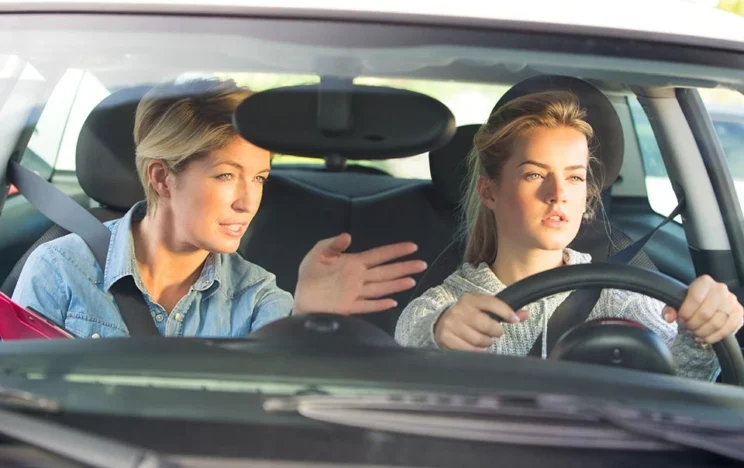
Adolescents are known to take chances, succumb to peer pressure, overestimate their abilities, and have emotional mood swings. Each of these behaviors can increase the likelihood for the teenage driver to be involved in an automobile crash. Investigations have shown that “the cause of teenage crashes is not the skill with which they can drive, but the judgment they exercise while driving,” according to an editorial in the Journal of Adolescent Health.
Dr. Simons-Morton of the National Institute of Child Health and Human Development has concluded from research that “safe driving judgment, as with all complex activities, comes only with experience.”
Inexperienced drivers are left with a Catch-22: Lack of experience makes puts them at high risk of being involved in an accident, and the only way to improve as a driver is more experience.
One of the safest methods to increase experience for new teen drivers is supervised driving sessions with their parents, before and after they have obtained their license. This provides a real-time, constructive environment in which to get hands-on experience, all while being monitored by their parents, legal guardian, or other knowledgable driver with years of experience under their belt. By continuing supervised driving practice sessions, this can help mitigate risks for your children and loved ones.
However, drivers’ education begins long before a child even touches the steering wheel. It is difficult to enforce rules on children that the parents do not follow themselves. It is important to keep in mind that parents should model safe driving habits at all times, but especially while their child is observing.
Teen drivers remain at a higher risk of serious and fatal crashes than more experienced drivers, and distractions such as cell phones, passengers, nighttime driving, and impaired driving can make that risk even worse according to a new policy statement by the American Academy of Pediatrics.
Mobile technology is always evolving, and with it comes a multitude of distractions. Calls, texts, and the ever-growing list of social media apps present a wave of distractions. Aside from cell phones, teens will put their focus to the test amidst the distractions of other (teenage) passengers, limited nighttime visibility, and the lure of mind-altering substances like alcohol and marijuana.
New drivers will need all the support they can get to stay safe behind the wheel and avoid distracted driving. You can help minimize car wrecks by providing constructive criticism and supervision to the less-experienced driver.
After more than 30 years representing injury victims in car wrecks, truck wrecks, and motorcycle accidents, the skilled lawyers at Angel Reyes & Associates have seen the consequences of negligence first-hand. If you have sustained injuries because of a car wreck which was not your fault, contact us now for a free and confidential case review. Fill out our form online, and we will get you on the road to recovery.
Witness Statement FAQs
How many supervised driving hours should a teen get before driving alone?
More supervised practice is generally better because crash risk is highest in the first months after licensure. Parents can improve safety by adding practice in rain, traffic, highways, and nighttime conditions instead of stopping once the license is issued.
Why are teen passengers so dangerous for new drivers?
Teen passengers can increase distraction, risk-taking, and pressure to show off, especially for inexperienced drivers. That is one reason graduated driver licensing systems often limit how many young passengers a new driver can carry.
Are nighttime crashes more dangerous for teenage drivers?
Yes. Teen drivers face greater crash risk at night because visibility is worse and hazardous decision-making is more likely in low-light, late-hour conditions.
Do seat belts make as much difference for teens as avoiding phone use?
Yes, and both matter. Federal health data shows many teens killed in crashes were unbelted, while distracted driving remains a major nationwide cause of fatal crashes.
What should parents include in a teen driving agreement?
A strong agreement should cover phone use, passengers, curfews, seat belts, speeding, and a zero-tolerance rule for alcohol or drugs. Written family rules can make expectations clearer and easier to enforce as a teen gains experience.
About the Authors

Angel Reyes
Writer
Angel L. Reyes, III is the Founder and Managing Partner of Angel Reyes & Associates. A nationally recognized trial attorney and business leader, Angel has helped over 70,000 injury victims recover more than $1 billion since founding the firm in 1993. Named to the Texas Super Lawyers list annually since 2008, Angel brings Wall Street experience, Ivy League education, and a deep commitment to client advocacy. He is a frequent legal commentator and published author with extensive contributions to legal scholarship, trial strategy, and consumer protection.

Kyle Nicolas
Editor
Kyle Nicolas is the Web Content & SEO Manager at Angel Reyes & Associates. He has more than 10 years of experience as a marketing co...

Angel Reyes
Reviewer
Angel L. Reyes, III is the Founder and Managing Partner of Angel Reyes & Associates. A nationally recognized trial attorney and business...