What Is the Basic Speed Law in Texas?


Every article on this site is researched by our internal team, reviewed for legal accuracy against current Texas law, and held to State Bar of Texas advertising standards before publication. We do not publish content that overstates outcomes or makes promises about results.
Learn more about our
editorial standards .
Key Takeaways
- Texas's basic speed law requires a reasonable and prudent speed for the actual conditions.
- Exceeding the limit is evidence of unlawful speed; hazards can require driving slower.
- EDR data, skid and crush analysis, and weather records can help show if speed was unsafe.
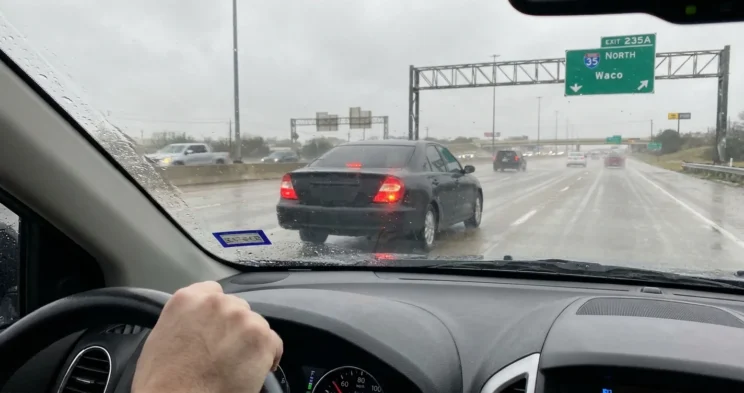
The basic speed law requires every Texas driver to choose a speed that is reasonable and prudent for the conditions. Texas Transportation Code §§ 545.351 and 545.352 explain this duty and how posted limits apply. A driver can follow the posted limit and still break the law when rain, fog, traffic, construction, or darkness calls for a slower speed.
What Does the Basic Speed Law Require in Texas?
Under § 545.351, drivers must respond to actual and potential hazards, including situations that call for a slower speed.
The Texas Department of Transportation uses the term “basic speed law” to describe these rules and identifies § 545.351 as its foundation.
The statute also calls for an appropriate reduced speed in specific situations:
- When approaching and crossing an intersection or railroad crossing
- When approaching and going around a curve
- When approaching the crest of a hill
- When traveling on a narrow or winding roadway
- When special hazards exist because of traffic, weather, or roadway conditions

Does Driving Below the Posted Speed Limit Satisfy the Law?
No. Driving at or below the posted limit does not by itself make your speed lawful. Under § 545.352, exceeding an applicable limit is prima facie evidence of an unreasonable and unlawful speed. Drivers must still slow down when a special hazard makes the posted speed unsafe.
What “Prima Facie” Means for Texas Speed Limits
“Prima facie” means the evidence creates a presumption unless someone shows otherwise. TxDOT explains that prima facie speed limits are presumed reasonable under normal conditions.
Texas speed limit laws require drivers to consider the posted limit and the hazards present. Exceeding the limit is evidence of unreasonable speed. Staying below it does not excuse unsafe driving for the conditions.
Follow the posted limit, and slow down further when conditions require it. The presumption does not give anyone permission to ignore signs.
Which Posted Speed Limit Applies?
The limit that applies is the one posted for that specific road segment, in that direction, at that time. Include any applicable temporary construction signs when checking the limit for a work zone.
When Can Conditions Call for a Slower Speed?
Conditions call for a slower speed when visibility, traffic, or roadway hazards make the chosen speed unreasonable. That can happen below the posted limit.
TxDOT’s tips for highway driving pair following posted speeds with adjusting to bad weather, congestion, and construction.
These hypothetical examples show how the rule can apply:
Rain. A driver on I-35 keeps the posted speed through a heavy downpour. Wet pavement and poor visibility can limit how quickly that driver can stop or steer safely.
Fog. A driver holds the limit into a fog bank. The fog hides a line of stopped cars ahead until it is too late to brake.
Traffic. Congestion on the LBJ Freeway leaves vehicles stopped or creeping ahead. Drivers need to reduce their speed and leave enough space to stop safely.
Construction. A work zone narrows the usable road and adds workers, equipment, and lane shifts. The safe speed may fall below even the temporary posted limit.
Darkness. On an unlit rural road at night, a driver can see only as far as the headlights reach. Hazards beyond that range appear with little warning.

These examples do not establish automatic fault or a fixed reduction in miles per hour. The question remains whether the chosen speed was reasonable and prudent for the hazard.
How Can Unsafe Speed Be Evaluated After a Crash?
Evidence that a driver’s speed was unreasonable can support an argument that the driver failed to use ordinary care. Fault in an injury claim also depends on showing how that conduct caused the collision and the injuries. A speeding ticket or a single speed reading does not settle liability on its own.
How Courts Treat the Basic Speed Law in Injury Cases
In Ochoa v. P.A.M. Cartage Carriers, LLC, a federal district court in San Antonio explained that § 545.351 reflects an ordinary-negligence standard. It rejected the argument that violating this section automatically establishes negligence, a legal theory called negligence per se.
For a car accident claim involving unsafe speed, the evidence needs to show the conditions, the driver’s speed, and why that speed was unsafe.
Evidence That Can Help Show Speed & Conditions
Building a picture of speed usually means combining several kinds of evidence. Each piece has limits, so investigators assess them together.
Event data recorder information. According to the National Highway Traffic Safety Administration, an event data recorder can capture brief crash-related data, including pre-crash speed and braking. Availability and content vary by vehicle. Investigators use this data alongside other evidence, and pre-crash speed can differ from impact speed.
Skid marks and crush damage. NHTSA’s Special Crash Investigations program documents tire marks, vehicle damage, impact location, and where vehicles came to rest. A qualified professional can assess these together to help reconstruct what happened. A photograph alone cannot establish an exact speed.
Weather records for the time and place. NOAA’s hourly weather observations include visibility, weather, and precipitation readings from weather stations. These records can be matched to the crash time, though conditions at a station may differ from conditions on the road.
Lighting evidence. Timestamped photos and video, witness accounts, and any available roadway lighting records can help show what the driver could see.
The applicable posted limit. Photos of permanent and temporary signs can help establish the limit for the exact segment, direction, and date.

The goal is to connect the conditions, the driver’s response, and the collision sequence. Evidence must support the claimed connection between unsafe speed, the crash, and your injuries.
Discuss a Texas Crash With Angel Reyes & Associates
If you were hurt in a crash and believe the other driver was going too fast for the conditions, you do not have to sort through the evidence alone.
Angel Reyes & Associates has served injured Texans for over 30 years and can talk with you about what happened.
Contact Angel Reyes & Associates for a free consultation to review your situation and your options.
Past results do not guarantee future outcomes.
Texas Speed Law FAQs
Can You Be Ticketed for Driving Too Slowly in Texas?
Yes. Under Texas Transportation Code § 545.363, drivers generally cannot travel so slowly that they impede normal and reasonable traffic movement, unless reduced speed is necessary for safe operation or required by law.
Does Texas Law Require Drivers to Slow Down for Emergency Vehicles?
Yes. Under Texas Transportation Code § 545.157, drivers approaching certain stopped emergency or service vehicles with activated warning lights must change lanes when possible or reduce their speed as required by the statute.
Can You Be Partially at Fault for a Speed-Related Accident in Texas?
Yes. Under Texas’s proportionate responsibility rules, multiple drivers can share fault for a collision, and an injured person’s compensation may be reduced by their percentage of responsibility. A person found more than 50% responsible generally cannot recover damages.
How Long Do You Have to File a Lawsuit After a Speed-Related Car Accident in Texas?
Under Texas Civil Practice and Remedies Code § 16.003, you must file most personal injury lawsuits within two years of the accident. Certain exceptions can change the deadline.
Does the Texas Basic Speed Law Apply to Rural Roads Without Speed Limit Signs?
Yes. Texas’s basic speed law applies even when no speed limit sign is visible, and statutory speed limits may still govern the roadway. Drivers must also comply with Texas Transportation Code § 545.051, which generally requires slower-moving vehicles to use the right-hand lane when applicable.
About the Authors

Spencer Browne
Writer
Spencer Browne is a partner at Angel Reyes & Associates and a Board Certified personal injury trial lawyer with nearly 100 jury trials across Texas. He focuses on car, truck, and wrongful death cases, with notable verdicts including a landmark win in the Choctaw Casino bus crash case. A recognized speaker and legal educator, Spencer is a member of the American Board of Trial Advocates and has been honored as a Texas Super Lawyer and one of D Magazine’s Best Lawyers in Dallas. He brings deep trial experience and relentless advocacy to every client he represents.

Kyle Nicolas
Editor
Kyle Nicolas is the Web Content & SEO Manager at Angel Reyes & Associates. He has more than 10 years of experience as a marketing co...

Spencer Browne
Reviewer
Spencer Browne is a partner at Angel Reyes & Associates and a Board Certified personal injury trial lawyer with nearly 100 jury trials a...