What Is the Crashworthiness Doctrine?


Every article on this site is researched by our internal team, reviewed for legal accuracy against current Texas law, and held to State Bar of Texas advertising standards before publication. We do not publish content that overstates outcomes or makes promises about results.
Learn more about our
editorial standards .
Key Takeaways
- Texas law may hold a manufacturer responsible for injuries made worse by a defective vehicle design.
- You generally must show that the defective design caused the additional injury, even though it did not cause the crash.
- Preserve the wrecked vehicle as early as possible because biomechanical and design evidence may depend on examining it before it is repaired, altered, or destroyed.
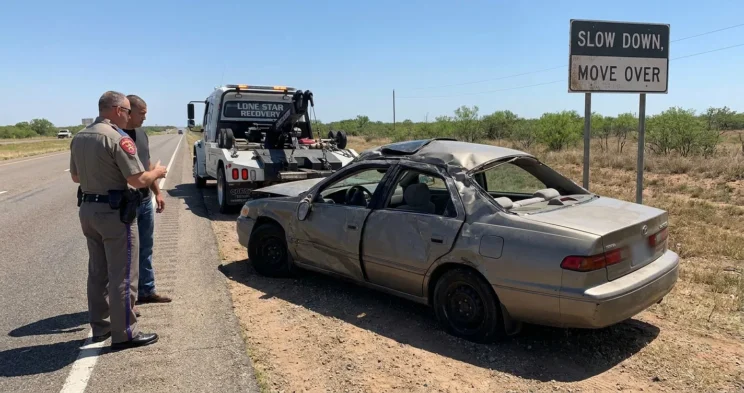
Another driver runs a red light on the LBJ Freeway and slams into your car. You expected the collision to cause injuries, but you did not expect that the roof would collapse into the passenger compartment, the seat back would give way, or the airbag would fail to deploy.
As you begin to understand how badly you were hurt, you realize that the other driver’s actions may not explain everything that happened to you. Some of your injuries may have resulted from the way your vehicle performed during the crash.
When a vehicle’s design or safety features make your injuries worse than they otherwise would have been, Texas law may allow you to pursue a claim against the manufacturer under the crashworthiness doctrine. The manufacturer may be responsible for your additional injuries, even if it did not cause the original collision.
Determining whether that doctrine applies requires looking closely at the crash, the vehicle’s design, and how the alleged defect caused your additional injuries.
What Is an Enhanced Injury in a Car Crash?

The crashworthiness doctrine can make a vehicle manufacturer responsible for the part of your injury that was caused or enhanced by a defective vehicle design, separate from the injuries caused by the crash itself. Lawyers and engineers call this added harm an “enhanced injury,” and a claim based on this is called an “enhanced injury claim.”
Engineers often describe a crash as happening in two stages:
- The first collision is when the vehicle hits another vehicle, a guardrail, or the pavement.
- The second collision is when the person inside hits the vehicle’s interior or is thrown from the vehicle.
That second collision is when crashworthiness becomes important. A roof that collapses during a rollover, a seat back that fails, a door that opens during impact, or a restraint system that allows you to hit the dashboard can all raise questions about the vehicle’s design, rather than how the crash happened.
A crashworthiness claim may arise when an investigation shows that the vehicle’s design made the injuries worse.
What Makes a Crashworthiness Claim Different?

Texas treats a crashworthiness case as a regular strict product liability case, not as a separate claim with different requirements.
The key difference is causation. You do not have to prove that the defect caused the crash.
Instead, you must show that the defective design caused the additional injury. For a design defect claim, you must also prove that a safer alternative design existed and could have reduced or prevented the risk.
Baseline Injury vs. Enhanced Injury
Texas requires you to prove that the defective design caused your enhanced injury. The jury then decides how much of your injury resulted from the defect compared with the crash itself.
Every enhanced injury claim can involve two different injuries in the same medical records:
- Baseline injury: This is the harm that the crash would have caused, even if the vehicle had been properly designed. The person who caused the crash is generally responsible for this type of injury.
- Enhanced injury: This is the additional harm caused by the vehicle’s defective design, which may make the manufacturer responsible for that added harm.
When multiple causes contribute to an injury, the jury may assign responsibility to one or more of them.
The division of responsibility is governed by Chapter 33 of the Texas Civil Practice and Remedies Code, which is Texas’s proportionate responsibility law. Under Section 33.003, the jury assigns a percentage of responsibility to each person or product that contributed to the harm.
Your own conduct may also affect how responsibility is divided. Under Section 33.001, a claimant who is more than 50% responsible for the harm caused by the crash generally cannot recover any damages. This means the manufacturer, the driver who caused the crash, and possibly the claimant may each have a percentage of responsibility assigned to them.
In an enhanced injury case, the parties must present evidence about how responsibility should be divided, and the jury decides the percentages based on that evidence.
Three Types of Evidence in an Enhanced Injury Claim

Three types of evidence can be especially important in an enhanced injury claim:
- Biomechanical analysis: Biomechanical experts examine the forces involved in the crash and how your body moved inside the vehicle. They may use crash-test data, vehicle damage, medical records, and other evidence to explain how the crash caused or enhanced an injury. This evidence helps explain how the injury occurred and whether the vehicle’s design contributed to it.
- Comparing the vehicle against crash tests and safety standards: Federal Motor Vehicle Safety Standards set the minimum safety requirements that a vehicle must meet before it can be sold. Meeting a federal safety standard does not automatically dismiss a design defect claim. However, in some circumstances, Texas law gives the manufacturer a presumption that it is not liable. Engineers may compare the vehicle’s actual and crash-test performance with alternative designs that could have reduced vehicle intrusion or the forces placed on the occupant.
- Vehicle preservation: The wrecked vehicle is often the most important evidence in an enhanced injury case. Its structure, seats, restraints, door latches, and roof can help show how the vehicle performed during the crash. It is important to preserve the vehicle before it is repaired, altered, sold for salvage, or destroyed because changes to its condition may cause important evidence to be lost.
Talk With Angel Reyes & Associates About Your Enhanced Injury Claim in Texas
In an enhanced injury claim, important evidence can disappear quickly. A vehicle may be repaired or sent to salvage, and crash data may become harder to obtain.
Angel Reyes & Associates has guided injured Texans through complex injury claims for over 30 years, and we have recovered more than $1 billion for our clients. Our investigators and accident reconstruction specialists can examine the evidence and help determine what happened. We handle cases on a contingency basis, which means you pay no fees unless we win your case.
Contact Angel Reyes & Associates for a free consultation today to discuss the evidence in your case.
Past results do not guarantee future outcomes.
Crashworthiness Doctrine FAQs
Can an airbag problem lead to a crashworthiness claim?
Yes. If an airbag failed to deploy, deployed improperly, or otherwise did not perform as it should, the circumstances may raise questions about whether a defect contributed to an occupant’s injuries. An investigation can help determine what happened.
Can a seatbelt problem lead to a crashworthiness claim?
Possibly. A seatbelt or restraint system may become relevant if it failed to protect an occupant as expected during a collision. The specific failure and its connection to the injury would need to be established with evidence.
What happens if the vehicle was recalled before my accident?
A recall may provide useful information about a potential safety problem, but a recall by itself does not prove that the recalled problem caused your particular injuries. The circumstances of the accident and the condition of the vehicle would still need to be examined.
About the Authors

Angel Reyes
Writer
Angel L. Reyes, III is the Founder and Managing Partner of Angel Reyes & Associates. A nationally recognized trial attorney and business leader, Angel founded the firm in 1993, which has gone on to help over 70,000 injury victims recover more than $1 billion. Named to the Texas Super Lawyers list annually since 2008, Angel brings Wall Street experience, Ivy League education, and a deep commitment to client advocacy. He is a frequent legal commentator and published author with extensive contributions to legal scholarship, trial strategy, and consumer protection.

Graham Griffin
Editor
Graham Griffin is the Web & Content Manager at Angel Reyes & Associates, where he oversees content strategy, AI-powered workflows, a...

Angel Reyes
Reviewer
Angel L. Reyes, III is the Founder and Managing Partner of Angel Reyes & Associates. A nationally recognized trial attorney and business...