When Both Drivers Claim the Other Is at Fault in Texas


Every article on this site is researched by our internal team, reviewed for legal accuracy against current Texas law, and held to State Bar of Texas advertising standards before publication. We do not publish content that overstates outcomes or makes promises about results.
Learn more about our
editorial standards .
Key Takeaways
- Texas uses proportionate responsibility rules that reduce or bar recovery based on your percentage of fault in a crash.
- Evidence like photos, damage patterns, and witness statements often matters more than competing driver statements in disputed-liability cases.
- You’re generally not required to give a recorded statement to the other driver’s insurer, and doing so can be used against you.
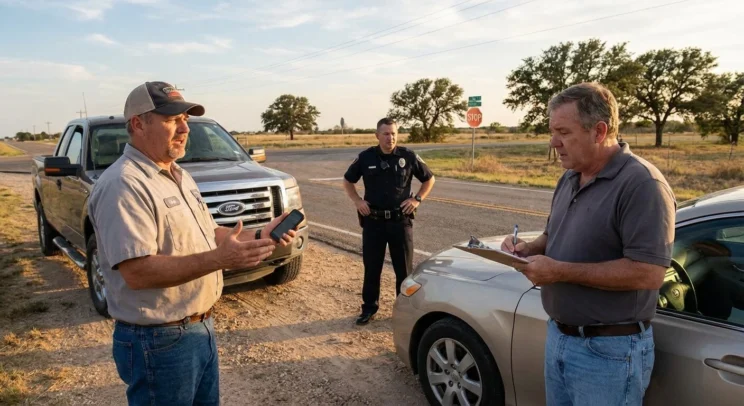
You were driving home on I-35E through Dallas when another car merged into your lane and caused a collision. Now you’re dealing with vehicle damage, a sore neck, and an insurance adjuster who says the other driver blames you for the crash.
Both of you are pointing fingers and claiming the other driver is at fault. How does this get sorted out when it’s your word against theirs?
This situation is more common than you might think. Disputed-liability crashes happen daily on busy corridors, like I-635 in DFW or Houston Street in San Antonio (especially after Spurs games). When both drivers blame each other, the path to fair compensation becomes more complicated.
Understanding how Texas handles these disputes can help you protect your claim.
Why “Word vs. Word” Crashes Turn Into Insurance Disputes
Fault disputes arise frequently in two-vehicle crashes. This is especially true when there are no independent witnesses or clear video evidence.
Each insurance company has a financial incentive to minimize payouts. The other driver’s insurer doesn’t represent you. Their goal is to resolve the claim for the lowest possible amount. Even when the facts feel obvious to you, the adjuster may push back or assign you partial blame.
There’s an important difference between what the other driver says happened and what can actually be proven. Statements alone rarely settle a dispute, evidence does.
Multi-vehicle situations can complicate matters further. A rear-end chain reaction on 288 in Houston or a lane-change collision in El Paso can involve multiple impact points. Sorting out who caused what becomes harder when several vehicles and drivers are involved.
How Fault Is Determined in Texas
Texas uses a system called proportionate responsibility. To summarize the law briefly, Texas Civil Practice and Remedies Code § 33.001 says your ability to recover compensation depends on your percentage of fault.
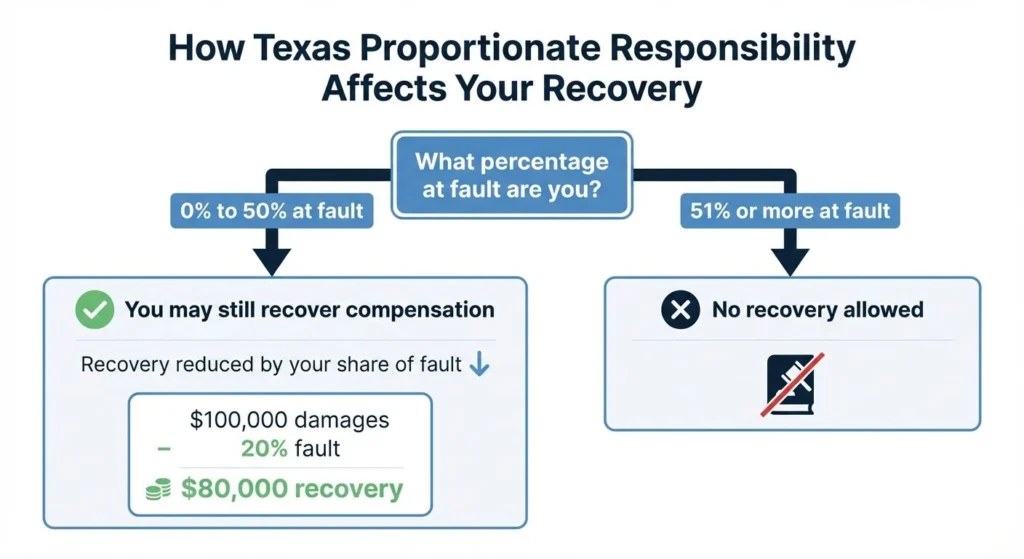
If you are 50% or less at fault, you can pursue compensation, but your compensation is reduced by your percentage of responsibility. For example, if your damages total $100,000 and you’re found 20% at fault, your recovery would be reduced to $80,000. If you’re found 51% at fault, you recover nothing.
If you are more than 50% at fault, you are barred from recovery. Understanding this rule is critical when the other driver is blaming you.
Who Decides Fault During a Claim vs. a Lawsuit?
Insurance adjusters make fault decisions for their company during the claims process. They review evidence, assign percentages, and decide whether to accept or deny liability. Their determination affects settlement offers but isn’t legally binding.
If settlement negotiations fail, a judge or jury becomes the decision-maker. Filing a lawsuit shifts the fault determination to the legal system. A car accident attorney can help you understand when litigation makes sense.
The Evidence Insurers Examine When Both Drivers Blame Each Other
In disputed-liability cases, evidence quality often determines the outcome. Adjusters look at multiple sources to piece together what happened.
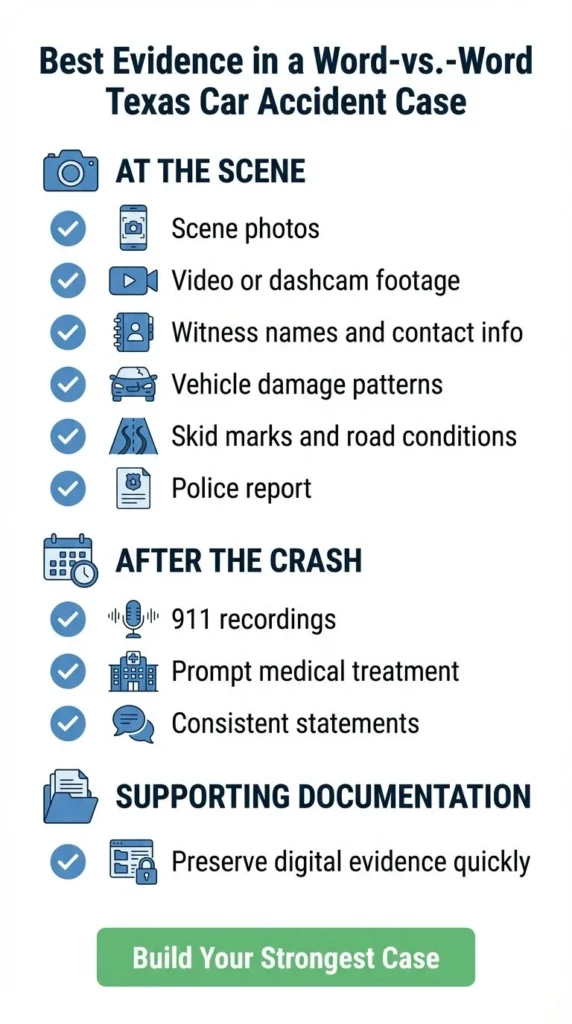
Key evidence categories include:
- Photos and video from the scene
- Vehicle damage patterns
- Skid marks and roadway conditions
- Witness contact information
- Dashcam or surveillance footage
- 911 call recordings
- Medical records and treatment timeline
Your injury documentation is also important to corroborate your claim. Seeking medical care promptly and following through with treatment creates a record that supports your side of the story. Gaps in care or delayed treatment can raise questions about the severity of your injuries.
A police report can be helpful evidence, but this report isn’t always the final word on fault. Adjusters and courts can reach different conclusions.
Common weak points in word-vs-word cases include having no witnesses, waiting too long to see a doctor, and making inconsistent statements. Avoiding these pitfalls strengthens your position. For a detailed guide, see our article on what information to collect after a car accident.
Why Vehicle Damage and Scene Photos Matter
Crash mechanics often tell a clearer story than either driver’s statement. The location and type of damage can support or contradict one party’s version of events.
This is why it’s important to photograph everything: all angles of both vehicles, close-ups of damage, the roadway, lane markings, traffic signs, and any debris. If the crash happened at an intersection in Lower Greenville or on Preston Road, capture the traffic signals and signage.
Damage patterns can quickly resolve common disputes. For example, a side-swipe pattern suggests a lane-change collision, while rear-end damage points to a following-too-closely situation.
It’s also worthwhile to try to obtain any evidence you can from surveillance cameras or other recording devices in the area that may have captured what happened. That being said, digital evidence disappears quickly. Dashcam footage can be overwritten within hours. Nearby business surveillance may be deleted within days. Act fast to preserve video evidence whenever possible.
If the Other Driver’s Insurer Denies Liability
A denied claim isn’t always the final answer; it’s often the beginning of negotiation.
You can request the specific basis for the denial. Submit a packet that includes photos, the police report, witness statements, and medical records. Correct any factual errors in writing. Insurance companies will usually reconsider their initial decision when presented with evidence.
While liability is disputed, you may be able to use your own coverages. Personal Injury Protection (PIP) or Medical Payments coverage can help with immediate medical bills. Uninsured/Underinsured Motorist coverage may apply in some situations. Review your policy or consult with an attorney if coverage questions arise.
When significant injuries or damages are involved, escalation may make sense. This could mean requesting a supervisor review, sending a formal demand with documentation, or involving an attorney.
Deadlines in Disputed-Fault Cases
Fault disputes often delay settlements. Delaying your own documentation can weaken your position.
Texas generally allows two years to file a personal injury lawsuit after a car accident under Texas Civil Practice and Remedies Code § 16.003. Missing this deadline can bar your claim entirely.
When to Talk to a Texas Car Accident Lawyer
Certain situations call for legal guidance. Consider consulting an attorney if:
- You have significant injuries or high medical bills
- The other insurer denies liability or blames you
- The police report contains errors or is inconclusive
- Multiple vehicles or commercial trucks are involved
- You’re unsure about your own coverage options
An attorney can investigate the crash, coordinate medical documentation, handle adjuster communications, and assess your comparative fault exposure. If you’re dealing with a disputed-liability situation in Dallas, Travis, or Harris County, local knowledge matters.
At Angel Reyes & Associates, we’ve spent over 30 years helping Texas drivers navigate insurance disputes. Our team includes investigators and reconstruction specialists who can help build the evidence needed for your case. We have helped more than 70,000 Texans pursue justice, and we would love to help you too. If you’re facing a word-vs-word dispute after a crash, reach out to us today to discuss your options with a free, no-obligation consultation.
Disputed Liability FAQs
Can I use my own collision insurance when the other driver’s insurer denies liability in Texas?
Yes. The Texas Department of Insurance says you can file through your own carrier if the other insurer refuses to pay, and collision coverage can pay for repairs subject to your deductible; TDI also notes your insurer may later seek reimbursement from the at-fault carrier through subrogation.
Can the Texas Department of Insurance help when the other driver’s insurer says I’m at fault?
Only in a limited way. TDI does not make fault assessments and usually cannot resolve a complaint that another person’s insurer refuses to accept liability, though a complaint can still force a written response from the company.
What if the other driver refuses to exchange insurance information after a Texas crash?
Under Texas Transportation Code § 550.023, a driver in a crash involving injury or damage must provide identifying and liability-insurance information and show a driver’s license if requested and available. If the other driver refuses or leaves, call law enforcement and document whatever identifying details you can.
Can I get a rental car while fault is still being disputed?
Sometimes. If the other driver is at fault, their insurer should pay for a rental car, but if liability is still contested you may need to use rental coverage on your own policy, if you bought it.
About the Authors

Angel Reyes
Writer
Angel L. Reyes, III is the Founder and Managing Partner of Angel Reyes & Associates. A nationally recognized trial attorney and business leader, Angel has helped over 70,000 injury victims recover more than $1 billion since founding the firm in 1993. Named to the Texas Super Lawyers list annually since 2008, Angel brings Wall Street experience, Ivy League education, and a deep commitment to client advocacy. He is a frequent legal commentator and published author with extensive contributions to legal scholarship, trial strategy, and consumer protection.

Graham Griffin
Editor
Graham Griffin is the Web & Content Manager at Angel Reyes & Associates, where he oversees content strategy, AI-powered workflows, a...

Spencer Browne
Reviewer
Spencer Browne is a partner at Angel Reyes & Associates and a Board Certified personal injury trial lawyer with nearly 100 jury trials a...