Crushing & Compression Injuries from Truck Accidents in Texas


Every article on this site is researched by our internal team, reviewed for legal accuracy against current Texas law, and held to State Bar of Texas advertising standards before publication. We do not publish content that overstates outcomes or makes promises about results.
Learn more about our
editorial standards .
Key Takeaways
- Crush syndrome and compartment syndrome can take days to fully appear.
- Texas law generally gives you two years to file a truck injury claim.
- Drivers, carriers, and manufacturers can all share fault for a crush injury.
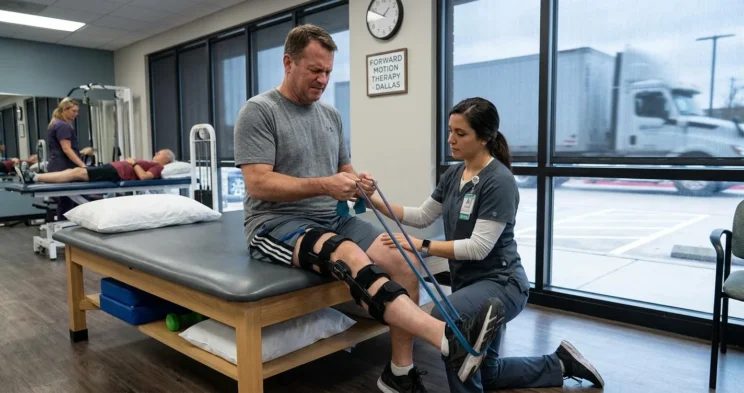
A truck crash can crush or compress your body in an instant, whether on a Dallas freeway or a rural Texas highway. If this has happened to you or a family member, you likely face surgeries, mounting bills, and uncertainty ahead. Understanding how these crashes cause this damage is the first step toward protecting your claim.
When Truck Crashes Trap & Crush Your Body
In a Texas truck accident, a truck weighing up to 80,000 pounds can concentrate force on your body. That force often goes beyond what bone and tissue can withstand. Busy corridors like I-35 and I-45 see frequent multi-vehicle wrecks that cause these common truck accident injuries.
How Crushing Injuries Develop
Crushing injuries cause immediate trauma, such as severe fractures, muscle and tissue damage, internal bleeding, and organ damage. They happen when victims become trapped under trucks, cargo, or debris.
Compression Injuries Explained
Compression injuries involve sustained pressure that damages nerves, blood vessels, and soft tissue, rather than the sudden trauma of a crushing injury. Rollovers, underride crashes, and cargo spills often cause both together.
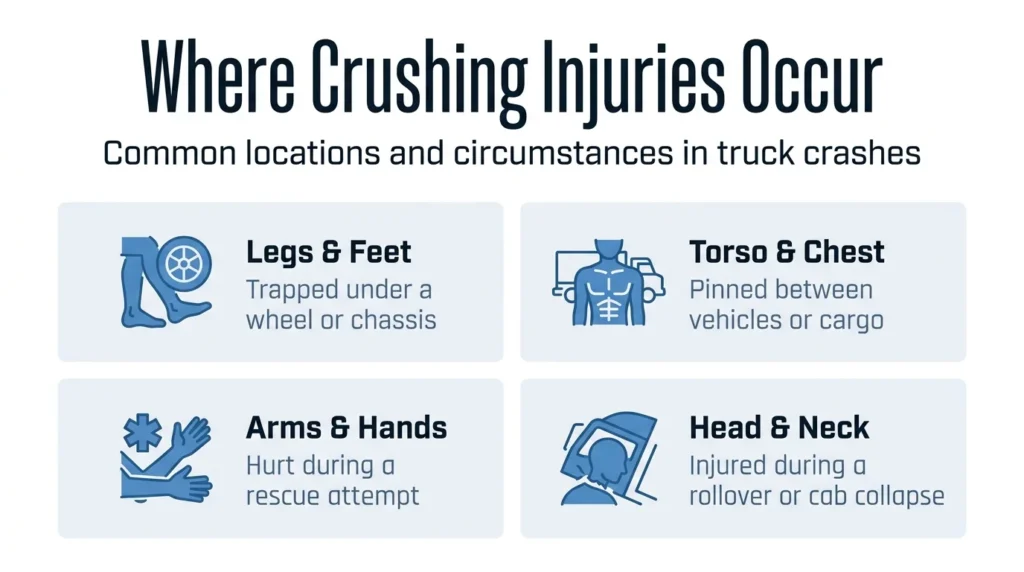
Common Locations & Circumstances
Crushing and compression injuries commonly affect:
- Legs and feet trapped under a wheel or chassis
- Torso and chest pinned between vehicles or cargo
- Arms and hands hurt during a rescue attempt
- Head and neck during a rollover or cab collapse
If you feel numbness, tingling, or a loss of sensation after a crash, seek medical care right away, even without a visible injury.
Why These Injuries Change Your Life Forever
The damage from a crushing or compression injury often outlasts the hospital stay. Nerve damage, amputation, chronic pain, and mental health struggles can follow. Many people who have sustained such injuries describe this stage as the hardest part of recovery.
Permanent Nerve Damage & Loss of Function
Nerve damage can cause permanent numbness, loss of motor function, chronic pain, and paralysis, and surgery often cannot repair it.
Life-Threatening Medical Complications
Crush syndrome develops when damaged muscle releases toxins into your bloodstream, which can cause kidney failure, dangerous electrolyte imbalances, and shock. Compartment syndrome develops when swelling inside a muscle compartment cuts off blood flow, which can require emergency surgery or lead to amputation.
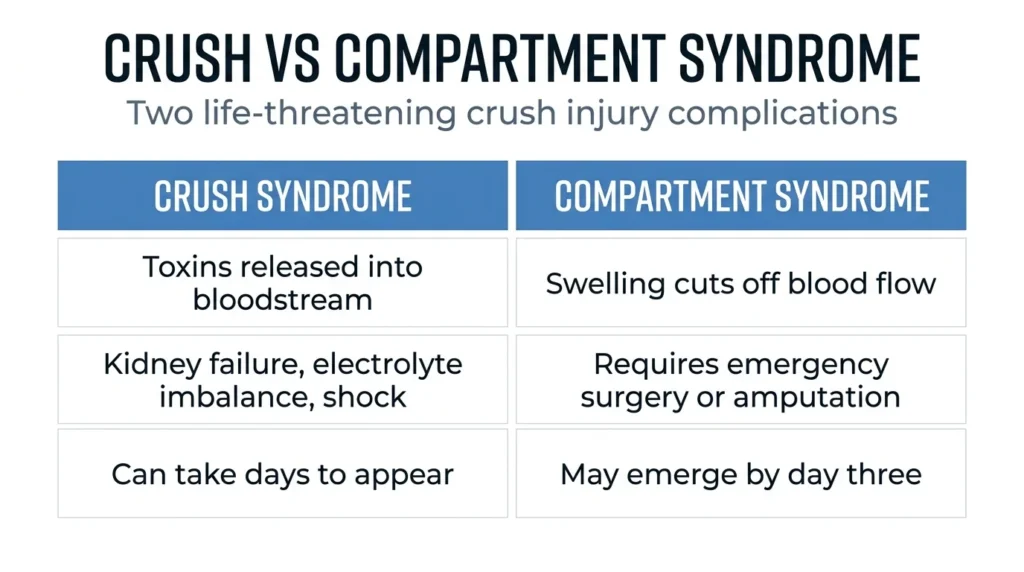
Both conditions can take hours, or even several days, to appear after the initial injury. Peer-reviewed case reports document this delayed onset, and the same CDC guidance on crush injury and crush syndrome warns that related complications like kidney failure can also take time to fully emerge.
Peer-reviewed case reporting has documented compartment syndrome symptoms emerging as late as day three after the original trauma.
That is why doctors recommend continued monitoring after discharge, and why your claim should account for complications not yet apparent.
Amputation & Permanent Disability
Amputation becomes necessary when crushing forces damage a body part beyond repair, when circulation cannot be restored, or infection sets in.
Chronic Pain & Long-Term Suffering
Chronic pain develops when nerve damage sends persistent pain signals long after healing, often requiring ongoing pain management and therapy.
Mental Health & Psychological Impact
Severe physical injuries often bring post-traumatic stress, depression tied to permanent disability, anxiety about future medical problems, and social isolation.
Who’s Really at Fault When You Get Crushed?
Crushing and compression injury crashes often involve more than one responsible party. Federal regulations set specific duties for drivers, carriers, and contractors in truck accident cases.
Truck Driver Responsibility
Drivers are responsible for negligent driving that causes rollovers, excess speed, and unsecured cargo that shifts and crushes victims.
Trucking Company Liability
Trucking companies face liability for negligent hiring, inadequate training, poor maintenance, and scheduling pressure that pushes unsafe driving.
Cargo Loading & Warehouse Contractor Responsibility
Cargo loading companies and warehouse contractors can share responsibility when they improperly secure cargo, overload a vehicle, or use inadequate restraints.
Vehicle & Equipment Manufacturer Liability
Manufacturers become responsible for defective safety equipment, inadequate truck design, faulty cargo restraint systems, or missing safety warnings.
Maintenance & Service Provider Responsibility
Maintenance contractors can contribute to crushing injuries by failing to maintain brakes, ignoring known defects, or skipping required safety inspections.
Third-Party Logistics & Coordination
Logistics companies sometimes share responsibility for unrealistic delivery schedules, failing to ensure proper cargo securement, or hiring carriers with poor safety records.
Evidence that supports your claim often includes:
- Medical records documenting the extent of your injuries
- Accident reconstruction analysis showing how the crash happened
- Cargo manifests and securement documentation
- Truck maintenance and safety inspection records
Getting Every Dollar You’re Owed After These Injuries
Crushing and compression injuries often justify substantial compensation because they affect both immediate costs and lifelong medical needs.
Medical Expenses & Treatment Costs
Medical expenses typically include emergency trauma care, reconstructive surgeries, rehabilitation, ongoing pain management, prosthetics, and home modifications.
Lost Income & Earning Capacity
Lost income compensation covers more than missed paychecks during recovery. Permanent nerve damage, amputation, and reduced mobility from a crush or compression injury can limit the work you can safely do. This limitation can last for the rest of your life.
That long-term vocational limitation, not just the weeks you missed on the job, drives a reduced earning capacity claim. Keep pay stubs, employer correspondence, and notes on work limitations to help document it.
Pain & Suffering Damages
Pain and suffering damages address severe physical discomfort, emotional trauma from permanent disability, and reduced quality of life from chronic pain. Texas law does not cap these damages in most cases.
Future Medical Care & Lifetime Needs
Future medical care costs require careful projection by medical experts, covering therapy, medication, monitoring for complications, and any future surgery.
Disability & Disfigurement Compensation
Disability and disfigurement compensation addresses permanent changes that affect daily living, including scarring, lost body parts, and reduced mobility or function.
Wrongful Death Benefits
Wrongful death benefits help families when a crushing injury proves fatal, covering funeral costs, lost future support, lost companionship, and mental anguish.
Time Limits to File Your Claim
Texas law sets firm deadlines for filing a crushing or compression injury claim, and missing one can end your right to compensation.

Texas Statute of Limitations
Under Texas Civil Practice and Remedies Code Section 16.003, you generally have two years from the accident date to file a personal injury claim. This applies regardless of when you fully understand the extent of your injuries.
Discovery rule exceptions can rarely extend this deadline when an injury was not immediately apparent, though crushing injuries are usually obvious right after a crash.
Special Considerations for Minors & Wrongful Death
Under Section 16.001 of the same code, a minor’s deadline tolls until their 18th birthday, so most minors have until age 20 to file. This is one of several exceptions to the standard statute of limitations in Texas.
A wrongful death claim carries its own two-year deadline, running from the date of death rather than
the accident, if death happens later.
Evidence Preservation Urgency
Evidence gets harder to find as time passes. Trucking companies routinely destroy maintenance records, witness memories fade, and physical evidence disappears from the scene.
Contact an attorney even while your medical treatment is ongoing so legal investigation can start right away. Crushing and compression injury cases demand specialized legal work due to their medical complexity and the number of parties involved.
Immediate Case Development & Evidence Preservation
Immediate case development means coordinating medical experts, preserving accident evidence, and gathering truck records before they disappear.
This early work does more than support your initial treatment claim. Crush and compression injuries often require revision surgeries months or years later. Early evidence preservation helps build a case that anticipates those future surgeries.
Medical Expert Coordination
Medical expert coordination means working with orthopedic surgeons, neurologists, rehabilitation specialists, and pain doctors to document injuries and project future needs.
Life Care Planning & Future Needs Assessment
Life care planning means working with medical professionals to project lifetime care costs, equipment needs, home modifications, and ongoing treatment.
Complex Damage Calculations & Economic Analysis
Complex damage calculations mean working with economists to determine lost earning capacity, project future medical costs, and account for disability-related expenses.
Multi-Party Litigation Management
Multi-party litigation becomes necessary when drivers, trucking companies, cargo loaders, manufacturers, and maintenance contractors all share responsibility.
What to Do After a Crushing Injury?
The right steps after a crushing or compression injury protect both your health and your legal claim.
Immediate Medical Care & Emergency Response
Get emergency medical care right away. Crushing and compression injuries can cause internal bleeding, organ damage, and circulation problems not always obvious right away.
Follow All Medical Recommendations
Follow every medical recommendation, including specialist appointments, rehabilitation, and medication schedules, and keep records of how treatment affects your daily life.
Document Your Injuries & Recovery
Document your injuries and recovery thoroughly. Photograph visible injuries as they change, keep a pain and symptom diary, and record how the injury affects your daily activities.
This record does more than support your current claim. Crush and compression injuries often require a future surgery, and a documented history helps connect that need back to the original crash.
Protect Your Legal Rights
Avoid discussing your injuries with an insurance adjuster, who may try to minimize a crushing injury’s severity. If one contacts you, keep a written log instead of responding on the spot.
Seek Immediate Legal Help
Crushing injury cases require specialized knowledge of medical issues, complex damage calculations, and multi-party investigation. Do not try to handle a claim like this alone.
Texas crushing injury truck accident checklist:
- Get immediate emergency medical treatment
- Follow all medical treatment recommendations completely
- Document injury progression and daily impact thoroughly
- Avoid discussing case details with insurance adjusters
- Contact an attorney for specialized legal guidance
Work with an Experienced Attorney
Angel Reyes & Associates has represented Texas truck accident victims for more than 30 years, including clients facing crushing and compression injuries that reshape their entire future. We coordinate medical experts, calculate lifetime damages, and pursue every responsible party.
You do not pay a fee unless we win your case, so you can focus on treatment and recovery while we handle the legal work.
If you or a loved one is dealing with a crushing or compression injury from a truck accident, contact us today for a free consultation.
Past results do not guarantee future outcomes.
Truck Accident Crush Injury FAQs
What role does rehabilitation play after a severe truck accident injury?
Rehabilitation can help victims improve strength, mobility, coordination, and independence while addressing limitations caused by serious damage to bones, muscles, or nerves.
Does permanent disability increase the value of a Texas truck accident claim?
Permanent disability can significantly affect damages because it may create ongoing medical expenses, reduce earning capacity, and affect a person’s ability to perform everyday activities.
What happens if a truck accident causes an injury that requires a prosthetic limb?
A prosthetic limb may become part of the victim’s long-term medical and rehabilitation needs, along with related expenses such as fitting, maintenance, replacement, and therapy.
About the Authors

Alex Ivanov
Writer
Alex Ivanov is a personal injury attorney at Angel Reyes & Associates, focused on car, truck, and motorcycle accident cases. Licensed in Texas and multiple federal districts, Alex brings international legal experience and a global education to his practice. He earned his LL.M. from Texas A&M University School of Law after graduating from Belarussian State University in 2016. Alex is fluent in Russian, English, Ukrainian, and Belarussian, and is recognized by multiple national trial lawyer associations for his results and leadership under 40.

Kyle Nicolas
Editor
Kyle Nicolas is the Web Content & SEO Manager at Angel Reyes & Associates. He has more than 10 years of experience as a marketing co...

Angel Reyes
Reviewer
Angel L. Reyes, III is the Founder and Managing Partner of Angel Reyes & Associates. A nationally recognized trial attorney and business...