How to Choose a Motorcycle Accident Lawyer in Texas


Every article on this site is researched by our internal team, reviewed for legal accuracy against current Texas law, and held to State Bar of Texas advertising standards before publication. We do not publish content that overstates outcomes or makes promises about results.
Learn more about our
editorial standards .
Key Takeaways
- Trial experience is what gives your attorney real settlement leverage with the insurer.
- Anti-biker bias from insurers is real, and your attorney needs a documented strategy to push back.
- Ask about fee structure, trial record, and bias strategy before signing with any motorcycle attorney.
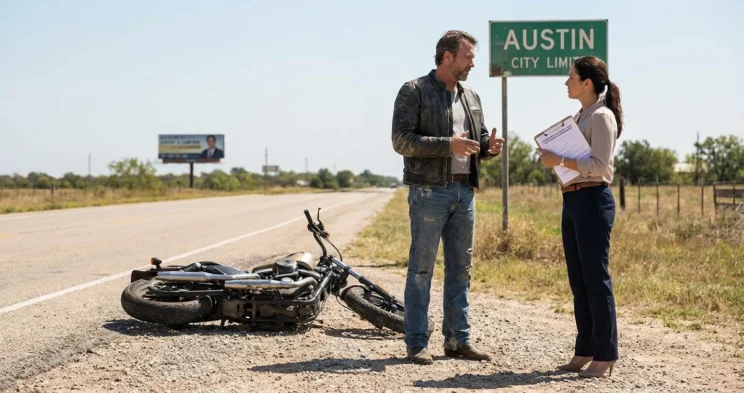
Your motorcycle is totaled, you are dealing with injuries, and someone may already be asking you to give a recorded statement. Before you do anything, get the right legal representation. Choosing the wrong attorney after a motorcycle crash in Texas can cost you as much as the crash itself.
What to Look for in an Attorney
Not every personal injury attorney is equipped to handle a motorcycle accident case. Motorcycle crashes involve distinct injury patterns, specific insurance company tactics, and a bias problem that a general lawyer may not anticipate or know about. An attorney who handles bike cases occasionally is not the same as one who handles them regularly.
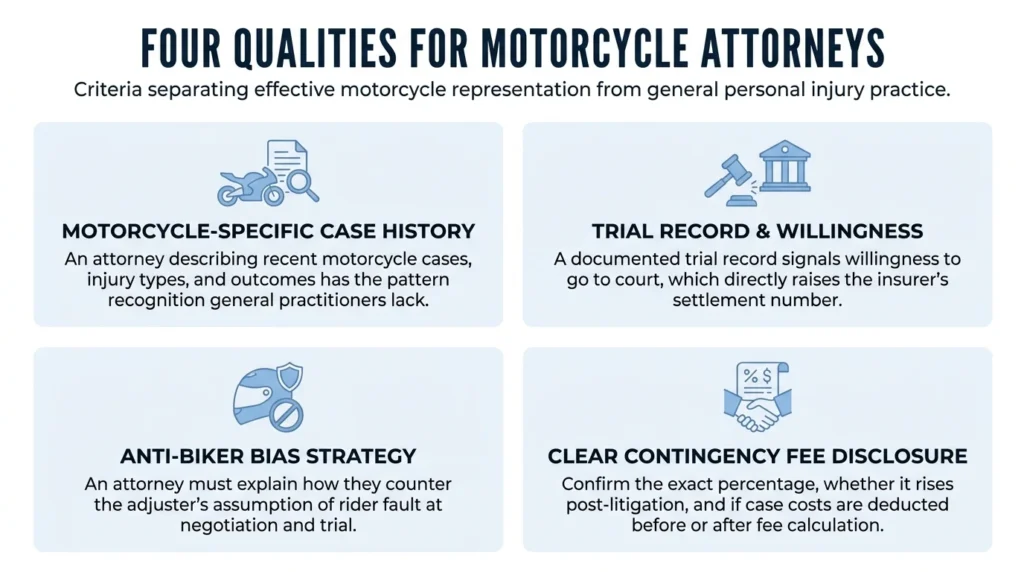
- Motorcycle-specific case experience. Look for attorneys who can describe recent motorcycle cases, the injuries involved, and how those claims were resolved. Experience with bike crashes means familiarity with how these cases are valued for compensation and how insurers treat them.
- Trial experience and willingness to litigate. Insurance companies track opposing counsel. An attorney with a documented trial record signals that they will go to court if an insurer refuses to offer fair value. An attorney who never tries cases has no leverage.
- Contingency fee structure. A Texas motorcycle attorney should work on contingency: no fee unless they recover compensation for you. Before signing anything, confirm the exact percentage and whether case costs are deducted before or after their fee is calculated. That detail directly affects your net compensation.
- Communication and accessibility. Your attorney should be reachable when you have questions about your own case. If updates are hard to get early in the process, that pattern typically does not improve.
For a clearer picture of what the settlement process looks like once you have representation, learn about how Texas motorcycle accident settlements work.
The Anti-Biker Bias Problem
Insurance adjusters approach motorcycle cases with an assumption many riders do not expect: that the rider was at fault. That assumption is not based on the facts of your crash. It is a baseline posture that affects initial settlement offers and, in cases that go to trial, can shape how jurors interpret the evidence.
A qualified attorney anticipates this and builds a strategy around it. They gather evidence that documents exactly what the other driver did wrong. They prepare to counter the assumption that riders are inherently reckless. That preparation is part of what separates an adequate settlement offer from a fair one.
When you consult with any attorney, ask them directly how they handle the anti-motorcycle bias problem. If they do not understand the question, or dismiss it as not relevant to your situation, that tells you something important about their preparation.
For context on how motorcycle crash patterns play out in Texas, learn about Texas motorcycle accident statistics and what they mean for riders.
Red Flags to Avoid When Hiring a Lawyer Following a Motorcycle Collision
Some attorney arrangements are structured in ways that benefit the firm more than the client. Knowing what to watch for helps you avoid signing with the wrong one.
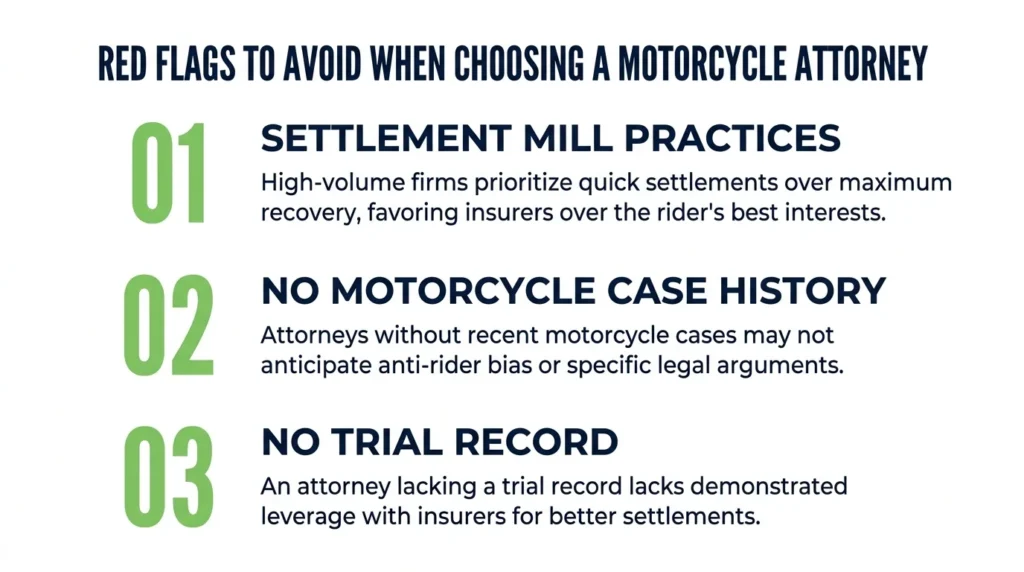
- Settlement mill practices. High-volume firms structured around quick settlements may prioritize efficiency over maximum recovery. Volume and speed favor the insurer, not the rider.
- Vague or incomplete fee disclosure. A legitimate attorney discloses their exact fee percentage and explains whether costs come out before or after their cut. Reluctance to answer those questions directly is a warning sign.
- No motorcycle case history. An attorney who cannot describe recent motorcycle cases they have handled may not have the experience to anticipate how these claims work. Accepting your case is not the same as being prepared to manage it well.
- No trial record. An attorney who has never taken a case to verdict has no demonstrated leverage with insurers. Ask specifically: when was the last time you tried a case in court?
- Poor communication from the start. If the attorney is hard to reach during the consultation phase, expect the same difficulty through the life of your case. An attorney who sends initial calls to non-attorney staff without explanation is showing you how they operate.
Questions to Ask During a Free Consultation
A free consultation is your opportunity to evaluate the attorney as much as they evaluate your case. These questions give you specific instead of vague answers.
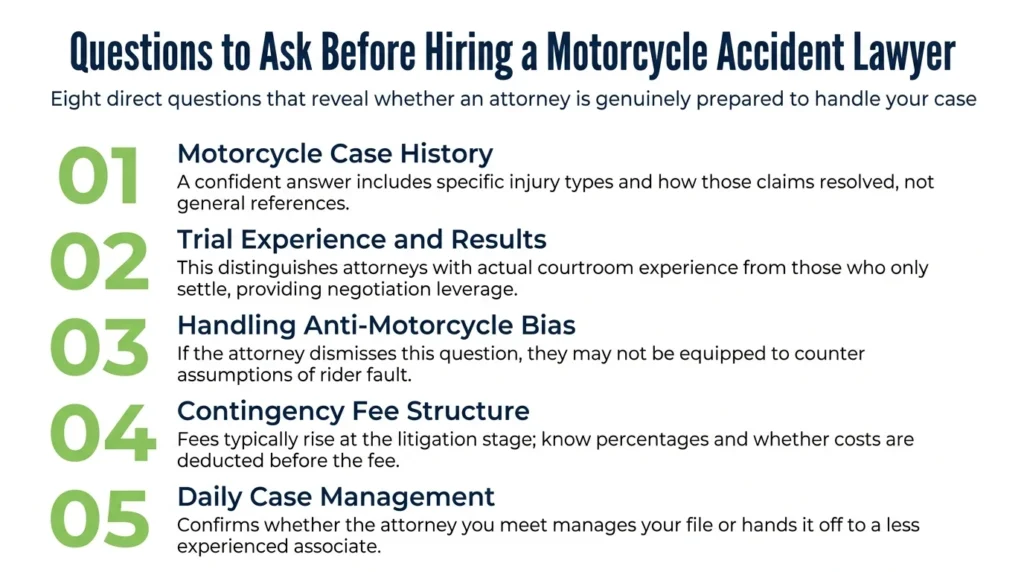
- How many motorcycle accident cases have you handled in the last two years, and what were the outcomes? A confident answer includes specific injury types and how those claims were resolved.
- Have you taken a motorcycle accident case to trial, and what was the result? This tells you whether they have actual courtroom experience or only settlement experience.
- What percentage of your cases settle versus go to trial? High settlement rates are not always positive. They can indicate the firm avoids trial regardless of case value.
- How do you handle the anti-motorcycle bias issue with insurers and juries? An attorney who does not understand the question may not be equipped to counter it.
- What is your contingency fee, and are costs deducted before or after your percentage is applied? The answer affects your net recovery more than most riders realize.
- Who will actually be handling my case day-to-day? You want to know if the attorney you are meeting is the one managing your file.
- How often will I receive case updates, and what is the best way to reach you? The answer tells you what communication to expect. Hold them to it.
- Do you see any weaknesses in my case, and how would you address them? A strong answer shows analytical honesty. A vague or overly positive response suggests the attorney is pitching, not planning.
You can verify any Texas attorney’s bar standing and check for disciplinary history through the State Bar of Texas.
Work with an Attorney Today
Choosing an attorney is a decision that directly affects the compensation you recover, so it’s something that should be taken seriously. The criteria in this guide reflect what a motorcycle accident case in Texas actually requires, and shows what a quality attorney should be able to do to hel pyou.
Angel Reyes & Associates has represented motorcycle accident victims across Texas for more than 30 years from more than 20 locations across the state. We have recovered more than $1 billion for our clients with our unique, entirely-remote process that strives to offer unmatched convenience as well as outstanding results.
We offer free initial consultations and operate on a no-fee-unless-you-win basis. Learn more about our motorcycle accidents services or contact us to take the first step.
Past results do not guarantee future outcomes.
Choosing an Attorney FAQs
What percentage do motorcycle accident lawyers charge in Texas?
Personal injury attorneys in Texas typically charge between 33 and 40 percent of the settlement as a contingency fee, with the higher percentage applying when a case goes to trial. Some firms also deduct case costs — filing fees, expert witnesses, investigation — from the settlement before applying their percentage, while others add those costs after. Clarifying these terms before signing with an attorney is essential.
How long does a Texas motorcycle accident case typically take?
It depends on the severity of your injuries, how clearly liability is established, and whether the insurer negotiates in good faith. Cases with clear liability and cooperative insurers can resolve in three to six months. Claims involving disputed liability or serious injuries often take a year or more. A case that goes to trial can take two to three years. An experienced attorney can give you a realistic timeline once they review your specific situation.
Can I change motorcycle accident lawyers after I've already hired someone?
Yes. You can change attorneys at any time during your case. There may be a fee owed to the outgoing attorney for work already performed, typically based on time spent rather than the final settlement. If you are not receiving updates, feel your concerns are not being taken seriously, or believe your settlement is being pushed through without adequate negotiation, those are legitimate reasons to seek new representation.
About the Authors

Angel Reyes
Writer
Angel L. Reyes, III is the Founder and Managing Partner of Angel Reyes & Associates. A nationally recognized trial attorney and business leader, Angel has helped over 70,000 injury victims recover more than $1 billion since founding the firm in 1993. Named to the Texas Super Lawyers list annually since 2008, Angel brings Wall Street experience, Ivy League education, and a deep commitment to client advocacy. He is a frequent legal commentator and published author with extensive contributions to legal scholarship, trial strategy, and consumer protection.

Kyle Nicolas
Editor
Kyle Nicolas is the Web Content & SEO Manager at Angel Reyes & Associates. He has more than 10 years of experience as a marketing co...

Angel Reyes
Reviewer
Angel L. Reyes, III is the Founder and Managing Partner of Angel Reyes & Associates. A nationally recognized trial attorney and business...