Can You Get a DUI on an E-Bike?


Every article on this site is researched by our internal team, reviewed for legal accuracy against current Texas law, and held to State Bar of Texas advertising standards before publication. We do not publish content that overstates outcomes or makes promises about results.
Learn more about our
editorial standards .
Key Takeaways
- Texas Transportation Code §541.201 excludes electric bicycles from the definition of "motor vehicle," which means DWI under TPC §49.04 typically does not apply to conforming e-bikes.
- A modified or non-conforming e-bike that exceeds 750 watts, 28 mph, or lacks operable pedals may not qualify as an electric bicycle — and DWI exposure increases significantly.
- Public intoxication under TPC §49.02 applies regardless of vehicle type; civil liability for injuries caused by an intoxicated rider is always available under Texas negligence law.
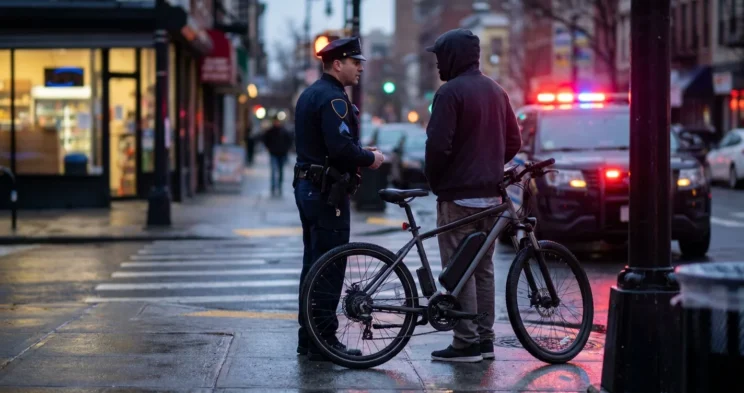
If you have wondered whether riding an e-bike drunk can lead to a DWI in Texas, the answer depends on a specific legal question: is your e-bike a motor vehicle under Texas law? The answer, for most e-bikes, is no. Yet the law has layers. You will still want to know what charges can apply, just as much as what cannot.
Why Texas Uses DWI, Not DUI
Texas does not have a standard DUI statute for adults. The relevant offense is Driving While Intoxicated under Texas Penal Code §49.04. “DUI” in Texas refers to a separate provision that applies to minors in certain circumstances. When adults ride a vehicle while intoxicated, §49.04 is the statute that applies.
Does Texas Law Treat E-Bikes as Motor Vehicles?
The answer for most e-bikes is no. Texas Transportation Code §541.201 defines “motor vehicle” as a self-propelled vehicle. The statute then says plainly: the term does not include an electric bicycle.
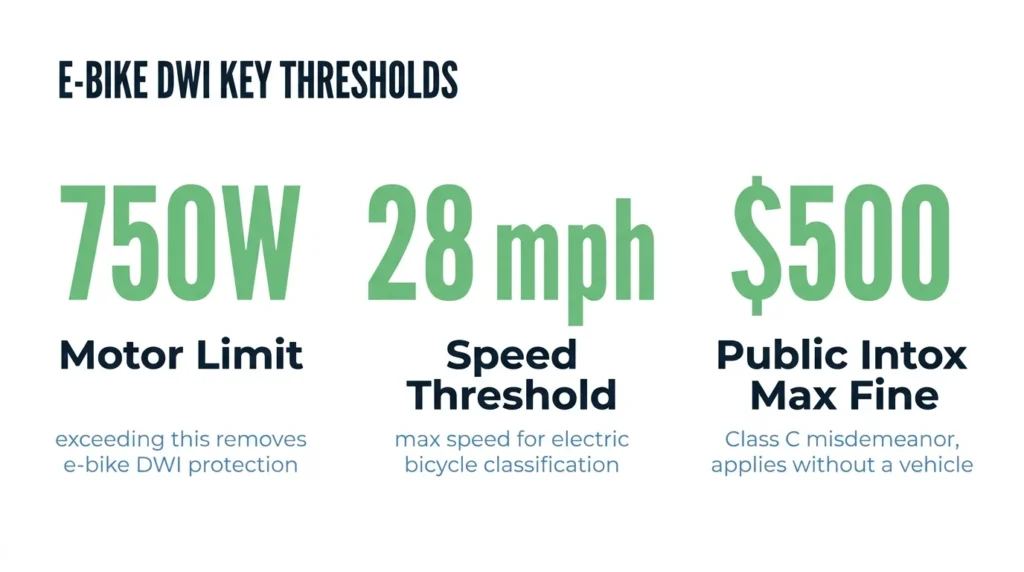
Texas Transportation Code Chapter 664 defines what qualifies as an electric bicycle. To meet that definition, a bike must have fully operable pedals, a motor under 750 watts, and a top assisted speed of 28 mph or less. Three classes fall within those parameters:
- Class 1: Motor assists only when the rider is pedaling; top assisted speed of 20 mph or less
- Class 2: Motor may propel the bike without pedaling; top assisted speed of 20 mph or less
- Class 3: Motor assists only when the rider is pedaling; top assisted speed between 20 and 28 mph
All three classes are electric bicycles under TTC Chapter 664. All three are excluded from the “motor vehicle” definition under §541.201. Because TPC §49.04 DWI requires operating a motor vehicle, the DWI charge does not apply to a rider on a conforming e-bike.
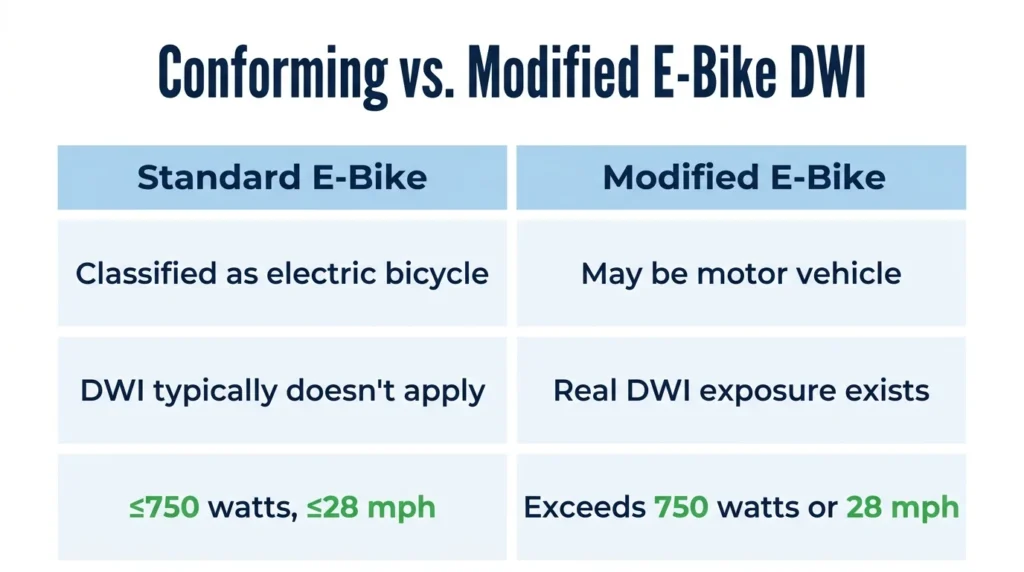
Class 2 e-bikes and the throttle question. Class 2 bikes can propel the rider without any pedaling. Some attorneys have argued that throttle-powered operation looks more like a motor vehicle. However, the TTC Chapter 664 classification still applies as long as the bike meets the wattage and speed thresholds. No Texas appellate court has definitively held that a conforming Class 2 e-bike is a motor vehicle for DWI purposes.
Modified and non-conforming e-bikes. This is where the analysis shifts. A bike that exceeds 750 watts, reaches assisted speeds above 28 mph, or lacks operable pedals does not qualify as an electric bicycle under TTC §664.001. That bike does not receive the §541.201 exclusion. A rider on such a bike faces real exposure to DWI charges. Riders of modified or high-powered e-bikes should understand that the motor vehicle exclusion does not apply to them.
E-scooters are not electric bicycles and do not carry the same statutory exclusion.
What Charges Can an Intoxicated E-Bike Rider Still Face?
The absence of a DWI charge does not mean an intoxicated e-bike rider has no legal exposure. Two separate consequences apply regardless of motor vehicle status.
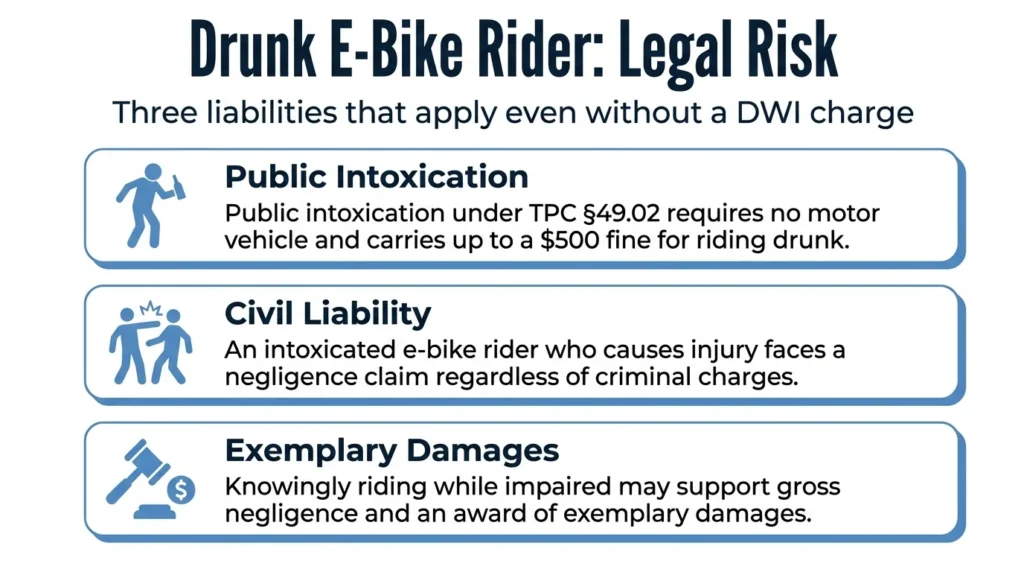
Public intoxication under TPC §49.02. A person commits this offense by appearing in a public place while intoxicated to a degree that may endanger themselves or others. No motor vehicle is required. Any road, trail, sidewalk, or park qualifies as a public place. Public intoxication is a Class C misdemeanor carrying a fine of up to $500.
Civil liability for injuries caused. If an intoxicated e-bike rider injures someone, that victim has a personal injury claim under Texas negligence law. Criminal charges are a separate matter from civil liability. Evidence of intoxication is directly relevant to whether the rider exercised reasonable care. A rider who was intoxicated and caused a crash breached their duty of care.
In cases where the rider knew they were impaired and rode anyway in a way that endangered others, a court may find gross negligence. Gross negligence under Texas law can support exemplary damages, sometimes called punitive damages.
Texas proportionate responsibility rules under CPRC Chapter 33 govern these claims. A jury assigns a fault percentage to each party. Your recovery is reduced by your own percentage of fault. A party found more than 50% responsible cannot recover. The statute of limitations for personal injury claims in Texas is two years under CPRC §16.003.
Work with a Texas Personal Injury Attorney
If an intoxicated e-bike rider injured you, the law provides a path to accountability. An attorney can evaluate the evidence of impairment, identify all liable parties, and calculate the full range of damages you may be entitled to recover.
Angel Reyes & Associates has represented injury victims across Texas for more than 30 years. We have recovered more than $1 billion for our clients. We offer free initial consultations and work on a no-fee-unless-you-win basis. You can review outcomes from past cases we have handled to understand how we approach these claims. To discuss your situation, contact us for a free consultation.
Past results do not guarantee future outcomes.
FAQs
Can you get a DWI on an e-bike in Texas?
For most e-bikes, no. Texas Transportation Code §541.201 excludes electric bicycles from the definition of “motor vehicle.” Because DWI under TPC §49.04 requires operating a motor vehicle, a properly classified e-bike does not meet that element. A modified or non-conforming e-bike that exceeds 750 watts, reaches assisted speeds above 28 mph, or lacks operable pedals may not qualify as an electric bicycle — and DWI exposure increases for those vehicles.
What is the difference between DWI and DUI in Texas?
Texas uses DWI under TPC §49.04 for adults operating motor vehicles while intoxicated. The term “DUI” in Texas refers to a separate provision applicable to minors. Adults riding vehicles while intoxicated face DWI, not DUI.
What charges can an intoxicated e-bike rider still face?
Public intoxication under TPC §49.02 applies regardless of vehicle type. The offense covers any person in a public place who is intoxicated to a degree that may endanger themselves or others. No motor vehicle is required. Public intoxication is a Class C misdemeanor with a fine of up to $500.
Is a Class 2 e-bike treated differently from Class 1 or Class 3?
Class 2 e-bikes can propel the rider without pedaling via a throttle. However, they remain classified as electric bicycles under TTC §664.001 as long as they meet the wattage and speed thresholds. The §541.201 motor vehicle exclusion still applies. No Texas appellate court has definitively ruled that a conforming Class 2 e-bike is a motor vehicle for DWI purposes.
What if an intoxicated e-bike rider injured me?
You can pursue a personal injury claim under Texas negligence law regardless of whether the rider faces criminal charges. Evidence of intoxication is relevant to breach of the duty of care. If the rider was grossly negligent, exemplary damages may be available. Texas proportionate responsibility rules under CPRC Chapter 33 apply, and the two-year statute of limitations under CPRC §16.003 governs your deadline to file.
What happens if an e-bike's motor has been modified to exceed legal limits?
A modified e-bike that exceeds 750 watts, reaches assisted speeds above 28 mph, or lacks operable pedals does not qualify as an electric bicycle under TTC Chapter 664. That vehicle does not receive the §541.201 motor vehicle exclusion. A rider operating such a bike while intoxicated faces genuine exposure to DWI charges under TPC §49.04.
About the Authors

Angel Reyes
Writer
Angel L. Reyes, III is the Founder and Managing Partner of Angel Reyes & Associates. A nationally recognized trial attorney and business leader, Angel has helped over 70,000 injury victims recover more than $1 billion since founding the firm in 1993. Named to the Texas Super Lawyers list annually since 2008, Angel brings Wall Street experience, Ivy League education, and a deep commitment to client advocacy. He is a frequent legal commentator and published author with extensive contributions to legal scholarship, trial strategy, and consumer protection.

Kyle Nicolas
Editor
Kyle Nicolas is the Web Content & SEO Manager at Angel Reyes & Associates. He has more than 10 years of experience as a marketing co...

Angel Reyes
Reviewer
Angel L. Reyes, III is the Founder and Managing Partner of Angel Reyes & Associates. A nationally recognized trial attorney and business...