How Much Is My Rideshare Accident Worth in Texas?


Every article on this site is researched by our internal team, reviewed for legal accuracy against current Texas law, and held to State Bar of Texas advertising standards before publication. We do not publish content that overstates outcomes or makes promises about results.
Learn more about our
editorial standards .
Key Takeaways
- The driver's app status at the crash sets which policy pays and your coverage ceiling.
- Texas bars recovery if you are found more than 50% at fault for the crash.
- You have 2 years from the date of the crash to file a rideshare injury claim in Texas.
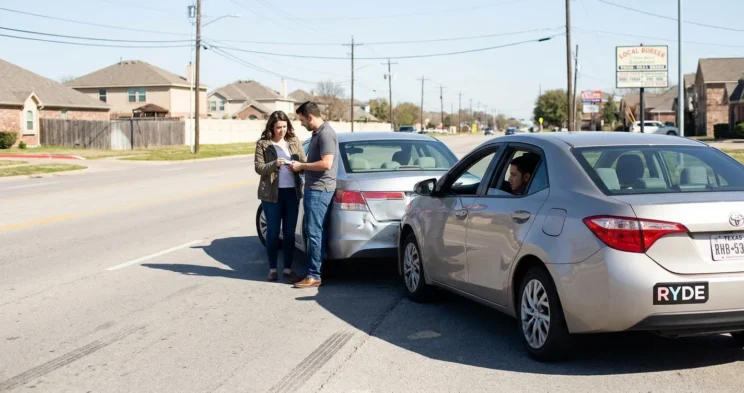
You were riding home from a late dinner in Montrose when your Uber driver got T-boned at a light on Westheimer Road. Now your back hurts, the medical bills are stacking up, and an insurance adjuster keeps calling with an offer that feels too low. How do you know what your claim is actually worth?
Coverage Periods Control Your Claim Value
The driver’s app status at the time of the collision determines which rideshare insurance tier applies. That is one of the first facts you need to establish after a rideshare crash, as it determines the available policy limits.
Texas requires rideshare companies to carry different levels of insurance depending on the driver’s status in the app at the time of the crash. The applicable coverage period sets the insurance limits available for your claim under Texas Insurance Code Chapter 1954.
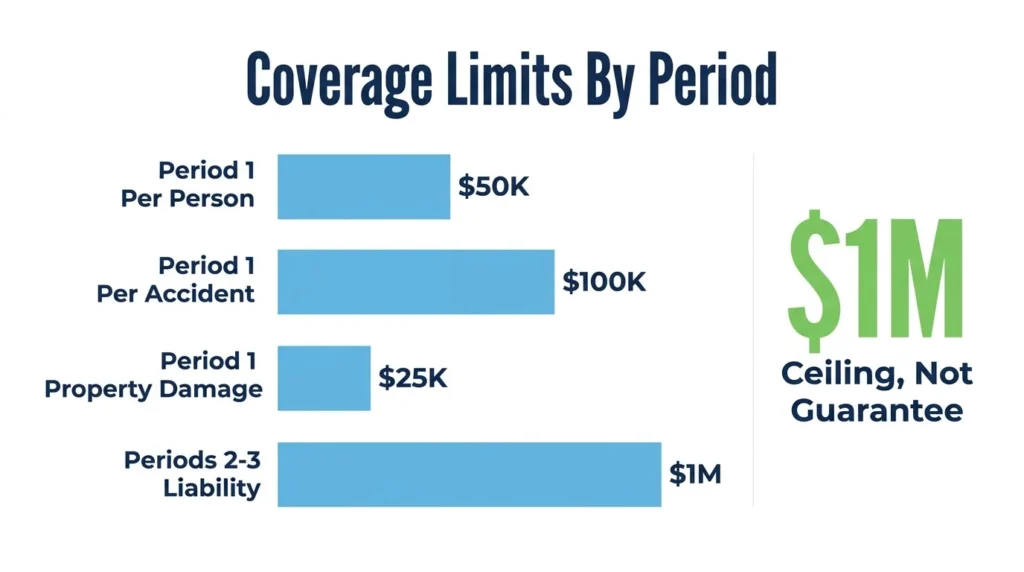
Period 1 is when the app is on, but the driver has not accepted a ride yet. In that window, the rideshare company provides limited backup coverage ($50,000 per person, $100,000 per accident, and $25,000 for property damage), and the driver’s personal auto policy may also apply. Disputes between the two insurers over which policy applies are common during Period 1, and many personal policies exclude commercial driving.
Periods 2 and 3 cover the stretch from an accepted ride through trip completion. During those periods, the rideshare company’s $1 million liability policy is active. That $1 million is a ceiling, not a payout. Your actual recovery depends on what you can document, not on the policy limit.
Your role in the crash also shapes which policy your claim targets. A passenger, another driver, and a pedestrian may each file against a different insurer. The coverage period still determines who bears primary responsibility for payment.
Damages You Can Recover in Texas
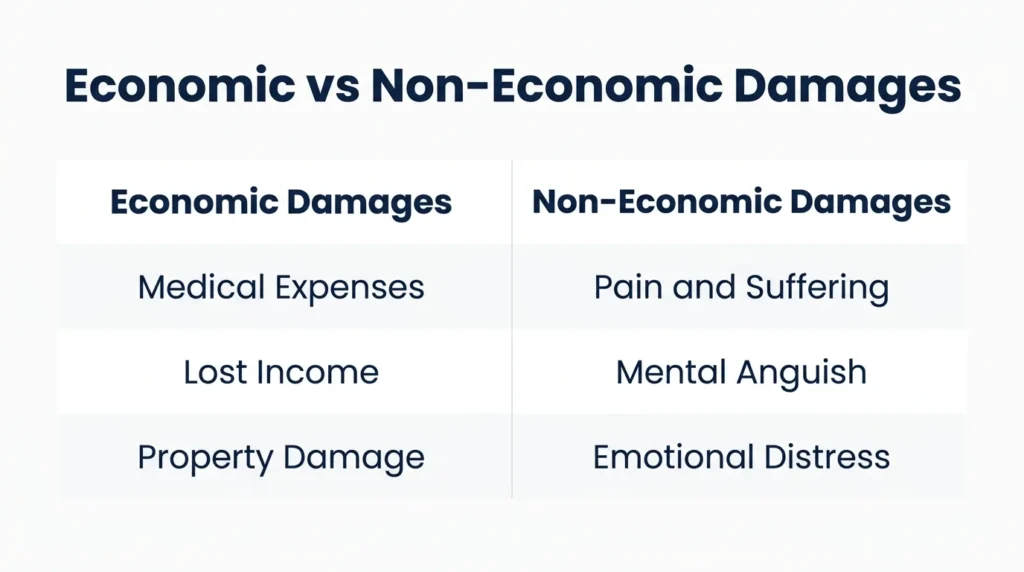
Texas law allows you to recover both economic and non-economic damages after a rideshare crash. The amount you ultimately recover can vary significantly, which is one reason average car accident settlements cover such a wide range.
Economic Damages
Economic damages cover the financial losses the crash caused. Unlike pain and suffering, you can usually prove these losses with bills, receipts, pay stubs, and other records.
Medical expenses are often the largest part of a claim. They include emergency treatment, hospital stays, surgery, rehabilitation, physical therapy, prescription medications, and any future medical care your doctors expect you to need because of the crash.
You can also recover lost income. That includes the wages you missed while you were unable to work, as well as loss of earning capacity if your injuries permanently affect the type or amount of work you can do.
Property damage covers the cost of repairing or replacing your vehicle and any personal belongings damaged in the collision.
Non-Economic Damages
Non-economic damages compensate you for losses that do not come with bills or receipts. Texas law allows you to recover for pain and suffering, mental anguish, emotional distress, physical impairment, disfigurement, and the loss of enjoyment of life.
There is no fixed formula for calculating these damages. Insurance companies sometimes use a multiplier as a starting point during settlement negotiations. Still, the value of a claim ultimately depends on the severity of your injuries, how long they last, and how they affect your daily life. Serious or permanent injuries generally support higher non-economic damages than injuries that resolve quickly.
Early settlement offers often undervalue these losses because they are harder to measure than medical bills or lost wages. That is one reason the first offer rarely reflects the full value of a claim.
What Reduces a Rideshare Claim’s Value
Shared fault, Period 1 coverage gaps, and the quality of your evidence can all reduce what you ultimately recover. Adjusters look for all three to justify paying you less.

Texas follows a modified comparative fault rule under Texas Civil Practice and Remedies Code Chapter 33. If you are found more than 50% responsible for the crash, you cannot recover damages. If your share of fault is 50% or less, your compensation is reduced by that percentage.
Insurance coverage can also limit recovery. During Period 1, when the rideshare driver’s app is on but no ride has been accepted, coverage is significantly lower than during an active trip. Disputes between the driver’s personal insurer and the rideshare company’s insurer are also more common, and many personal auto policies exclude commercial driving.
Finally, the strength of your documentation can make a significant difference. Medical records, police reports, witness statements, photographs, and proof of lost income help establish the value of your claim. The actions you take immediately after a crash often determine how strong that evidence will be. Knowing what to do after a rideshare accident can protect your claim from the start.
Texas also imposes a deadline. Under Texas Civil Practice and Remedies Code § 16.003, you generally have two years from the date of the crash to file a personal injury lawsuit. Missing that deadline can prevent you from recovering compensation, regardless of how strong your claim may have been.
How Attorneys Evaluate Rideshare Claims
An attorney values your claim based on the full scope of your losses. They consider future medical treatment, lost earning capacity, pain and suffering, and any long-term effects your injuries may have on your daily life. Looking at the full picture often helps maximize a personal injury settlement.
People with an attorney generally recover more than those who negotiate alone because an attorney identifies the damages adjusters overlook and is ready to litigate when needed. If you have already received an early offer, it is worth reviewing it with an experienced attorney before you sign anything.
Settlement values also vary by the type of rideshare claim. Average Uber accident settlements and average Lyft accident settlements provide useful points of comparison, but no two cases are alike. The value of your claim ultimately depends on the facts of your crash, the severity of your injuries, the available insurance coverage, and the evidence supporting your damages.
Talk to an Attorney About Your Case
A rideshare crash leaves you sorting through tiered policies, app-status rules, and adjusters who would rather pay less. You do not have to sort through it alone. Angel Reyes & Associates has handled rideshare injury claims across Texas for over 30 years, with more than $1 billion recovered for clients.
We offer free initial consultations and charge no fee unless we win. You can reach us 24/7. Before you accept any offer, schedule a free consultation so you understand what your claim is really worth. You can also see what our clients say about working with us.
Past results do not guarantee future outcomes.
Rideshare Accident Value FAQs
If multiple people were hurt in the same rideshare crash, do we all share the same policy limit?
Yes. The $1 million liability policy during Periods 2 and 3 is a per-accident limit, so every injured person’s claim competes against the same pool of coverage. If total damages across all claimants exceed the limit, each person’s recovery may be reduced.
Does it matter how quickly I saw a doctor after the rideshare crash?
Yes. Gaps between the crash and your first medical visit give adjusters a basis to argue your injuries were not caused by the accident. Starting treatment promptly and attending follow-up appointments consistently creates a stronger record linking your injuries to the crash.
Can a passenger be held partially at fault for a rideshare accident in Texas?
Passengers can be assigned a share of fault in rare circumstances, such as distracting the driver or failing to wear a seatbelt. If you are assigned any percentage below 51%, your recovery is reduced by that amount; above 50%, Texas law bars any recovery.
What happens if the rideshare driver had no personal auto insurance during Period 1?
When the driver carries no personal policy, the rideshare company’s contingent coverage in Period 1 becomes the primary source available, up to $50,000 per person for bodily injury. That limit is much lower than the $1 million available during Periods 2 and 3, so the practical ceiling on recovery can be significantly smaller.
Can I sue Uber or Lyft directly, or do I have to go through their insurance?
Filing an insurance claim is the most common path, but a direct lawsuit against the company is possible in some cases. Because rideshare drivers are classified as independent contractors, standard employer liability typically does not apply, though claims based on negligent driver screening can still target the company itself.
About the Authors

Angel Reyes
Writer
Angel L. Reyes, III is the Founder and Managing Partner of Angel Reyes & Associates. A nationally recognized trial attorney and business leader, Angel has helped over 70,000 injury victims recover more than $1 billion since founding the firm in 1993. Named to the Texas Super Lawyers list annually since 2008, Angel brings Wall Street experience, Ivy League education, and a deep commitment to client advocacy. He is a frequent legal commentator and published author with extensive contributions to legal scholarship, trial strategy, and consumer protection.

Kyle Nicolas
Editor
Kyle Nicolas is the Web Content & SEO Manager at Angel Reyes & Associates. He has more than 10 years of experience as a marketing co...

Angel Reyes
Reviewer
Angel L. Reyes, III is the Founder and Managing Partner of Angel Reyes & Associates. A nationally recognized trial attorney and business...