How Long Does an Uber or Lyft Accident Claim Take in Texas?


Every article on this site is researched by our internal team, reviewed for legal accuracy against current Texas law, and held to State Bar of Texas advertising standards before publication. We do not publish content that overstates outcomes or makes promises about results.
Learn more about our
editorial standards .
Key Takeaways
- Texas Uber and Lyft insurance claims typically resolve in 3 to 6 months.
- Cases involving a lawsuit for a rideshare incident usually run 12 to 24 months from filing.
- Individual factors can either shorten or extend the expected case timeline.
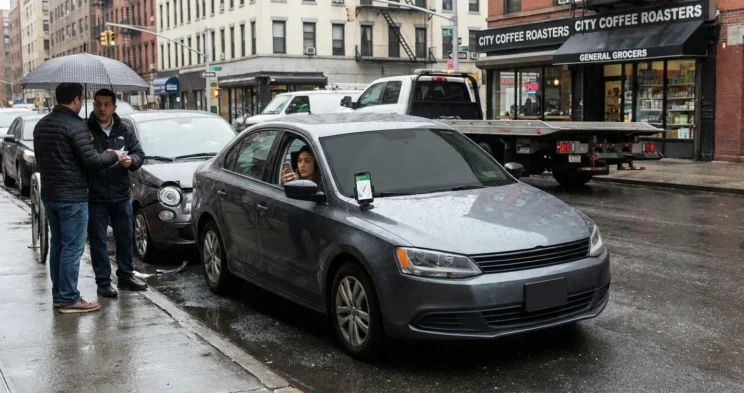
You called an Uber for a ride home after a night out in Lower Greenville. Things were going fine when another driver ran a red light, T-boning the vehicle.
Weeks later, you have medical bills stacking up, you’re still in a lot of pain, and you haven’t been able to work since the incident. Worse, the other driver’s insurer refuses to budge from their insultingly low first offer, and someone telling you these cases drag on forever.
You want a straight answer about how long this will actually take. The honest answer starts with which track your case is on.
The Two Paths: Insurance Claim vs. Lawsuit
Most Texas rideshare accident cases resolve on one of two tracks, and the track you are on decides how long your case takes. Knowing which path applies is the first step to setting realistic expectations.

The Insurance Claim Path (3-6 Months)
In cases with clear liability and documented injuries that have reached maximum medical improvement (MMI), the insurance claim path typically takes around three to six months. That timeline extends if injuries are disputed or require a lengthy recovery period.
During an insurance claim, there is often a lot of back-and-forth negotiation with the insurance company, particularly as new details and developments emerge over the course of your recovery. This is why most experienced attorneys advise against settling before MMI.
The claim path is the faster option compared to a lawsuit, but it carries a real risk. Accepting a settlement before you know the full scope of your injuries and costs can leave money on the table.
The Lawsuit Path (12-24 Months)
If the insurance claim path fails, a lawsuit can help you recover damages, but on a longer timeline. A lawsuit typically takes between 12 and 24 months from filing to settlement or verdict.
The claim path can fail because of disputed liability, a lowball offer, or coverage limits that fall short of your actual damages. A lawsuit is a tool available to plaintiffs to help them hold responsible parties accountable for what they owe.
In high-volume Texas metro counties, such as Dallas, Fort Worth, Houston, and Austin, court docket congestion can push trial-bound cases beyond 24 months.
Filing a lawsuit does not stop the negotiation process. Mediation and pre-trial settlement typically continue before trial, and cases can settle before ever seeing a courtroom. While the number varies, it’s estimated that only around three percent of all injury cases ever actually reach a full jury verdict.
Why Rideshare Cases Take Longer Than Standard Car Accident Claims
Rideshare cases add structural layers that standard car accident claims do not have. Each layer introduces a decision point, a new party, or a coverage question that must be cleared before the case advances.
Rideshare claims involve multiple insurers. Uber or Lyft’s commercial carrier, the driver’s personal insurer, and a third-party driver’s insurer can each run a separate investigation on its own schedule.
Your rideshare driver’s status at the time of the accident also dramatically changes the nature of their insurance. Texas Insurance Code Chapter 1954 sets three TNC coverage periods, and the period in effect at the moment of the crash decides which policy responds. Period 1 carries limits of 50/100/25. That’s $50,000 per claimant, $100,000 total per accident, and $25,000 in property damage coverage.
Periods 2 and 3 carry a $1 million liability limit. This means that if you were riding in an Uber or Lyft that you hired through the app, and you were mid-journey, you are protected by a policy with limits of up to $1 million.
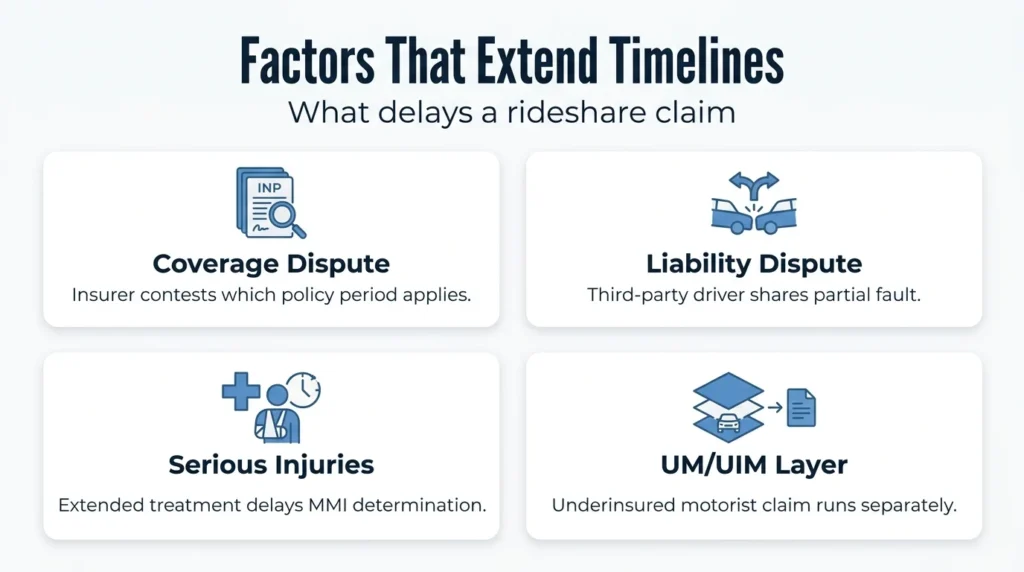
Coverage period disputes can add weeks or months. When an insurer contests whether the driver was “on the app” or “en route to a pickup,” carriers audit app data and GPS logs before the investigation moves forward.
Shared fault adds another step. When a third-party driver shares blame, Texas proportionate responsibility rules under CPRC Chapter 33 require allocating fault percentages across every responsible party before any insurer pays. That process extends the timeline.
Uninsured or underinsured motorist (UM/UIM) coverage adds a final track. When a third-party driver lacks adequate coverage, the UM/UIM layer can run alongside or after the primary liability claim. Our uninsured motorist accident guide breaks this down.
Phase-by-Phase Timeline: What Happens and When
A rideshare accident claim moves through identifiable phases. Knowing what happens in each phase, and how long each takes, gives you a concrete framework for tracking your own case.
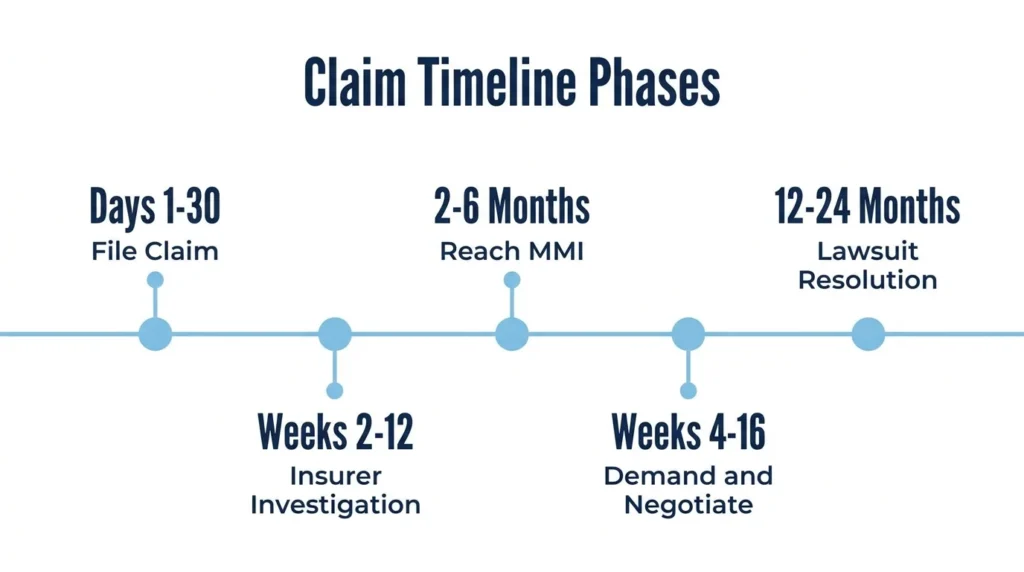
Phase 1: Immediate Aftermath and Claim Filing (Days 1-30). You report the accident through the app, seek medical treatment, and open a claim with the applicable insurer. Uber and Lyft both have internal reporting portals.
Uber and Lyft use third-party insurers to administer claims. Under Texas Insurance Code Chapter 542, insurers must acknowledge a claim within 15 business days. They must pay an accepted claim within 5 business days of acceptance.
Reporting late can create documentation gaps that slow the investigation. See our guide on what to do after a rideshare accident in Texas.
Phase 2: Platform and Insurer Investigation (Weeks 2-12). Uber or Lyft’s internal safety team reviews app data, GPS records, and driver history. The TNC insurer runs its own separate liability investigation. These two reviews proceed on independent timelines and do not always align.
Phase 3: Medical Treatment and MMI (Often 2-6 Months). Your treating physician determines when you have reached maximum medical improvement. Most attorneys advise against accepting any offer before MMI, because future treatment, lost earning capacity, and ongoing care cannot be calculated accurately beforehand.
Phase 4: Demand, Negotiation, and Settlement (Weeks 4-16 after MMI). Your attorney submits a formal demand package to the insurer. The deadlines established in Texas Insurance Code Chapter 542 apply to first-party claims, but third-party responses must follow good-faith claims handling standards.
Negotiation rounds typically run 30 to 90 days. Our Texas insurance settlement timeline explains what to expect during this process.
Phase 5: Lawsuit Filing Through Resolution (12-24 Months from Filing). If negotiation fails, your attorney files suit in Texas district court. This phase includes written discovery, depositions, expert designations, mediation, and trial if mediation fails. Many cases reach settlement at mediation or before trial.
Factors That Shorten or Extend Your Timeline
Not every rideshare case takes the same amount of time. Specific facts about your accident, your injuries, and the insurers involved pull your timeline in one direction or the other.
Several factors shorten timelines:
- Clear liability
- A documented injury with a defined MMI
- A cooperative TNC insurer
- No coverage period dispute
- No third-party driver all speed resolution
Other factors extend it:
- A disputed coverage period
- Disputed liability with a third-party driver
- Serious injuries requiring extended treatment
- A UM/UIM layer
Uber and Lyft user agreements also include mandatory arbitration clauses that may affect where a claim is resolved, though passengers can challenge these provisions.
Cases with multiple claimants competing for the same policy limits run longer too.
Texas modified comparative fault rules bar recovery if a court finds you more than 50 percent at fault. When the rideshare driver and a third-party driver both bear partial blame, the insurer has a financial incentive to investigate fault allocation closely, which extends the investigation phase.
Insurer responsiveness is a documented variable. Chapter 542 prompt payment penalties, set at 18 percent annual interest on late payments, push TNC carriers to meet statutory deadlines on first-party claims. Enforcement on third-party claims relies on bad-faith litigation.
Understanding how Texas insurers handle rideshare claims helps you spot delays and know when to escalate.
Your Two-Year Deadline and Why Waiting Costs You
There is a critical deadline here. Under Texas Civil Practice and Remedies Code (CPRC) § 16.003, personal injury claims against Uber, Lyft, the driver, and any at-fault party must be filed within two years. Missing that deadline forfeits your right to sue.
Insurance negotiations do not pause the statute of limitations. A TNC insurer can stretch negotiations until the deadline passes, leaving you with no fallback option.
This is one of the reasons why retaining legal representation for this process could be one of the best decisions you ever make. An attorney tracks this deadline independently of settlement talks and can apply pressure to your insurer to take action. They can also take steps to file a lawsuit before the deadline to allow more time for negotiations to continue.
Independent of this deadline, evidence also deteriorates over time. App data, GPS logs, dashcam footage, and witness recollections all degrade or can even be lost entirely. Retaining an attorney earlier preserves evidence and builds a record that supports your claim if it reaches litigation.
Talk to an Attorney Before the Clock Runs Out
The timeline for your Uber or Lyft accident claim depends on which track you are on, how disputed the liability and coverage questions are, and how far your medical treatment has progressed. An experienced attorney can tell you where your case stands and what the realistic path to resolution looks like.
Angel Reyes & Associates has handled Texas rideshare accident claims for over 30 years and has recovered more than $1 billion for clients across the state. We offer free initial consultations and charge no fee unless we win your case. Contact us today to discuss your claim and protect your two-year deadline.
You can also read our client reviews and testimonials to learn how we have helped others.
Past results do not guarantee future outcomes.
Uber & Lyft Accident Timeline FAQs
How does Texas' prompt payment law affect an Uber or Lyft accident claim?
Texas Insurance Code Chapter 542 imposes deadlines on insurers in certain first-party claims, but those deadlines do not automatically control third-party injury liability negotiations. Delays in a liability claim may require additional legal action if an insurer fails to handle the claim in good faith.
Can surveillance footage or app data speed up a Texas rideshare accident claim?
Yes. Dashcam footage, business surveillance video, GPS records, and rideshare app data can help establish liability more quickly when they clearly show how the crash occurred.
What happens if more than one insurance policy applies after an Uber or Lyft accident?
Multiple insurance policies may apply depending on who caused the crash and the rideshare driver’s status in the app. Determining which policy pays first can add time to the claims process, especially when insurers dispute responsibility.
Will a pre-existing injury prevent me from recovering compensation after a rideshare accident?
Not necessarily. Under Texas law, you may still recover damages if the accident aggravated a pre-existing condition, although medical evidence is often needed to distinguish new injuries from prior health issues.
What evidence should I keep while waiting for my Uber or Lyft accident claim to settle?
Save medical records, bills, receipts, photographs, correspondence with insurers, and documentation of missed work. Keeping organized records throughout your recovery can make it easier to prove the full value of your claim.
About the Authors

Angel Reyes
Writer
Angel L. Reyes, III is the Founder and Managing Partner of Angel Reyes & Associates. A nationally recognized trial attorney and business leader, Angel has helped over 70,000 injury victims recover more than $1 billion since founding the firm in 1993. Named to the Texas Super Lawyers list annually since 2008, Angel brings Wall Street experience, Ivy League education, and a deep commitment to client advocacy. He is a frequent legal commentator and published author with extensive contributions to legal scholarship, trial strategy, and consumer protection.

Kyle Nicolas
Editor
Kyle Nicolas is the Web Content & SEO Manager at Angel Reyes & Associates. He has more than 10 years of experience as a marketing co...

Angel Reyes
Reviewer
Angel L. Reyes, III is the Founder and Managing Partner of Angel Reyes & Associates. A nationally recognized trial attorney and business...