Can You File a Wrongful Death Claim After a Fatal Pedestrian Accident in Texas?


Every article on this site is researched by our internal team, reviewed for legal accuracy against current Texas law, and held to State Bar of Texas advertising standards before publication. We do not publish content that overstates outcomes or makes promises about results.
Learn more about our
editorial standards .
Key Takeaways
- Only a surviving spouse, children, or parents may file a claim under §71.004.
- If a pedestrian is found more than 50% at fault, your family cannot recover anything.
- UM/UIM coverage can pay your family if the driver flees the scene or has no insurance.
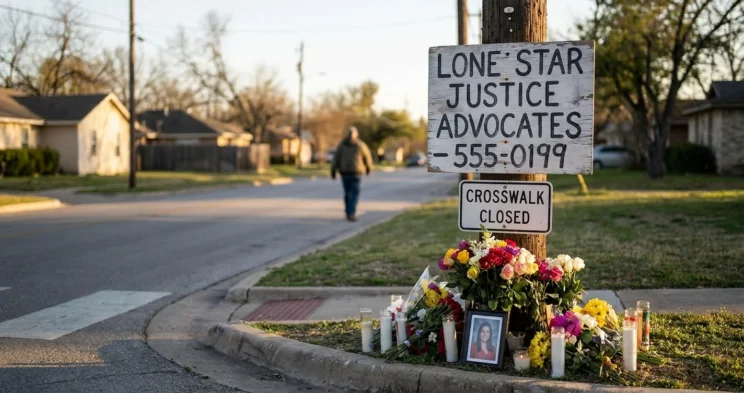
On a service road off I-35, a driver fatally struck your loved one, and now you need to know your legal options.
Texas law allows close family members to file a wrongful death claim when a pedestrian is killed by a negligent driver, but determining who can file the claim, what they have to prove, and where the money will come from are all governed by law. These laws ultimately decide whether your family can recover any damages.
Here is how a pedestrian accident wrongful death case works in Texas, from start to finish.
Who Can File a Wrongful Death Claim for a Pedestrian Killed in Texas?
Texas limits wrongful death claims to a short list of acceptable family members, which is why sorting out who is legally allowed to file the claim is the first step in a wrongful death lawsuit.
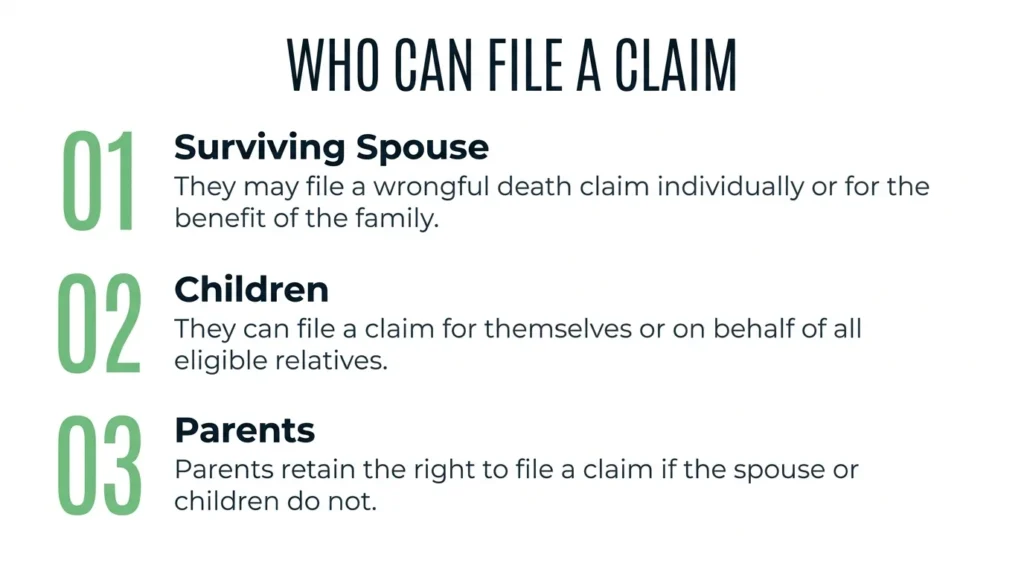
Under Texas Civil Practice & Remedies Code §71.004, a wrongful death claim can only be filed by the surviving spouse, children, and parents of the deceased. Any one of these family members can file a claim for themselves or all three parties.
If none of the eligible family members files a lawsuit within three calendar months after the death, then the claim must be filed by the estate’s executor or administrator, unless all the eligible beneficiaries ask them not to. This three-month rule does not shorten the overall deadline for filing the claim.
Proving the Driver Was Negligent: Failure to Yield, Distraction, and Speed
A wrongful death claim requires proof that the driver acted negligently and their actions likely caused the death. If there was gross negligence involved (such as drunk driving), then your family may also be able to seek exemplary (or punitive) damages.
Texas law is specific about this. Transportation Code Chapter 552 spells out the rules that drivers must follow to keep pedestrians safe, including:
- §552.002: At a signaled crossing, a pedestrian facing a”Walk” signal may cross, and the driver of a vehicle must yield the right-of-way to the pedestrian.
- §552.003: At a crosswalk with no traffic signal, the driver must stop and yield to any pedestrian crossing on the driver’s side of the roadway or approaching close enough to be in danger. A vehicle behind another vehicle that has stopped for a pedestrian may not pass the vehicle in front of them.
- §552.008: Regardless of who had the right-of-way, a driver must use reasonable care to avoid hitting a pedestrian. They must also use their horn when necessary and take extra precautions around children or obviously confused or incapacitated pedestrians.
The last rule is especially important. It means that a driver is not automatically excused from responsibility because a pedestrian stepped off the curb in the wrong place. Distracted driving and speeding can also establish negligence, no matter who had the right-of-way, because a driver who was texting at the moment of impact or driving well above the posted speed limit has breached the duty of care.
Phone records, black box data, and measurements from the crash scene are critical evidence in pedestrian accident cases, and they become harder to procure as time passes.
How the Pedestrian’s Percentage of Fault Can Reduce or Dismiss Recovery
A wrongful death claim is based on the injury claim that the pedestrian could have filed if they had survived. The beneficiaries of the deceased have to represent them in court, and the at-fault driver can use many of the same defense strategies against the family, including the argument that the pedestrian was partially at fault for the crash.
Crossing Location
The crossing location is often a major argument in these cases. Under Texas Transportation Code §552.005, a pedestrian who is crossing outside a marked or unmarked crosswalk must yield the right-of-way to vehicles, and a pedestrian may cross adjacent signal-controlled intersections only in a marked crosswalk.
Insurers often use these rules to argue that the pedestrian shared responsibility for the crash. However, the driver’s duty to use reasonable care under §552.008 still applies, so a driver may still be responsible if they could have avoided hitting a pedestrian who was crossing the street.
Our blog on whether pedestrians always have the right-of-way in Texas explains how those two rules interact.
Texas’s 51% Rule
Percentages of fault are applied through Texas’s proportionate responsibility statute. Texas Civil Practices & Remedies Code §33.001 explains that a claimant may not recover damages if their percentage of responsibility is greater than 50%. This is known as the 51% bar.

If the claimant is found to be 50% or less at fault, then they may file a claim. In this case, Texas Civil Practices & Remedies Code §33.012 requires the court to reduce the award according to the assigned percentage of fault.
For example, a jury that finds a pedestrian 30% responsible for the accident with an award of $1 million in damages would leave the family with $700,000. However, if the jury finds the pedestrian 51% at fault, then the family recovers nothing.
As you can see, a few percentage points of fault can be worth hundreds of thousands of dollars, which is exactly why insurers invest so heavily in shifting the blame to the deceased, as they can no longer testify on their own behalf.
Liability Insurance and UM/UIM Coverage
A successful verdict is only good if it can be paid out. In a fatal pedestrian accident case, the money usually comes from one or more sources, pursued in the following order:
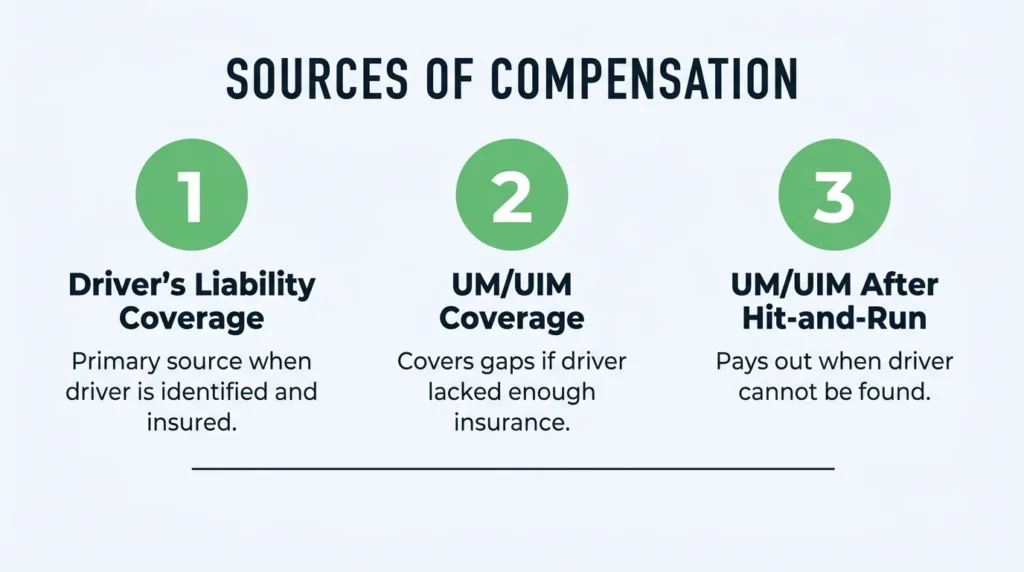
- The at-fault driver’s auto liability coverage: This is the primary source of payment when the driver is identified and insured. A settlement or judgment is typically paid up to this policy’s limits.
- Uninsured/underinsured motorist (UM/UIM) coverage from the family’s own policy: The Texas Department of Insurance describes [uninsured motorist coverage](https://www.tdi.texas.gov/tips/uninsured-motorist-coverage.html) as extra coverage for situations in which the driver who caused the crash had no insurance or did not have enough insurance to pay for the damages.
- UM/UIM after a hit-and-run accident: In the event of a hit-and-run crash, the Texas Department of Insurance confirms that uninsured motorist coverage is responsible for payment if the driver who caused the crash cannot be found.
These sources can also be bundled together. A family can collect payment from the driver’s liability limits first, then file a UM/UIM claim to cover the remaining damages, or they can immediately pursue a UM/UIM claim if the driver fled the scene or had no coverage at all.
One detail to be aware of is that Texas insurers must offer UM/UIM coverage, but they are not required to include it automatically in your policy. The policyholder can also reject this coverage, but it must be done in writing.
The adjuster handling a UM/UIM claim works for your own insurer, but their job is still to resolve the claim while paying as little money as possible. This is why reviewing the declarations page for every policy in the household is worth doing early, because coverage sometimes exists on a vehicle that was not connected to the crash. Our uninsured motorist accident guide explains how to file these claims.
Speak With an Attorney About Your Family’s Pedestrian Accident Case in Texas
Liability, fault percentages, and available coverage all depend on the specific facts of the case. In a fatal pedestrian accident, these facts are established using evidence that can start disappearing within days of the crash. Texas also imposes filing deadlines, and missing one will dismiss your claim, regardless of how strong it is.
Angel Reyes & Associates has guided Texas families through wrongful death claims for over 30 years. Our team of personal injury attorneys, investigators, and accident reconstruction specialists can be reached 24/7, and we work on contingency, which means you pay no fee unless we win your case.
Contact Angel Reyes & Associates today for a free consultation and a clear explanation of your family’s options.
Past results do not guarantee future outcomes.
Fatal Pedestrian Accident FAQs
How long does my family have to file a wrongful death claim after a fatal pedestrian accident in Texas?
Generally, you have two years from the date of the death to file a claim, according to Texas Civil Practices & Remedies Code §16.003(b), which specifies that the two-year deadline starts on the date of the death, not the date of the crash (if the two dates are different). The two-year filing deadline is separate from the three-month deadline that the family has to file the claim before it is passed to the estate’s representative. Missing the two-year deadline dismisses your claim, regardless of how strong the evidence of negligence is. Therefore, it is worth confirming the exact deadline as quickly as possible.
Can a stepchild, sibling, or grandparent recover compensation for a pedestrian's wrongful death in Texas?
Generally, no. Texas Civil Practices & Remedies Code §71.004 limits a wrongful death claim to the surviving spouse, children, and parents of the person who died. Any one of these family members may file a claim for themselves, or on behalf of all three parties. Stepchildren and stepparents generally do not qualify unless a legal adoption took place, and siblings, grandparents, and other distant relatives typically have no independent claim of their own. Family relationships vary, so anyone in this situation should confirm their legal right to file a claim with an attorney, rather than make the assumption on their own.
Can a family recover exemplary (punitive) damages if the driver was grossly negligent, such as driving drunk?
Possibly. A wrongful death claim requires that you prove the driver was negligent. Conduct that qualifies as gross negligence may allow you to claim exemplary (punitive) damages on top of the regular compensation for your family’s losses. Gross negligence such as driving while intoxicated is harder to prove than ordinary carelessness, so it is crucial to gather evidence of the driver’s condition, decisions, and actions at the time of the crash.
About the Authors

Angel Reyes
Writer
Angel L. Reyes, III is the Founder and Managing Partner of Angel Reyes & Associates. A nationally recognized trial attorney and business leader, Angel has helped over 70,000 injury victims recover more than $1 billion since founding the firm in 1993. Named to the Texas Super Lawyers list annually since 2008, Angel brings Wall Street experience, Ivy League education, and a deep commitment to client advocacy. He is a frequent legal commentator and published author with extensive contributions to legal scholarship, trial strategy, and consumer protection.

Kyle Nicolas
Editor
Kyle Nicolas is the Web Content & SEO Manager at Angel Reyes & Associates. He has more than 10 years of experience as a marketing co...

Angel Reyes
Reviewer
Angel L. Reyes, III is the Founder and Managing Partner of Angel Reyes & Associates. A nationally recognized trial attorney and business...