What Are Loss of Companionship and Mental Anguish Damages in Texas?


Every article on this site is researched by our internal team, reviewed for legal accuracy against current Texas law, and held to State Bar of Texas advertising standards before publication. We do not publish content that overstates outcomes or makes promises about results.
Learn more about our
editorial standards .
Key Takeaways
- Texas wrongful death claims cover companionship, mental anguish, and guidance losses.
- A surviving spouse, children, and parents can recover these non-economic damages.
- No cap limits non-economic damages in an ordinary Texas auto wrongful death case.
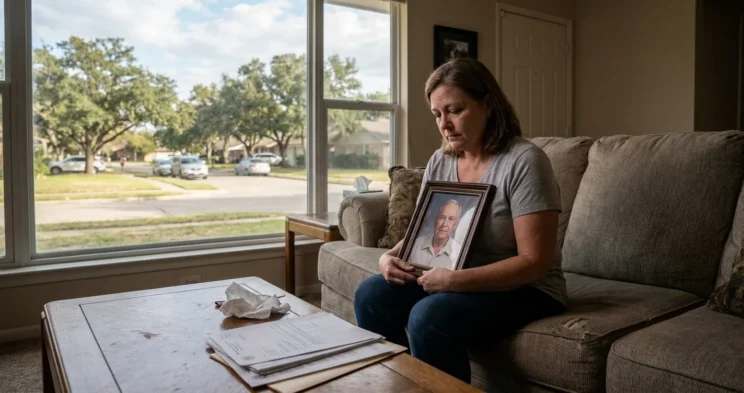
The call came while you were still at work. Your husband’s car never made it home from his evening commute on Houston’s Gulf Freeway, and the house has felt impossibly quiet ever since. Somewhere in the fog of grief, a hard question surfaces. Does the law even recognize what you have actually lost?
Non-Economic Damages in a Wrongful Death Case
A Texas wrongful death claim covers far more than lost income and funeral bills. It also pays for the personal losses that carry no receipt.
Economic damages are the ones with numbers attached, like lost financial support, medical costs before death, and burial expenses. Non-economic damages cover what you feel, including the missing companionship, the emotional suffering, and the guidance your loved one gave.
These claims arise under Texas’s wrongful death statute, the Texas Civil Practice and Remedies Code (CPRC) § 71.002. The law treats your intangible losses as real, recoverable harm.
Because these losses feel intangible, families often assume they fall outside a Texas wrongful death case. They do not.
Three of these losses deserve a closer look: lost companionship, mental anguish, and lost care and guidance. A wider breakdown of every wrongful death loss, including the state’s damage caps, lives in our guide to what a wrongful death claim can recover.
3 Types of Non-Economic Damages
Texas does not fold your loss into one lump grief award. It recognizes three separate non-economic damages, and a jury weighs each on its own.
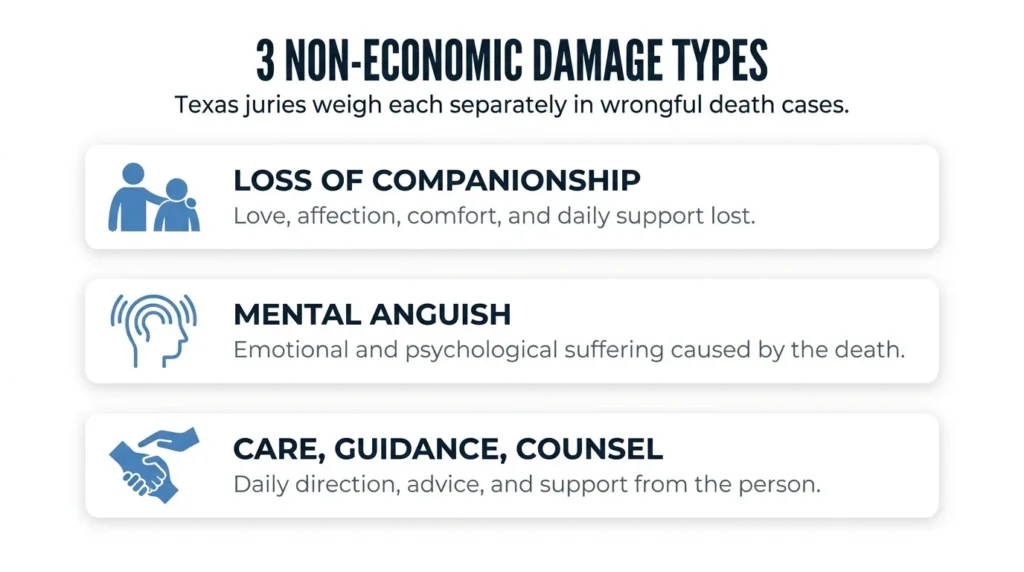
Loss of Companionship & Society
Loss of companionship and society covers the love, affection, comfort, and daily support you no longer receive. A surviving spouse, children, and parents can all claim it, depending on the relationship.
Mental Anguish
Mental anguish is the emotional and psychological suffering the death itself causes you. This harm stands apart from lost companionship, and Texas treats it as its own category.
Texas courts have long recognized mental anguish as a real injury. You do not need a physical symptom or a doctor’s diagnosis to recover for it.
Loss of Care, Guidance & Counsel
Loss of care, guidance, and counsel covers the practical direction the person provided day to day. A parent guides a child through school and life choices. A spouse offers advice, steadiness, and help with the decisions you once shared.
Who Can Recover These Damages in Texas?
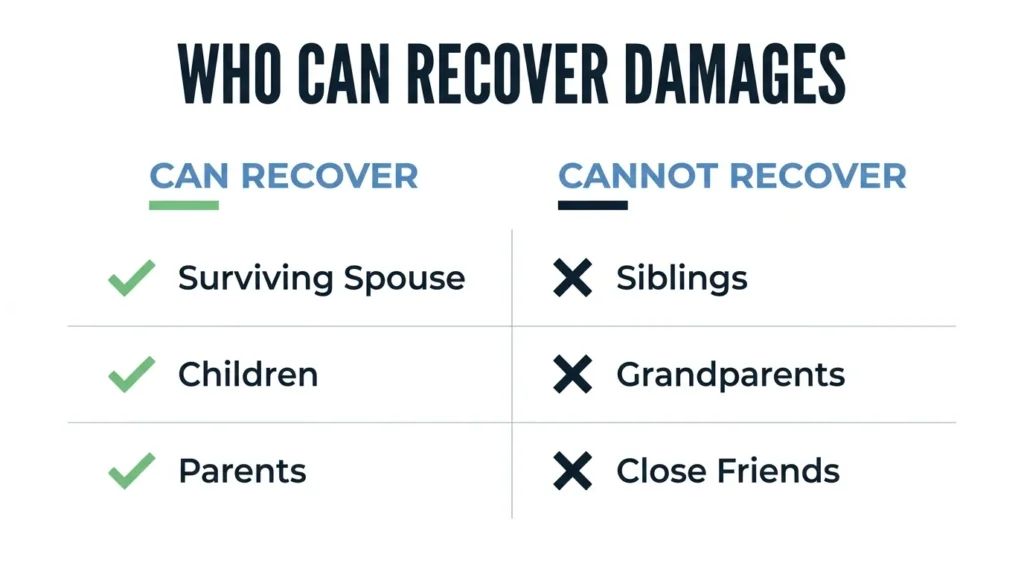
Texas limits these claims to close family. Under the Texas Civil Practice and Remedies Code § 71.004, only a surviving spouse, children, and parents of the person who died may recover.
Siblings, grandparents, and close friends cannot bring these claims, no matter how deep the bond. Texas draws the line at spouse, child, and parent.
You may have searched for “loss of consortium.” In Texas, that term applies when a spouse is injured but survives. When the injury is fatal, Texas law uses “loss of companionship and society” instead.
If you are not certain where you fit, our overview of who can file a wrongful death claim walks through each eligible family member.
We have stood beside grieving families through these claims for years. You can read more about who we are and how we work.
If you are still weighing whether you qualify, it helps to know how long Texas gives you to file, since eligibility and deadlines go together.
How Juries Value Non-Economic Damages in Texas
No formula sets the value of these damages. A jury decides the amount based on your relationship and the evidence you present, and the law governing that award sits in CPRC § 71.010.
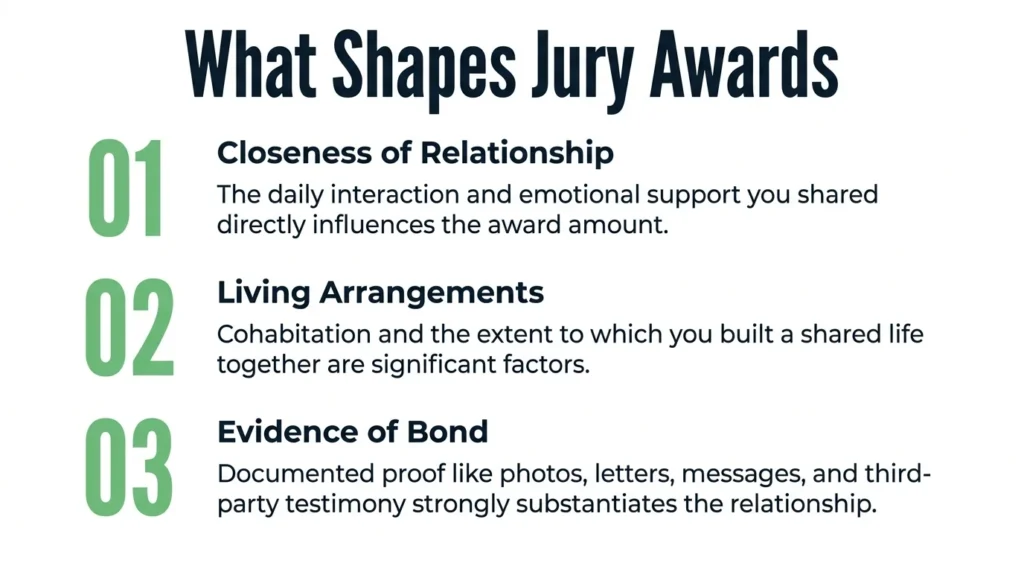
Three things shape the number more than any other:
Closeness of the relationship: how much you shared, day in and day out
Living arrangements: whether you lived together and built a life under one roof
Evidence of the bond: photos, letters, messages, and testimony from people who knew you both
You do not need a medical record to prove mental anguish. Testimony about your sleepless nights, your grief, and your changed daily life carries real weight in court.
Start saving those photos, messages, and mementos now, because these damages rise and fall on that kind of proof.
Here is some relief for your claim. Texas places no cap on non-economic damages when a wrongful death grows out of an ordinary car accident case. The familiar cap applies only to medical malpractice claims, under CPRC § 74.301.
Our breakdown of Texas damage caps and settlement limits explains exactly where caps apply and where they do not.
Because no ceiling applies, non-economic damages can make up a large share of a wrongful death recovery. To see how the pieces add up, look at what wrongful death settlements involve.
Work with a Texas Wrongful Death Attorney
No amount of money brings back the person you lost, but holding the responsible party accountable can lift some of the financial weight while you grieve.
Angel Reyes & Associates has guided Texas families through wrongful death claims for more than 30 years. We work across the entire state, so you can reach us wherever your loss happened. You can also browse our offices across Texas to find one near you.
You do not have to face this decision alone. Reading what other families say about us may help you feel less isolated right now.
We take these cases on contingency, so there is no cost to start and no fee unless we win. When you are ready, schedule a free consultation and we will walk you through your options.
Past results do not guarantee future outcomes.
Frequently Asked Questions
How long do I have to file a wrongful death claim in Texas?
Texas law gives you two years from the date of death to file a wrongful death lawsuit. If the claim involves a minor child, that two-year clock does not start until the child turns 18.
What happens if there is no surviving spouse, child, or parent to file a claim?
If none of these family members file within three months of the death, the executor or administrator of the estate can step in instead.
Do you have to pay taxes on mental anguish damages in a wrongful death case?
Compensation for mental anguish and loss of companionship in a wrongful death case is generally not taxable under federal law. Interest added to a settlement, however, can be taxed separately.
Can my family still recover damages if the person who died was partly at fault?
Yes, but the award drops by that person’s share of the fault. Texas also bars recovery completely if their fault was more than 50 percent.
Does each family member get a separate damage award, or is it one lump sum?
Each eligible family member can receive a separate share for their own losses. A jury may award the spouse, each child, and the parents different amounts based on what each person individually lost.
About the Authors

Spencer Browne
Writer
Spencer Browne is a partner at Angel Reyes & Associates and a Board Certified personal injury trial lawyer with nearly 100 jury trials across Texas. He focuses on car, truck, and wrongful death cases, with notable verdicts including a landmark win in the Choctaw Casino bus crash case. A recognized speaker and legal educator, Spencer is a member of the American Board of Trial Advocates and has been honored as a Texas Super Lawyer and one of D Magazine’s Best Lawyers in Dallas. He brings deep trial experience and relentless advocacy to every client he represents.

Kyle Nicolas
Editor
Kyle Nicolas is the Web Content & SEO Manager at Angel Reyes & Associates. He has more than 10 years of experience as a marketing co...

Angel Reyes
Reviewer
Angel L. Reyes, III is the Founder and Managing Partner of Angel Reyes & Associates. A nationally recognized trial attorney and business...