How to Calculate Damages in a Texas Personal Injury Case


Every article on this site is researched by our internal team, reviewed for legal accuracy against current Texas law, and held to State Bar of Texas advertising standards before publication. We do not publish content that overstates outcomes or makes promises about results.
Learn more about our
editorial standards .
Key Takeaways
- Economic damages cover measurable losses, like medical bills, lost wages, future treatment, and property damage.
- Non-economic damages cover pain, emotional distress, physical limitations, and the ways in which an injury changes your daily life.
- A strong damages claim depends on clear records, consistent treatment, and enough time to understand future losses before settling.

A driver hits your car on I-35 near Dallas. You go to the emergency room, miss work, and find out weeks later that your back injury will require more treatment than you expected.
Your damages are not limited to the first hospital bill. They include the full financial and personal effect of the injury.
Calculating damages in a personal injury case means putting a fair value on every loss tied to the accident. That includes costs you can prove with records and losses that affect your daily life in ways a receipt cannot fully capture. Many of these rules apply across different kinds of personal injury claims, regardless of whether the injury happened in a crash, a fall, or another preventable event.
Economic Damages & Direct Losses
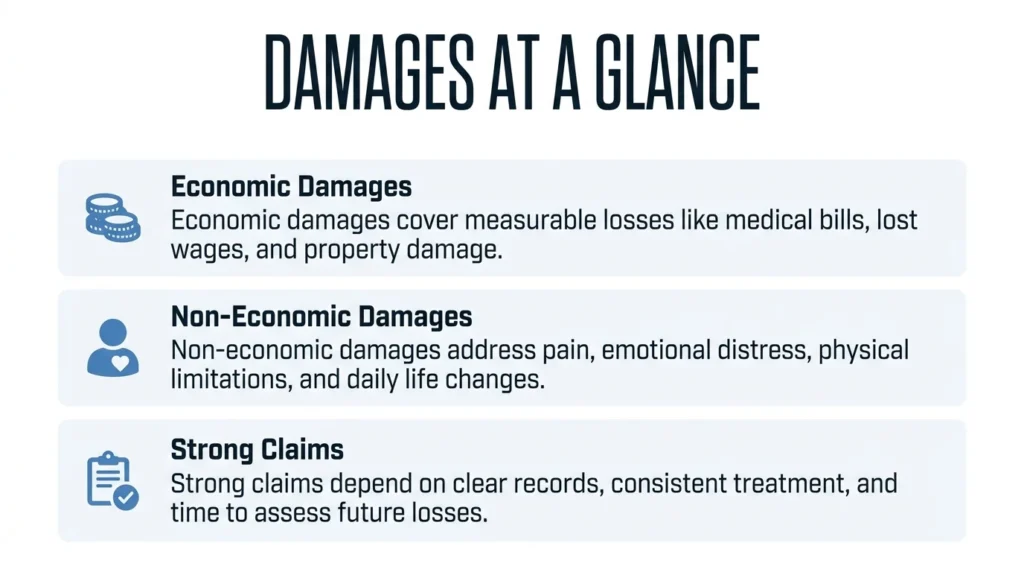
These losses usually come first because they can be documented with bills, statements, payroll records, and repair estimates. They are as follows:
- Medical expenses: Emergency care, hospital stays, surgery, imaging, prescriptions, physical therapy, follow-up appointments, and medical equipment
- Future medical treatment: Ongoing therapy, specialist care, injections, future procedures, home modifications, and long-term medication needs
- Lost wages: Income you already missed while recovering, including salary, hourly pay, overtime, bonuses, and used paid time off
- Reduced earning capacity: Losses tied to permanent restrictions, reduced hours, job changes, or an inability to return to the same kind of work you were doing before the crash
- Property damage: Vehicle repairs, replacement value, rental car costs, and damaged personal items
- Out-of-pocket costs: Travel to medical appointments, help with household tasks, childcare costs caused by the injury, and other reasonable expenses linked to recovery
The more complete your records are, the harder it is for an insurer to argue that these losses are inflated or unrelated.
Non-Economic Damages & Human Impact
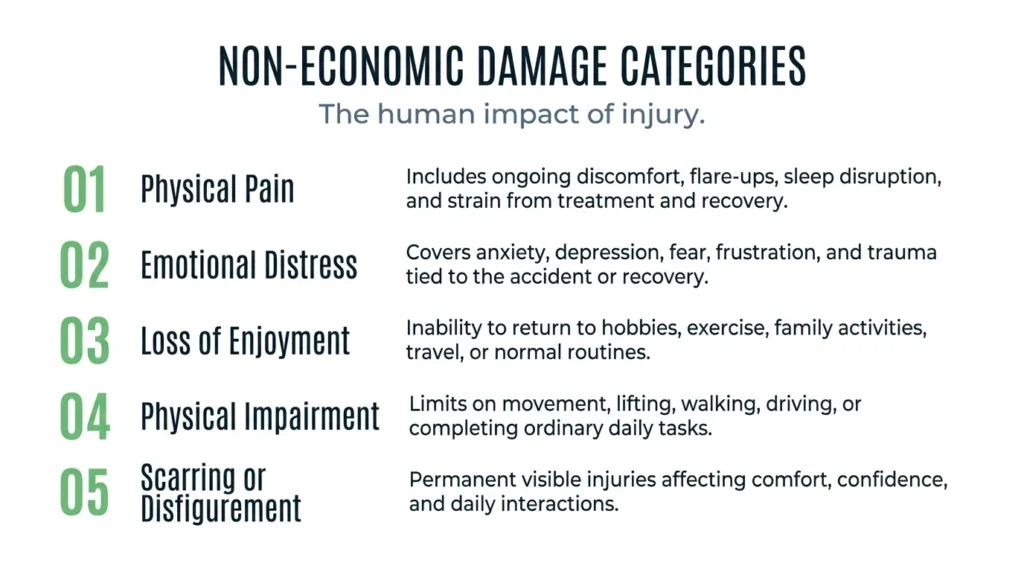
These damages cover the part of the injury that changes how you feel, function, and live each day. They are real losses, even though they do not come with a fixed price. They include:
- Physical pain: Ongoing discomfort, flare-ups, sleep disruption, and the physical strain of treatment and recovery
- Emotional distress: Anxiety, depression, fear, frustration, and trauma tied to the accident or the recovery process
- Loss of enjoyment of life: Inability to return to the hobbies, exercise, family activities, travel, or normal routine you enjoyed before the crash
- Physical impairment: Physical limitations on movement, lifting, walking, driving, or completing ordinary tasks at home or at work
- Scarring or disfigurement: Permanent visible injuries that affect your comfort, confidence, and daily interactions
These damages are usually supported by medical records, treatment history, testimony from the injured person, and statements from people who have seen how the injured person’s life has changed after the crash.
What Determines Case Value & Settlement Range
No two injury claims have the same value because damages are tied to facts, not a standard chart. A stronger case usually has clear liability, consistent treatment, and solid proof that the injury has changed the claimant’s health, work, and routine.
Several facts often push the value of a claim up or down, including:
- How serious the injury is: A sprain that resolves in a few weeks is valued differently than a spinal injury, traumatic brain injury, or permanent limitation.
- How long recovery lasts: Short-term pain and treatment are different from months of therapy or a lifelong condition.
- Whether future care is likely: Cases with expected surgeries, long-term pain management, or permanent work restrictions are often worth more than cases in which a full recovery is expected.
- How clear fault is: Strong evidence of negligence usually improves settlement leverage.
- How consistent treatment has been: Gaps in care can give insurers an opening to question the severity of the injury.
- How believable the damages are: To ensure this, the records, timeline, and the injured person’s own account should all tell the same story.
In rare cases involving extreme misconduct, a claim may also include exemplary damages. These types of damages are meant to punish especially dangerous behavior, not just compensate for losses.
Proof & Documentation That Supports Your Claim
The right evidence does more than show you were hurt; it helps connect the injury to a dollar value that can be negotiated or presented to a jury.
Use the following records to support your damages calculation:
- Medical records and bills to show diagnosis, treatment, restrictions, and cost
- Pay records and tax documents to prove missed income and changes in earning ability
- Photos and video footage of injuries, property damage, and the accident scene
- Repair estimates and receipts to support property losses and related expenses
- Doctors’ opinions on future treatment, permanency, and work limitations
- A daily pain journal to track symptoms, limitations, missed activities, and recovery setbacks
Strong proof also helps your lawyer push back when an insurer claims you are fully healed, blames a pre-existing condition, or minimizes long-term impact.
Why Early Settlement Offers Often Undervalue Claims
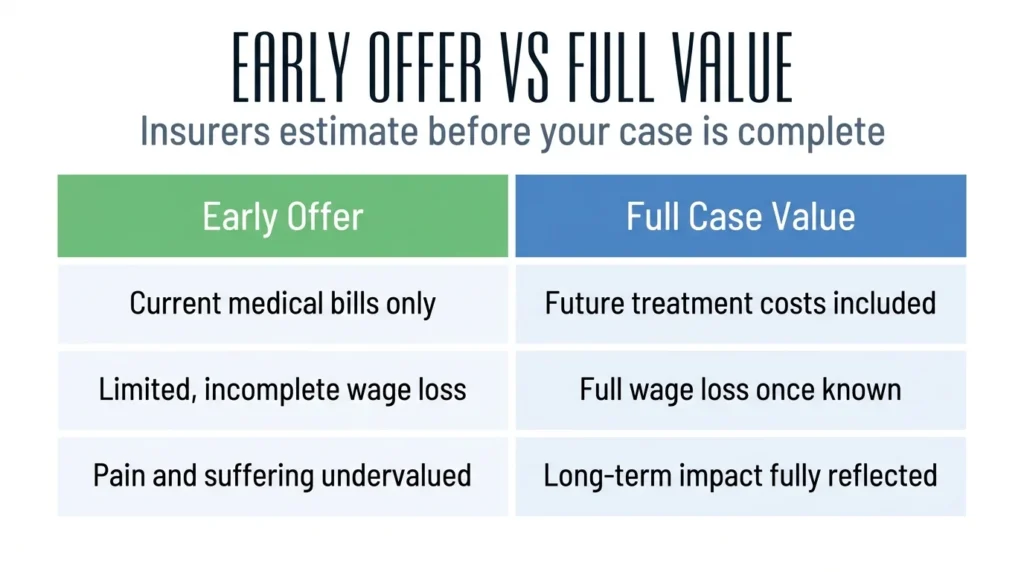
Insurance companies often start with what they can see right away. That usually means current medical bills, limited wage loss, and a value for pain and suffering that does not reflect the full disruption to your life. Early offers often come before doctors know whether you will need more treatment, before wage losses are complete, and before the long-term impact of your injury is clear.
That is why timing is so important. Settling too early can leave you responsible for future care and income loss that should have been part of the claim.
If you are still sorting out whether your facts support your case, our post on what qualifies as a personal injury case explains the basic legal framework.
If your injury came from a crash, our post on what to do after a car accident covers the early steps that protect evidence and strengthen your damages claim.
You can also review our case results to see how injury severity, proof, and long-term consequences can affect your claim’s value.
Get a Full Damages Review Before You Settle
A fair case value should account for more than the bills already on your kitchen table. It should include future care, lost earning ability, daily limitations, and the real effect the injury has had on your daily life.
Talk with Angel Reyes & Associates about your injury claim before you accept a settlement that may be too low. We offer free initial consultations, and you pay no fee unless we win.
Past results do not guarantee future success.
Injury Damages FAQs
Do Texas personal injury damages include the full amount originally billed by a hospital or only what was actually paid or still owed?
Usually, only the amount actually paid or still owed is recoverable for past medical expenses. Under Texas Civil Practice and Remedies Code § 41.0105, recovery of medical or healthcare expenses is limited to the amount “actually paid or incurred,” and the Texas Supreme Court has enforced that rule in personal injury cases.
Can my damages be reduced if I was partially at fault for the accident?
Yes. Under § 33.001, you can still recover damages if you were 50% or less responsible, but your recovery is reduced by your percentage of fault.
Are personal injury damages taxable in Texas?
Usually, compensatory damages for personal physical injuries are not taxable federally, but exceptions may apply, including some prior medical deductions, punitive damages, and interest. Texas does not have a state income tax, but the federal tax treatment still applies when a settlement or judgment is paid.
Can punitive damages be added to a Texas personal injury case?
Can interest increase the value of a Texas personal injury judgment?
Yes, in some cases. Texas Finance Code Chapter 304 provides for prejudgment and postjudgment interest in personal injury, wrongful death, and property damage cases, although prejudgment interest cannot be recovered on exemplary damages.
About the Authors

Angel Reyes
Writer
Angel L. Reyes, III is the Founder and Managing Partner of Angel Reyes & Associates. A nationally recognized trial attorney and business leader, Angel has helped over 70,000 injury victims recover more than $1 billion since founding the firm in 1993. Named to the Texas Super Lawyers list annually since 2008, Angel brings Wall Street experience, Ivy League education, and a deep commitment to client advocacy. He is a frequent legal commentator and published author with extensive contributions to legal scholarship, trial strategy, and consumer protection.

Kyle Nicolas
Editor
Kyle Nicolas is the Web Content & SEO Manager at Angel Reyes & Associates. He has more than 10 years of experience as a marketing co...

Angel Reyes
Reviewer
Angel L. Reyes, III is the Founder and Managing Partner of Angel Reyes & Associates. A nationally recognized trial attorney and business...