What Qualifies as Pain & Suffering in a Texas Personal Injury Case?


Every article on this site is researched by our internal team, reviewed for legal accuracy against current Texas law, and held to State Bar of Texas advertising standards before publication. We do not publish content that overstates outcomes or makes promises about results.
Learn more about our
editorial standards .
Key Takeaways
- Texas law allows pain and suffering damages for losses such as physical pain, mental anguish, disfigurement, physical impairment, and loss of enjoyment of life.
- The strongest claims use medical records, mental health treatment, photos, daily notes, and witness statements to show how the injury changed your routine.
- Fast action helps protect your evidence, negotiations with the insurer, and the filing deadline under Texas law.
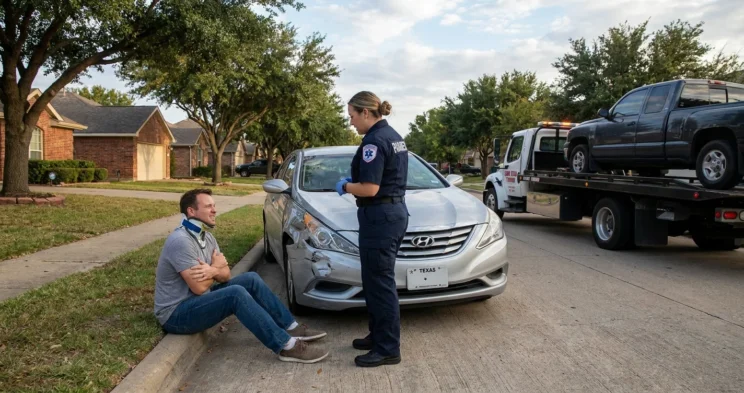
Imagine this: You are hit at a Dallas intersection and taken to the ER with a back injury. Weeks later, the bills are piling up, but that is not the only loss. You cannot sleep through the night, you dread getting behind the wheel, and you need help with errands you used to handle on your own. In addition to the physical damage, these psychological losses may be part of your claim, too.
Pain & Suffering Has a Legal Meaning in Texas
In a Texas personal injury claim, pain and suffering usually falls within noneconomic damages. Under Texas Civil Practice and Remedies Code § 41.001(12), noneconomic damages can include physical pain and suffering, mental or emotional anguish, disfigurement, physical impairment, inconvenience, and loss of enjoyment of life. That gives you a path to seek compensation for the actual effects an injury has on your daily life, not just the charges listed on a medical bill.
What Usually Counts as Pain & Suffering
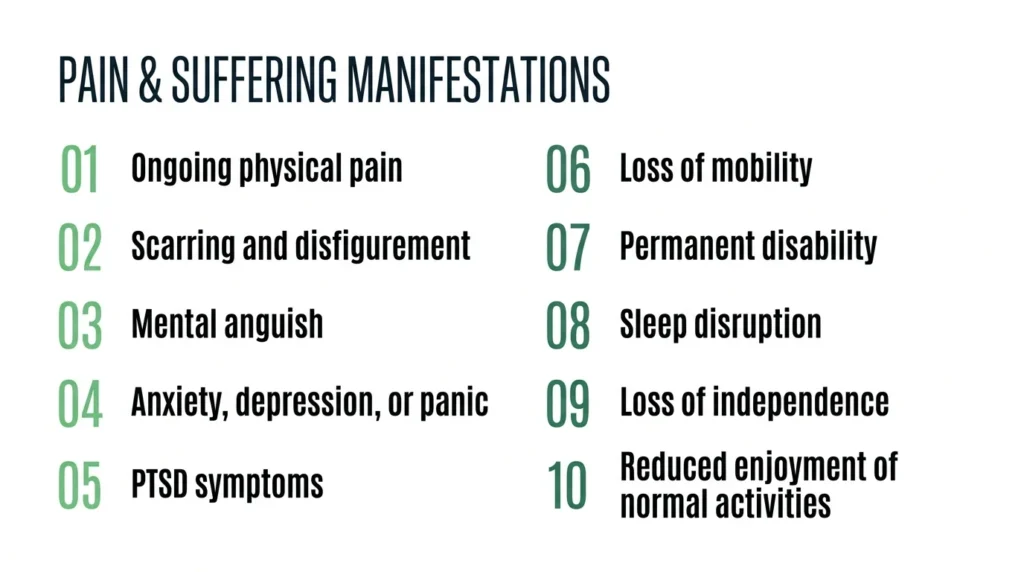
Pain and suffering often includes losses that do not come with a fixed price tag. Your claim may involve:
- Ongoing physical pain
- Scarring and disfigurement
- Mental anguish
- Anxiety, depression, or panic
- PTSD symptoms
- Loss of mobility
- Permanent disability
- Sleep disruption
- Loss of independence
- Reduced enjoyment of normal activities
It’s not about what you call the injury; it’s about how the injury changed your life.
Physical Injuries Often Lead to Pain & Suffering Claims

Many pain and suffering claims start with a physical injury that keeps affecting you after the initial treatment ends. Common examples include:
- Broken bones
- Burns
- Lacerations
- Neck and back injuries
- Head injuries
- Spinal cord injuries
- Muscle and ligament damage
- Internal injuries
- Paralysis
- Loss of function in a limb
Severe injuries usually support larger claims because they interfere with your work, movement, sleep, and everyday routines for longer periods of time.
Emotional Harm Can Be Part of Your Case
Pain and suffering is not limited to what shows up on an X-ray. A serious accident can leave you dealing with fear, anger, flashbacks, or emotional withdrawal long after your visible injuries improve. The National Institute of Mental Health PTSD overview explains that traumatic events can lead to symptoms such as intrusive memories, nightmares, avoidance, and heightened reactions.
Emotional harm in a personal injury case may include:
- Anxiety
- Depression
- Panic attacks
- Chronic nightmares
- Mood swings
- Withdrawal from family and friends
- Fear of driving or leaving home
- Personality changes after a traumatic event
This part of the claim becomes stronger when your symptoms are documented through counseling records, medical treatment, prescriptions, and statements from people who have witnessed how the injuries have affected your wellbeing.
Daily Disruption Often Drives Claim Value
Insurance companies do not pay fairly for vague complaints. You need facts that prove how your injuries have affected your daily life. Useful examples include:
- You cannot pick up your child without pain.
- You are missing work because you cannot sit, stand, or drive for long.
- You stopped exercising, traveling, or attending family events.
- You need help bathing, dressing, cooking, or cleaning.
- You avoid traffic because the crash left you panicked behind the wheel.
- You cannot perform the same job duties that you had before the crash.
These details show how the injury has affected your independence, your family, and your routine.
What Helps Prove Pain & Suffering?
You’ll need more than a diagnosis to prove pain and suffering. You’ll need evidence that connects the injury to lasting physical and emotional harm. Strong evidence often includes:
- Medical records
- Imaging and treatment notes
- Mental health records
- Prescription history
- Photos of injuries and recovery
- A pain journal
- Statements from family, friends, or coworkers
- Work records showing missed time or reduced duties
If you are still in the early stages of a claim, our post on how to document injuries after an accident can help you build a clean record from the start.
There Is No Definitive Guide to Pain & Suffering
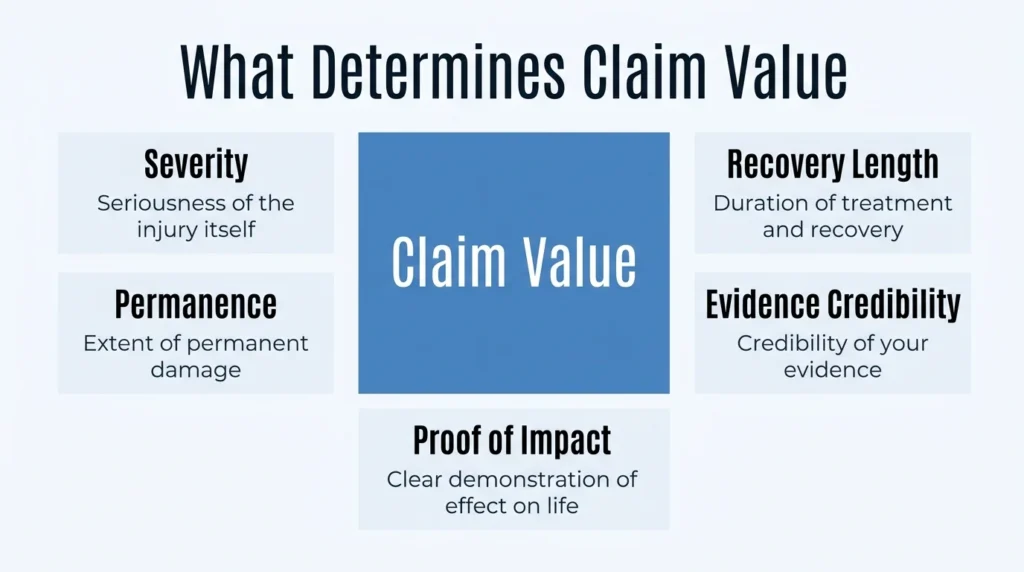
Pain and suffering depends on the facts; the value of your claim usually hinges on the severity of the injury, the length of recovery, whether the damage is permanent, how credible your evidence is, and how clearly you can prove the effect that the injury has had on your work and personal life. For this reason, we strongly recommend having your case evaluated by a licensed attorney to get a more complete picture of your claim’s value.
You can review our case results to see how much serious injury claims can vary when the harm is severe and well documented. We also have a custom-designed case calculator that can give you a general estimate of your case’s value, based on your input and our experience with a wide range of different lawsuits.
Act Quickly
Delaying the process can damage a good case. Most Texas personal injury lawsuits must be filed within the time allowed by Texas Civil Practice and Remedies Code § 16.003, which is generally two years from the date the claim accrues.
Additionally, insurers have deadlines for acknowledging, investigating, and responding to claims, as explained in the Texas Department of Insurance claim deadline guide.
Our post on how long you have to file a personal injury claim in Texas explains the timeline in more detail and lists situations that can complicate it.
Detail the Full Impact of Your Injury In Your Claim
Pain and suffering is about more than discomfort. It is about what the injury took from your normal life. If someone else caused the accident, we can work with you to prove the physical pain, mental strain, and daily limits that can help you win your claim.
Angel Reyes & Associates offers free initial consultations, and you pay no fee unless we win. Use our free case review form to talk with us about your next steps.
Past results do not guarantee future success.
Pain & Suffering FAQs
Can a pre-existing injury still support a pain and suffering claim in Texas?
Yes. You may still recover if the accident made an existing condition worse, but the records need to show what changed after the incident, rather than treating the condition as a new diagnosis.
Can my own fault reduce pain and suffering damages in a Texas injury case?
Yes. Texas follows proportionate responsibility, so your recovery can be reduced by your share of fault, and you generally cannot recover anything if you were more than 50% responsible.
Do I have to turn over therapy or mental health records if I claim emotional suffering?
Sometimes. When you seek damages for mental or emotional harm, relevant psychological records may become accessible because they can affect how that part of the claim is evaluated.
Are pain and suffering damages capped in Texas?
Usually not in an ordinary personal injury case, but some claims, especially healthcare liability cases, are subject to statutory limits on noneconomic damages.
Can pain and suffering be part of a claim even if my medical bills are not very high?
Yes. Lower medical bills do not automatically mean lower noneconomic damages if the injury still causes serious pain, sleep problems, anxiety, daily limitations, or lasting disruption to your routine.
About the Authors

Spencer Browne
Writer
Spencer Browne is a partner at Angel Reyes & Associates and a Board Certified personal injury trial lawyer with nearly 100 jury trials across Texas. He focuses on car, truck, and wrongful death cases, with notable verdicts including a landmark win in the Choctaw Casino bus crash case. A recognized speaker and legal educator, Spencer is a member of the American Board of Trial Advocates and has been honored as a Texas Super Lawyer and one of D Magazine’s Best Lawyers in Dallas. He brings deep trial experience and relentless advocacy to every client he represents.

Kyle Nicolas
Editor
Kyle Nicolas is the Web Content & SEO Manager at Angel Reyes & Associates. He has more than 10 years of experience as a marketing co...

Angel Reyes
Reviewer
Angel L. Reyes, III is the Founder and Managing Partner of Angel Reyes & Associates. A nationally recognized trial attorney and business...